
How to Handle a Customer Complaint About Weak or Bitter Coffee
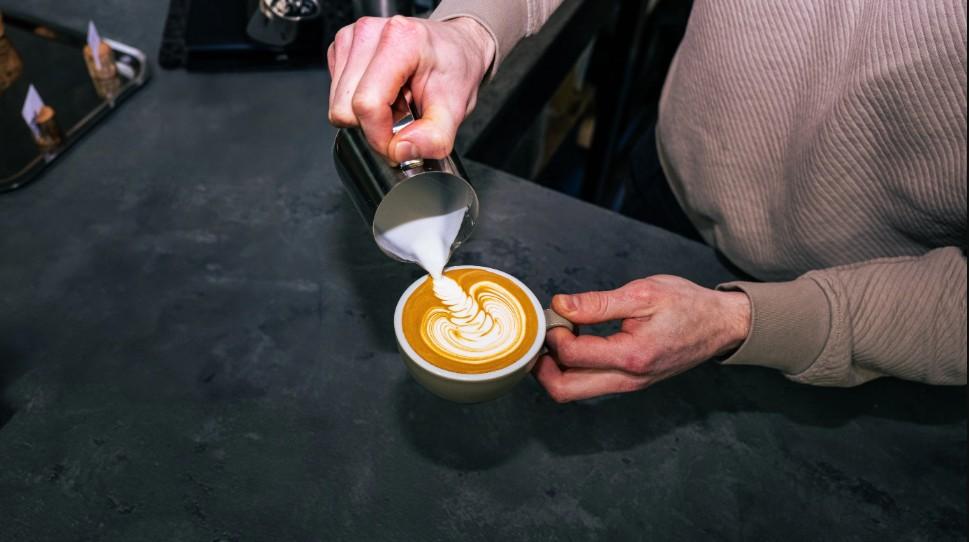
Every café manager and barista knows the feeling: the morning rush is in full swing, the steam wand is hissing, and a customer walks back up to the counter holding a cup with a look of disappointment. Their feedback is brief but clear: "My coffee tastes watery," or "This espresso is unpleasantly bitter." In the fast-paced hospitality world, a misbrewed beverage can feel like a minor speed bump, but to the customer, it represents a ruined routine and wasted money.
Understanding the Brew Science: Why Coffee Tastes Weak or Bitter
To address a customer's complaint constructively, a barista must first understand the underlying extraction science that creates off-flavors. Coffee extraction is the process of dissolving soluble flavors from roasted coffee grounds into water. When extraction parameters slip out of balance, the taste profile degrades quickly into two distinct issues: under-extraction (weakness) or over-extraction (bitterness).
-
Weak or Watery Coffee (Under-Extraction):
-
When coffee tastes sour, thin, or excessively watery, water has passed through the coffee bed too quickly without dissolving the desirable sugars and aromatic compounds. Common causes include a grind size that is too coarse, a dose weight that is too low, insufficient tamping pressure, or water temperature that has dropped below the ideal range ($195^\circ\text{F}$ to $205^\circ\text{F}$).
-
Bitter or Harsh Coffee (Over-Extraction):
-
Conversely, bitter coffee occurs when water stays in contact with the coffee grounds for too long, stripping out harsh organic acids and dry tannins. This typically happens when the grind setting is too fine, the shot extraction time exceeds 30 seconds, or the espresso machine shower screens and portafilters are coated in stale, burnt coffee oils.
By quickly identifying whether the issue stems from under-extraction or over-extraction, the barista can diagnose the technical fault while preparing a fresh, perfectly balanced replacement drink.
The 4-Step Customer De-Escalation Strategy
When a customer presents a complaint, how the barista responds in the first ten seconds sets the tone for the entire interaction. Implementing a standardized, empathetic de-escalation protocol ensures that staff members remain calm, attentive, and focused on resolution rather than defense.
-
Listen Actively Without Interruption:
-
Allow the customer to finish explaining what is wrong with their beverage without interrupting or immediately justifying the recipe. Maintain open body language and make direct eye contact to show that their experience matters to you.
-
Validate and Apologize Sincerity:
-
Acknowledge their preference right away. Saying something as simple as, "I'm so sorry your drink isn't tasting right today—let me fix that for you right away," validates their feelings without assigning blame.
-
Offer a Custom Replacement or Alternative:
-
Ask clarifying questions to tailor the remake. Ask if they prefer a bolder flavor profile, a different milk choice, or a adjustments to sweetness. If they seem entirely turned off by espresso that day, offer a smooth pour-over or cold brew alternative.
-
Follow Up and Value-Add:
-
When handing over the newly prepared cup, invite them to take a quick sip at the counter to ensure it meets their expectations. To leave a positive lasting impression, consider offering a complimentary pastry voucher or a card for their next visit.
Practical Barista Troubleshooting Behind the Bar
Resolving the customer’s immediate complaint is only half the battle; preventing the same issue on the next ticket requires immediate technical adjustment behind the espresso machine. Baristas should follow a systematic checklist whenever a flavor quality flag is raised.
-
Purge and Clean the Group Head: Flush water through the dispersion screen to remove trapped grounds and residual bitter oils from previous extractions.
-
Check the Extraction Shot Time: Pull a test shot while timing the yield. A standard double shot should yield roughly double the dry dose weight within 25 to 30 seconds.
-
Adjust the Grind Micrometer: If the shot ran too fast (causing a weak brew), adjust the grinder to a finer setting. If it choked or ran too slowly (causing bitterness), coarsen the grind size slightly.
-
Inspect Milk Texturing and Temperature: For milk-based drinks like lattes and cappuccinos, scalding the milk past $150^\circ\text{F}$ destroys sweetness and produces a scorchingly bitter taste profile regardless of espresso quality.
Maintaining a rigorous dial-in routine at the start of every shift dramatically reduces these operational errors before customers ever taste them.
Building Long-Term Consistency Through Staff Development
While quick fixes on the bar can solve isolated incidents, long-term consistency relies heavily on comprehensive education. Individual barista intuition varies, but a well-trained team operates with standardized precision, understanding how small variables like ambient humidity, water filtration, and bean age impact the final cup.
Investing in formal structured education, such as an accredited barista training course, equips coffee shop personnel with the sensory calibration and technical knowledge required to maintain exact extraction standards consistently. When baristas undergo structured learning, they gain confidence not only in dialing in espresso grinders but also in communicating naturally with guests about flavor profiles. This proactive skill set transforms potential service failures into opportunities to display genuine hospitality expertise.
Conclusion: Transforming Complaints into Customer Loyalty
Customer complaints about weak or bitter coffee are inevitably part of running a high-volume coffee program. However, they should never be viewed as operational failures. Instead, treat each complaint as a diagnostic alert that helps maintain quality control on your bar.
By pairing scientific troubleshooting skills with empathetic, fast-acting customer service, your café can resolve issues instantly and earn the long-term respect of your patrons. When customers know that your staff cares deeply about their satisfaction and possesses the technical expertise to get their order right every single time, they will keep coming back for years to come.

 English
 Arabic
 French
 Spanish
 Portuguese
 Deutsch
 Turkish
 Dutch
Dutch
 Russian
 Romaian
 Portuguese (Brazil)
 Greek
Greek