
7 Common Causes of Acne and How to Build a Healthy Skincare Routine
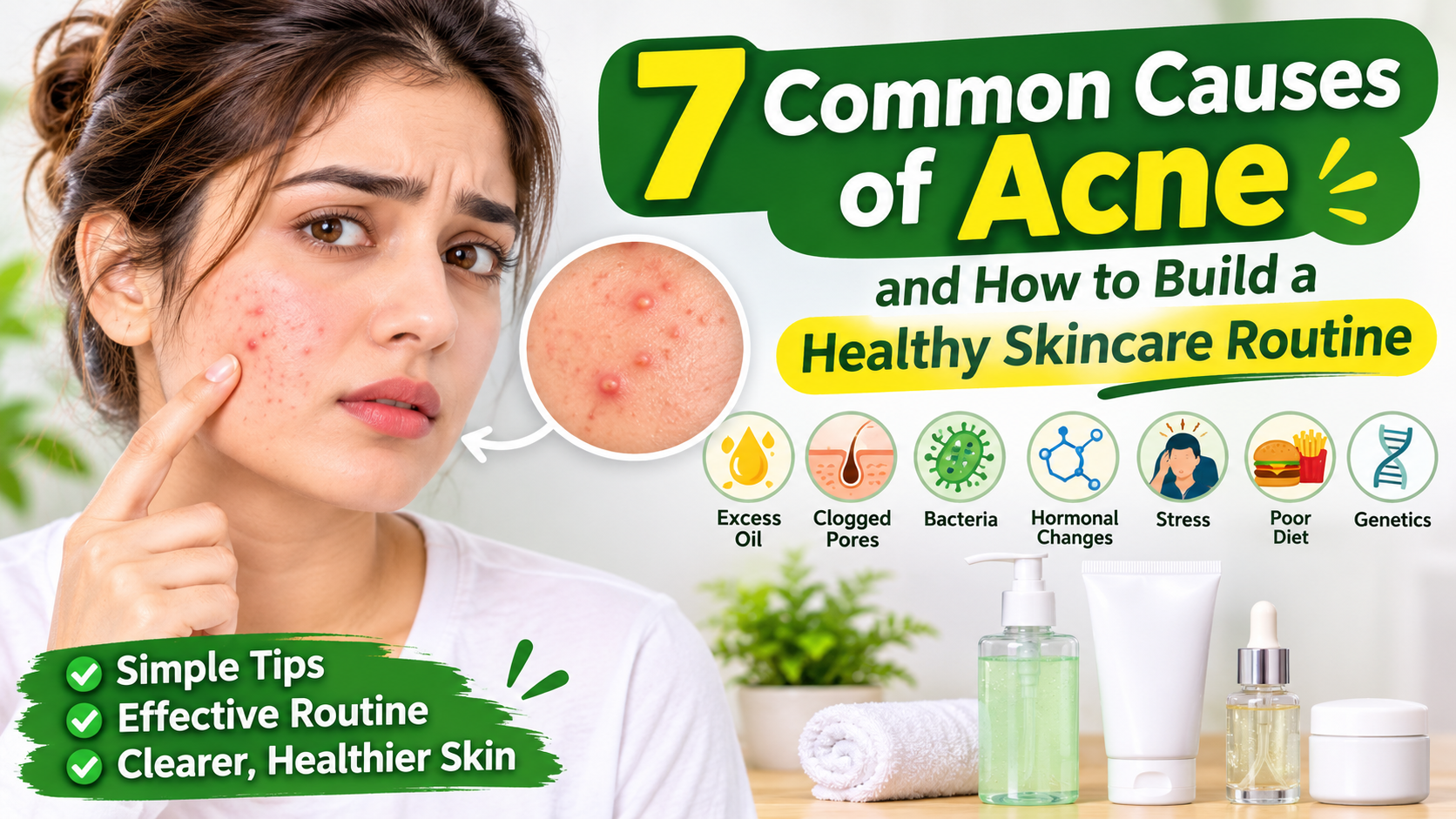
Acne is one of the most common skin concerns, affecting people of different ages and skin types. From occasional pimples to persistent breakouts, acne can affect both skin appearance and self-confidence. Although it is often associated with teenage years, adults can experience acne due to hormonal changes, lifestyle habits, skincare products, and other factors.
Understanding what causes acne is the first step towards managing it. With consistent skincare habits and suitable products, many people can improve their skin condition and reduce frequent breakouts.
1. Excess Oil Production
Your skin naturally produces sebum, an oily substance that helps protect and moisturize the skin. However, excessive sebum production can contribute to clogged pores.
When excess oil combines with dead skin cells, pores can become blocked, creating an environment where acne-causing bacteria can grow.
People with oily skin may benefit from lightweight, non-comedogenic skincare products that do not unnecessarily clog pores.
2. Hormonal Changes
Hormones play an important role in regulating oil production. Changes during puberty, menstruation, pregnancy, and other hormonal fluctuations can trigger acne breakouts.
Hormonal acne commonly appears around the chin, jawline, and lower cheeks, although it can affect other areas too.
If breakouts are persistent or painful, consulting a dermatologist can help identify appropriate treatment options.
3. Using the Wrong Skincare Products
Not every skincare product works for every skin type. Heavy creams, pore-clogging cosmetics, and unsuitable oils may contribute to breakouts in acne-prone individuals.
Consider these skincare habits:
-
Choose products labelled non-comedogenic.
-
Remove makeup before sleeping.
-
Avoid frequently changing skincare products.
-
Introduce new active ingredients gradually.
-
Avoid harsh scrubs and aggressive cleansing.
A simple routine that suits your skin is often more useful than using too many products.
4. Poor Cleansing Habits
Dirt, sweat, makeup, and excess oil can accumulate on the skin throughout the day. Inadequate cleansing may contribute to clogged pores.
Wash your face gently twice daily and after excessive sweating. Avoid scrubbing aggressively because irritation can make acne-prone skin more uncomfortable.
Use a mild cleanser suitable for your skin type.
5. Stress and Lack of Sleep
Stress can influence hormonal activity and may worsen existing acne in some individuals. Poor sleep can also affect overall skin health and make it harder to maintain healthy daily habits.
Try to establish a regular sleep schedule, stay physically active, and include relaxing activities in your daily routine.
Although stress management cannot replace acne treatment, it can support overall wellbeing.
6. Diet and Lifestyle Factors
Diet does not cause acne in everyone, but research suggests that certain dietary patterns may worsen breakouts in some people.
High-glycemic foods, including sugary drinks and refined carbohydrates, may be associated with increased acne in susceptible individuals. Some studies have also explored a possible relationship between dairy consumption and acne.
Rather than following restrictive diets, focus on balanced meals containing vegetables, fruits, whole grains, healthy fats, and adequate protein.
Pay attention to how your own skin responds to different foods.
7. Touching or Picking Pimples
Picking, squeezing, or repeatedly touching pimples can increase irritation and potentially contribute to inflammation, infection, and scarring.
Allow blemishes to heal naturally and avoid aggressive home remedies.
For persistent breakouts, evidence-based acne treatments recommended by a dermatologist are a safer approach.
How to Build a Simple Skincare Routine for Acne-Prone Skin
Consistency is essential when managing acne. A basic morning and evening routine can help maintain skin cleanliness and support the skin barrier.
Morning Routine
-
Gentle Cleanser: Wash your face with a mild cleanser.
-
Suitable Moisturizer: Apply a lightweight, non-comedogenic moisturizer.
-
Sunscreen: Use broad-spectrum SPF 30 or higher to protect your skin.
Evening Routine
-
Cleanse: Remove sunscreen, makeup, dirt, and excess oil.
-
Acne Treatment: Consider dermatologist-recommended ingredients such as salicylic acid, benzoyl peroxide, or adapalene.
-
Moisturize: Finish with a moisturizer to help maintain the skin barrier.
Introduce active ingredients gradually because some acne treatments can cause dryness and irritation.
When Should You Consult a Dermatologist?
Occasional pimples can often be managed with appropriate skincare, but professional advice is important when:
-
Acne is painful, deep, or cystic.
-
Breakouts leave scars or dark marks.
-
Acne does not improve with consistent treatment.
-
You experience sudden or severe breakouts.
-
Acne affects your confidence or emotional wellbeing.
A dermatologist can assess your skin and recommend treatment based on the type and severity of acne.
Final Thoughts
Managing acne requires patience, consistency, and an understanding of your skin's needs. Excess oil, hormonal changes, unsuitable skincare products, stress, and certain lifestyle factors can all contribute to breakouts.
Avoid harsh skincare practices, choose suitable products, and give treatments enough time to work. If acne is persistent or severe, professional dermatological guidance is the best way to explore effective treatment options.
For a more detailed explanation of acne causes, different acne types, skincare routines, and treatment options, read this comprehensive Acne Treatment Guide by ChiltanPure.

 English
 Arabic
 French
 Spanish
 Portuguese
 Turkish
 Dutch
 Italiano
 Russian
 Romaian
 Portuguese (Brazil)
 Greek