
Spinal Decompression in Oak Creek: What Really Happens From Your First Visit to Your Final Session
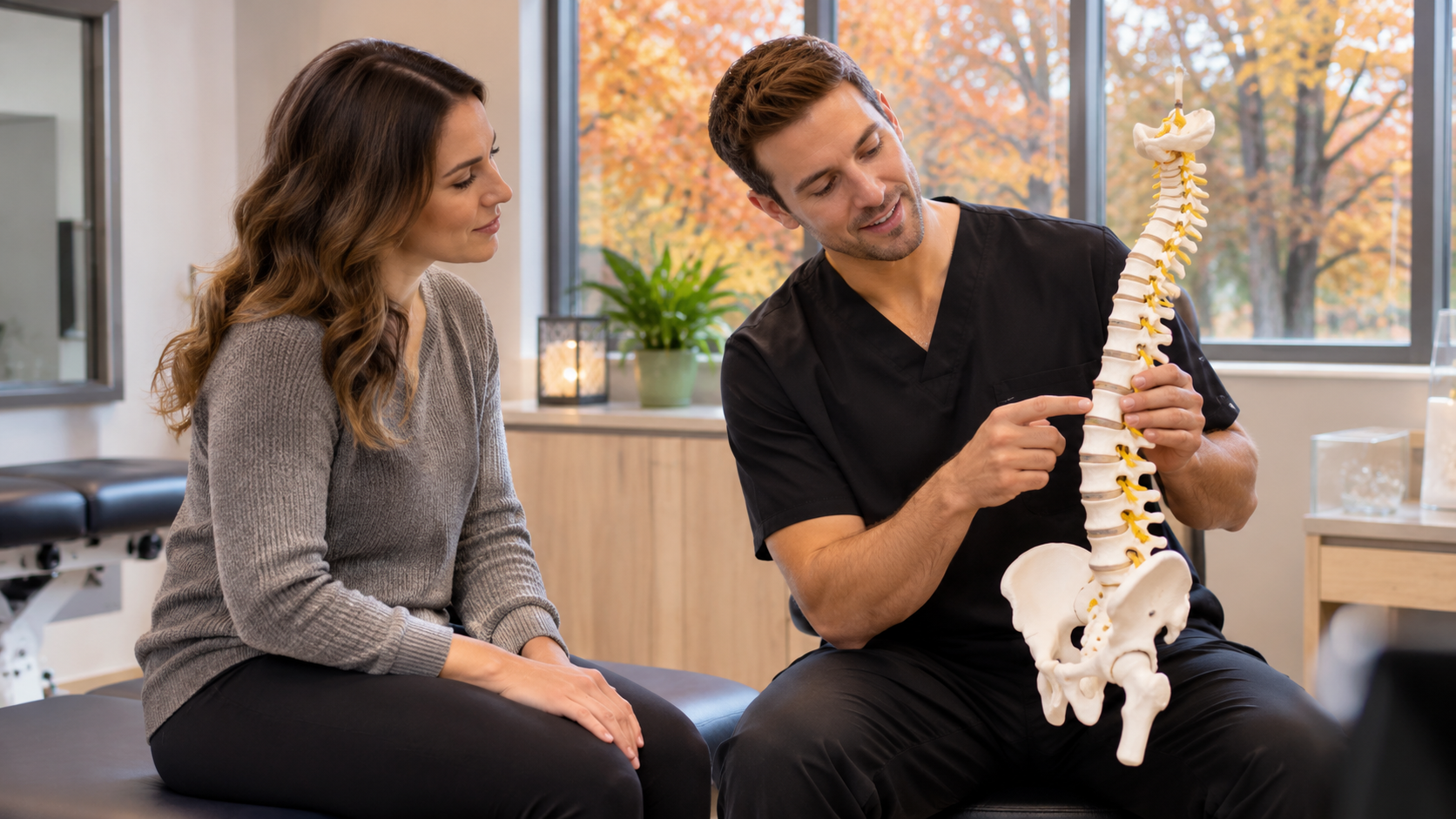
The most common thing I hear from people who are thinking about spinal decompression in Oak Creek is not "Will it work?" It is "What are they actually going to do to me?" That question makes total sense. When your back hurts, the idea of being strapped to a table and stretched sounds a little intimidating, and nobody wants to walk into an appointment without knowing the plan.
So in this post I am going to take you through the whole journey, step by step, the way I wish someone had explained it to me the first time I started researching this therapy. We will go from the first phone call to the last scheduled session, and I will cover what the exam looks like, how the table works, what you will feel, how often you go, and what you should be doing at home in between. If you want to see how one local clinic describes its own process, the team at Evolved Chiropractic lays out its approach to nonsurgical spinal decompression in Oak Creek, WI on its service page, and I will reference that model a few times below because it is a clear example of how a well-organized protocol runs.
My goal here is simple: by the end, you should be able to walk into a consultation knowing what questions to ask, what is normal, and what is not.
Why So Many People Are Looking Into Decompression Therapy
Back pain is not a niche problem. According to the World Health Organization, low back pain affected 619 million people worldwide in 2020, and the organization expects that number to climb to 843 million by 2050 as populations grow and age. The same World Health Organization fact sheet on low back pain describes it as the leading cause of disability worldwide.
In my experience, the people who end up searching for decompression therapy usually fall into one of three groups:
- The "I've tried everything" group. They have done stretches, rest, heat, ice, over-the-counter pain relievers and maybe a round of physical therapy, but the pain keeps coming back.
- The "I want to avoid surgery" group. They have been told they have a herniated or bulging disc, and they want to explore every conservative option before talking to a surgeon.
- The "something just changed" group. They had manageable stiffness for years, and then suddenly they started feeling burning, tingling or numbness down one leg.
If you see yourself in any of those groups, it is worth understanding how the process works before you commit to anything.
What Nonsurgical Spinal Decompression Actually Is
Let me keep this plain. Your spine is a stack of bones called vertebrae. Between each pair of vertebrae sits a disc, which acts like a cushion. Each disc has a tougher outer ring and a softer, gel-like center. When a disc is under constant pressure, or when it starts to wear down, that center can bulge outward or even push through the outer ring. If the bulging material presses on a nearby nerve, you can feel pain in your back, your buttock or all the way down your leg.
Nonsurgical spinal decompression uses a computer-controlled table to apply a gentle, gradual pulling force to the spine. The idea is to create a bit of space between the vertebrae, lower the pressure inside the disc, and encourage better movement of fluid and nutrients into the area. The key word is gradual. A good decompression system does not yank on your spine. It ramps up slowly, holds, then eases off, in repeating cycles.
This is very different from the old-school traction you might picture from a movie, where weights hang off the end of a hospital bed. Modern decompression tables are programmed to work with your body, and many of them can add slight angles, such as lateral flexion (a gentle side bend), to target a specific level of the spine.
I always tell people to think of it as unloading rather than stretching. Your spine spends all day carrying weight. Decompression gives it a structured break.
Before You Book: Check Your Symptoms Honestly
Before you even call a clinic about spinal decompression in Oak Creek, I recommend taking two minutes to write down your symptoms. It sounds basic, but it makes your first visit far more productive. Here are the kinds of details a provider will want to know:
- Where exactly does it hurt? Lower back only, or does it travel into a buttock, hip, thigh, calf or foot?
- What does it feel like? Dull and achy, sharp, burning, electric, or tingling?
- Do you have numbness anywhere?
- Is it worse after sitting for a long time, after standing for a long time, or when you go from sitting to standing?
- Did it start after a specific event, like lifting a heavy box or shoveling snow, or did it build slowly?
- How long has it been going on?
That last question matters more than people realize. The WHO separates low back pain into acute (under 6 weeks), sub-acute (6 to 12 weeks) and chronic (over 12 weeks). Where you fall on that timeline can shape what a provider recommends first.
When to Skip Decompression and Get Urgent Care Instead
I want to be very clear about this part. Some symptoms are not a "book a chiropractic consultation next week" situation. If you notice any of the following, get emergency medical care right away:
- Loss of bladder or bowel control
- Numbness in the groin or inner thighs (sometimes called saddle numbness)
- Sudden, severe or rapidly worsening weakness in a leg
- Back pain along with fever, unexplained weight loss, or a history of cancer
- Back pain after a serious fall or accident
These can be signs of something that needs immediate medical attention. A responsible decompression provider will screen for these, but you should not wait for an appointment to act on them.
Step 1: The Consultation and Health History
Your first visit for spinal decompression in Oak Creek should feel more like a conversation than a sales pitch. A thorough provider will ask about your symptoms, your medical history, previous injuries, past surgeries, medications and your daily routine.
Expect questions like:
- What do you do for work? Do you sit at a desk, drive, or lift?
- How do you sleep, and does pain wake you up?
- What have you already tried, and what helped even a little?
- What are your goals? Getting back to golf? Picking up your kids without wincing? Sitting through a full workday?
That goals question is one of my favorites, because it tells you the provider is thinking about function, not just pain scores. A plan built around "I want to walk the Oak Creek Parkway trail again without stopping" is a lot more motivating than a plan built around a number on a scale.
This is also your chance to ask questions. Do not be shy. I list some good ones later in this post.
Step 2: The Physical Exam and Imaging
After the history, the provider will usually perform a hands-on exam. This often includes checking your posture, range of motion, reflexes, muscle strength and sensation in your legs. Some tests involve lifting your leg while you lie down or sit on the table, because certain movements can reproduce nerve pain and help pinpoint the source.
Imaging is often part of the process too. On its decompression page, Evolved Chiropractic notes that it uses X-rays at the first chiropractic visit to assess the location and severity of the problem before setting treatment force. X-rays show bone alignment, disc height (indirectly, by the space between vertebrae), arthritic changes and other structural issues.
Here is something I think more people should know: an X-ray cannot show a disc herniation directly, because discs are soft tissue. If your provider suspects a significant herniation or nerve compression, they may ask whether you already have an MRI, or they may refer you for one. If you have had an MRI in the past, bring the report. It saves time and gives a clearer picture.
Step 3: Building Your Custom Protocol
This is the part that separates good decompression care from a one-size-fits-all approach. The force the table applies should not be a random number. It should be based on factors like:
- Your age
- Your body weight
- Your general health
- The location of the problem (which disc level)
- The severity of your condition
Most modern tables let the provider set the maximum pull, the hold time, the rest time between cycles, the angle and the total session length. The clinic I keep referencing uses a Chattanooga Triton m6 decompression table, which allows customizable protocols. Whatever brand a clinic uses, the important thing is that someone is adjusting those settings for you, and adjusting them again as you progress.
If you ask "How did you decide on my settings?" and the answer is vague, that is a yellow flag.
Step 4: What a Decompression Session Actually Feels Like
Okay, this is the part everyone is really curious about.
You will usually lie on your back (sometimes on your stomach, depending on the table and your condition). The provider will fit you with a harness or belt system: typically one around your lower ribcage or upper torso and one around your pelvis. Those harnesses let the table pull on the lower half of your spine while the upper half stays still.
Many people are given a safety switch to hold. If anything feels wrong, you press it and the table immediately releases tension.
Then the cycles begin. The table slowly increases the pulling force, holds it for a period, and then slowly reduces it. That pattern repeats. Some protocols also add slight lateral flexion, which is a gentle side bend, so the force targets one side more than the other.
What do people report feeling? Most describe it as a gentle, sustained stretch in the lower back. Some say it is surprisingly relaxing, and a fair number of people nearly fall asleep. It should not be sharply painful. If your pain spikes during a session, you need to tell the provider right away so they can lower the force or change the angle.
On the Evolved Chiropractic page, sessions are listed at 8 to 15 minutes. That is shorter than many people expect, and it is one reason decompression fits into busy schedules. You can often come in before work or during a lunch break.
Little Things That Make Sessions More Comfortable
- Use the restroom first. You will be lying still and harnessed for several minutes.
- Wear comfortable clothing. Avoid stiff belts or bulky jeans that make the harness awkward.
- Breathe and relax. Tensing your back muscles fights the gentle pull. Slow breathing helps your body let go.
- Speak up. If the harness is pinching or the stretch feels too strong, say so.
Step 5: How Often You Go and How Long Treatment Lasts
This is where expectations really matter. Spinal decompression in Oak Creek is not usually a one-and-done visit. According to the clinic's own description, sessions typically happen 2 to 3 times per week, and many patients notice relief within the first few treatments.
The exact number of total visits depends on your condition, how long you have had it, and how your body responds. A provider should explain the plan up front and tell you how they will measure progress. Good measures include:
- Less pain intensity
- Pain that stays more central (in the back) rather than traveling down the leg
- Longer sitting or standing tolerance
- Easier transitions from sitting to standing
- Better sleep
- Return to activities you had stopped
I always encourage people to ask for a progress check at set points, such as after the first week or two, so you are not just going through visits without knowing whether things are changing.
What Happens Between Your Sessions Matters Just as Much
Here is the truth I wish more patients heard: the time between sessions is where a lot of your results are protected or undone. If you spend 12 minutes decompressing your spine and then go sit hunched in a car for an hour and lift a heavy bin of holiday decorations that evening, you are working against yourself.
Things I recommend talking through with your provider:
Sitting Habits
If you work at a desk, set a timer to stand up every 30 to 45 minutes. Walk to the kitchen, stretch gently, reset your posture. Long, uninterrupted sitting is one of the biggest aggravating factors for disc-related pain.
Walking
Gentle walking is one of the most underrated tools for back health. The WHO lists low physical activity as a risk factor for non-specific low back pain. If your provider clears it, short daily walks keep your spine moving and your circulation up.
Lifting and Wisconsin Winters
If you live anywhere around Oak Creek, Franklin or South Milwaukee, you already know snow shoveling season is hard on backs. While you are in a decompression program, ask your provider whether you should avoid shoveling, use a snow blower, or change your technique. Pushing snow instead of lifting and twisting is usually gentler on the lower back.
Sleep Position
Many people with disc pain sleep better on their side with a pillow between their knees, or on their back with a pillow under their knees. Ask what makes sense for your specific condition.
Hydration and General Health
Discs are made largely of water-holding tissue, and general health habits support healing. Staying hydrated, eating well and not smoking are all reasonable things to discuss. The WHO lists smoking and obesity among risk factors for non-specific low back pain.
Why Decompression Is Usually Paired With Other Care
Most quality programs do not use the decompression table alone. They combine it with other approaches to stabilize the spine and keep results going. That can include rehabilitation exercises, corrective chiropractic care and supportive therapies that strengthen the ligaments, tendons and muscles around your spine.
Adjustments often play a role too. If your joints are not moving well, decompression may relieve disc pressure, but stiffness and poor motion in the surrounding joints can keep pulling you back into old patterns. Many people find that pairing decompression with chiropractic spinal adjustments for back pain relief gives them a more complete plan, because one approach unloads the disc and the other restores healthier joint movement.
The rehab piece is the one I would never skip. Decompression can calm things down, but strength and control are what help keep the problem from returning. Expect your provider to give you home exercises, and expect them to progress over time. The clinic's own page also recommends home exercise and periodic office visits after the main plan to help maintain results and reduce the chance of recurrence.
Who Should Not Get Spinal Decompression
Decompression is not right for everyone. Every provider has their own screening process, but these are situations that are commonly treated as reasons to avoid or delay this therapy, or at least to get clearance from your physician first:
- Pregnancy
- Recent spinal fracture
- Spinal tumors or active cancer in the spine
- Severe osteoporosis
- Spinal infections
- Certain types of spinal surgical hardware, such as fusion with rods or screws
- Advanced spinal instability beyond what the provider treats
On the other hand, the clinic I have been referencing lists failed back surgery syndrome and Grade 1 spondylolisthesis among the conditions it works with, which shows why individual assessment is so important. A history of surgery is not automatically a deal breaker, but it needs a careful look. Be fully honest about your medical history during the consultation.
Questions I Would Ask Any Decompression Provider
When you are comparing options for spinal decompression in Oak Creek, these questions help you see who is thorough:
- What exactly do you think is causing my pain? You want a clear explanation, not just "your spine is out."
- Why do you think decompression is a fit for my condition?
- How will you set my table settings, and how often will you adjust them?
- How many sessions do you expect, and when will we check progress?
- What will I be doing at home?
- What happens if I am not improving after a reasonable trial? A good provider will tell you when they would refer you to a medical doctor, physical therapist or specialist.
- Do you combine decompression with other care, like adjustments or rehab exercises?
- What should I avoid during treatment?
I especially like question 6. Any provider who says they would refer you out when something is not working is a provider who cares more about your outcome than about keeping you on the schedule.
Signs Your Treatment Is Moving in the Right Direction
People often expect pain to switch off like a light. Usually, it does not happen that way. Progress tends to show up in small changes first:
- Centralization. Leg pain shrinks back toward the lower back. This might feel strange, because your back can still hurt, but pain moving out of the leg and toward the center is often considered a positive sign.
- Fewer bad days. You still have flare-ups, but they are less intense and pass faster.
- Better tolerance. You can sit through a meal or a meeting without shifting constantly.
- Better sleep. Less waking up from pain.
- More confidence. You are moving more naturally instead of guarding.
On the other hand, tell your provider promptly if you notice new numbness, increasing weakness, or pain that is clearly getting worse over several sessions. Those changes deserve a reassessment.
My Honest Take on Decompression Therapy
I like to be straight with people. Research on traction-style therapies for back pain is mixed, and results vary from person to person. Decompression is not a magic fix, and nobody should promise you a specific outcome. But for many people with disc-related pain, sciatica or certain degenerative conditions, a carefully screened, well-supervised decompression program is a reasonable conservative option to explore before considering more invasive procedures.
What makes the biggest difference, in my experience, is the quality of the whole program: a careful exam, customized settings, honest progress checks, a strong home exercise plan, and a provider who knows when to refer you elsewhere. If you find that combination for spinal decompression in Oak Creek, you are giving yourself a real chance at better days without jumping straight to surgery or long-term medication.
Frequently Asked Questions
1. Does spinal decompression in Oak Creek hurt?
It should not hurt in a sharp way. Most people describe a gentle, steady stretch in the lower back, and many find it relaxing. If you feel sharp or increasing pain during a session, tell your provider right away so they can adjust the force or angle.
2. How long is each decompression session?
At the Oak Creek clinic I referenced in this post, sessions run about 8 to 15 minutes. The total visit may be a bit longer once you include getting set up on the table and any other care you receive that day.
3. How many sessions will I need?
It depends on your condition, how long you have had symptoms, and how you respond. Plans for spinal decompression in Oak Creek usually schedule sessions 2 to 3 times per week, and your provider should give you an estimated plan with progress checkpoints during your first visits.
4. Will I need X-rays before starting?
Many clinics take X-rays at the first visit to understand alignment and structural changes before setting your table force. If you already have an MRI or recent imaging, bring the report so your provider can review it.
5. Can I go back to work right after a session?
Most people return to normal daily activities right after a session. Your provider may suggest avoiding heavy lifting, twisting or long periods of sitting during your treatment plan.
6. Is nonsurgical spinal decompression the same as an inversion table?
No. An inversion table uses gravity and your body weight with no computer control. A decompression table uses programmed, gradual pulling force with set hold and rest cycles, customized and supervised by a provider.
7. Who is not a good candidate for decompression therapy?
People who are pregnant, have a recent spinal fracture, spinal tumors, spinal infections, severe osteoporosis or certain spinal hardware are commonly screened out or need medical clearance first. Your provider should review your full history before starting.
8. What should I wear to my appointment?
Wear comfortable, flexible clothing like athletic pants and a T-shirt. Avoid heavy belts or stiff jeans, since harnesses fit around your torso and pelvis.
9. Can decompression help with sciatica?
Sciatica that comes from disc pressure on a nerve root is one of the main reasons people try decompression. Results vary from person to person, so a careful exam is needed to confirm where your leg pain is coming from.
10. What should I do at home between sessions?
Stay gently active, take regular breaks from sitting, follow your prescribed home exercises, avoid heavy lifting and twisting, and sleep in a supported position. Let your provider know about any new or worsening symptoms right away.
Final Thoughts
If you have been on the fence about spinal decompression in Oak Creek because you did not know what to expect, I hope this walkthrough has taken some of the mystery out of it. You now know the steps: a real conversation about your history, a careful exam, customized settings, short and gentle sessions, a structured schedule, and home habits that protect your progress.
Write down your symptoms, bring your imaging, ask the hard questions, and pay attention to how a provider answers. The right fit will make you feel informed, not pressured. And if anything about your symptoms falls into the urgent category I mentioned earlier, skip the consultation and get medical care right away.
Your back carries you through every single day. Giving it a thoughtful, well-planned chance to recover is worth it.

 English
 Arabic
 Spanish
 Portuguese
 Deutsch
 Turkish
 Dutch
 Italiano
 Russian
 Romaian
 Portuguese (Brazil)
 Greek