
Why Grounding Design Is Essential for Utility-Scale Solar Projects
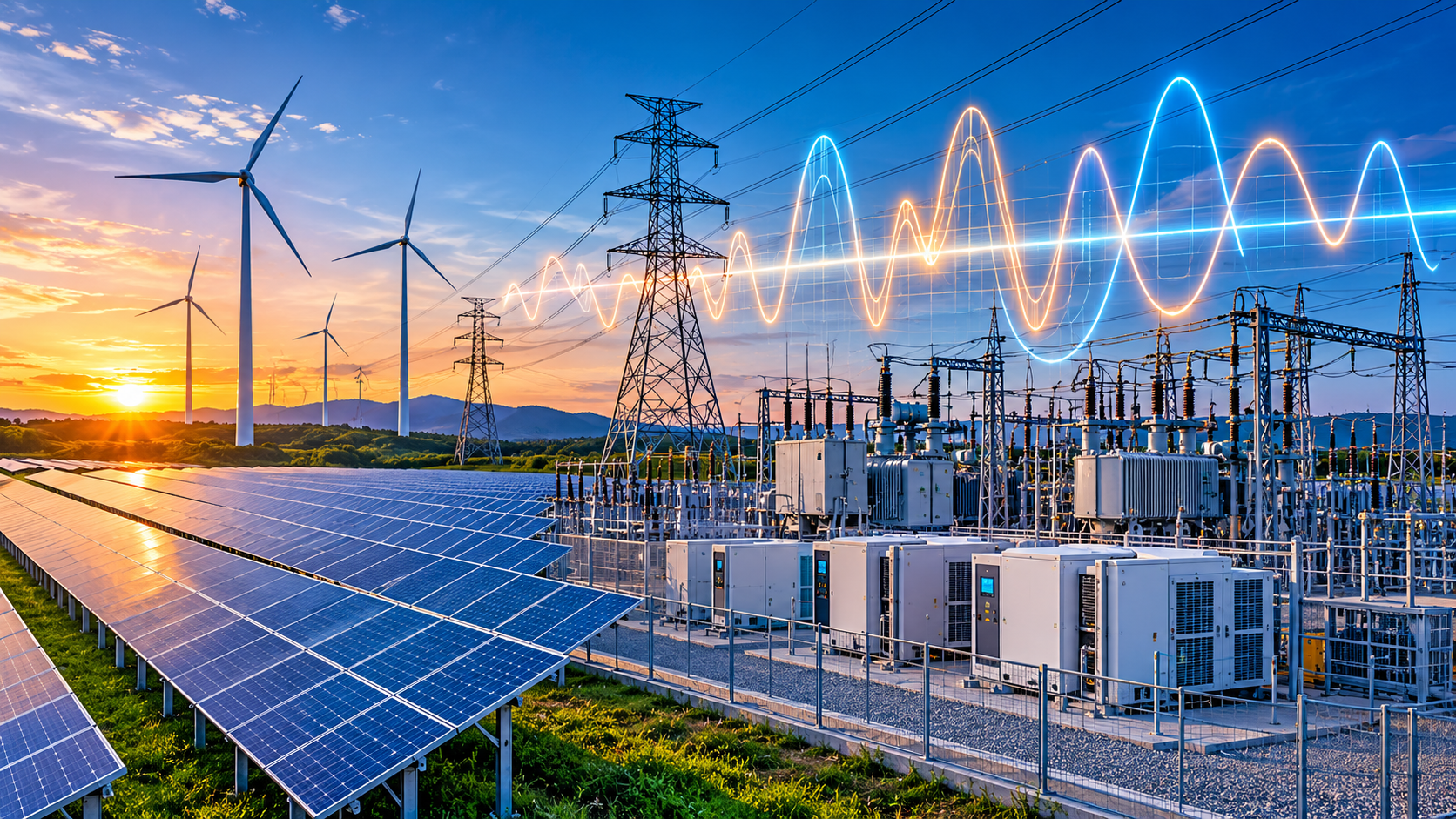
Utility-scale solar farms are designed to generate electricity efficiently, reliably, and safely over decades of operation. While solar panels, inverters, transformers, and transmission equipment often receive the most attention during project development, one critical engineering element should never be overlooked: grounding design.
A properly engineered grounding system protects people, electrical equipment, and the overall power infrastructure from dangerous fault currents, lightning strikes, and unexpected voltage differences. Without an effective grounding strategy, even a technically advanced solar facility can experience equipment damage, operational interruptions, and serious electrical hazards.
As solar installations continue to expand in capacity and complexity, grounding has become an essential part of electrical system planning. Understanding the importance of grounding design helps developers, EPC contractors, and engineering teams build safer and more dependable renewable energy facilities.
1. Understanding the Role of Grounding in Solar Power Plants
An electrical grounding system provides a controlled path for fault current to flow safely into the earth. It also helps maintain appropriate voltage references throughout an electrical installation and limits dangerous voltage differences between exposed conductive components.
In a utility-scale solar farm, grounding requirements extend across a large and diverse electrical network. Solar module mounting structures, inverter enclosures, transformer tanks, switchgear, cable trays, equipment foundations, and substation components may all require proper bonding and grounding connections.
Unlike smaller rooftop installations, utility-scale solar projects cover extensive areas and often operate with multiple inverter stations, medium-voltage collection systems, and high-voltage interconnections. This makes grounding design more challenging because electrical conditions can vary across different sections of the site.
A well-developed grounding strategy ensures that interconnected metallic components remain appropriately bonded and that electrical faults can be cleared by protective devices. It also reduces the risk of dangerous touch and step voltages, particularly around substations and equipment locations.
2. Protecting Personnel from Electrical Hazards
Personnel safety is one of the primary reasons grounding deserves careful engineering attention. Solar facilities contain energized electrical equipment, and insulation failures, damaged cables, or equipment malfunctions can introduce dangerous voltages onto normally non-energized metallic surfaces.
If an effective grounding system is not available, a person touching an energized equipment enclosure could experience a potentially life-threatening electric shock.
Two important safety considerations are touch voltage and step voltage.
Touch voltage refers to the potential difference between an object being touched and the ground beneath a person's feet. Step voltage occurs when a person stands on two points of the ground that have different electrical potentials during a fault condition.
These hazards are particularly important near inverter stations, transformers, switchyards, and substations, where substantial fault currents may enter the grounding network.
Engineers evaluate these conditions through detailed electrical grounding studies. Such studies help determine whether calculated touch and step voltages remain within acceptable safety limits under the applicable design criteria.
Depending on project requirements, engineers may incorporate ground grids, buried conductors, bonding connections, and surface materials such as crushed rock to improve personnel protection.
3. Why Soil Resistivity and Grounding Design Matter
Soil conditions have a direct influence on grounding system performance. Different soil types can have significantly different electrical resistivity values, affecting how fault current disperses into the earth.
For example, dry sandy soil, rocky terrain, and compacted ground may exhibit higher resistivity than moist or clay-rich soil. Seasonal changes in moisture and temperature can also influence measured values.
This is why grounding design should never rely on generic assumptions about soil conditions.
A professional site investigation typically includes soil resistivity testing at multiple locations and electrode spacings. These measurements help engineers develop an appropriate soil model and understand how electrical resistance varies with depth.
Based on the collected data, engineers can determine suitable grounding conductor layouts, electrode depths, grid spacing, and other design parameters.
For large solar installations, grounding design for solar farms must account for site-specific conditions rather than applying the same configuration to every project.
A carefully developed grounding network improves current distribution, supports reliable fault clearing, and helps maintain safe operating conditions throughout the facility's service life.
4. Managing Lightning Protection and Electrical Fault Currents
Utility-scale solar farms are frequently installed in open areas with extensive exposed infrastructure. Depending on their geographical location, some projects may face significant lightning exposure.
A lightning strike can introduce substantial transient currents into solar module structures, communication systems, inverter equipment, and electrical distribution networks. Without appropriate protection and grounding coordination, these events can damage sensitive electronics and disrupt plant operations.
An effective lightning protection strategy works alongside the grounding system to provide suitable paths for lightning current dissipation. This may involve air terminals, down conductors, bonding connections, surge protection devices, and properly integrated grounding electrodes.
Fault current management is equally important.
When an electrical fault occurs, the grounding network must provide a suitable current path while supporting the operation of protective devices such as circuit breakers, relays, and fuses.
Engineers must evaluate the available fault current, system configuration, conductor capacity, and protective equipment characteristics before finalizing the grounding arrangement.
Coordinating grounding and protection systems reduces the likelihood of equipment damage and helps minimize unnecessary plant outages.
5. The Importance of Detailed Solar Project Grounding Analysis
A successful grounding system requires more than installing buried copper conductors around equipment. Its performance must be evaluated using actual project conditions and relevant engineering calculations.
A comprehensive solar project grounding analysis typically considers several important factors:
-
Soil resistivity assessment: Establishes the electrical characteristics of the site and supports accurate grounding calculations.
-
Ground grid design: Determines conductor arrangement, spacing, burial depth, and electrode placement.
-
Fault current evaluation: Identifies the current levels that the grounding network may need to withstand.
-
Touch and step voltage calculations: Evaluates potential personnel exposure during electrical faults.
-
Ground potential rise: Assesses the increase in grounding system voltage relative to remote earth during fault conditions.
-
Thermal conductor sizing: Ensures grounding conductors can withstand expected fault current and clearing duration.
-
Bonding verification: Checks electrical continuity between metallic structures and grounding components.
Depending on project scope, engineers may use specialized software to model grounding networks, simulate fault conditions, and evaluate system performance.
Standards such as IEEE Std 80 and IEEE Std 81 provide important guidance for substation grounding safety and soil resistivity measurements. Other applicable requirements may include IEEE 837, IEC standards, and relevant national electrical codes.
The selected standards should reflect the project's jurisdiction, voltage levels, utility requirements, and technical specifications.
6. Building Long-Term Reliability Through Proper Grounding Design
Grounding is not simply a construction requirement; it is a long-term investment in solar plant safety and performance.
Poorly designed or installed grounding networks can contribute to corrosion-related failures, unreliable electrical connections, equipment damage, and increased maintenance requirements. These issues may become more difficult and expensive to address after a solar facility becomes operational.
A well-engineered system considers conductor material selection, corrosion exposure, mechanical protection, connection quality, and accessibility for future inspection and testing.
Grounding design should also be coordinated with other electrical engineering activities, including inverter integration, transformer specifications, substation design, cable routing, and protection coordination.
For project developers and EPC contractors, involving qualified electrical engineers early in the design process can help identify potential issues before construction begins. This approach reduces design revisions, supports construction quality, and helps prevent avoidable operational problems.
Regular inspections and grounding system testing after commissioning are equally important. They help identify deteriorating connections, corrosion, and other conditions that could affect long-term performance.
Conclusion
Grounding design is a fundamental part of utility-scale solar engineering. It protects personnel from electrical hazards, supports effective fault protection, reduces lightning-related risks, and contributes to the long-term reliability of renewable energy infrastructure.
From soil resistivity testing and ground grid calculations to touch voltage assessments and equipment bonding, every aspect of grounding requires careful engineering consideration.
For developers planning large solar installations, investing in a properly engineered grounding system from the beginning can prevent costly problems and improve overall project safety.
At Keentel Engineering, comprehensive electrical engineering solutions support the development of reliable and efficient power infrastructure. A carefully planned grounding strategy helps ensure that utility-scale solar projects are not only productive but also safe, dependable, and ready for long-term operation.

 English
 Arabic
 French
 Spanish
 Deutsch
 Turkish
 Dutch
 Italiano
 Russian
 Romaian
 Portuguese (Brazil)
 Greek