
How to Streamline Training Management With Employee Training Management Software
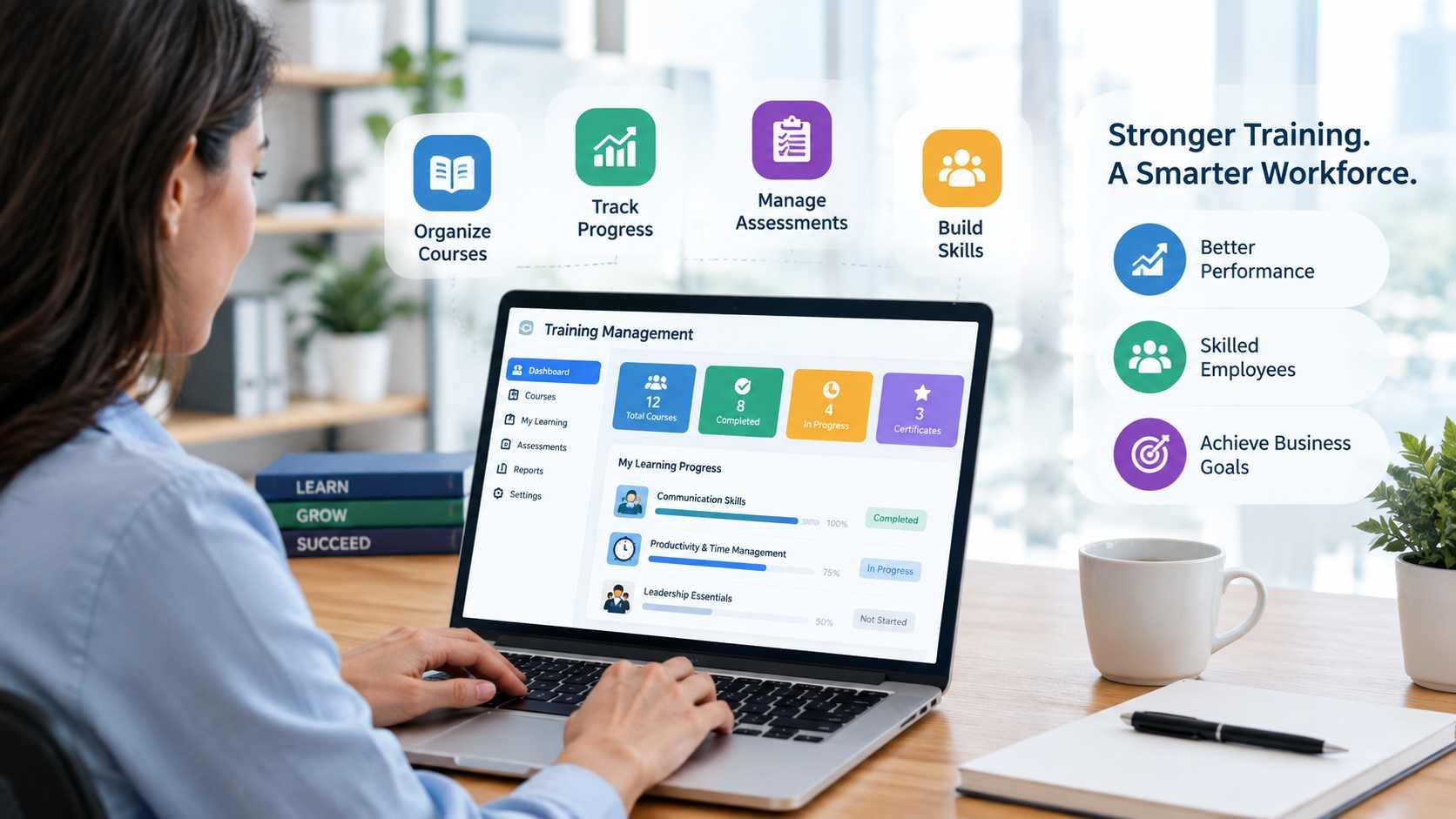
As businesses grow, employee training can quickly become difficult to organize. HR teams may have to manage courses, learning materials, assessments, completion records, and employee progress across multiple spreadsheets and platforms. When information is scattered, it becomes harder to understand who has completed training and where additional development is needed.
Understanding how to streamline training management can help organizations create a more organized and consistent learning experience. A centralized employee training management solution can bring courses, assessments, progress tracking, and training reports into one place. This makes it easier for HR professionals and managers to support employees while connecting learning activities with broader business goals.
Effective training is not simply about completing courses. It should help employees build practical skills, improve performance, and prepare for changing responsibilities. SHRM describes learning and development as a way to build skills and competencies that support both current and future organizational needs.
What Makes Training Management Difficult?
Traditional training processes often depend on manual administration. An HR manager might create a spreadsheet to track course completion, send individual reminders, collect assessment results, and manually prepare reports for management.
This approach may work for a small team, but it becomes increasingly time consuming as the workforce expands. Employees can also have different roles and learning requirements, making it difficult to provide relevant training without a structured system.
For example, imagine a growing customer service company with 100 employees. New employees need onboarding courses, existing employees require periodic skills training, and supervisors need leadership development. Managing all these requirements manually can create unnecessary administrative work and make it harder to identify employees who need additional support.
How to Streamline Training Management With Technology
Centralize Courses and Learning Materials
One practical way to simplify training is to keep learning resources in a centralized location. Instead of storing videos, documents, articles, quizzes, and course information across different platforms, businesses can organize them through a dedicated training management system.
Employees can access relevant learning materials without repeatedly asking HR for resources. Managers can also maintain a clearer view of available courses and assign learning based on specific roles or development needs.
Automate Progress Tracking
Manual progress tracking can consume significant administrative time. Training software can make it easier to monitor course completion, assessment results, and learning activity.
For example, if an employee starts a required course but does not finish it, the system can help HR identify the incomplete training. This creates a more consistent process and reduces the need to maintain multiple spreadsheets.
Automation does not replace HR involvement. Instead, it allows HR professionals to spend less time managing routine records and more time improving the overall learning experience.
Use Assessments to Measure Understanding
Completing a course does not necessarily mean an employee has understood the material. Quizzes and assessments can provide additional insight into whether employees have absorbed important concepts.
Organizations can use assessment results to identify areas where employees may need additional learning. This creates a more practical approach to development because training decisions are based on learning outcomes rather than completion alone.
The CIPD notes that workplace learning should support individuals, teams, and organizations in building skills and capability while improving performance.
Connect Training With Workforce Development
Training becomes more valuable when it connects directly with workforce development. Rather than treating training as a collection of mandatory courses, organizations can use it to address skill gaps and prepare employees for future responsibilities.
For example, a software company may notice that several team members need stronger project management skills. Instead of assigning unrelated courses, HR can introduce targeted training covering planning, communication, resource management, and project tracking.
Over time, employee training data can help managers understand which skills are developing and where additional support may be required. This creates a more structured connection between learning and business needs.
SHRM recommends aligning learning programs with organizational priorities and using performance information to help target development opportunities.
Make Training Easier for Employees to Access
A streamlined training process should also be convenient for employees. If learning resources are difficult to find or require multiple logins and manual requests, employees may be less likely to engage consistently.
A centralized platform can make learning materials easier to access and organize. Employees can follow assigned courses, review resources, complete assessments, and monitor their own progress from a single environment.
This is particularly useful for organizations with remote or distributed teams where employees may not be working in the same location or schedule.
Use Training Data to Improve Future Programs
Another important part of learning management is reviewing the results. Training reports can help organizations determine which courses are being completed, where employees are struggling, and which areas may require additional attention.
Suppose an organization discovers that employees consistently perform poorly on one section of a compliance assessment. Rather than simply repeating the same course, the training team can review the content and make it clearer or more practical.
This creates a continuous improvement cycle where training data informs future learning decisions.
Conclusion
Knowing how to streamline training management is increasingly important for organizations that want to develop employee skills without creating unnecessary administrative work. Centralized courses, automated progress tracking, assessments, and useful reporting can make training easier to manage while giving employees a clearer learning experience.
When technology is connected with meaningful employee training and development, businesses can move beyond simply checking whether courses were completed. They can create structured learning opportunities that support skills, performance, and long term workforce development.
FAQs
How can businesses streamline training management?
Businesses can streamline training management by centralizing learning materials, automating progress tracking, organizing employee courses, using assessments, and reviewing training reports through a dedicated platform.
What is a training management system?
A training management system is software that helps organizations organize employee learning activities, manage courses, track progress, monitor assessments, and maintain training records in a centralized environment.
How does training software support workforce development?
Training software can help organizations identify learning needs, organize relevant courses, monitor employee progress, and use training data to support ongoing skills development.
Why is employee training progress tracking important?
Progress tracking helps HR teams and managers understand whether employees are completing assigned learning and where additional training or support may be needed.
How can training management software reduce HR workload?
It can reduce repetitive administrative work by centralizing training information, simplifying course management, tracking employee progress, and making training data easier to review.
How can organizations measure employee training effectiveness?
Organizations can evaluate training through completion rates, assessment results, skill development, employee feedback, and changes in job performance. These measurements can help determine whether training is meeting its intended objectives.
How does employee training contribute to workforce development?
Employee training contributes to workforce development by helping workers build relevant skills, adapt to changing responsibilities, and prepare for future roles within an organization.
How can companies make employee training more engaging?
Companies can make training more engaging by providing relevant learning materials, using assessments and interactive content, offering accessible learning options, and connecting training topics to employees' actual responsibilities.

 English
 Arabic
 French
 Spanish
 Portuguese
 Turkish
 Dutch
Dutch
 Italiano
 Russian
 Romaian
 Portuguese (Brazil)
 Greek
Greek