
Book Publishing Services: A Complete Guide to Turning Your Manuscript Into a Published Book
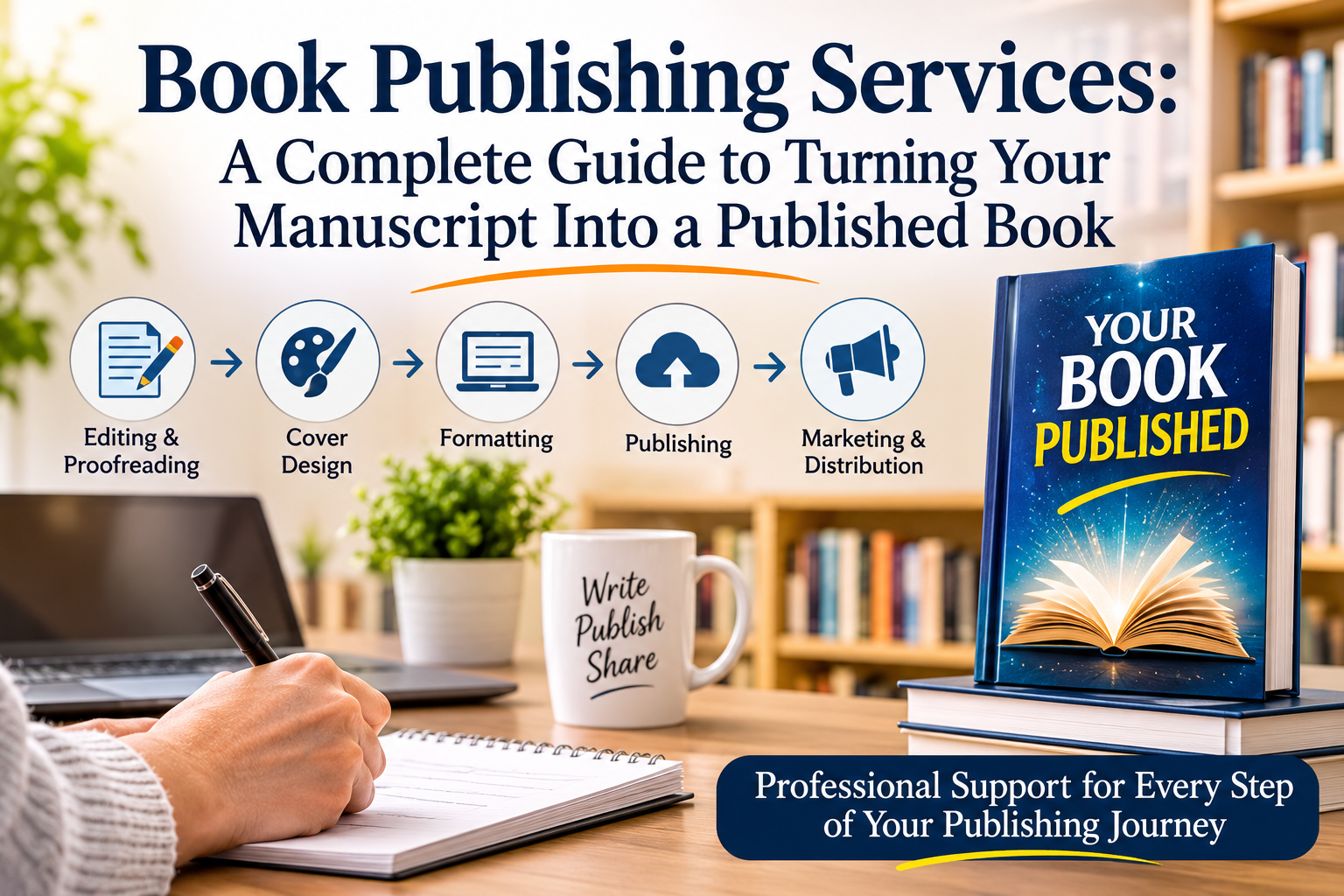
Writing a book is an exciting achievement, but completing a manuscript is only the beginning of an author's publishing journey. Once the writing process is finished, the next challenge is transforming that manuscript into a professionally presented book that readers will enjoy. From editing and formatting to cover design, distribution, and marketing, publishing involves several important steps that require careful planning and expertise.
This is where professional book publishing services become valuable. Whether you are a first-time author preparing to publish your debut novel or an experienced writer looking to expand your readership, working with publishing professionals can make the entire process more manageable.
The publishing industry has changed significantly over the years. Authors no longer have to depend exclusively on traditional publishing houses to bring their work to market. Digital publishing, independent publishing, and self-publishing platforms have created new opportunities for writers to maintain creative control while reaching readers across the world.
However, having access to publishing platforms does not automatically guarantee a successful book. Quality, presentation, and professional preparation remain essential. Understanding the publishing process and choosing the right support can help authors avoid common mistakes and produce books that meet industry expectations.
Understanding Professional Book Publishing Services
Book publishing services cover the different professional activities involved in preparing, producing, and distributing a book. These services are designed to help authors move from an unfinished or unformatted manuscript to a polished publication suitable for readers.
Depending on an author's requirements, publishing support may include:
-
Manuscript assessment and development.
-
Professional editing and proofreading.
-
Book cover design.
-
Interior formatting and typesetting.
-
ISBN and publishing guidance.
-
Ebook conversion and formatting.
-
Print-on-demand preparation.
-
Publishing platform assistance.
-
Distribution guidance.
-
Book launch and marketing support.
Not every author requires every service. Someone publishing a short ebook may need formatting, proofreading, and cover design, while an author preparing a printed novel may require a more comprehensive publishing package.
The main objective is to ensure that every element of the book is professionally prepared before publication. A well-written manuscript deserves a presentation that reflects the effort invested in creating it.
Why Authors Need Professional Publishing Support
Many writers initially believe that publishing a book simply involves uploading a document to an online platform. Although digital platforms have made publishing more accessible, the process involves considerably more than submitting a manuscript.
A book containing spelling mistakes, inconsistent formatting, an unsuitable cover, or poorly structured chapters can create a disappointing reading experience. Even an excellent story may struggle to attract readers if its presentation does not meet their expectations.
Professional publishing support helps authors address these challenges.
1. Improving Manuscript Quality
The quality of a manuscript has a significant influence on the reader's experience. Grammar errors, punctuation mistakes, awkward sentences, and inconsistencies can distract readers from the actual content.
Professional editors and proofreaders carefully examine manuscripts to identify areas that need improvement. Depending on the editing level, they may address sentence structure, readability, clarity, consistency, grammar, and punctuation.
Developmental editing can also help authors strengthen the organisation, pacing, character development, and overall structure of their books.
Investing in editing before publication helps ensure that the final manuscript communicates the author's ideas effectively.
2. Creating an Attractive Book Cover
A book cover is often the first thing potential readers notice. In online marketplaces, where readers frequently browse through hundreds of titles, an attractive and relevant cover can help a book stand out.
Professional cover design considers several factors, including:
-
The book's genre and target audience.
-
Typography and font selection.
-
Colour combinations.
-
Image quality and visual composition.
-
Author branding.
-
Front, back, and spine requirements for print editions.
A successful cover should communicate the book's subject, atmosphere, and intended audience. A thriller, romance novel, business guide, and children's book all require different visual approaches.
Professional design helps ensure that the cover looks appealing while remaining appropriate for the book's genre.
3. Ensuring Professional Book Formatting
Formatting is another essential part of the publishing process. A manuscript that looks organised in Microsoft Word may not automatically display correctly as a printed book or ebook.
Professional formatting involves arranging chapter headings, paragraphs, page numbers, margins, spacing, fonts, and other layout elements.
For ebooks, formatting must also account for different screen sizes and reading devices. A properly formatted ebook should provide a comfortable reading experience on smartphones, tablets, computers, and dedicated ebook readers.
For printed books, layout consistency is especially important because the final document must meet the technical specifications of the chosen printing service.
Traditional Publishing vs Self-Publishing
One of the most important decisions authors face is choosing between traditional publishing and self-publishing. Both approaches offer opportunities, but they work differently.
Traditional Publishing
Traditional publishing generally involves submitting a manuscript to a literary agent or publishing house. If the work is accepted, the publisher may manage editing, production, distribution, and promotional activities.
The publisher usually makes important decisions about the production and commercial positioning of the book. In return, authors may receive an advance, royalties, or both, depending on the publishing agreement.
However, traditional publishing can be competitive. Many manuscripts are rejected, and the process of securing representation and a publishing contract may take considerable time.
Self-Publishing
Self-publishing allows authors to publish their books independently, often through online platforms and print-on-demand providers.
This approach gives writers greater control over their manuscripts, cover designs, pricing, publishing schedules, and marketing decisions.
The author is generally responsible for arranging editing, formatting, design, and other production requirements. Professional book publishing services can provide support for these tasks without requiring authors to surrender ownership of their creative work.
Self-publishing is particularly attractive to writers who want flexibility and direct involvement in their publishing decisions.
Which Option Is Better?
There is no single answer that works for every author.
Traditional publishing may suit writers who want to pursue established publishing networks and are comfortable with a competitive submission process. Self-publishing may be more suitable for those who value independence, flexibility, and control.
The best approach depends on an author's goals, budget, experience, publishing timeline, and target readership.
The Essential Stages of Publishing a Book
Understanding the publishing process helps authors make better decisions and prepare their manuscripts effectively.
Step 1: Complete and Review Your Manuscript
Before approaching a publisher or publishing service provider, ensure that your manuscript is complete.
Read the entire work carefully and check whether the chapters follow a logical structure. Identify sections that may need rewriting, additional information, or clarification.
Although professional editors can identify problems, authors should provide the strongest possible draft before beginning the editing process.
Step 2: Arrange Professional Editing and Proofreading
Editing should take place before the final formatting stage. Depending on the manuscript, authors may need developmental editing, line editing, copyediting, or proofreading.
Developmental editing focuses on the overall structure and content. Line editing improves language, style, and readability. Copyediting addresses grammar, consistency, and technical accuracy, while proofreading identifies remaining errors in the final text.
Selecting the appropriate editing service helps ensure that the manuscript is ready for publication.
Step 3: Design the Book Cover
After establishing the manuscript's direction, authors can work on a suitable cover design.
A professional designer will consider the book's genre, subject, audience, and intended publishing format. The final cover should be visually appealing and technically suitable for digital or print publication.
It is also important to ensure that all images, illustrations, and fonts are properly licensed or otherwise legally usable.
Step 4: Format the Interior
Interior formatting transforms the edited manuscript into a publication-ready document.
For printed books, this includes page dimensions, margins, headers, footers, page numbering, chapter layouts, and typography.
For ebooks, the formatting process focuses on compatibility, navigation, chapter structure, and responsive text display.
Proper formatting makes the book easier to read and gives it a professional appearance.
Step 5: Prepare the Book for Publication
Once editing, design, and formatting are complete, the book must be prepared for the selected publishing platform.
This may involve checking file requirements, selecting an appropriate book description, choosing relevant categories, reviewing metadata, and arranging ISBN registration where required.
Authors should carefully review the final files before approving publication. Checking the digital preview or printed proof can help identify layout problems that might otherwise go unnoticed.
Step 6: Choose Distribution Channels
Distribution determines how readers will access the published book.
Ebooks can be distributed through digital bookstores, subscription services, and other online platforms. Printed books may be sold through online retailers, independent bookshops, or print-on-demand networks.
The right distribution strategy depends on the author's audience and publishing objectives.
Step 7: Plan the Book Launch
Publishing a book is an important milestone, but readers need opportunities to discover it.
Authors can build awareness through social media, email newsletters, author websites, interviews, reader communities, and relevant online publications.
A planned launch can help generate early interest, encourage reviews, and establish the author's presence in the market.
Why Ebook Publishing Is Becoming Increasingly Popular
Digital reading has created new opportunities for authors who want to reach audiences without relying exclusively on printed books.
Ebooks offer several advantages, including convenience, accessibility, and flexible distribution. Readers can purchase and access digital titles from different locations, often without waiting for physical delivery.
For authors, digital publishing can reduce some production and distribution barriers. It also makes it easier to update certain editions when corrections or revisions are necessary.
However, an ebook still requires professional preparation. Incorrect formatting, missing navigation links, inconsistent headings, and poor cover presentation can negatively affect the reading experience.
Authors publishing digitally should consider:
-
EPUB or other platform-compatible file preparation.
-
Responsive formatting for different devices.
-
A clickable table of contents.
-
Consistent chapter headings.
-
Properly displayed images and illustrations.
-
Accurate book descriptions and metadata.
-
A professional digital cover.
Writers exploring digital publishing opportunities in the UK can learn more about ebook publishers in the UK and the professional support available for preparing their manuscripts for publication.
How to Choose the Right Book Publishing Services
Choosing a publishing partner is an important decision because the quality of professional support can influence the final product.
Authors should take time to evaluate available providers rather than selecting a service based solely on price.
Review the Range of Services
Start by identifying what a provider offers. Some companies focus primarily on editing or formatting, while others provide broader publishing assistance.
If you need several services, working with a provider that can coordinate multiple stages may make the process more convenient.
Examine Previous Work
Look for examples of previously published or professionally prepared books. Portfolio samples can help you evaluate cover design, formatting quality, and overall presentation.
Where available, reviews and testimonials can also provide useful information about customer experiences.
Understand the Pricing Structure
Publishing costs vary according to manuscript length, editing requirements, design complexity, and the level of assistance required.
Request a clear breakdown of the services included in a quotation. Ask whether revisions, additional formatting, or other production tasks involve separate charges.
A transparent pricing structure helps authors plan their budgets and avoid unexpected expenses.
Check Ownership and Rights
Authors should understand who owns the manuscript, copyright, and publishing rights.
Before agreeing to any publishing arrangement, carefully review the contract. Pay attention to exclusivity clauses, royalty arrangements, licensing terms, distribution rights, and termination conditions.
A professional service arrangement should clearly explain what the author is paying for and which rights remain with the author.
Look for Clear Communication
Publishing is a collaborative process. Authors need a provider that communicates clearly, explains technical requirements, and responds to questions.
Good communication can prevent misunderstandings and help ensure that the final publication reflects the author's expectations.
Common Publishing Mistakes Authors Should Avoid
Even talented writers can make mistakes when preparing their first book for publication. Understanding these challenges can help authors protect their investment.
Skipping professional editing: Authors sometimes publish their manuscripts immediately after completing the writing process. However, self-review alone may not identify every grammatical or structural problem.
Using an unsuitable cover: A poorly designed cover can make a book appear unprofessional or fail to attract its intended audience.
Ignoring formatting requirements: Different publishing platforms have specific technical requirements. Submitting incorrect files may cause delays or display problems.
Choosing services without research: Selecting a provider without reviewing its experience, pricing, or terms can lead to disappointing results.
Neglecting book descriptions: A compelling description helps potential readers understand what a book offers. It should communicate the subject, central themes, and benefits without giving away unnecessary details.
Expecting instant sales: Publishing does not automatically create demand. Authors need realistic expectations and a consistent promotional strategy.
Overlooking the target audience: A book should be positioned for the readers most likely to appreciate its subject and style. Understanding the audience can influence design, categories, pricing, and marketing decisions.
The Importance of Book Marketing After Publication
Publishing is not the final stage of an author's journey. Once a book becomes available, marketing helps connect it with potential readers.
An effective marketing strategy does not necessarily require an enormous budget. Authors can begin with practical activities that gradually build awareness.
Build an Author Website
An author website provides a central location where readers can discover books, learn about the writer, and find purchasing information.
It can also support long-term visibility through useful articles, search engine optimisation, and email subscriptions.
Use Social Media Strategically
Social media platforms provide opportunities to share book announcements, writing insights, character introductions, excerpts, and behind-the-scenes content.
Instead of promoting a book constantly, authors can focus on building genuine relationships with readers and participating in relevant communities.
Encourage Honest Reader Reviews
Reader reviews can help potential buyers understand a book's strengths and subject matter.
Authors can encourage readers to leave honest feedback after finishing a book, without offering incentives that violate the relevant platform's policies.
Create Relevant Content
Blog articles, interviews, newsletters, and guest posts can introduce an author's work to new audiences.
Content should provide genuine value rather than simply repeating sales messages. For example, a writer publishing a historical novel could share research insights, while an author of a business book could publish practical advice related to the book's subject.
Maintain Consistent Promotion
A successful book launch is valuable, but continued promotion helps maintain visibility.
Authors can plan seasonal campaigns, participate in relevant events, collaborate with other writers, and update their websites with new information.
The Value of Professional Publishing for First-Time Authors
First-time authors often face uncertainty because they may not understand the technical and commercial aspects of publishing.
They may have questions about ISBNs, ebook formats, cover dimensions, distribution channels, royalties, and publishing agreements.
Professional guidance can make these decisions easier to understand.
Working with experienced publishing specialists also allows authors to focus on their creative goals while receiving assistance with the practical requirements of producing a book.
This does not mean that authors must hand over every decision. A good publishing process should involve collaboration, allowing writers to remain informed and retain appropriate control over their work.
For someone publishing a first novel, memoir, poetry collection, children's book, or nonfiction guide, professional assistance can provide valuable confidence throughout the journey.
The Future of the Publishing Industry
The publishing industry continues to evolve as technology changes how books are created, distributed, and consumed.
Digital bookstores, print-on-demand technology, independent publishing platforms, and new marketing tools have expanded opportunities for writers.
Authors can now reach international audiences more easily and experiment with different publishing formats. Audiobooks, ebooks, and printed editions can also complement one another as part of a broader publishing strategy.
At the same time, the growing number of published titles makes professional quality increasingly important.
Readers have many options, and books must compete for attention. Clear writing, attractive covers, accessible formatting, and effective positioning can help authors present their work professionally.
Technology may simplify certain publishing tasks, but thoughtful editorial decisions and a strong understanding of readers remain essential.
Conclusion: Give Your Manuscript the Professional Presentation It Deserves
Publishing a book involves much more than completing a manuscript and making it available online. Every stage, from editing and proofreading to formatting, cover design, distribution, and marketing, contributes to the final reading experience.
Professional book publishing services can help authors navigate these stages with greater confidence and ensure that their work is prepared to meet readers' expectations.
Whether you are planning to publish a debut novel, a personal memoir, an educational guide, or a digital ebook, investing in quality preparation can make a meaningful difference.
The most important step is to choose publishing support that aligns with your goals, respects your creative vision, and provides clear guidance throughout the process.
Your manuscript represents time, creativity, and dedication. Give it the professional attention it deserves, and take the next step towards sharing your work with readers around the world.

 English
 Arabic
 French
 Spanish
 Portuguese
 Deutsch
 Turkish
 Dutch
 Italiano
 Russian
 Romaian
 Portuguese (Brazil)