
Author Website Design: Build Your Online Presence and Connect with Readers Worldwide
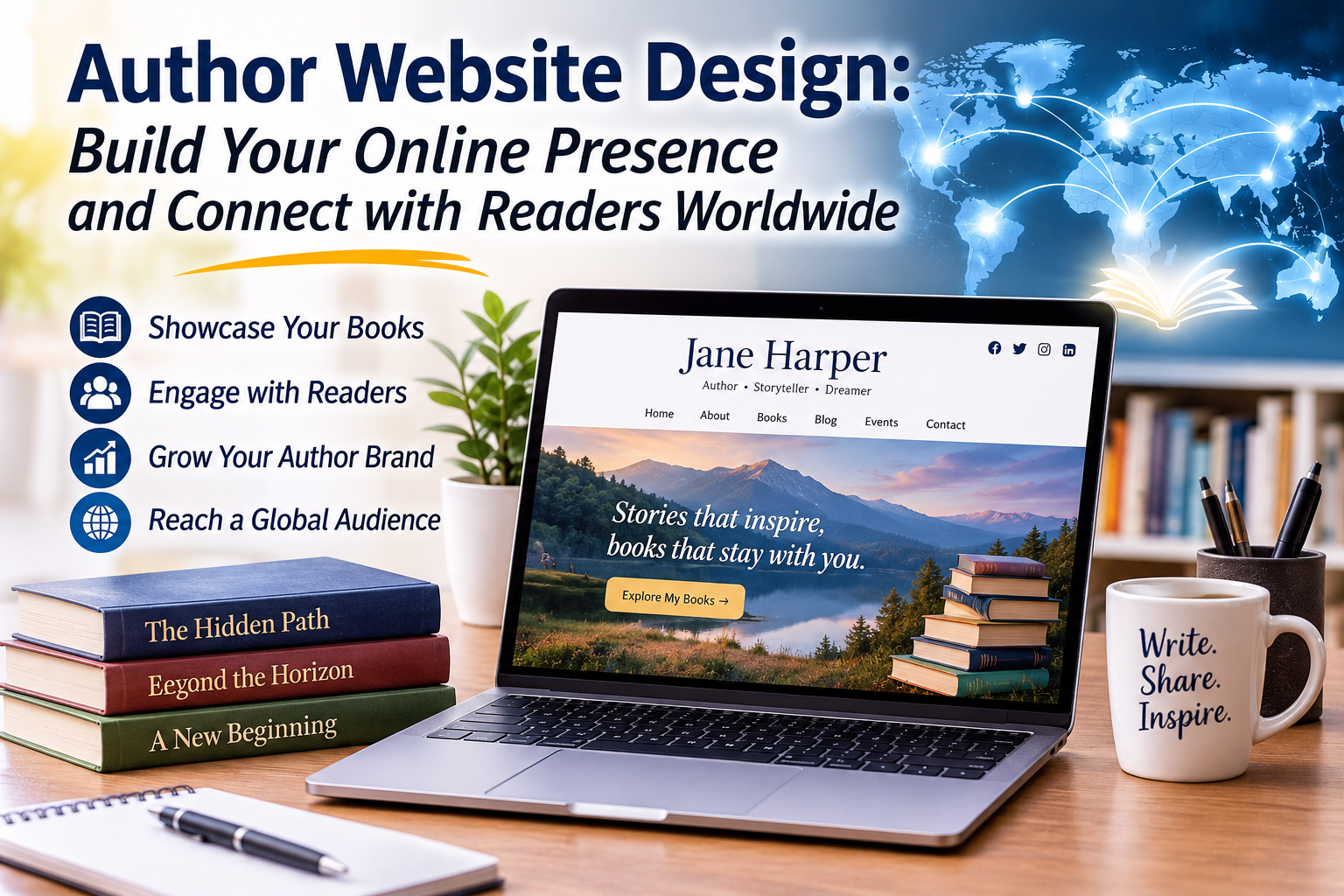
The publishing industry has changed dramatically over the past decade. Today, becoming a successful author involves more than writing an excellent book and finding the right publishing opportunity. Writers must also establish a strong online presence, connect with readers, promote their publications, and build a recognisable personal brand. One of the most effective ways to achieve these goals is through professional author website design.
An author website serves as a central online destination where readers, publishers, literary agents, and potential business partners can discover your work. It provides an opportunity to showcase your books, share your writing journey, publish updates, and communicate directly with your audience. Whether you are a first-time novelist, an experienced writer, or a professional author with several published titles, having a well-designed website can make a significant difference to your career.
However, creating an effective author website requires more than selecting an attractive template and uploading a few photographs. It involves understanding your audience, developing a consistent brand identity, organising information, and creating an enjoyable browsing experience.
This is where professional author website design services can help transform your creative identity into a polished digital presence.
1. Why Every Author Needs a Professional Website
In a competitive publishing environment, authors need reliable ways to distinguish themselves from thousands of other writers. Social media platforms can help generate interest, but they do not provide complete control over your online identity.
A personal author website gives you a dedicated space to present your work according to your preferences. Unlike social media profiles, your website allows you to control its appearance, content, structure, and functionality.
There are several reasons why every serious author should consider investing in a professional website.
Establishing credibility: A professionally designed website makes your author brand appear more established. When readers search for your name, they can find your biography, publications, achievements, and contact information in one convenient location.
Showcasing published books: Your website can feature your entire book collection, including descriptions, cover images, reader reviews, and purchasing links.
Connecting with readers: Features such as contact forms, newsletters, blogs, and social media integrations help you build meaningful relationships with your audience.
Promoting future publications: You can announce upcoming releases, share exclusive previews, and create excitement around your next book.
Building long-term visibility: Search engine optimisation can help your website appear when potential readers search for your name, books, or related literary topics.
A professional website is therefore not simply an online portfolio. It is a valuable marketing resource that can support your author career over the long term.
2. What Makes Effective Author Website Design?
A successful author website should communicate your personality while making it easy for visitors to explore your work. Its design should reflect your writing style, genre, professional identity, and target audience.
For example, a fantasy novelist might prefer imaginative visuals, atmospheric backgrounds, and creative typography. A business author may benefit from a clean, professional layout that highlights expertise, publications, and speaking opportunities.
Although different authors have different requirements, several elements are essential for effective website design.
Clean and Attractive Layout
The first impression matters. When visitors arrive at your website, they should immediately understand who you are and what you write.
A clean layout, balanced spacing, readable typography, and high-quality images can make your website more appealing. Avoid overcrowding pages with unnecessary graphics, excessive animations, or lengthy blocks of text.
Easy Navigation
Visitors should be able to locate important information without struggling.
Your main navigation menu should include essential sections such as:
-
Home
-
About the Author
-
Books
-
Blog or News
-
Events
-
Contact
Depending on your requirements, you may also include testimonials, media appearances, press kits, and a dedicated book launch section.
Consistent Branding
Your website should have a recognisable visual identity. Consistent colours, fonts, imagery, and messaging help establish a professional author brand.
Your branding should also complement your book covers and promotional materials. This creates a consistent experience whenever readers encounter your work online.
Mobile-Friendly Design
Many readers browse websites through smartphones and tablets. A responsive website automatically adjusts its layout to different screen sizes.
Mobile-friendly author website design ensures that visitors can comfortably read your content, view book covers, navigate menus, and complete contact forms regardless of the device they use.
3. Essential Pages Every Author Website Should Include
A well-structured website provides visitors with all the information they need to understand your work and connect with you.
Here are some important pages to consider.
Homepage
Your homepage is often the first point of contact between you and potential readers. It should communicate your author identity and introduce your most important publications.
Consider including:
-
A professional author photograph.
-
A short introduction.
-
Your latest or most popular book.
-
Links to your featured publications.
-
Recent announcements.
-
A newsletter subscription option.
-
Clear calls to action.
Your homepage should make it easy for visitors to discover more about you.
About the Author Page
Readers are often interested in the people behind their favourite books. An engaging author biography helps visitors understand your background, inspiration, experience, and creative interests.
You can share your writing journey, literary achievements, educational background, and personal motivations.
Keep your biography authentic and interesting. Instead of presenting a lengthy list of achievements, explain what makes your journey meaningful.
Books and Publications Page
This is one of the most important sections of an author website.
Create a dedicated page for each publication containing its title, cover image, synopsis, genre, publication date, and available formats.
You can also include links to retailers where readers can purchase your books.
If you have published multiple titles, organise them into categories or series so visitors can easily explore your collection.
Blog and News Section
A blog allows authors to publish useful information, share personal insights, and keep readers updated.
You might write about your creative process, upcoming publications, writing advice, literary events, book recommendations, and behind-the-scenes experiences.
Regularly publishing relevant articles can also create additional opportunities for search engine visibility.
Contact Page
Make it easy for readers, publishers, journalists, and event organisers to reach you.
Your contact page can include an enquiry form, professional email address, social media links, and relevant business information.
A straightforward contact process encourages communication and helps you build professional relationships.
4. How SEO Improves Your Author Website's Visibility
Having an attractive website is important, but readers must also be able to discover it.
Search engine optimisation (SEO) helps improve your website's visibility in search engine results. When someone searches for your author name, book title, or relevant literary topics, an optimised website has a better opportunity to appear.
SEO should be considered during the website design process rather than added as an afterthought.
Conduct Keyword Research
Keyword research helps identify the phrases your potential readers are searching for.
For example, an author might target relevant terms such as:
-
Author website design
-
Professional author website
-
Author web design services
-
Book author website
-
Fiction author website
-
Independent author website
-
Author branding services
Use these phrases naturally in appropriate page titles, headings, descriptions, and website content.
Avoid excessive keyword repetition because it can make your content difficult to read.
Optimise Page Titles and Meta Descriptions
Every important page should have a unique title and meta description that accurately explains its content.
For example, your homepage title might include your author name and primary writing genre.
A compelling meta description can encourage searchers to visit your website by explaining what they will find there.
Use Descriptive Image Alt Text
Book covers, author photographs, and promotional images contribute to the visual appeal of your website.
Adding meaningful alternative text helps describe these images to visitors using screen readers and provides search engines with additional context.
Improve Website Loading Speed
Slow websites can frustrate visitors and make it difficult for them to explore your content.
Optimise image sizes, use efficient website hosting, minimise unnecessary scripts, and implement appropriate caching techniques.
A faster website provides a better browsing experience, particularly for mobile users.
Create Valuable Content
Publishing informative blog articles can help attract visitors interested in your writing niche.
For instance, a historical fiction author could publish articles about historical research, character development, and the historical periods featured in their novels.
The key is to create genuinely useful content rather than publishing articles simply to include keywords.
5. Building an Author Brand Through Website Design
Your author brand represents how readers recognise and remember you.
It includes your writing personality, professional reputation, visual identity, communication style, and the experience people associate with your books.
A carefully designed website helps bring all these elements together.
Start by identifying what makes your writing distinctive. Consider your preferred genres, recurring themes, target readership, and the qualities you want readers to associate with your name.
For example, a children's author may want a friendly, colourful, and imaginative website. A thriller writer might prefer a darker visual style that creates suspense and curiosity.
Your website should reflect these qualities consistently.
Professional photographs, recognisable book covers, well-written biographies, and engaging content all contribute to a stronger author identity.
It is also important to maintain consistency across your website, social media profiles, email newsletters, and other promotional channels.
When readers encounter the same visual identity and messaging across different platforms, your author brand becomes easier to recognise.
6. Important Features That Make an Author Website More Engaging
Modern websites offer numerous features that can improve visitor engagement and encourage readers to return.
Here are some useful additions to consider.
Email Newsletter Integration
An email newsletter allows you to communicate directly with interested readers.
Visitors can subscribe to receive publication announcements, exclusive content, event invitations, and occasional updates.
Unlike social media followers, an email subscriber list gives you a direct communication channel that is not dependent on social media algorithms.
Online Bookstore
Authors who want to sell books directly through their websites can consider adding e-commerce functionality.
An online bookstore can include product descriptions, book images, secure payment options, and order management features.
Before launching an online store, consider payment processing, fulfilment arrangements, delivery costs, and applicable consumer protection requirements.
Reader Testimonials and Reviews
Positive reader feedback can help visitors understand how others have responded to your work.
You can feature selected reviews, testimonials, or media coverage on relevant pages.
Always ensure that reviews are genuine and used with appropriate permission.
Social Media Integration
Social media links make it easier for readers to follow your updates and engage with your content.
You can connect your website to platforms where your audience is active, such as Instagram, Facebook, LinkedIn, or other relevant channels.
Avoid adding unnecessary social media widgets that slow down your website or distract visitors from your books.
Events and Appearances
If you participate in book fairs, literary festivals, workshops, or author interviews, create a dedicated events section.
This provides readers with an easy way to discover upcoming appearances and learn more about your professional activities.
7. Why Authors Should Invest in Professional Website Design Services
Although website builders provide convenient starting points, creating a professional author website involves several technical and creative considerations.
Authors may find it difficult to manage website structure, visual branding, responsive layouts, SEO settings, content organisation, and technical maintenance while concentrating on their writing projects.
Professional author website design services can simplify this process.
Experienced designers understand how to combine visual presentation with practical functionality. They can develop a website that reflects your identity while providing a smooth experience for visitors.
Professional support can also help with:
-
Custom website layouts.
-
Author branding and visual identity.
-
Book showcase pages.
-
Responsive website development.
-
Search engine optimisation.
-
Blog integration.
-
Contact forms and newsletter features.
-
E-commerce functionality.
-
Website formatting and final testing.
Working with professionals also gives you an opportunity to discuss your requirements, review design concepts, and provide feedback throughout the development process.
The result should be a website that represents your creative vision rather than a generic online template.
8. Choosing the Right Author Website Design Company
Selecting a suitable website design provider is an important decision. Your website represents your professional identity, so it deserves careful planning and attention.
Before choosing a company, consider the following factors.
Industry understanding: Look for a provider that understands the publishing industry and the specific requirements of authors.
Portfolio and experience: Review previous projects to assess design quality, functionality, and creative approach.
Customisation: Your website should reflect your personality and writing style rather than looking identical to every other author's website.
SEO knowledge: Ask whether the provider considers search engine optimisation during website development.
Communication: A good design process should include clear communication, opportunities to share feedback, and agreement on project requirements.
Ongoing support: Understand how website updates, technical assistance, and future improvements will be handled.
You should also clarify website ownership, domain registration, hosting arrangements, maintenance costs, and access to administrative accounts before starting the project.
Making an informed decision can help prevent unnecessary complications later.
9. How Wright Book Associates Helps Authors Build Their Online Presence
Creating an effective online identity is an important part of developing a successful writing career. However, many authors need professional guidance to turn their ideas into a well-structured and visually appealing website.
Wright Book Associates provides dedicated author website design services to help writers establish a professional digital presence.
The aim is to create websites that reflect each author's personality, showcase their publications, and provide readers with an engaging browsing experience.
The process begins with understanding the author's requirements, preferred design style, writing genre, and professional objectives.
The team then works on developing a tailored website concept for review and approval. Once the initial design is approved, the website moves through further development, editing, refinement, and final formatting.
This collaborative approach allows authors to share their ideas and provide feedback throughout the project.
Services can support important website elements such as:
-
Customised author website layouts.
-
Professional author profiles.
-
Book showcase sections.
-
Reader engagement features.
-
Website content and formatting.
-
Search engine optimisation.
-
Final website presentation and launch support.
Whether you are preparing to publish your first book or expanding the online presence of an established author brand, having a professionally designed website can help you present your work more effectively.
If you are looking to establish your digital identity, explore the author website design services offered by Wright Book Associates and discover how professional website development can support your writing journey.
10. Common Author Website Design Mistakes to Avoid
Even a visually attractive website can struggle to engage visitors if important design and usability considerations are overlooked.
Here are some common mistakes authors should avoid.
Overcomplicated navigation: Too many menu options can confuse visitors. Keep navigation simple and organise related information logically.
Poor-quality images: Blurry photographs and low-resolution book covers can make your website appear unprofessional. Use clear, appropriately sized images.
Outdated information: An author website should be maintained regularly. Update publication details, upcoming events, contact information, and recent achievements.
Ignoring mobile users: A website that looks excellent on a desktop may be difficult to use on a smartphone. Always test different screen sizes.
Weak calls to action: Visitors should know what to do next. Encourage them to explore your books, subscribe to your newsletter, purchase a publication, or contact you.
Neglecting website security: Use HTTPS, keep software updated, maintain secure passwords, and arrange appropriate website backups.
Publishing thin content: Every page should provide meaningful information. Avoid creating unnecessary pages that offer little value to readers.
By avoiding these mistakes, authors can create a more professional and enjoyable online experience.
11. The Future of Author Website Design
The digital publishing landscape continues to evolve, and author websites are becoming increasingly important as readers discover books through different online channels.
Modern website design is moving towards more personalised experiences, faster browsing, accessible interfaces, and better integration with digital marketing tools.
Artificial intelligence is also creating new opportunities for website personalisation, content organisation, and customer interaction. However, technology should support an author's identity rather than replace the human creativity that makes their work unique.
Accessibility is another important consideration. Clear typography, readable colour combinations, descriptive image text, keyboard-friendly navigation, and well-organised content help make websites more inclusive.
Authors should also consider how their websites can grow alongside their careers. A website that begins with a simple biography and one book should be capable of expanding to accommodate additional publications, interviews, events, and new business opportunities.
Investing in a flexible and professionally structured website today can make future updates easier.
Conclusion: Give Your Author Brand a Professional Digital Home
Writing a remarkable book is an achievement worth celebrating, but helping readers discover that book requires a thoughtful online presence.
Professional author website design gives writers an opportunity to showcase their publications, communicate their personalities, establish credibility, and develop lasting relationships with readers.
From attractive homepages and informative author biographies to SEO-friendly content, online bookstores, and newsletter integrations, every element contributes to creating a valuable digital destination.
Whether you are a debut novelist, an independent publisher, or an experienced non-fiction writer, a professionally designed website can become one of the most useful tools in your author career.
Wright Book Associates understands the importance of presenting an author's creative identity professionally. With tailored website design solutions and a collaborative development process, the company helps authors turn their online vision into a polished digital presence.
Your stories deserve to be discovered. Give your writing career a stronger online foundation with professional author website design and start building meaningful connections with readers around the world.

 English
 Arabic
 French
 Spanish
 Deutsch
 Turkish
 Dutch
 Italiano
 Russian
 Romaian
 Portuguese (Brazil)
 Greek