
Prior Authorization in Radiology Billing: How to Reduce Denials

Prior authorization is an important part of the radiology revenue cycle. Before performing certain imaging procedures, radiology practices must obtain approval from a patient's insurance company to confirm that the requested service meets the payer's coverage requirements. Missing approvals, incorrect procedure codes, and incomplete clinical documentation can lead to claim denials, delayed payments, and additional administrative work.
Managing prior authorization in radiology billing requires coordination between scheduling teams, ordering physicians, authorization specialists, and billing professionals. A well-organized process helps radiology practices avoid preventable errors, improve claim accuracy, and maintain consistent reimbursements.
In this guide, we'll explain common authorization challenges, ways to prevent denials, and practical steps to improve the radiology authorization process.
What Is Prior Authorization in Radiology Billing?
Prior authorization is an approval process in which an insurance company reviews a requested medical service before it is performed. For radiology practices, this commonly applies to advanced imaging procedures such as MRI, CT scans, PET scans, and certain nuclear medicine studies.
Insurance companies use authorization requirements to evaluate whether an imaging procedure meets their medical necessity and coverage guidelines.
For example, a physician may order an MRI of the lumbar spine for a patient experiencing persistent back pain. Depending on the insurance plan, the radiology facility may need to submit clinical notes, previous treatment information, and the appropriate procedure and diagnosis codes before receiving approval.
Obtaining authorization does not guarantee payment. The service must still meet the payer's coverage, documentation, coding, and claim submission requirements.
Which Radiology Procedures Commonly Require Prior Authorization?
Authorization requirements vary by insurance company, patient plan, and imaging procedure. However, several advanced imaging services commonly require prior approval.
|
Imaging procedure |
Examples |
|
MRI |
Brain, spine, joints, and musculoskeletal imaging |
|
CT scans |
Chest, abdomen, pelvis, and CT angiography |
|
PET scans |
PET/CT imaging for oncology evaluations |
|
Nuclear medicine |
Cardiac imaging and bone scans |
|
Advanced diagnostic imaging |
Selected specialized imaging procedures |
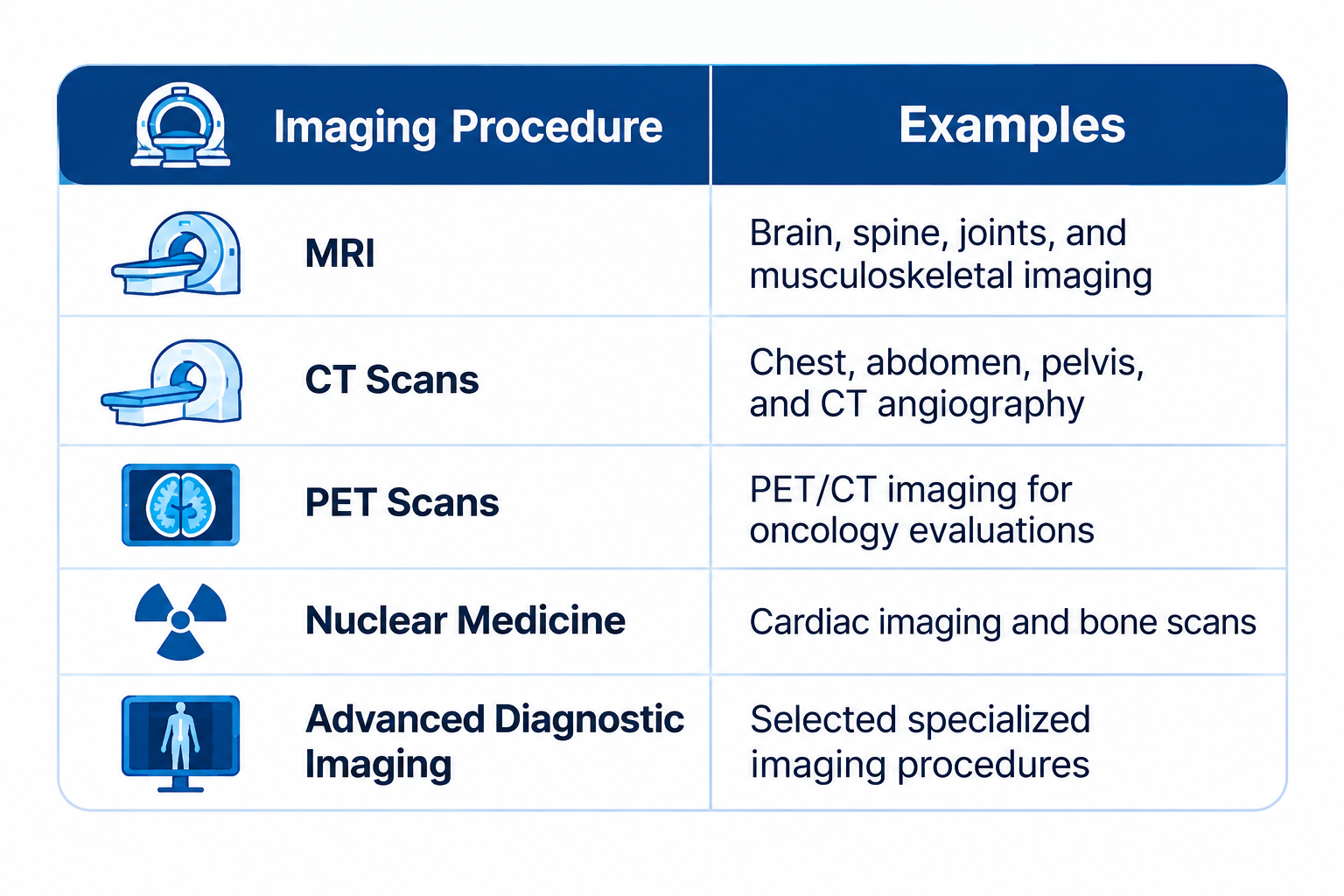
Radiology practices should verify payer requirements before scheduling or performing these services. Checking authorization rules early helps prevent unnecessary delays and avoidable denials.
Common Reasons for Radiology Prior Authorization Denials
Understanding why authorization requests are rejected helps billing teams identify problems before they affect reimbursement.
1. Missing or Incomplete Authorization
One common reason for denial is performing an imaging procedure without obtaining the required approval. This can happen when authorization responsibilities are unclear or staff overlooksoverlook payer requirements during scheduling.
2. Incorrect CPT Codes
Submitting an authorization request with an incorrect procedure code can create a mismatch between the approved service and the imaging procedure performed.
Radiology CPT codes must accurately represent the requested examination, including relevant technical details such as contrast usage when applicable.
3. Insufficient Medical Necessity Documentation
Insurance companies may reject authorization requests when clinical documentation does not adequately support the requested imaging service.
For example, missing symptoms, incomplete medical history, or insufficient information about previous treatments may prevent the payer from establishing medical necessity.
4. Expired or Invalid Authorization
Authorizations generally have specific validity periods and may include limitations on approved services, locations, or units. Performing an imaging procedure after approval expires can result in reimbursement problems.
5. Mismatch Between Approved and Performed Procedures
Sometimes, the physician changes the requested imaging procedure after authorization has been granted. If the updated service requires a different approval, using the original authorization may lead to a denial.
How to Reduce Denials Through an Effective Radiology Prior Authorization Process
An organized authorization process helps radiology practices identify potential problems before claims reach insurance companies. The following practices can improve accuracy and reduce preventable denials.
1. Verify Insurance Eligibility Before Scheduling
Start by confirming the patient's active insurance coverage, benefits, and authorization requirements. Check whether the requested imaging procedure requires approval and identify the appropriate payer or authorization vendor.
Early verification helps prevent scheduling problems and reduces the risk of performing services without the required approval.
2. Use Accurate CPT and ICD-10-CM Codes
Accurate coding is essential for successful authorization requests. The requested procedure must be represented by the appropriate CPT code, while the diagnosis code should clearly support the clinical reason for imaging.
Radiology coding and billing teams should review code descriptions, documentation, and payer-specific requirements before submitting requests.
3. Submit Complete Clinical Documentation
Provide the information needed for the payer to evaluate medical necessity. Depending on the procedure and payer guidelines, this may include:
-
Patient symptoms and clinical history.
-
Ordering physician's notes.
-
Relevant ICD-10-CM diagnosis codes.
-
Previous imaging reports.
-
Conservative treatment history, when applicable.
-
Clinical findings supporting the requested examination.
Complete documentation can reduce requests for additional information and unnecessary authorization delays.
4. Track Authorization Numbers and Expiration Dates
Maintain an organized record of authorization numbers, approval dates, expiration dates, approved procedures, and payer information.
A centralized tracking system helps staff identify pending requests, monitor expiring approvals, and verify authorization details before the imaging appointment.
5. Match Approved Procedures With Performed Services
Before submitting a claim, confirm that the performed imaging procedure matches the approved service. Review the CPT codes, authorization number, imaging details, and relevant patient information.
If the procedure changes, determine whether additional authorization is required before proceeding.
6. Review Payer Guidelines Regularly
Insurance companies update authorization policies and coverage requirements. Radiology practices should regularly review payer guidelines to understand which procedures require approval and what documentation must accompany requests.
Training scheduling and billing staff on these changes can help prevent outdated authorization practices.
Essential Radiology Prior Authorization Checklist
Before performing an imaging procedure, review the following information:
-
Confirm active patient insurance coverage.
-
Verify whether prior authorization is required.
-
Check the correct CPT and ICD-10-CM codes.
-
Collect supporting clinical documentation.
-
Confirm the approved imaging procedure.
-
Record the authorization reference number.
-
Verify approval dates and validity.
-
Confirm the authorized facility and provider, when applicable.
Following this checklist can strengthen the radiology billing workflow and help identify authorization issues before claims are submitted.
How to Handle Radiology Prior Authorization Denials
Even with proper verification, authorization requests can still be rejected. When this happens, practices should identify the reason and determine the appropriate next step.
Review the denial reason: Check the payer's explanation to understand whether the issue involves medical necessity, missing documentation, incorrect coding, or authorization requirements.
Correct documentation and coding errors: Review the original request and update incorrect information. Obtain additional clinical records when necessary.
Request a peer-to-peer review: When permitted by the payer, the ordering physician may discuss the clinical justification directly with the reviewing physician.
Submit an appeal: If the request was denied despite meeting applicable requirements, submit an appeal with supporting medical records and relevant clinical information.
Monitor the outcome: Track appeal deadlines, submission dates, and payer responses to avoid missed follow-ups.
How Radiology Billing Services Help Reduce Authorization-Related Denials
Managing authorization requests alongside coding, claims, and reimbursement activities can place significant pressure on radiology practices. Professional radiology billing services can help streamline these responsibilities through structured workflows and specialized billing support.
Experienced billing teams can assist with insurance eligibility verification, prior authorization tracking, CPT and ICD-10-CM coding reviews, medical necessity documentation, claim submission, and denial management.
Integrating authorization checks into the broader radiology coding and billing process helps practices identify potential issues before claims are submitted. It also allows internal staff to spend less time handling administrative tasks and more time supporting patient care.
Conclusion
Effective prior authorization management is essential for maintaining an efficient radiology revenue cycle. From verifying insurance requirements to submitting accurate documentation and tracking approvals, every step plays a role in preventing avoidable denials.
By improving authorization procedures and coordinating scheduling, coding, and billing activities, radiology practices can reduce administrative challenges and support timely reimbursement. Professional billing support can further strengthen these processes and help practices maintain a more organized revenue cycle.
Frequently Asked Questions
1. What is prior authorization in radiology billing?
It is an insurance approval process required for certain imaging procedures before they are performed. It helps determine whether the requested service meets the payer's coverage and medical necessity requirements.
2. Which radiology procedures require prior authorization?
MRI, CT scans, PET scans, and certain nuclear medicine procedures commonly require prior authorization. Requirements depend on the patient's insurance plan and payer policies.
3. Does prior authorization guarantee claim payment?
No. Approval does not guarantee reimbursement. Claims must still meet eligibility, medical necessity, coding, documentation, and other applicable coverage requirements.
4. How can radiology practices prevent authorization denials?
Practices can reduce preventable denials by verifying insurance coverage, using accurate CPT and ICD-10-CM codes, submitting complete clinical documentation, tracking authorization validity, and reviewing payer requirements.

 English
 Arabic
 French
 Spanish
 Portuguese
 Deutsch
 Turkish
 Dutch
 Italiano
 Romaian
 Portuguese (Brazil)
 Greek