
Nerve Conduction Velocity Test in Bangalore: Before You Go
Tingling fingers. A foot that feels “asleep” for no reason. A grip that suddenly feels weaker. Most of us brush these signs aside until they start affecting daily life.
If your doctor mentions a nerve conduction velocity test in Bangalore, it simply means they want to see how well your nerves carry signals. Many people searching for NCV testing services in Bangalore are unsure what the procedure involves. This article explains it in plain language, so you know what to expect and can prepare calmly.
How Your Nerves Send Signals
Your nerves work like wiring. They carry electrical messages between your brain, spinal cord, muscles and skin. When a nerve is compressed, irritated or damaged, those messages can slow down or weaken.
That is when you may notice numbness, burning, pins and needles, or muscle weakness.
What Happens During a Nerve Conduction Study
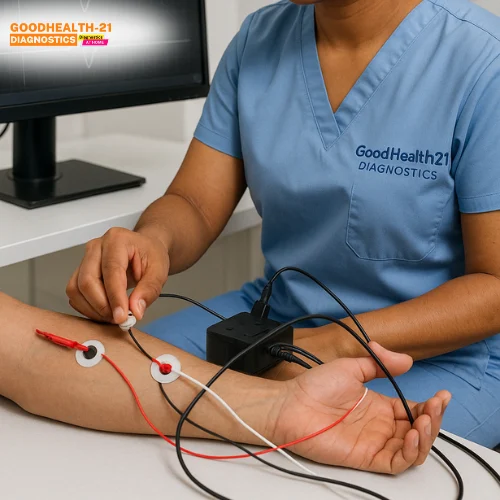
The test is simple and non-surgical. Here is how it usually goes:
-
Small sticker electrodes are placed on your skin over the nerve being checked.
-
A mild electrical pulse is delivered nearby.
-
The machine records how fast the signal travels and how strong it is.
-
The technician repeats this for other nerves, often comparing one side of the body with the other.
Slower speeds or reduced signal strength can suggest a problem with the nerve or its protective covering. The result is a clue, not a final verdict. Your doctor will read it alongside your symptoms and examination.
NCV vs EMG: What’s the Difference?
These two tests are often done together, so they are easy to confuse.
-
NCV checks how well nerves conduct signals.
-
EMG (electromyography) checks the electrical activity inside muscles using a very fine needle electrode.
Together, they help doctors work out whether the trouble starts in the nerve, the muscle, or somewhere near the spine.
Who Should Consider a Nerve Conduction Velocity Test in Bangalore?
Your doctor may suggest a nerve study if you have:
-
Numbness or tingling in the hands or feet
-
Pain shooting down an arm or leg
-
Weak grip or trouble holding objects
-
Frequent cramps or twitching
-
Unexplained clumsiness or tripping
City life can add to the problem. Long hours at a laptop, constant phone use and daily two-wheeler commutes can strain nerves in the wrist, elbow and neck. Diabetes and vitamin B12 deficiency, both common in India, can also affect nerves over time.
Conditions the Test Can Help Evaluate
-
Carpal tunnel syndrome
-
Peripheral neuropathy
-
Ulnar nerve entrapment
-
Nerve root compression, such as sciatica
-
Some nerve and muscle disorders
Please don’t self-diagnose from this list. Many conditions share similar symptoms, and only a doctor can interpret the findings correctly.
Preparing for Your Nerve Conduction Velocity Test in Bangalore
Preparation is easy. A few small steps help the readings stay accurate.
-
Skip lotions, oils and creams on the day. They can stop electrodes from sticking well.
-
Wear loose clothing so the arms or legs are easy to reach.
-
Stay warm. Cold limbs slow nerve signals and may affect results. Bangalore’s cool mornings and air-conditioned waiting rooms make this worth remembering.
-
Tell the team about your health. Mention any pacemaker, implanted device or blood-thinning medicine.
-
Carry earlier reports, including blood tests, scans and prescriptions.
No fasting is needed, so you can eat and take regular medicines unless your doctor says otherwise.
What It Feels Like
Most people describe a quick tapping or tingling sensation with each pulse. It can feel odd, and sometimes a little uncomfortable, but it is rarely painful. If it becomes too much, tell the technician. You can ask to pause.
The study generally takes between 20 and 60 minutes, depending on how many nerves are checked. If an EMG is added, you may feel a slight pinch from the thin needle. Some people have mild muscle soreness for a day afterwards.
Picking the Right Centre
Bangalore has plenty of diagnostic options, so it helps to look beyond convenience alone. When you plan a nerve conduction velocity test in Bangalore, consider these points:
-
Trained staff. The study should be performed or supervised by experienced professionals, with the report reviewed by a neurologist or qualified specialist.
-
A clear report. Look for measurements for each nerve and a readable summary your doctor can act on.
-
A comfortable, warm room with well-maintained equipment.
-
Easy access. Traffic here is unpredictable. Choose a location you can reach without stress and leave some buffer time.
-
Your doctor’s preference. Your physician may favour a centre whose report format they already know.
When Not to Wait
Slowly developing numbness can usually be assessed at a planned appointment. But sudden weakness, difficulty speaking, loss of bladder or bowel control, or rapidly worsening symptoms need urgent medical attention. Don’t wait for a scheduled test in those situations.
Final Thoughts
Nerve symptoms rarely disappear on their own, and guessing the cause can delay proper care. A well-timed nerve conduction velocity test in Bangalore can give your doctor useful, measurable information. That can guide the next step, whether it is lifestyle changes, medicines, physiotherapy or further tests.
If your hands or feet don’t feel right, talk to your doctor sooner rather than later. A short, well-prepared appointment may save you months of uncertainty.
Frequently Asked Questions
1. Is a nerve conduction study painful?
Most people feel a brief tingling or tapping with each pulse. It can be uncomfortable but is generally well tolerated.
2. Do I need a doctor’s referral?
Many centres prefer one, so the right nerves are tested and the report is useful to your treating doctor. Confirm this when booking.
3. How soon will I get my report?
It varies by centre. Some share it the same day, others within a day or two. Ask at the time of booking.
4. Can I eat and take my medicines before the test?
Yes, no fasting is required. Just avoid lotions or oils on the skin, and follow any specific advice from the centre.
5. Is the procedure safe for everyone?
It is safe for most people. Inform the staff if you have a pacemaker, implanted defibrillator or bleeding disorder, as they may adjust the approach.

 English
 Arabic
 Spanish
 Portuguese
 Deutsch
 Turkish
 Dutch
 Italiano
 Russian
 Romaian
 Portuguese (Brazil)
 Greek