
Fun Ways to Use Squishy Toys in Indoor Games and Activities
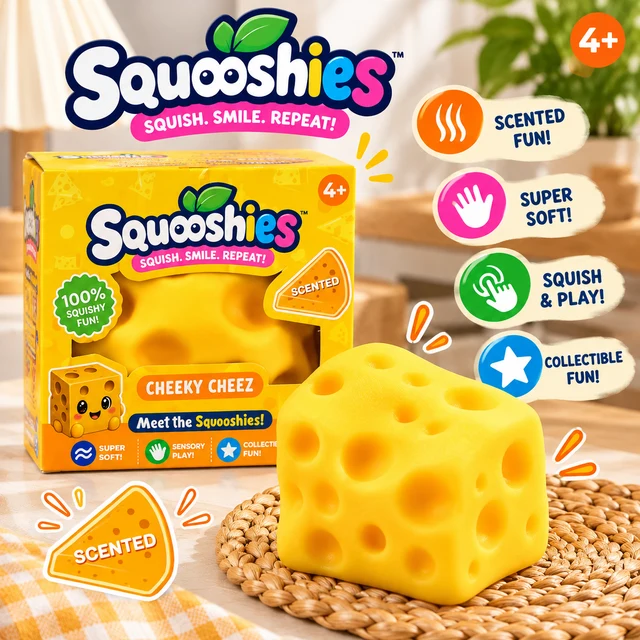
Indoor play can be a great way for children to stay entertained when the weather is poor, outdoor space is limited or a quiet activity is needed at home. While traditional board games and building toys are always useful, squishy toys can add another type of fun. Their colourful designs, soft feel and variety of shapes make them easy to include in simple games and creative activities.
Squishy toys are available in many styles, from slow-rising shapes and playful food designs to animals and colourful characters. Children can use them for pretend play, sorting games, challenges and imaginative stories. They can also be combined with everyday household items to create activities without needing a complicated setup.
For parents looking for new ways to make indoor play more interesting, squishy toys offer plenty of possibilities. The key is to choose age-appropriate toys and adapt each activity to the child’s interests and abilities.
1. Create a Squishy Toy Treasure Hunt
A treasure hunt is a simple way to turn an ordinary room into an exciting play area. Hide a few squishy toys in safe, easy-to-reach places around the room and invite children to find them.
You can make the activity more interesting by giving clues instead of telling children exactly where each toy is hidden. For younger children, use simple clues such as “look near something soft” or “find the toy beside a book”. Older children may enjoy solving short riddles or following a sequence of clues.
To keep the activity suitable for different ages, make sure the toys are hidden in places that children can reach safely. Avoid high shelves, electrical equipment or areas where children might need to climb.
The treasure hunt can also have a theme. Children might search for animal-shaped squishies, colourful toys or a particular character. This gives them a reason to explore different designs while enjoying a playful challenge.
2. Play a Colour-Sorting Game
Squishy toys often come in bright and varied colours, making them useful for a simple sorting activity. Place several toys on a table or clean floor and ask children to group them according to colour.
Younger children can begin with two or three basic colours. As they become more confident, introduce additional shades or ask them to find toys that are similar but not exactly the same colour.
For older children, add a time limit or turn the activity into a team challenge. Each player can take turns choosing a toy and placing it in the correct group. The game can be adjusted to make it easier or more challenging.
Colour sorting is also a useful way to organise a toy collection after playtime. Children can help put the toys back into separate containers, making tidying up part of the activity.
3. Invent a Squishy Toy Story
Squishy toys can become characters in imaginative play. A toy shaped like an animal, piece of food or familiar object can be used as the starting point for a story.
Children might create a pretend town where each toy has a role, or imagine that the toys are going on a journey. One squishy could be the shopkeeper, another could be a visitor and a third could be the delivery driver.
Parents can join in by asking simple questions such as “Where are they going?” or “What happens next?” These prompts can help children develop the story without taking over their ideas.
For group play, each child can choose a toy and add one sentence to the story. The next player continues from where the previous person stopped. This creates a shared activity that can become funny, surprising or imaginative.
4. Try a Squishy Toy Memory Game
A memory game can be made using a small collection of squishy toys. Place several toys on a tray or table and give children a short time to look at them. Then cover the toys with a cloth and ask them to remember which ones they saw.
For younger children, start with only a few toys. Older children can try to remember more items or describe the order in which the toys were arranged.
Another version involves removing one toy while the others are covered. When the toys are revealed, children try to identify which one is missing.
The game can be played individually or with a group. Players can take turns arranging the toys, hiding one and asking the others to guess. It is an easy activity that can be repeated with different toy combinations.
5. Set Up a Squishy Toy Shop
Pretend shopping is a familiar activity that can be adapted for indoor play. Arrange squishy toys on a table or shelf and let children create their own toy shop.
They can decide what each toy costs, make simple price labels and take turns being the shopkeeper and customer. Play money or homemade paper coins can be used to make the activity more interactive.
Younger children can practise recognising numbers and matching prices, while older children may enjoy working out totals or giving change. The activity can also include imaginative details, such as special offers or a shop opening announcement.
The focus should remain on fun rather than getting every calculation right. Children can change the rules and invent new roles as the game develops.
6. Build a Simple Squishy Toy Obstacle Course
A small indoor obstacle course can make play more active while using squishy toys as part of the challenge. Place a few safe markers on the floor and create a route for children to follow.
The squishy toys can be used as objects to collect along the way. For example, children might walk around a cushion, step over a soft item and pick up a toy before reaching the finish line.
Keep the course simple and make sure there is enough clear space. Avoid slippery surfaces, sharp furniture edges or obstacles that require children to jump from heights.
For younger children, the route can be short and easy to follow. Older children can help design the course or suggest new challenges. The activity can be changed whenever children want to try something different.
7. Play “Guess the Toy”
This activity encourages children to describe objects and listen carefully. Place a few squishy toys inside a bag or box that allows children to reach inside without seeing the contents.
One player feels a toy and tries to guess what it is. They can describe its shape, texture or general appearance before making a guess.
For younger children, use familiar shapes and provide hints if needed. Older children may enjoy a version where they can only ask yes-or-no questions.
Make sure the container is large enough and safe for the child to use. The toys should also be suitable for the child’s age, with no small detachable parts that could create a hazard.
8. Make a Squishy Toy Matching Game
If children have several toys with similar shapes, colours or designs, they can use them to create a matching game. Arrange the toys in pairs and place them face down or cover them with small containers.
Players take turns revealing two toys. If the toys match according to the chosen rule, the player keeps the pair. If they do not match, the toys are covered again.
The matching rule can be based on colour, shape, character or size. This allows the game to be adapted to the toys available and the child’s age.
For a simpler version, place all the toys in view and ask children to find matching pairs. For a more challenging version, include several similar designs and ask players to identify small differences.
9. Create a Squishy Toy Art Display
Squishy toys can also inspire a simple creative activity. Children can arrange their toys into a scene and use paper, crayons or building blocks to create a background.
For example, animal-shaped toys might be arranged in a pretend jungle, while food-shaped toys could become part of a make-believe café. Children can draw signs, make paper accessories or create a story around the display.
This activity is especially useful when children want something quieter after more active play. It allows them to use their imagination without needing to follow a fixed set of rules.
Keep any craft materials suitable for the child’s age and supervise activities involving scissors, glue or small accessories.
10. Use Squishy Toys for a Simple Turn-Taking Game
A simple turn-taking game can be created with a small group of children. Place a few squishy toys in the centre and decide on a basic rule, such as choosing one toy when it is your turn or naming something related to the toy you pick.
For example, a player who chooses an animal-shaped squishy might name another animal. A player who chooses a food-shaped toy could name a favourite meal.
The rules can be changed to suit the group. Younger children may simply take turns choosing a toy, while older children can add questions or challenges.
This type of activity can help children practise waiting for their turn and following shared rules while keeping the game relaxed and enjoyable.
Choosing Squishy Toys for Indoor Activities
When choosing squishy toys for games at home, consider the child’s age, interests and the types of activities they enjoy. Colourful shapes may be suitable for sorting and matching games, while themed designs can inspire pretend play and storytelling.
Check the product description for material information, age recommendations and care instructions. Younger children should only use toys that are suitable for their age and do not contain small parts that could present a choking risk.
It is also worth considering how easy the toys are to clean and store. A small container or box can keep the collection organised and make it easier for children to choose toys for their next activity.
Gifzy’s squeeze and squishy toy collection includes a range of designs that can be explored for different play ideas:
https://gifzy.co.uk/collections/squeeze-squishy-toys
Making Indoor Play Easy and Enjoyable
The best indoor activities do not need expensive equipment or complicated instructions. A few squishy toys, some space to play and a little imagination can be enough to create an enjoyable afternoon.
Children may prefer different activities on different days. One day they might enjoy a treasure hunt, while another day they may want to invent a toy shop or create a story. Giving them the freedom to choose can help keep play interesting.
Parents can also join in when time allows. Taking turns, asking questions or helping set up a game can make the activity more engaging without making it feel like a lesson.
For more toy and gift ideas, visit https://gifzy.co.uk/.
Conclusion
Squishy toys can be used in many indoor games and activities beyond simple squeezing or collecting. They can become part of treasure hunts, sorting challenges, memory games, pretend shops, obstacle courses and imaginative stories.
These activities can be adjusted for different ages and interests, making them suitable for a range of play situations. The most important points are to choose age-appropriate toys, keep the play area safe and allow children to use their own ideas.
With a little creativity, a small collection of squishy toys can provide plenty of ways to make indoor play more varied, enjoyable and memorable.
 English
 Arabic
 French
 Spanish
 Portuguese
 Deutsch
 Turkish
 Dutch
 Italiano
 Russian
 Romaian
 Portuguese (Brazil)
 Greek