
What Happens During a Residential Hidden Listening Device Inspection?
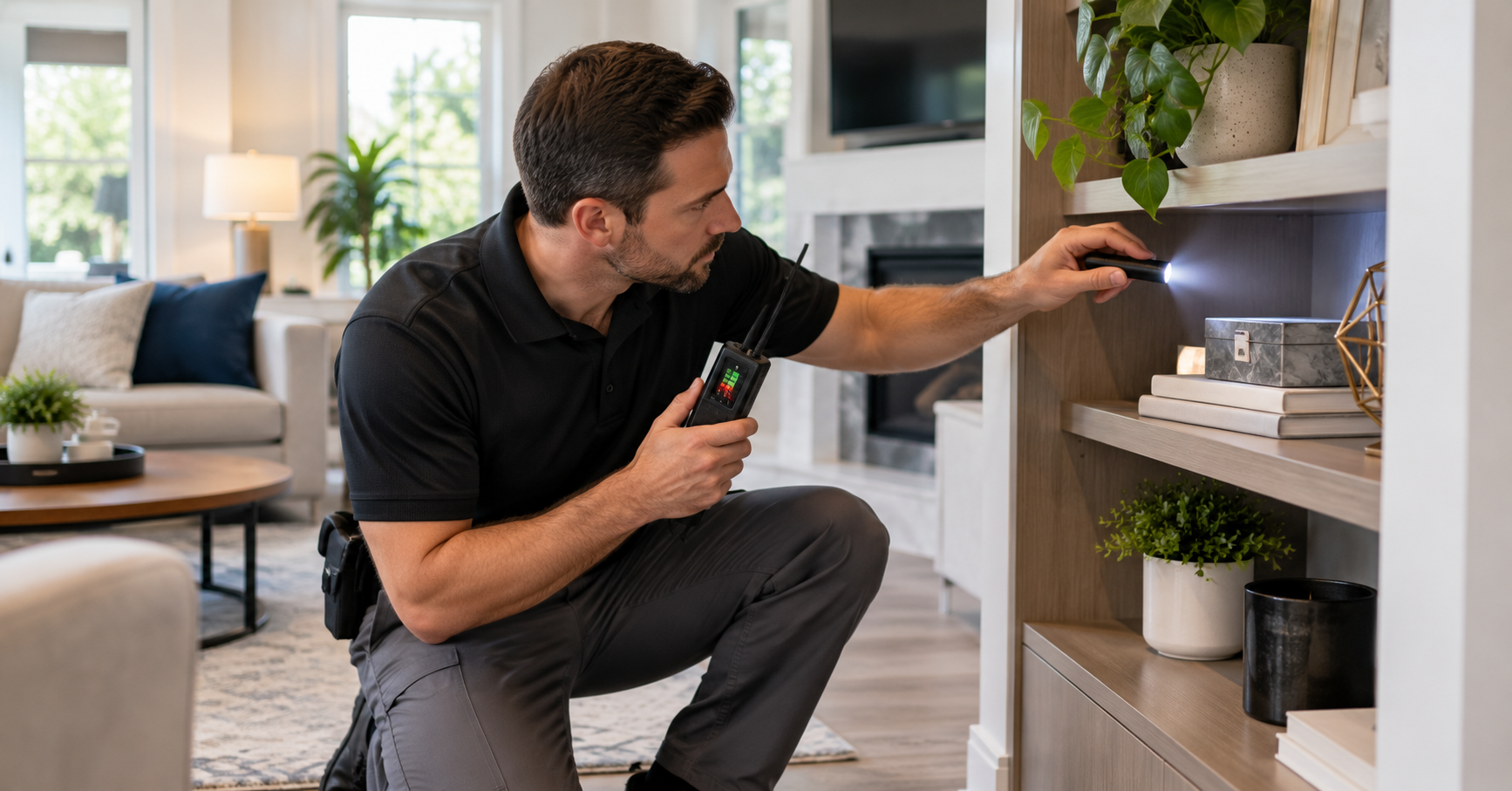
Your home is where you expect to have private conversations without worrying about who might be listening. Whether you're discussing family matters, financial decisions, or confidential business information, protecting personal conversations is important. If you have credible reasons to suspect unauthorized audio recording, hiring a professional residential hidden listening device service can help you investigate possible surveillance threats. A professional inspection uses specialized detection methods to assess your property and identify suspicious equipment that may compromise your privacy.
Why Hidden Audio Surveillance Is a Home Privacy Concern
Modern technology has made recording devices smaller and easier to conceal. Some audio recorders can be placed inside everyday household objects, while others transmit recordings through wireless connections.
Although these devices have legitimate uses, unauthorized recording can create serious privacy concerns.
Homeowners may worry about confidential conversations being recorded, sensitive information being exposed, or personal boundaries being violated.
However, it is important to remember that privacy concerns do not automatically indicate surveillance. A careful assessment should consider ordinary electronic devices, digital security issues, and other possible explanations before concluding that hidden recording equipment is present.
When Should You Consider an Audio Surveillance Inspection?
Not every unusual sound or unfamiliar object indicates a hidden microphone. Still, certain situations may justify a professional security assessment.
1. After a Confirmed Security Breach
If your property has experienced unauthorized entry or a documented security incident, evaluating your home's physical security may be a reasonable precaution.
A professional inspection can examine accessible areas for suspicious equipment or modifications.
2. When Confidential Information Has Been Exposed
Suppose private information becomes known to someone who should not have access to it.
Before assuming that your conversations were recorded, consider whether the information could have been obtained through compromised accounts, shared devices, messages, or accidental disclosure.
If there is credible evidence suggesting physical surveillance, an audio inspection may help investigate that possibility.
3. Following Unauthorized Access to Private Areas
If an unauthorized person has had access to your home office, bedroom, or another private space, you may want to assess whether the room's security has been compromised.
Professional technicians can inspect relevant areas while documenting any potentially suspicious findings.
4. When You Handle Sensitive Information at Home
Remote workers, business owners, attorneys, and other professionals may discuss confidential matters in residential offices.
For individuals dealing with sensitive information, periodic privacy assessments may be useful as part of a broader security strategy.
Where Can Hidden Listening Devices Be Concealed?
Hidden audio recording equipment can vary considerably in design and operation.
Some devices are standalone recorders, while others may be incorporated into electronic objects.
During an authorized inspection, professionals may examine accessible areas around:
-
Household electronic equipment
-
Electrical fixtures and outlets
-
Desks and office furniture
-
Decorative objects
-
Entertainment systems
-
Areas surrounding home-office equipment
These are general inspection considerations, not evidence that any particular object contains surveillance equipment.
The purpose of a professional assessment is to identify unusual devices or modifications using appropriate inspection methods.
How Residential Hidden Listening Device Detection Works
A professional audio surveillance inspection typically involves several stages.
Initial Consultation
The process usually begins with a discussion of the homeowner's concerns.
Technicians may ask about previous security incidents, the rooms involved, and any specific evidence that prompted the inspection.
This helps determine the appropriate inspection scope.
Physical Security Inspection
A visual and physical assessment may identify unfamiliar electronic equipment, unexplained modifications, or other conditions requiring further examination.
Technicians focus on accessible areas and use methods appropriate to the property.
Electronic Signal Analysis
Certain listening devices transmit information through radio-frequency signals.
Professional equipment can help identify and analyze some of these transmissions.
However, many ordinary household devices also produce wireless signals, so technicians must distinguish normal electronic activity from potentially suspicious findings.
Non-Transmitting Device Detection
Not all recording devices transmit signals.
Some store audio internally, making them difficult to locate through radio-frequency scanning alone.
Depending on the inspection requirements, professionals may use additional equipment or physical examination techniques to assess these risks.
Reporting and Recommendations
Following the inspection, the provider should explain what was examined, describe any findings, and identify the limitations of the assessment.
If potentially unauthorized equipment is discovered, the homeowner may need guidance on preserving evidence and contacting appropriate authorities.
Professional Audio Bug Sweeps vs. DIY Detection Devices
Many online retailers advertise inexpensive hidden microphone detectors.
These tools may identify certain wireless signals, but their capabilities can be limited.
Limitations of DIY Detection
Basic detectors may react to Wi-Fi routers, smartphones, and other everyday electronic equipment.
This can create false alarms or make results difficult to interpret.
They may also fail to identify recorders that are turned off or operating without wireless transmission.
Advantages of Professional Inspections
Professional technicians can combine several inspection methods and evaluate findings in context.
Their experience may help distinguish normal household electronics from unusual equipment.
A professional service can also provide an explanation of the inspection scope and any limitations.
Importantly, no inspection method can guarantee that every possible listening device will be discovered.
What Should You Do If You Discover a Suspicious Device?
Finding an unfamiliar electronic object does not necessarily mean it is being used for surveillance.
Before taking action, consider whether the equipment belongs to another household member or has a legitimate purpose.
If you have credible evidence that a device is recording conversations without authorization, avoid damaging or unnecessarily handling it.
Document the circumstances when safe to do so and consider seeking professional assistance.
If the situation involves threats, stalking, or unlawful activity, contacting law enforcement or obtaining appropriate legal advice may be necessary.
How to Protect Your Home Conversations From Privacy Risks
Maintaining household privacy involves both physical and digital security.
Secure Your Home Network
Use strong passwords, appropriate Wi-Fi encryption, and updated router software.
Review connected devices periodically to identify unfamiliar network activity.
Check Smart Home Device Permissions
Smart speakers, cameras, and other connected devices may contain microphones.
Review privacy settings and account permissions to understand how these devices operate.
Manage Physical Access
Limit access to sensitive rooms and review keys, entry codes, and visitor permissions after confirmed security incidents.
Keep Personal Devices Updated
Phones, tablets, laptops, and smart home systems should receive appropriate security updates.
Some privacy incidents originate from compromised digital accounts rather than physical recording devices.
Use Professional Assessments When Appropriate
When credible evidence suggests a physical surveillance threat, a professional inspection can help evaluate that concern through a structured process.
Why Choose HAM Investigations for Audio Surveillance Concerns?
Homeowners seeking an audio bug sweep should look for a provider that takes privacy concerns seriously and follows an evidence-based inspection process.
HAM Investigations offers audio bug sweep services for individuals concerned about potential unauthorized listening devices.
Before scheduling an inspection, homeowners can discuss their specific concerns, the areas requiring examination, and the methods included in the proposed service.
A clear understanding of the inspection scope helps set realistic expectations and supports informed decisions.
Frequently Asked Questions
Can a Hidden Listening Device Record Without Wi-Fi?
Yes. Some audio recorders store information locally, while others use wireless technologies that do not depend on a home's Wi-Fi network.
Can a Phone App Detect Hidden Microphones?
A smartphone application cannot reliably identify every concealed recording device. Some applications can display nearby wireless activity, but this is not proof of hidden surveillance.
How Do Professionals Check for Audio Bugs?
Depending on the inspection scope, professionals may use physical examination, radio-frequency analysis, and specialized electronic detection equipment.
How Long Does a Residential Audio Inspection Take?
Inspection time depends on property size, accessibility, equipment used, and the number of areas requiring examination.
What Happens If No Listening Device Is Found?
A negative inspection result means no device was identified within the methods and areas examined. It does not provide an absolute guarantee that the property contains no recording equipment.
Final Thoughts
Protecting your privacy at home starts with understanding potential security risks and responding to concerns appropriately.
Although hidden audio surveillance is technically possible, many suspicious situations have ordinary explanations unrelated to recording devices.
When there is credible evidence of unauthorized access or possible surveillance, a professional residential audio inspection can provide a structured way to investigate.
By combining responsible physical security practices, digital privacy protection, and professional assistance when warranted, homeowners can take practical steps toward maintaining a more secure living environment.

 English
 Arabic
 French
 Spanish
 Deutsch
 Turkish
 Dutch
 Italiano
 Russian
 Romaian
 Portuguese (Brazil)
 Greek