
Choosing Branded Gable Boxes: Sizes, Materials and Designs
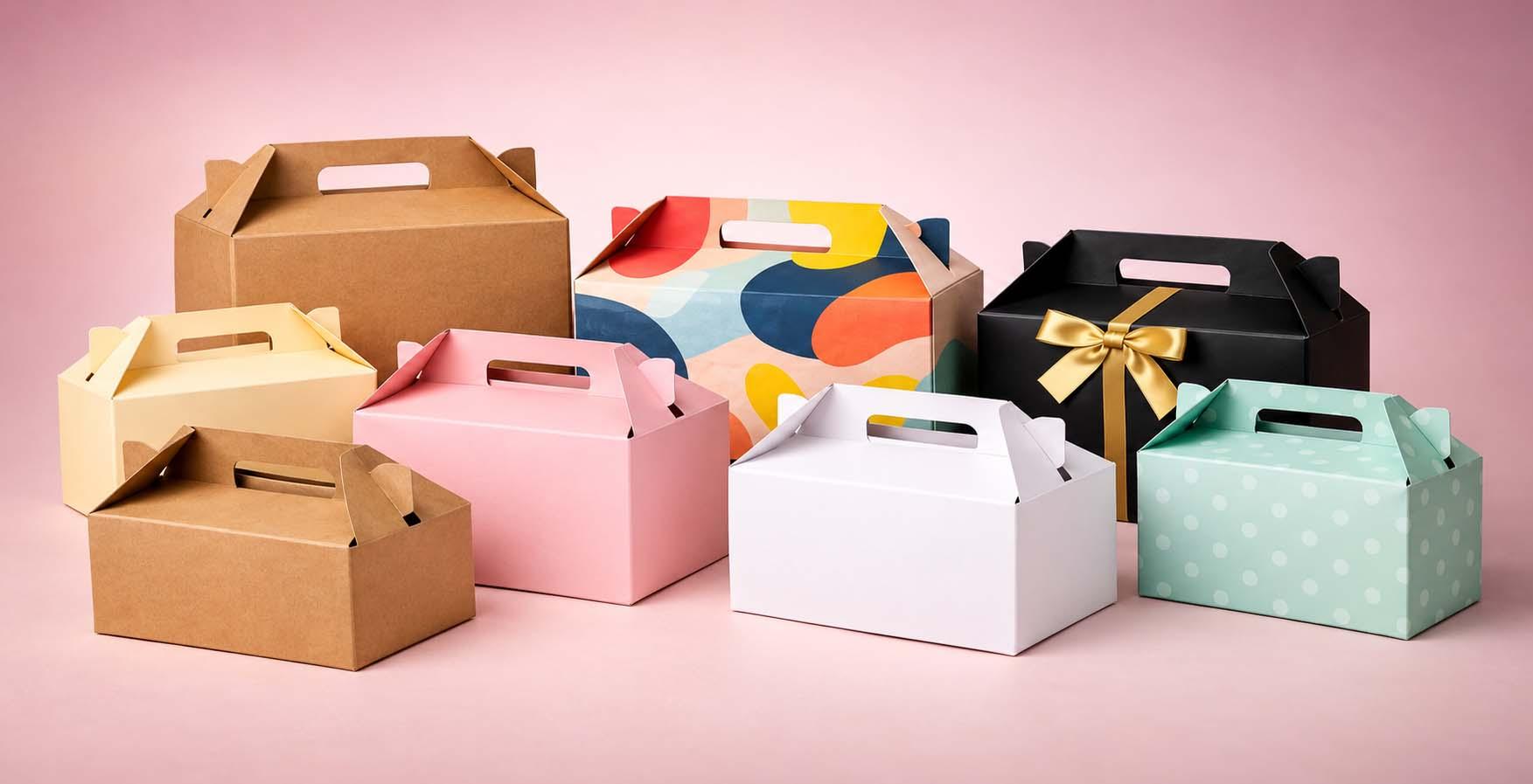
Gable boxes have earned their place as one of the most practical packaging formats in modern retail. The built-in handle, stable base, and generous branding panels make them ideal for countless applications. Yet choosing the right branded gable boxes requires more thought than many businesses realise. This guide breaks down the three decisions that matter most: size, material, and design.
Order the wrong size and products rattle around, arriving damaged. Choose the wrong material and boxes collapse under the weight of their contents. Neglect the design and your packaging fades into the background. Each decision connects to the others, and getting all three right transforms your packaging from a cost into a genuine marketing asset.
Understanding Gable Box Construction
Before diving into specifications, a quick look at how gable boxes work helps you make better choices. The format features a rectangular base, vertical side panels, and a peaked roof formed by two folding flaps. These flaps meet at the top and interlock to create the handle.
The handle is the defining feature. Customers carry purchases comfortably without needing a separate bag. This convenience suits food service, retail, and event giveaways. The structure also reinforces the box, preventing the sides from bowing outward under load.
Assembly varies by design. Some gable boxes arrive pre-glued and pop open in seconds. Others require manual folding and tab insertion. Consider your packing workflow before committing to a format—assembly time adds up across hundreds of units.
Choosing the Right Size
Size drives protection, cost, and customer experience. Too large a box wastes material and allows contents to shift. Too small a box crushes products and frustrates packing teams.
Standard Size Ranges
Gable boxes typically span from small favour sizes around 10cm cubed to large catering formats exceeding 30cm in length. Common retail sizes sit between 15cm and 25cm, suitable for bakery items, cosmetics, and small gifts. Catering sizes accommodate full meals, sandwich platters, or multiple pastries.
Map your product range against these brackets. Most businesses need two or three sizes rather than a single box. Offering a small, medium, and large covers the majority of orders while keeping your packaging inventory manageable.
Measuring for Fit
Measure your product at its widest point, including any protective wrapping or inserts. Add a small clearance—typically 5mm to 10mm on each side—to allow easy packing without excessive movement. Depth matters as much as width. A tall candle in a shallow box will tip during transit.
Consider the weight of your contents. Heavier items need boxes with reinforced bases and stronger board grades. A box that performs well for lightweight pastries may fail entirely under the load of glass jars.
Handle Clearance
The handle must support the filled weight comfortably. Check the handle aperture size—it should accommodate an adult hand without pinching. For heavier contents, look for reinforced handles with additional board layers or die-cut finger grips.
Test a filled box by carrying it for several minutes. If the handle digs into your fingers, your customers will notice the same discomfort.
Selecting Materials That Perform
Material choice affects durability, sustainability, print quality, and cost. Understanding the options prevents expensive mistakes.
Corrugated Board
Corrugated cardboard remains the workhorse for gable boxes. The fluted inner layer provides strength and cushioning. Single-wall corrugated suits most retail applications. Double-wall corrugated handles heavier loads and longer transit distances.
Board grade matters. E-flute corrugated offers a thinner profile with excellent printability, ideal for retail display. B-flute provides greater strength for shipping. Discuss your specific requirements with your supplier rather than accepting a default specification.
Folding Boxboard
Folding boxboard—sometimes called solid board—offers a smoother surface than corrugated. It prints beautifully, making it the choice for premium retail packaging where graphics matter. However, it offers less cushioning and structural strength than corrugated alternatives.
Use folding boxboard for lightweight products: cosmetics, confectionery, small accessories. Pair it with appropriate inserts if products need extra protection.
Kraft Paper Board
Kraft board brings a natural, unbleached appearance that suits artisan brands. Bakeries, farm shops, and eco-conscious retailers favour this material. It communicates authenticity and simplicity without shouting.
Kraft board takes print well, though colours appear more muted than on white board. Design accordingly—bold, high-contrast graphics work better than subtle pastels. Consider leaving areas unprinted to celebrate the material's natural texture.
Food-Safe Coatings
If you package food directly in gable boxes, food-safe materials are non-negotiable. Look for suppliers who provide food-grade certification. Grease-resistant linings prevent oil stains from hot food. Ventilation options prevent condensation from softening crispy items.
Design Principles for Branded Gable Boxes
Design determines whether your packaging attracts attention or disappears on the shelf. Every panel offers branding space—use it wisely.
Prioritising Panel Visibility
Customers see different panels depending on how the box sits. The front panel faces outward on shelves. The top panels remain visible when boxes sit on counters. Side panels appear when customers carry boxes by the handle.
Place your primary logo on the front and both side panels. Add secondary messaging to the top flaps. This ensures brand visibility from every angle.
Colour Strategy
Match your packaging colours to your overall brand identity. Inconsistency between your website, shopfront, and packaging confuses customers and undermines recognition.
Consider colour psychology. Warm tones like reds and oranges stimulate appetite, suiting food brands. Soft pastels suggest gentleness for cosmetics. Deep greens and browns communicate sustainability. Choose colours that reinforce what your brand stands for.
Typography and Legibility
Your brand name must read clearly from a distance. Test typography at actual size before printing. Small, decorative fonts may look elegant on screen but vanish on a shelf three metres away.
Include essential information legibly. Weight, ingredients, allergen warnings, and contact details must remain readable. Regulatory requirements vary by product type—verify yours before finalising artwork.
Finishing Techniques
Finishing options elevate perceived value. Matt lamination offers a sophisticated tactile finish. Gloss lamination provides shine and moisture resistance. Spot UV adds contrast by creating glossy areas against matte backgrounds.
Foil stamping introduces metallic accents for premium positioning. Embossing adds texture and dimension. These techniques increase costs, so apply them selectively. A single foil logo often outperforms heavy-handed decoration.
Sustainability Considerations
Environmental responsibility has become a baseline expectation rather than a differentiator. Your packaging choices reflect your values publicly.
Recyclability
Plain cardboard and kraft board recycle easily through household collections. Avoid plastic laminates that contaminate the recycling stream. Water-based coatings offer protection without compromising recyclability.
Check whether your local authority accepts the material. Communicate disposal instructions to customers. A small "recyclable" note reinforces your commitment and helps customers do the right thing.
Responsible Sourcing
Look for FSC certification, which verifies that materials come from responsibly managed forests. This certification resonates with environmentally conscious customers and demonstrates genuine commitment rather than greenwashing.
Right-Sizing to Reduce Waste
Oversized boxes waste material and increase shipping costs. Right-sizing your packaging reduces environmental impact and saves money. Custom sizes tailored to your products outperform generic options on both fronts.
Practical Ordering Tips
Here is actionable advice to avoid common pitfalls.
Request Physical Samples
Never approve a design from a screen. Order assembled samples in your chosen material and finish. Fill them with actual products. Test how they perform during handling and transport.
Calculate Total Costs
Compare quotes on total landed cost, not unit price alone. Include tooling, setup fees, delivery, and storage. A cheaper box that requires expensive inserts may cost more overall than a premium option with integrated protection.
Plan Reorder Quantities
Custom packaging often carries minimum order quantities. Balance cost efficiency against storage constraints and the risk of design obsolescence. Start with modest volumes and scale up as demand proves consistent.
Verify Supplier Reliability
Ask about lead times and production capacity. Request references from similar businesses. A supplier who understands your sector anticipates problems before they arise.
Conclusion
Branded gable boxes combine practicality with powerful branding potential. Size determines protection and customer convenience. Material affects durability, sustainability, and print quality. Design transforms a functional box into a recognisable brand asset.
Approach these three decisions together rather than in isolation. A premium material paired with poor design wastes money. A stunning design in the wrong size fails in practice. Balance all three against your budget and product requirements.
Test rigorously before committing to large orders. Request samples, measure carefully, and gather feedback from your packing team. These steps prevent costly mistakes and ensure your packaging performs as intended.
Ready to order branded gable boxes for your business? Contact a packaging specialist today for samples and a quote tailored to your needs. Share your packaging challenges in the comments below—we would love to hear how your business approaches this essential brand touchpoint.

 English
 Arabic
 French
 Spanish
 Deutsch
 Turkish
 Dutch
 Italiano
 Russian
 Romaian
 Portuguese (Brazil)
 Greek