
How to Tell If Leather Is Real: 10 Easy Ways to Identify Genuine Leather
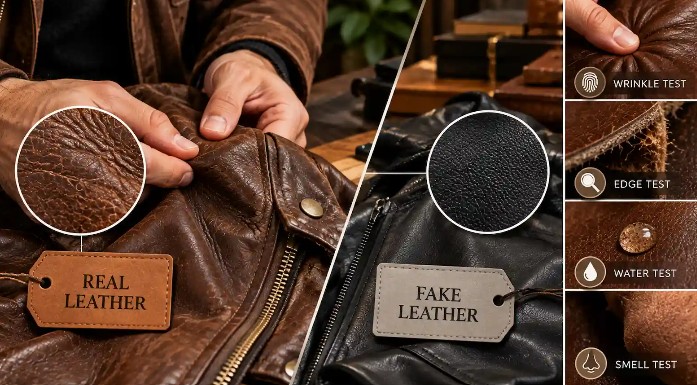
Leather products are popular because of their durability, classic appearance, and timeless style. From jackets and coats to bags, shoes, and accessories, leather remains a preferred material for people who appreciate quality. However, not every product advertised as leather is made from genuine animal hide. Many products use synthetic materials designed to look and feel like real leather.
Knowing how to tell if leather is real can help you make better purchasing decisions and avoid paying genuine leather prices for imitation products. Fortunately, you do not need professional equipment to identify many common differences. By checking the texture, smell, flexibility, edges, and other features, you can get a better idea of the material's authenticity.
This guide explains ten practical ways to identify genuine leather and understand what separates it from synthetic alternatives.
1. Examine the Leather Texture
One of the easiest ways to identify genuine leather is by examining its surface. Real leather comes from natural animal hide, so its texture usually contains small imperfections and variations.
Look closely at the material. You may notice:
-
Small pores and natural grain patterns.
-
Slight differences in texture.
-
Minor wrinkles and surface marks.
-
Uneven grain distribution.
Synthetic leather is often manufactured with repeating patterns. Its surface may look extremely uniform because the texture is mechanically produced.
However, corrected-grain and embossed genuine leather can also have consistent patterns, so texture alone cannot confirm authenticity.
2. Check the Smell of the Material
Smell can provide another useful clue when identifying genuine leather. Real leather generally has a distinctive natural, earthy smell that develops during the tanning and finishing process.
Synthetic leather often smells like plastic, rubber, or chemicals because it is commonly manufactured using polyurethane (PU) or polyvinyl chloride (PVC).
When examining a leather product, pay attention to its natural scent. Keep in mind that dyes, coatings, storage conditions, and manufacturing treatments can change the smell, so this method should be used alongside other checks.
3. Feel the Surface and Softness
Touching the material can help you understand its quality and construction. Genuine leather often feels warm, soft, and flexible. Its surface may have slight variations that make each piece different.
Synthetic leather can feel smooth and consistent, sometimes with a plastic-like finish. However, modern synthetic materials can also feel surprisingly soft.
When checking a leather jacket, gently run your fingers across the surface. Notice how the material responds to touch and whether it feels natural or artificially coated.
Remember that different leather types have different textures. Full-grain leather, suede, nubuck, and lambskin do not feel exactly the same.
4. Look at the Edges of the Material
The edges of a leather product can reveal useful information about its construction.
Natural leather usually has a fibrous structure when viewed at an unfinished edge. Synthetic leather may show a layered construction, including a fabric or textile backing underneath its outer coating.
Check areas such as:
-
Jacket seams.
-
Bag edges.
-
Belt holes.
-
Unfinished interior sections.
Manufacturers often seal or paint leather edges, so an exposed fibrous edge is not always visible. This test works best when you can inspect an unfinished section without damaging the product.
5. Perform a Gentle Flexibility Test
Flexibility is another characteristic worth checking when learning how to tell if leather is real.
Genuine leather generally bends naturally and develops soft creases when pressure is applied. Its surface may show small, irregular wrinkles rather than perfectly uniform lines.
Synthetic leather can also bend, but some varieties develop sharper creases or may show signs of cracking as they age.
For a simple test, gently bend a small section of the material. Never fold, stretch, or apply excessive pressure to an expensive product.
The response depends on the leather type, thickness, and finishing process.
6. Check the Backside of the Material
The backside can provide valuable clues about the material.
Genuine leather often has a suede-like or fibrous underside, depending on how it has been processed. Synthetic leather may have a textile backing covered by a manufactured surface layer.
If the interior of a leather jacket or accessory is accessible, examine its construction carefully.
Look for natural fibers rather than assuming that a smooth backside means the product is fake. Some genuine leather products have linings, backing treatments, or bonded construction that make identification more difficult.
7. Observe How the Material Absorbs Moisture
Water absorption is sometimes used as a traditional method for identifying genuine leather.
Untreated or lightly finished natural leather may absorb a small amount of moisture, causing a temporary dark spot. Synthetic leather generally resists water because its outer surface is coated.
However, this test has limitations. Many genuine leather products have protective finishes that prevent moisture absorption. Some synthetic materials may also absorb moisture through exposed edges or backing.
Important: Avoid dropping water onto finished leather jackets, expensive bags, or delicate products. Moisture can leave permanent marks or damage certain finishes.
8. Look for Natural Grain Variations
Natural grain is an important feature of genuine leather. Since animal hides have different surface characteristics, genuine leather usually contains unique grain patterns.
You may notice:
-
Small wrinkles.
-
Natural pores.
-
Slight color variations.
-
Fine surface irregularities.
-
Different grain patterns across panels.
Synthetic leather is manufactured to reproduce a particular appearance. Its grain may look repetitive or unusually consistent.
Still, high-quality synthetic leather can imitate natural grain very effectively. Similarly, some genuine leather products are embossed to create a uniform finish.
For better results, inspect several sections rather than judging the material from one small area.
9. Check the Product Label and Description
Product labels can help you understand what material you are purchasing.
Look for terms such as:
-
Full-grain leather: Leather that retains its natural grain surface.
-
Top-grain leather: Leather with a refined outer surface.
-
Genuine leather: A broad commercial term for leather made from animal hide.
-
Suede: Leather with a soft, brushed surface.
-
Bonded leather: Material made using leather fibers combined with bonding agents.
-
PU leather: Synthetic material made with polyurethane.
-
Faux leather: Artificial leather designed to imitate real leather.
Always read product descriptions carefully. The word leather in a product title does not automatically mean the entire item is made from genuine leather.
A reliable seller should provide clear information about the material, construction, and finish.
10. Consider the Quality and Overall Construction
The overall construction of a leather product can provide additional information about its quality.
Examine the stitching, seams, panels, hardware, and finishing. Well-made leather jackets often feature consistent stitching, properly aligned panels, and carefully finished edges.
Genuine leather can last for years with appropriate care, although its lifespan depends on the leather grade, tanning method, thickness, construction, and usage.
Do not assume that an expensive product is automatically genuine. Price and appearance are not reliable proof of authenticity.
Choose sellers that clearly explain their materials and provide accurate product information.
Real Leather vs. Faux Leather: Key Differences
Understanding the differences between natural and synthetic materials makes shopping easier.
|
Feature |
Genuine Leather |
Faux Leather |
|---|---|---|
|
Surface |
Natural grain variations |
Often uniform patterns |
|
Smell |
Natural leather scent |
May smell like plastic |
|
Texture |
Varies by leather type |
Often consistent |
|
Backside |
Usually fibrous |
Often textile-based |
|
Flexibility |
Natural bending and creasing |
Depends on synthetic material |
|
Aging |
Can develop a natural patina |
May peel or crack |
|
Maintenance |
Requires suitable leather care |
Usually easier to clean |
These are general characteristics rather than absolute rules. Modern manufacturing techniques can make synthetic leather look and feel similar to natural leather.
Why Does Genuine Leather Matter When Buying a Jacket?
A leather jacket is a long-term wardrobe investment for many people. Selecting the right material can influence its comfort, appearance, durability, and maintenance requirements.
Genuine leather jackets offer several benefits:
Long-Term Durability
Quality leather can withstand regular use when properly maintained. Its durability makes it a popular choice for everyday jackets, biker styles, bomber jackets, and classic outerwear.
Timeless Appearance
Leather jackets have remained popular across generations. Their classic designs work with casual outfits, denim, boots, and different fashion styles.
Natural Texture
Every natural hide has individual characteristics. These variations give genuine leather products a distinctive appearance.
Comfortable Fit
Leather gradually adapts to regular wear. Depending on the leather type and construction, a jacket can become more comfortable over time.
Common Mistakes People Make When Identifying Real Leather
Even experienced shoppers can make mistakes when evaluating leather products. Avoid relying on only one identification method.
Here are some common mistakes:
Judging by price: Expensive products are not always made from genuine leather.
Trusting appearance alone: Synthetic materials can closely reproduce natural leather grain.
Using the burn test: Burning leather can damage the product, release harmful fumes, and still produce misleading results.
Applying too much water: Water can stain or damage leather finishes.
Ignoring product descriptions: Always check the material specifications before purchasing.
The best approach is to combine multiple inspection methods and purchase from sellers that provide transparent product information.
How to Maintain Genuine Leather Products
After purchasing a genuine leather product, proper maintenance can help preserve its appearance and condition.
Follow these basic care practices:
-
Store leather jackets in a cool, dry place.
-
Use a padded hanger to maintain the jacket's shape.
-
Avoid exposing leather to excessive sunlight.
-
Clean the surface with a suitable leather cleaner.
-
Apply a leather conditioner when recommended for the material.
-
Keep leather away from excessive moisture.
-
Allow wet leather to dry naturally at room temperature.
Different leather finishes require different care methods. Always follow the manufacturer's instructions before using cleaning products or conditioners.
Frequently Asked Questions
How can you tell if leather is real or fake?
Check the texture, smell, flexibility, surface grain, edges, and backside. Genuine leather generally has natural variations and a fibrous structure, while synthetic leather often has a more uniform manufactured surface.
Does real leather peel?
Genuine leather does not typically peel like a synthetic surface coating. However, poor-quality leather, damaged finishes, and bonded leather can crack or deteriorate over time.
Does genuine leather have a natural smell?
Yes. Genuine leather commonly has a distinctive earthy smell, although tanning methods, dyes, and finishing treatments can affect its scent.
Is genuine leather waterproof?
No. Genuine leather is generally not completely waterproof. Some products have protective finishes that improve water resistance, but excessive moisture can still cause damage.
Is faux leather better than genuine leather?
It depends on your preferences. Faux leather is often more affordable and easier to clean, while genuine leather offers natural texture and the potential for long-term durability.
Does real leather stretch?
Yes. Genuine leather can stretch slightly with regular use, depending on its type, thickness, and construction. Excessive stretching should be avoided because it can permanently change the product's shape.
Which type of leather is best for jackets?
Full-grain, top-grain, and lambskin leather are popular choices for jackets. The best option depends on your preferred appearance, softness, durability, and budget.
Final Thoughts
Learning how to tell if leather is real helps you make informed decisions when purchasing jackets, bags, shoes, and other leather accessories. Checking the grain, smell, flexibility, edges, and product label can help you identify important differences between genuine and synthetic materials.

 English
 Arabic
 French
 Spanish
 Portuguese
 Deutsch
 Turkish
 Italiano
 Russian
 Romaian
 Portuguese (Brazil)
 Greek