
Why Do Healthcare Providers Struggle with Revenue Cycle Management Today?
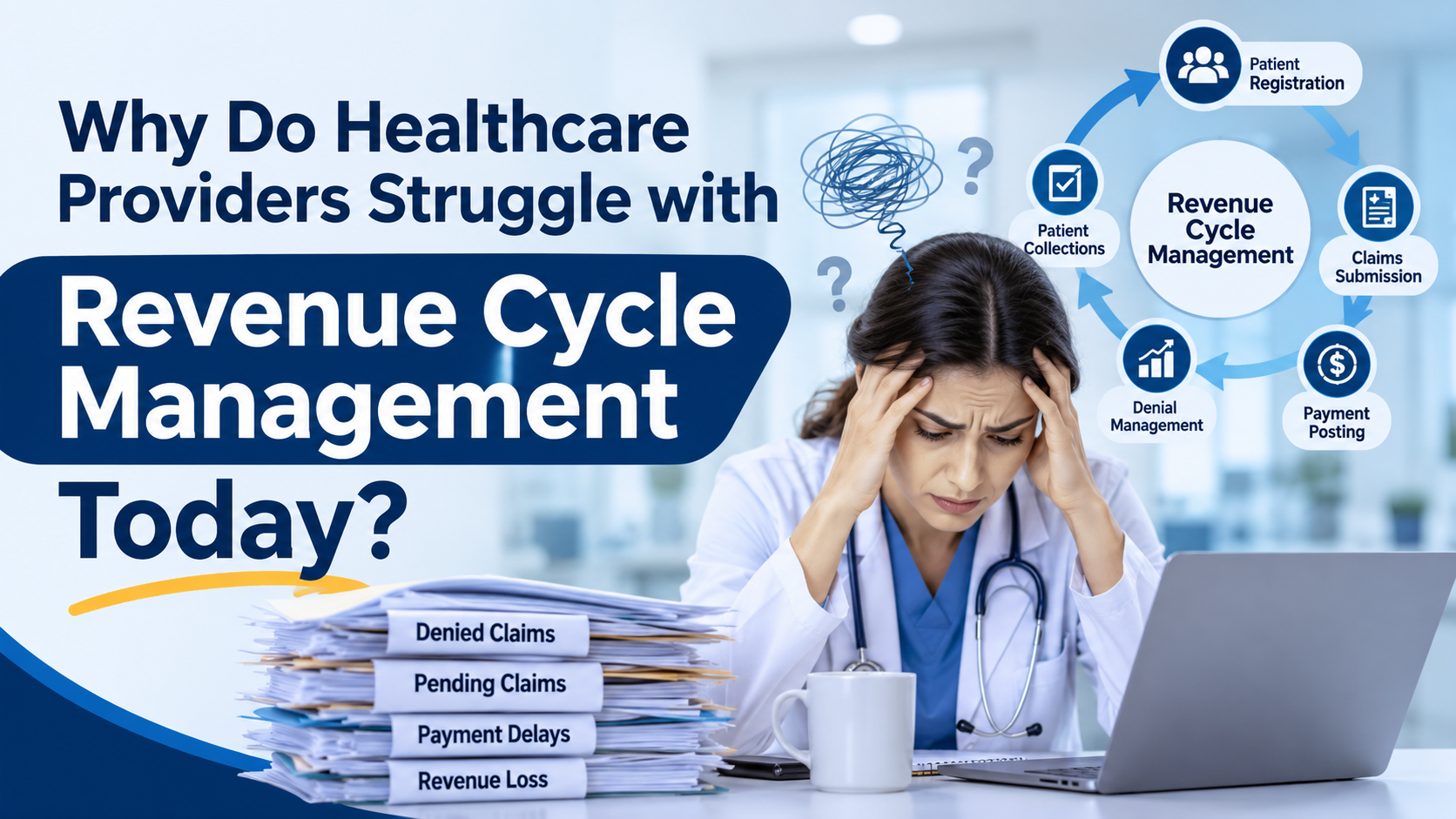
The healthcare landscape has undergone massive transformation over the past decade. While clinical advancements continue to improve patient outcomes, medical practices face an uphill battle behind administrative desks. Managing cash flow, processing claims, and maintaining financial viability have never been more difficult. Today, physicians and practice managers spend countless hours navigating complex insurance policies instead of focusing entirely on patient care. Rising costs, changing regulations, and declining reimbursements continue to shrink operating margins across the industry.
Financial strain is no longer limited to small clinics alone, as even large hospital networks struggle to maintain steady cash flow. To survive in this demanding environment, implementing modern healthcare revenue cycle management software has become a critical step toward eliminating costly administrative errors.
Understanding why these financial bottlenecks happen is the first step toward building a sustainable, profitable practice.
What Makes Modern Revenue Cycle Management So Complicated?
Revenue Cycle Management (RCM) is the financial engine of any healthcare organization. It tracks the entire life of a patient account from initial appointment scheduling to final balance payment.
A standard revenue cycle involves several critical steps:
-
Pre-registration and scheduling: Gathering insurance details and demographic data.
-
Eligibility verification: Confirming active coverage and copay requirements.
-
Coding and charge capture: Translating clinical notes into billable medical codes.
-
Claim submission: Transmitting clean claims to private or government payers.
-
Payment posting and collections: Applying payments and managing patient balances.
Because these stages are interconnected, an error during the first step creates a domino effect. A misspelled name or an unverified policy at check-in frequently results in a costly claim denial weeks later.
5 Major Reasons Providers Struggle with RCM Today
Managing healthcare finances is far more complicated than basic retail accounting. Providers must juggle clinical documentation, patient expectations, and strict payer rules simultaneously.
Here are the primary reasons healthcare organizations struggle to maintain a smooth revenue cycle.
1. Complex and Ever-Changing Payer Guidelines
Commercial insurers and government programs like Medicare constantly update their billing rules. What was billable three months ago might now require prior authorization or additional medical records.
Keeping up with these changes places an immense burden on administrative staff. When billing teams fail to catch an updated guideline in time, claims are rejected immediately. This leads to delayed cash flow and endless hours spent refiling paperwork.
2. A Dramatic Rise in Claim Denials
Denial rates have risen steadily across the healthcare industry over recent years. Payers employ sophisticated algorithms to scan claims for discrepancies, missing modifiers, or lack of medical necessity.
Managing these denials costs practices significant time and money:
-
Reworking a single denied claim costs an average of $25 to $118 depending on practice size.
-
Up to 65% of denied claims are never resubmitted due to a lack of time.
-
Repeated denials directly increase accounts receivable (A/R) days and drain revenue.
3. The Growth of High-Deductible Health Plans (HDHPs)
The financial burden of healthcare has shifted significantly from insurance companies to patients. Millions of patients are enrolled in high-deductible plans, meaning they pay thousands out of pocket before coverage kicks in.
Collecting payments directly from patients is much harder than billing commercial payers. Many patients are surprised by unexpected medical bills and struggle to pay them on time. Without upfront cost transparency and clear collection workflows, bad debt write-offs quickly increase.
4. Severe Staffing Shortages and Administrative Burnout
Medical billers, coders, and front-desk personnel are leaving the industry at alarming rates. High workloads, repetitive tasks, and confusing insurance portals contribute to rapid turnover.
When experienced billers leave, practices face noticeable revenue disruptions:
-
Lost institutional knowledge: Nuances of specific payer contracts are forgotten.
-
Delayed billing cycles: Unprocessed claims pile up on desks.
-
Training overhead: Onboarding new administrative employees requires months of supervision.
5. Fragmented Systems and Outdated Technology
Many medical practices still rely on disconnected platforms to run their operations. The Electronic Health Record (EHR) does not always communicate seamlessly with the practice management software.
Manual data entry between systems increases human error and creates data silos. Without automated tools, staff spend their days on phone calls checking claim statuses instead of working on complex denials.
How Technology Bridges the RCM Gap
To overcome these challenges, practices must replace outdated manual workflows with intelligent automation. Modern platforms streamline billing by validating insurance eligibility in real time and scrubbing claims before submission.
For independent clinics and growing medical groups, selecting the best medical billing software for small business operations is essential to keep overhead costs low while maximizing collections. These specialized solutions offer clear dashboards, automated patient reminders, and simplified coding tools tailored to smaller teams.
By combining technology with structured workflows, practices can collect more revenue while reducing the workload on their administrative staff.
Best Practices to Strengthen Your Revenue Cycle
Fixing your revenue cycle does not happen overnight, but small operational shifts yield measurable improvements. Providers can protect their bottom line by adopting these actionable strategies:
-
Verify insurance before every visit: Confirm active coverage and co-pays prior to the appointment date.
-
Collect patient balances at check-in: Collect copayments and outstanding deductibles before the patient sees the provider.
-
Track key performance indicators (KPIs): Monitor your clean claims rate, days in A/R, and net collection rate monthly.
-
Automate repetitive tasks: Use software to generate payment reminders, run eligibility checks, and track claims.
-
Invest in staff education: Keep your coding and billing team updated on annual ICD-10 and CPT changes.
Conclusion
Managing the revenue cycle has become one of the most demanding aspects of running a medical practice today. Between regulatory updates, rising denials, and patient collection challenges, providers are stretched thin.
However, struggling with cash flow does not have to be the status quo. By identifying your administrative bottlenecks and equipping your team with modern digital tools, your organization can achieve financial stability. A healthy revenue cycle allows healthcare professionals to stop stressing over claims and focus on what matters most: exceptional patient care.
Frequently Asked Questions (FAQs)
1. What does RCM stand for in healthcare?
RCM stands for Revenue Cycle Management. It encompasses all clinical and administrative functions that contribute to the capture, management, and collection of patient service revenue.
2. What is a healthy clean claims rate for a medical practice?
A healthy clean claims rate should ideally be 95% or higher. This means that 95% of claims submitted to payers are accepted and processed on the first pass without rejection or denial.
3. Why are claim denials increasing across the industry?
Denials are increasing because insurance companies use automated claim-scrubbing algorithms, enforce stricter prior authorization rules, and frequently update clinical coverage criteria.
4. How do high-deductible health plans affect practice revenue?
High-deductible health plans require patients to pay more out-of-pocket before insurance coverage starts. Because collecting from individuals is harder than collecting from insurers, practices often experience higher bad debt and delayed payments.
5. Can outsourcing medical billing help solve RCM challenges?
Yes, outsourcing to a dedicated medical billing company can reduce administrative burdens, lower staffing costs, and provide access to certified coders who focus exclusively on maximizing collections.

 English
 Arabic
 French
 Portuguese
 Deutsch
 Turkish
 Dutch
 Italiano
 Russian
 Romaian
 Portuguese (Brazil)
 Greek