
Best Eye Supplements for Digital Eye Strain: What to Look For Before You Buy (2026)
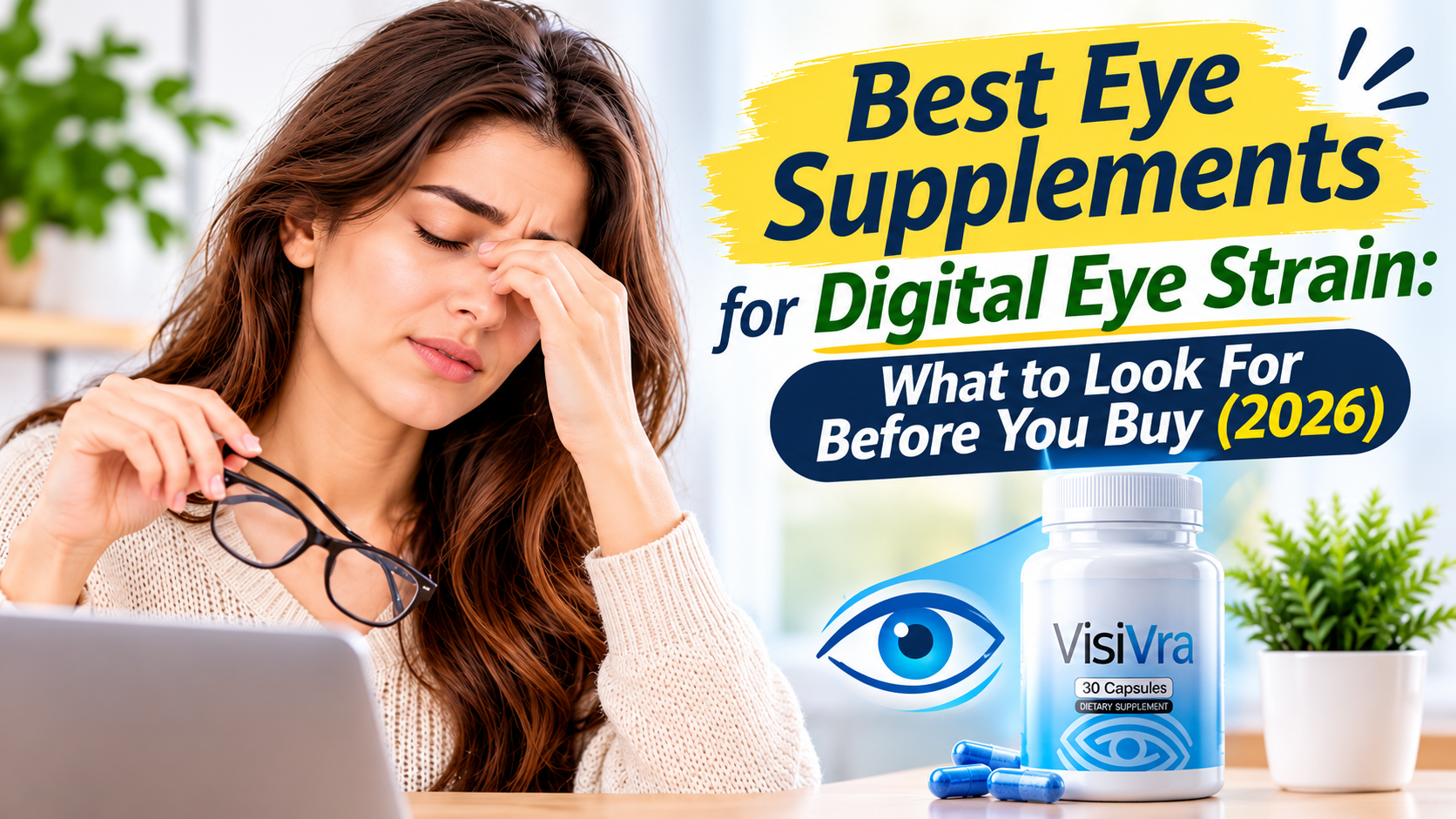
Quick answer: The ingredients most often studied for screen-related eye fatigue are lutein, zeaxanthin, omega-3 fatty acids, and vitamins A, C and E, with zinc as a common supporting mineral. Evidence for supplements is modest, and they work best alongside habits like regular screen breaks. When comparing products, look for a full ingredient label with exact amounts, realistic claims, a clear refund policy, and third-party testing.
In this guide
-
What digital eye strain is
-
Can supplements help?
-
Ingredients worth knowing
-
How to evaluate any eye supplement
-
Where Visivra fits
-
Who should skip supplements or talk to a doctor first
-
Habits that matter more than any pill
-
FAQ
What Is Digital Eye Strain?
If your eyes feel tired, dry or achy after a long day on a laptop or phone, you’re in good company. Digital eye strain (sometimes called computer vision syndrome) covers a group of symptoms linked to long screen sessions:
-
Dry, burning or watery eyes
-
Blurred or fluctuating vision
-
Headaches around the eyes or temples
-
Neck and shoulder tension
-
Trouble refocusing between near and far
Several things stack up behind a screen. People blink noticeably less when concentrating on a display, which lets the surface of the eye dry out. Screens are often held at awkward distances or angles. Glare, poor lighting and uncorrected vision problems make it worse. Strain is usually temporary and eases with rest, but it can become a daily annoyance for people who work on screens all day.
Can Supplements Actually Help?
Here’s the honest answer: maybe a little, for some people, and not as a replacement for good screen habits.
Most large eye-supplement studies were not about eye strain at all. The best-known research, the AREDS and AREDS2 trials from the National Eye Institute, looked at people with intermediate or advanced age-related macular degeneration (AMD). The AREDS2 formula used lutein, zeaxanthin, vitamins C and E, zinc and copper. That result applies to a specific eye disease. It doesn’t prove the same blend relieves tired eyes after a workday.
For screen fatigue specifically, the research is smaller and more mixed. Some trials suggest lutein and zeaxanthin can raise macular pigment and may ease visual fatigue in heavy screen users, but the effects tend to be modest. For other ingredients, results vary by study and dose.
So treat any eye supplement as a possible extra, not a fix. Anyone promising to “repair your vision” or “reverse eye damage” is overselling.
Ingredients Worth Knowing
You’ll see the same names on most eye-health labels. Here’s what each one is and what the evidence says.
|
Ingredient |
What it is |
What to know |
|
Lutein |
Carotenoid found in leafy greens |
Concentrates in the macula. Most-studied ingredient for visual fatigue; effects are modest. |
|
Zeaxanthin |
Carotenoid, works alongside lutein |
Usually paired with lutein. Look for both on the label. |
|
Omega-3 (DHA/EPA) |
Fatty acids from fish or algae |
Often added for dry eye. Results are mixed; a large trial of dry eye patients found no clear benefit over placebo. |
|
Vitamin A |
Fat-soluble vitamin |
Needed for normal vision and the eye’s surface. Too much can be harmful, especially in pregnancy. |
|
Vitamin C & E |
Antioxidants |
Part of the AREDS2 formula, which was studied for AMD rather than eye strain. |
|
Zinc |
Essential mineral |
Supports normal retinal function. High doses can reduce copper absorption, which is why some formulas add copper. |
|
Astaxanthin |
Carotenoid from algae |
A few small studies on eye fatigue. Promising but limited. |
|
Bilberry |
Berry extract |
Popular for years; clinical evidence for eye strain is thin. |
A note on beta-carotene: Older AMD formulas used beta-carotene, but it has been linked to a higher lung cancer risk in smokers and former smokers, so later formulas swapped in lutein and zeaxanthin. If you smoke or used to, check the label.
How to Evaluate Any Eye Supplement
Before you spend money, run any product through this checklist.
1. Full ingredient disclosure. The label should list every ingredient and the amount of each. Be wary of “proprietary blends” that hide the dose of the active ingredients.
2. Doses that match the research. Compare the amounts to what was used in studies. A trace amount of lutein on the label may be there for marketing rather than effect.
3. Realistic claims. “May support eye comfort” is reasonable. “Restores 20/20 vision” or “replaces glasses” is a red flag. In the US, supplements aren’t approved by the FDA for effectiveness before they’re sold, so be skeptical of anyone saying otherwise.
4. Third-party testing. Seals from groups like USP, NSF or ConsumerLab mean an outside lab checked that the bottle contains what it says. Many good products don’t have one, but it’s a plus.
5. Transparent company information. Look for a real business name, contact details and a physical address.
6. A clear refund policy. Read it before you buy. How long is the window, and do you have to return the bottle?
7. Honest reviews. Be suspicious of pages where every review is five stars and reads the same. Look for discussion on independent sites too.
8. Buying from the official source. Imitation products and fake listings are common in this category. Buy from the brand’s official website.
If you want a deeper walk-through of these checks applied to a real product, we did exactly that in our guide, Is Visium Max Legit? What to Check Before You Buy. The same framework works for any supplement, including the ones below.
Where Visivra Fits
Visivra is an eye health supplement sold through its official website. Using the checklist above, here is what to confirm before deciding.
What to realistically expect. Eye supplements aren’t quick fixes. If you try one, give it a fair stretch of consistent use, and pair it with the habits in the next sections. Results vary from person to person, and some people notice no difference. Reasonable claims on the official page should read as “supports eye health,” not as promises of cures.
Who it may suit: adults who spend long hours on screens, eat few leafy greens or colorful vegetables, and want to add a daily supplement to healthy habits.
Who it may not suit: anyone expecting a medical treatment, or anyone who needs a diagnosis rather than a supplement.
Who Should Skip Supplements or Talk to a Doctor First
Check with a doctor or pharmacist before starting any eye supplement if you:
-
Are pregnant, breastfeeding or planning pregnancy (vitamin A in particular)
-
Take prescription medication or blood thinners
-
Have a diagnosed eye condition such as glaucoma, AMD or chronic dry eye disease
-
Have a history of smoking (beta-carotene concerns)
-
Have allergies to ingredients such as fish, shellfish or algae
-
Are giving a supplement to a child
Also see an eye doctor if you have sudden vision changes, eye pain, flashes of light, floaters that appear suddenly, or symptoms that don’t improve with rest. Those aren’t screen-fatigue symptoms, and a supplement won’t fix them.
Habits That Matter More Than Any Pill
If you do only one thing from this article, make these changes. They cost nothing and have more support than any supplement.
-
Use the 20-20-20 rule. Every 20 minutes, look at something about 20 feet away for at least 20 seconds.
-
Blink on purpose. Staring lowers your blink rate. Blink fully and often, and consider lubricating eye drops if your eyes feel dry (ask your doctor or pharmacist which kind).
-
Fix your setup. Position the screen roughly an arm’s length away, with the top at or slightly below eye level.
-
Cut glare. Match screen brightness to the room, and avoid sitting directly under harsh lights or facing a bright window.
-
Raise text size instead of leaning toward the screen.
-
Get your eyes checked. Uncorrected prescriptions are a very common cause of strain. Once a year is a good rule for heavy screen users.
-
Skip the blue-light glasses hype. A major review of the evidence found no clear benefit for eye strain.
-
Eat for your eyes. Spinach, kale, eggs, oily fish and colorful vegetables provide lutein, zeaxanthin and omega-3s from food.
-
Sleep and hydrate. Tired bodies mean tired eyes.
Frequently Asked Questions
What is the best supplement for digital eye strain?
There isn’t one proven “best” product. The ingredients with the most research behind them for screen-related fatigue are lutein and zeaxanthin, often combined with omega-3s and vitamins A, C and E. Choose a product with clear labeling, sensible doses and a fair refund policy.
Do eye supplements really work?
They may help some people, but the effects are usually modest, and supplements don’t replace screen breaks or an eye exam. Most major eye-supplement research focused on macular degeneration, not eye strain.
How long does it take to see results?
There’s no set timeline. Studies on lutein and zeaxanthin generally run for weeks to months, so be wary of products promising results in days.
Can I get the same nutrients from food?
Yes. Leafy greens, eggs, corn, peppers and oily fish all contain these nutrients. Supplements fill gaps; they don’t need to replace a good diet.
Are blue-light glasses worth it?
Current evidence doesn’t show a clear benefit for relieving eye strain. Better lighting, breaks and a proper prescription are more effective.
Are there side effects?
Possible side effects depend on the ingredients and dose. High doses of some vitamins and minerals can cause problems, and allergies are possible. Read the label and check with your doctor if you’re on medication.
Is Visivra legit?
Judge it the way you’d judge any supplement: check the full ingredient list, company information, refund policy and claims, and buy only from the official website. Our vetting checklist shows how.
When should I see an eye doctor instead?
If symptoms are severe, sudden, one-sided or don’t ease with rest, book an exam rather than trying a supplement.
Final Thoughts
Digital eye strain is common, and it’s tempting to look for a quick fix in a bottle. A well-made supplement with lutein, zeaxanthin and other studied ingredients may offer some added support, but the foundation is simple: take breaks, blink, set up your screen well and get regular eye exams. If you decide to try a product like Visivra, read the label first, check the refund policy and buy only from the official source.
____________________________________________________________________________________________________________
Disclosure: This article may contain affiliate links. If you buy through them, we may earn a commission at no extra cost to you. This is general information, not medical advice.

 English
 Arabic
 French
 Spanish
 Portuguese
 Deutsch
 Turkish
 Dutch
 Italiano
 Russian
 Romaian
 Greek