
Planning to Study in Australia? 8 Decisions Singapore Students Should Make Before Applying
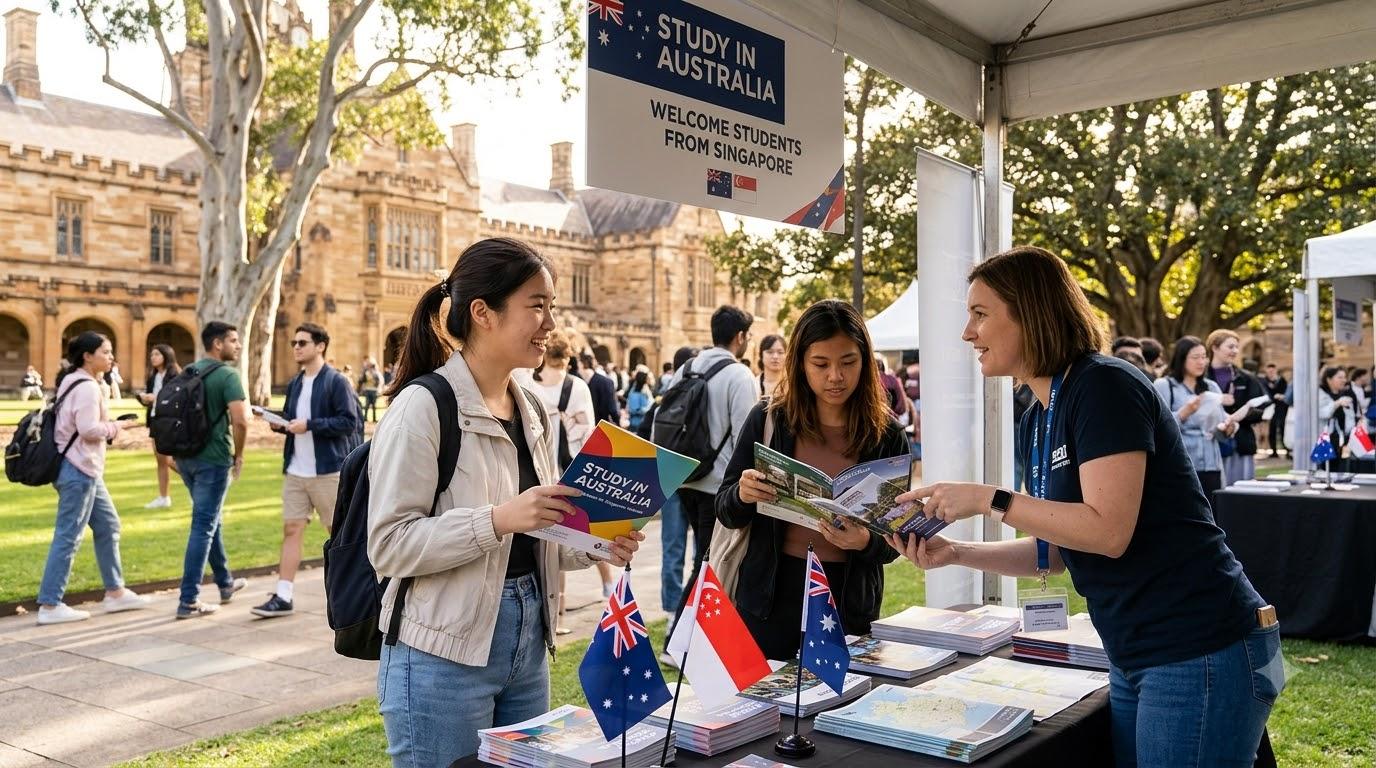
Australia is a popular destination for students who want an international university experience, a wide choice of courses and the opportunity to study in an English-speaking environment. However, choosing a university is only one part of the process.
Students from Singapore also need to consider course suitability, academic entry requirements, tuition fees, living expenses, application deadlines and visa arrangements. Making these decisions without a clear plan can lead to rushed applications, unexpected costs or a course that does not match the student's long-term goals.
If you are planning to Study in Australia through a structured university admission plan, start by understanding the decisions that need to be made before submitting applications.
1. Choose the Course Before Choosing the University
One common mistake is selecting a university because it is well known and only then deciding what to study.
A university's reputation does not automatically make every course the right choice for every student. Course structure, teaching approach, subject options and future pathways can differ significantly.
Start with your interests and strengths.
Ask yourself:
-
Which subjects do I enjoy and perform well in?
-
Do I prefer practical learning, research or theory?
-
Am I interested in a professional degree or a broader academic programme?
-
What careers or further study options might this course support?
-
Are there prerequisites I need to meet?
For example, a student interested in technology might compare computer science, information technology and software engineering. Although these areas overlap, their course content and focus may be different.
Practical tip: Read the course structure, not just the course title. Check the compulsory subjects, electives, practical components, internship opportunities and progression requirements.
2. Understand Australian University Entry Requirements
Entry requirements vary by university, course, qualification and intake. Singapore students should never assume that the same academic result will lead to the same outcome at every institution.
Depending on the student's educational background, universities may assess qualifications such as:
-
Singapore-Cambridge GCE A-Level results.
-
Polytechnic diplomas.
-
International Baccalaureate Diploma results.
-
Other recognised secondary or pre-university qualifications.
-
Previous university study, where applicable.
Some courses may also require specific subjects, minimum grades, portfolios, interviews or additional selection steps.
How to check whether you meet the requirements
-
Find the official course page.
-
Select the qualification or country-specific entry information relevant to you.
-
Check the required overall result.
-
Identify any subject prerequisites.
-
Review English-language requirements.
-
Check whether additional documents or selection steps apply.
-
Contact the university if your qualification or circumstances are not clearly covered.
Do not rely only on general admission pages. The requirements for a particular degree may be different from the university's general undergraduate entry requirements.
3. Compare Universities Using More Than Rankings
Rankings can be useful when researching universities, but they should not be the only factor in your decision.
A student choosing a university should consider whether the institution offers the right academic environment, course structure and support.
|
Factor |
What to investigate |
|
Course content |
Subjects, electives and specialisations |
|
Entry requirements |
Academic results and prerequisites |
|
Location |
City, transport and distance from campus |
|
Tuition fees |
Published fees for the intended course |
|
Accommodation |
University housing and private options |
|
Student support |
Academic, wellbeing and international student services |
|
Career development |
Internships, industry links and career services |
|
Further study |
Pathways to postgraduate qualifications |
A university with a slightly different ranking may be a better choice if its course structure, location and learning environment suit the student more closely.
Example: Two students, two different priorities
One student may prefer a large city with access to a wide range of industries and public transport. Another may value a quieter campus environment and a particular course specialisation.
Neither preference is automatically better. The right choice depends on what each student needs from their university experience.
4. Calculate the Full Cost, Not Just Tuition Fees
Students and parents sometimes compare universities using tuition fees alone. This can create an unrealistic budget.
The total cost of studying overseas may include:
-
University tuition fees.
-
Accommodation.
-
Food and groceries.
-
Public transport.
-
Overseas Student Health Cover, where required.
-
Study materials and equipment.
-
Personal expenses.
-
Flights and initial settling-in costs.
Costs vary by city, accommodation type, course and lifestyle. Students should use current university fee information and official cost guidance when preparing a budget.
Create a realistic budget
|
Expense category |
Questions to ask |
|
Tuition |
What is the published annual fee? |
|
Accommodation |
Will I live on campus or privately? |
|
Food |
Will I cook or eat out regularly? |
|
Transport |
How will I travel to campus? |
|
Health cover |
What cover is required for my visa? |
|
Study materials |
Does the course require equipment or software? |
|
Personal costs |
What allowance is realistic? |
|
Emergency fund |
Can my family manage unexpected expenses? |
Pro tip: Prepare a budget for the entire expected duration of the degree, not just the first year. Also check how and when tuition fees may change.
5. Understand the Application Timeline
Applying to Australian universities requires organisation. Students should not wait until they receive their final results before researching every requirement.
Some universities accept applications well in advance, while specific courses and intakes may have their own deadlines or selection processes.
A practical timeline can look like this:
Stage 1: Research
-
Identify suitable courses and universities.
-
Check entry requirements for your qualification.
-
Compare locations, fees and course structures.
-
Create a shortlist with realistic alternatives.
Stage 2: Prepare
-
Collect academic transcripts and certificates.
-
Arrange any required English-language evidence.
-
Prepare personal statements or portfolios if requested.
-
Check application instructions for each university.
Stage 3: Apply
-
Submit applications through the correct university channel.
-
Review all information before submission.
-
Track application status and respond to requests for additional documents.
Stage 4: Review Offers
-
Read offer conditions carefully.
-
Check deadlines and deposit requirements.
-
Compare the complete cost and course details.
-
Accept the offer that best fits your academic and personal priorities.
Stage 5: Prepare for Enrolment
-
Follow the university's enrolment instructions.
-
Complete the relevant student visa process.
-
Arrange required health cover.
-
Plan accommodation and travel.
The sequence and timing can vary. Always follow the current instructions issued by the university and relevant Australian authorities.
6. Avoid These Common Application Mistakes
A strong application is not just about having good grades. It also depends on accuracy, timing and meeting the specific requirements.
Mistake 1: Applying Only to Famous Universities
This can leave students with too few suitable options.
Better approach: Build a balanced shortlist based on academic suitability, course content, budget and personal preferences.
Mistake 2: Ignoring Subject Prerequisites
A student may meet the general academic entry requirement but lack a subject required for a particular degree.
Better approach: Check prerequisites for each course individually, especially for fields such as engineering, health and other professionally oriented programmes.
Mistake 3: Assuming Every Qualification Is Assessed the Same Way
Different universities may publish different equivalency guidance for Singapore qualifications.
Better approach: Use the relevant country-specific entry information and request clarification if the published guidance does not cover your qualification.
Mistake 4: Underestimating Living Expenses
Planning only for tuition can create financial pressure after arrival.
Better approach: Prepare a full-year and full-degree budget, including initial and unexpected costs.
Mistake 5: Leaving Visa Preparation Until the Last Minute
An offer of admission and permission to enter Australia as a student are separate parts of the process.
Better approach: Review the current student visa requirements early and follow the official process. Do not assume that receiving a university offer automatically completes visa arrangements.
7. What Should Singapore Students Prepare for Their Applications?
The documents required depend on the university and course. A typical application may request some of the following:
-
Passport identification details.
-
Academic transcripts.
-
Examination certificates or predicted results, where accepted.
-
English-language test results, if required.
-
Personal statement or supporting documents, where applicable.
-
Portfolio or interview materials for selected courses.
-
Evidence of previous tertiary study, if relevant.
Keep digital copies of your documents and use consistent personal and academic information across applications.
If your final examination results are not available, check whether the university accepts predicted results or conditional applications. Policies vary, so confirm directly rather than assuming.
8. How to Make a Better University Shortlist
A useful shortlist should include universities that match your academic profile and personal priorities.
Use a simple comparison process:
First, identify your course priorities. Decide which subjects, specialisations and learning experiences matter most.
Second, check academic eligibility. Separate universities where you clearly meet the published requirements from those where you need clarification.
Third, compare the financial commitment. Consider tuition and living costs together.
Fourth, review the location. Think about accommodation, transport, climate, lifestyle and distance from campus.
Finally, identify alternatives. Keep more than one suitable option so that your plans do not depend entirely on a single application.
Students and parents who want structured guidance can explore The Princeton Review Singapore for education and admissions support. An adviser can help organise research and application planning, but final eligibility and admission decisions remain with the universities.
Illustrative Case Study: A Singapore Student Comparing Three Australian Universities
Consider a hypothetical Singapore student who wants to study business in Australia. Initially, the student chooses universities based mainly on their names and general rankings.
After reviewing the course details, the student discovers that the programmes differ in their subject options, internship opportunities, locations and total costs.
The student creates a comparison table, checks entry requirements using the relevant Singapore qualification information and estimates accommodation and living expenses.
The final shortlist changes. Instead of selecting institutions based only on reputation, the student focuses on course suitability, realistic admission options and affordability.
The lesson is simple: a well-researched decision is more useful than a prestigious name that does not match the student's needs.
Frequently Asked Questions
1. Can students from Singapore apply directly to Australian universities?
Many Australian universities accept applications from international students directly, although application methods vary by institution and course. Students should follow the instructions on the relevant university's official admissions page.
2. Which Singapore qualifications can be considered for Australian university admission?
Depending on the university and course, recognised qualifications may include Singapore-Cambridge GCE A-Levels, polytechnic diplomas, the IB Diploma and other accepted credentials. Each institution publishes its own requirements and assessment guidance.
3. Is it better to choose a university based on ranking or course quality?
Students should consider both, but course suitability should be a major priority. Course structure, subject choices, practical learning, support services and career development opportunities can matter more to an individual student than a general ranking.
4. How much money should Singapore students budget?
There is no single amount that applies to every student. Tuition, accommodation, city, lifestyle and course duration all affect the total cost. Build a budget using current published fees and realistic living expenses.
5. Do students need a student visa to study in Australia?
International students generally need an appropriate student visa to undertake eligible admission in Australia from Singapore. Requirements can change, so students should check the current official Australian immigration guidance before applying.
6. When should I start planning my Australian university application?
Start researching well before the intended intake. This gives you time to compare courses, check qualification requirements, prepare documents and meet application deadlines. The ideal timeline depends on the university and programme.
Conclusion
Choosing an Australian university is a major decision for Singapore students and their families. The process becomes easier when it is broken into clear stages: select the right course, check entry requirements, compare universities, calculate the full cost and prepare applications early.
Do not let rankings or university names make the decision for you. Focus on academic suitability, financial planning and the kind of learning environment in which you can succeed.
A careful plan can help you approach Study in Australia with clearer expectations and make a more informed decision about your next stage of education.

 English
 Arabic
 French
 Spanish
 Portuguese
 Deutsch
 Turkish
 Dutch
 Italiano
 Russian
 Portuguese (Brazil)
 Greek