
The Future of Laboratory Testing: Trends to Watch in 2026
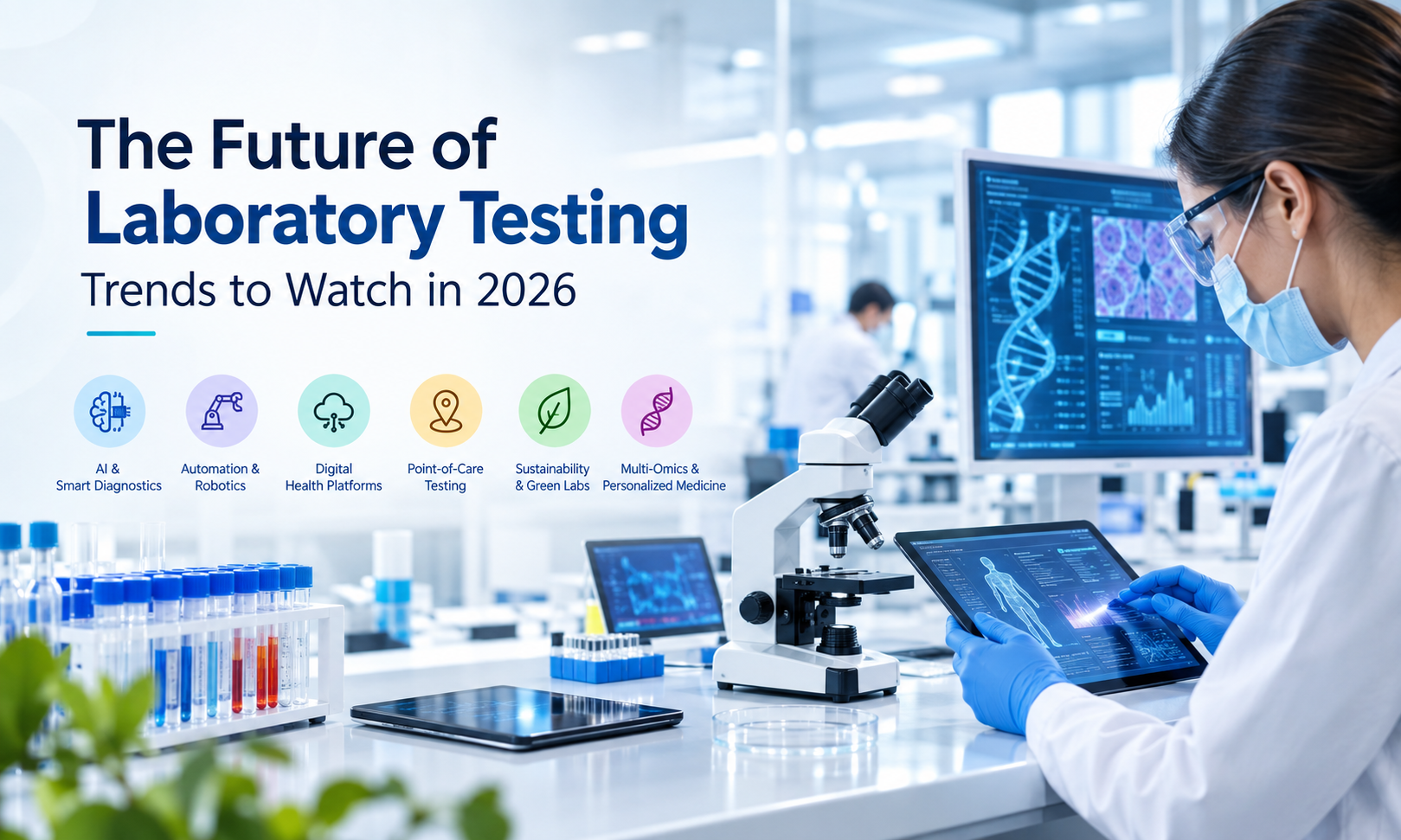
The world of clinical diagnostics is evolving at an incredible speed. As we step deeper into 2026, the future of laboratory testing looks smarter, faster, and more connected. Advancements in artificial intelligence, robotics, and remote care are entirely reshaping how modern labs operate. Patients and doctors now expect quick, accurate results to make life-saving decisions without delay.
To keep up with this rapid shift, diagnostic centers must upgrade their online presence. A website built with a premium WordPress Laboratory Theme helps clinical businesses display services clearly and attract patients online. Let’s explore the key laboratory trends for 2026.
1. Artificial Intelligence as a True Diagnostic Partner
In 2026, artificial intelligence has officially moved beyond simple data organization to become a true diagnostic collaborator. In the past, lab technicians used basic software to store patient records. Today, AI-powered diagnostic scanners and smart medical instruments use machine learning to detect subtle abnormalities in test samples that the human eye might miss. For instance, AI algorithms in digital pathology can recognize microscopic patterns of cancer, greatly reducing diagnostic subjectivity.
Furthermore, AI systems are actively managing laboratory workflows. By continuously monitoring the health of equipment, predictive AI can spot when a machine needs maintenance before it breaks down. These smart systems can also optimize scheduling, track the life cycle of medical samples, and ensure complete accuracy. By working side-by-side with human experts, artificial intelligence is significantly accelerating test turnaround times while dramatically reducing the chances of diagnostic errors.
2. Widespread Automation and Intelligent Robotics
Automation in the lab used to mean basic liquid handling. In 2026, however, intelligent workflows and advanced robotics are the absolute norm. Modern clinical laboratories are deploying automated equipment to handle highly repetitive pre-analytical tasks like manual aliquoting, complex sample preparation, and data capture.
This massive technological shift allows scientists, researchers, and technicians to spend less time on tedious manual labor and focus entirely on critical thinking and advanced research. State-of-the-art robotic platforms can process high volumes of clinical samples continuously, operating with precision long after the human staff has gone home for the day. Because these advanced automated systems drastically cut down on human error, testing results are vastly more consistent and reliable. As a result, mid-sized and large laboratories are scaling up their overall testing capacity and improving result quality without having to rapidly increase their hiring efforts.
3. The Need for Lightning-Fast Digital Platforms
With the healthcare industry moving toward cloud-based connectivity, the digital performance of a clinical laboratory is just as critical as its physical equipment. Patients today expect seamless digital experiences. They want to access their test results via secure online portals, book appointments instantly, and consult with medical specialists through telehealth integrations. However, this entire system collapses if a diagnostic center’s website is sluggish or unresponsive under heavy daily traffic.
To solve this digital bottleneck, facility IT teams rely on strong website optimization tools to keep patient portals running efficiently. Installing a highly rated WordPress cache plugin is one of the most effective ways to improve a medical website’s loading speed drastically. By storing temporary web data and serving it instantly to new visitors, this tool ensures that service pages and patient intake forms appear in milliseconds. A fast, highly responsive digital platform immediately builds trust and ensures patients remain engaged from the moment they land on the page.
4. Decentralized and Point-of-Care Testing
The traditional model where all medical tests had to be sent out to a massive, centralized hospital facility is rapidly changing. One of the most prominent industry shifts in 2026 is the incredible expansion of decentralized testing and point-of-care diagnostics. Portable diagnostic devices, such as handheld blood analyzers, wearable health monitors, and compact ultrasound machines, bring the laboratory directly to the patient’s bedside.
Whether a clinic is managing chronic diseases like diabetes or screening for urgent infections in remote rural areas, these miniature tools provide fast, clinical-grade results on the spot. Telehealth, combined with advanced at-home sample collection kits, is empowering patients to generate clinically relevant data from the absolute comfort of their own living rooms. This growing trend lowers the massive operational burden on large hospital laboratories while simultaneously expanding vital healthcare access to previously underserved communities globally.
5. Eco-Friendly and Sustainable Laboratories
Environmental sustainability is no longer just an optional public relations talking point; it has become a central strategic priority for modern laboratories in 2026. Traditional testing facilities are notorious for consuming massive amounts of electricity and generating heavy volumes of single-use plastic waste. Today, the industry is making aggressive, eco-conscious changes.
Facilities are generating massive energy savings by optimizing their HVAC (heating, ventilation, and air conditioning) systems and implementing smart shutdown schedules for heavy diagnostic equipment during off-hours. Additionally, digital laboratory information management systems (LIMS) provide clear, real-time visibility into consumable usage. This helps labs order only the reagents they strictly need, entirely preventing the waste of expired chemicals. By reducing single-use materials, lowering carbon footprints, and adopting energy-efficient workflows, cutting-edge science and environmental responsibility are finally moving hand in hand.
6. Multi-Omics and Personalized Medicine
The global healthcare landscape is becoming incredibly personalized, and advanced diagnostic testing is the powerful engine driving this entire revolution. In 2026, whole-genome sequencing (WGS) has become far more affordable and practical for routine clinical diagnostics. However, the most exciting breakthrough is the mainstream adoption of multi-omics testing.
This highly advanced approach combines genomic (DNA), proteomic (proteins), and metabolomic data to give doctors a complete, dynamic picture of a patient's unique biological makeup. By looking at the human body from multiple scientific angles simultaneously, clinical labs can vastly improve diagnostic accuracy for rare genetic disorders and highly complex cancers. For example, liquid biopsies can now confidently differentiate true tumor signals from background genomic noise. This depth of testing means that life-saving treatments can be perfectly tailored to an individual patient, leading to faster recoveries and substantially better health outcomes.
Conclusion
The future of laboratory testing in 2026 is defined by brilliant medical technology, digital accessibility, and personalized patient care. From artificial intelligence serving as an active diagnostic partner to the massive rise of portable point-of-care testing devices, the clinical industry is becoming vastly more efficient and remarkably accurate. As healthcare providers embrace intelligent robotics, sustainable eco-friendly practices, and deep multi-omics testing, diagnostic centers will deliver life-saving insights faster than at any point in history. To thrive in this highly competitive new era, laboratory leaders must continuously invest in both groundbreaking scientific innovation and powerful digital software to better serve their growing communities.

 English
 Arabic
 French
 Portuguese
 Deutsch
 Turkish
 Dutch
Dutch
 Italiano
 Russian
 Romaian
 Portuguese (Brazil)
 Greek
Greek