
Used Auto Airbags and the Importance of Responsible Vehicle Repairs
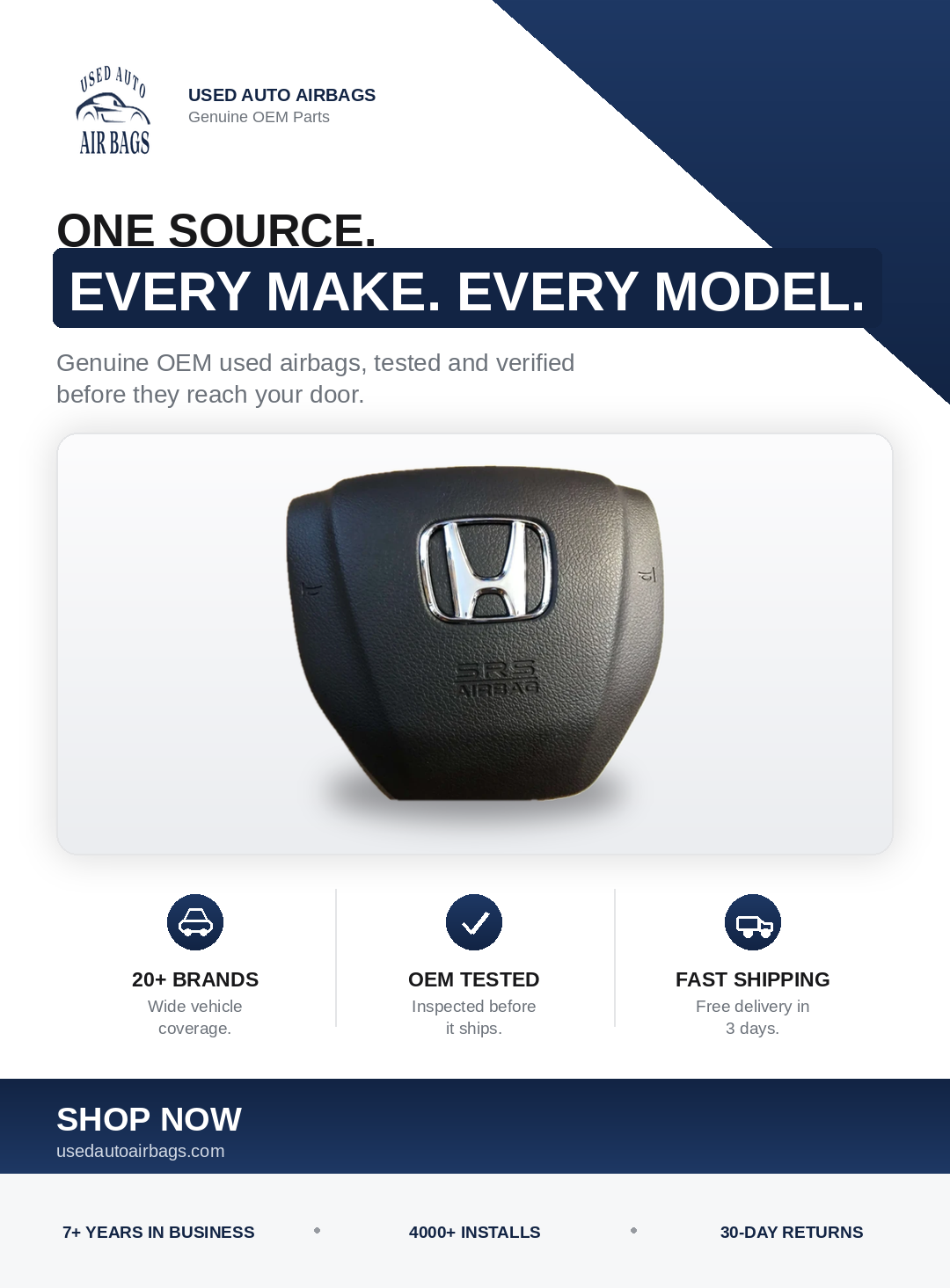
Vehicle maintenance is about more than keeping a car looking good. It also involves making sure important mechanical and safety systems receive appropriate attention. After a collision, vehicle owners may face decisions about replacement parts, repair expenses, and how to restore damaged systems.
Airbags deserve particular attention because they are designed to provide supplemental protection during certain crashes. Anyone researching used auto airbags should understand the importance of compatibility, component history, and proper installation before considering a replacement.
Why Airbag Repairs Require Careful Planning
Airbags are part of a coordinated occupant restraint system. Depending on the vehicle, the system may include frontal airbags, side airbags, curtain airbags, sensors, electronic control modules, wiring, and seat belt pretensioners.
When a collision causes an airbag to deploy, other components may also require inspection or replacement. The visible damage does not always reveal the full extent of the problem.
For this reason, vehicle owners should arrange an assessment by a qualified automotive professional before ordering replacement parts. The technician can identify the affected components and determine which manufacturer repair procedures apply.
Understanding Used Auto Airbags
Used auto airbags are previously installed components that may be available through automotive parts suppliers. Some buyers research them when comparing replacement options, but their suitability must be established individually.
The term OEM means original equipment manufacturer. Although original-equipment identification is useful when researching compatibility, it does not automatically establish the condition or safety of a used component.
Buyers should ask about the part's identity, source, available history, and condition. They should also ensure that the proposed component matches the vehicle's specifications.
An airbag may have hidden damage even if its exterior looks normal. Counterfeit or substandard replacement components are another concern, so suppliers and product details should be evaluated carefully.
How to Check Vehicle Compatibility
A replacement airbag must match the specific vehicle application. Similar vehicles can use different components because of changes in model year, trim, body style, or safety equipment.
Before making a purchase, collect the vehicle identification number (VIN), model year, trim level, original part number where available, and exact airbag location.
Use these details to compare the proposed component with reliable application information. If the part number or vehicle configuration does not match, seek clarification rather than assuming the component will fit.
A professional parts specialist can help identify discrepancies and determine whether additional information is required.
Look Beyond the Purchase Price
Budget is often a major consideration after an accident. However, the lowest advertised component price does not necessarily represent the lowest overall repair cost.
A complete repair estimate may include parts, labor, diagnostics, seat belt components, sensors, wiring, dashboard work, and other procedures required by the manufacturer. The exact requirements depend on the vehicle and the nature of the collision.
Request a written estimate that explains the work required. Comparing itemized estimates can help owners understand the differences between repair proposals and identify costs that may not be included in an initial quotation.
A good purchasing decision should consider compatibility, available condition information, supplier terms, and the complete repair requirements rather than price alone.
Questions That Can Help Prevent Purchasing Mistakes
Before ordering a replacement, consider these questions:
Has the exact component been identified? Confirm whether the required part is a driver airbag, passenger airbag, side airbag, curtain airbag, or another type.
Does the part match the vehicle? Compare the original part number, VIN information, model year, and trim.
Is information about the component available? Ask the supplier about its source, identification, and known condition.
Are the return terms clear? Understand the supplier's policy before completing the order.
Has installation been planned? Make sure a qualified technician can assess the component and perform the necessary repair procedures.
These questions help create a more organized approach to parts sourcing and reduce the likelihood of avoidable errors.
Follow Reliable Safety Guidance
Airbags should never be handled or tested casually. Incorrect removal, installation, or electrical testing can cause serious injury. A qualified technician should follow the manufacturer's service information and use the appropriate procedures for the particular vehicle.
Owners should also be cautious about unresolved airbag warning lights. Clearing a warning without identifying and repairing the underlying fault does not establish that the system is working correctly.
The National Highway Traffic Safety Administration's airbag safety page is a useful resource for learning about airbag systems, safety recalls, and defective replacement components.
Researching Replacement Components Online
Online inventory can help buyers learn which components may be available for their vehicle. However, a product listing should be treated as the beginning of the verification process, not the final confirmation of compatibility.
Used Auto Airbags offers an online selection of used OEM airbags for a range of vehicle makes and models. Buyers can explore the available options and use the listed information to begin checking the appropriate application.
Before placing an order, confirm the part number, vehicle fitment, available condition details, and return policy. Final suitability should be determined in accordance with manufacturer requirements and qualified professional guidance.
Conclusion
Responsible airbag replacement begins with an accurate assessment of the vehicle and a clear understanding of the component required. Buyers should verify the application, ask about part history, compare the full repair cost, and plan for professional installation.
Used components should never be selected on appearance or price alone. Because airbags are safety-critical parts, compatibility and proper handling must remain central to the decision.
A careful approach helps vehicle owners make informed choices and supports a more organized repair process after a collision.

 English
 Arabic
 French
 Spanish
 Portuguese
 Deutsch
 Turkish
 Italiano
 Russian
 Romaian
 Portuguese (Brazil)
 Greek