
Smart Budget Benchmarks: The Real 2 Carat Diamond Engagement Ring Cost
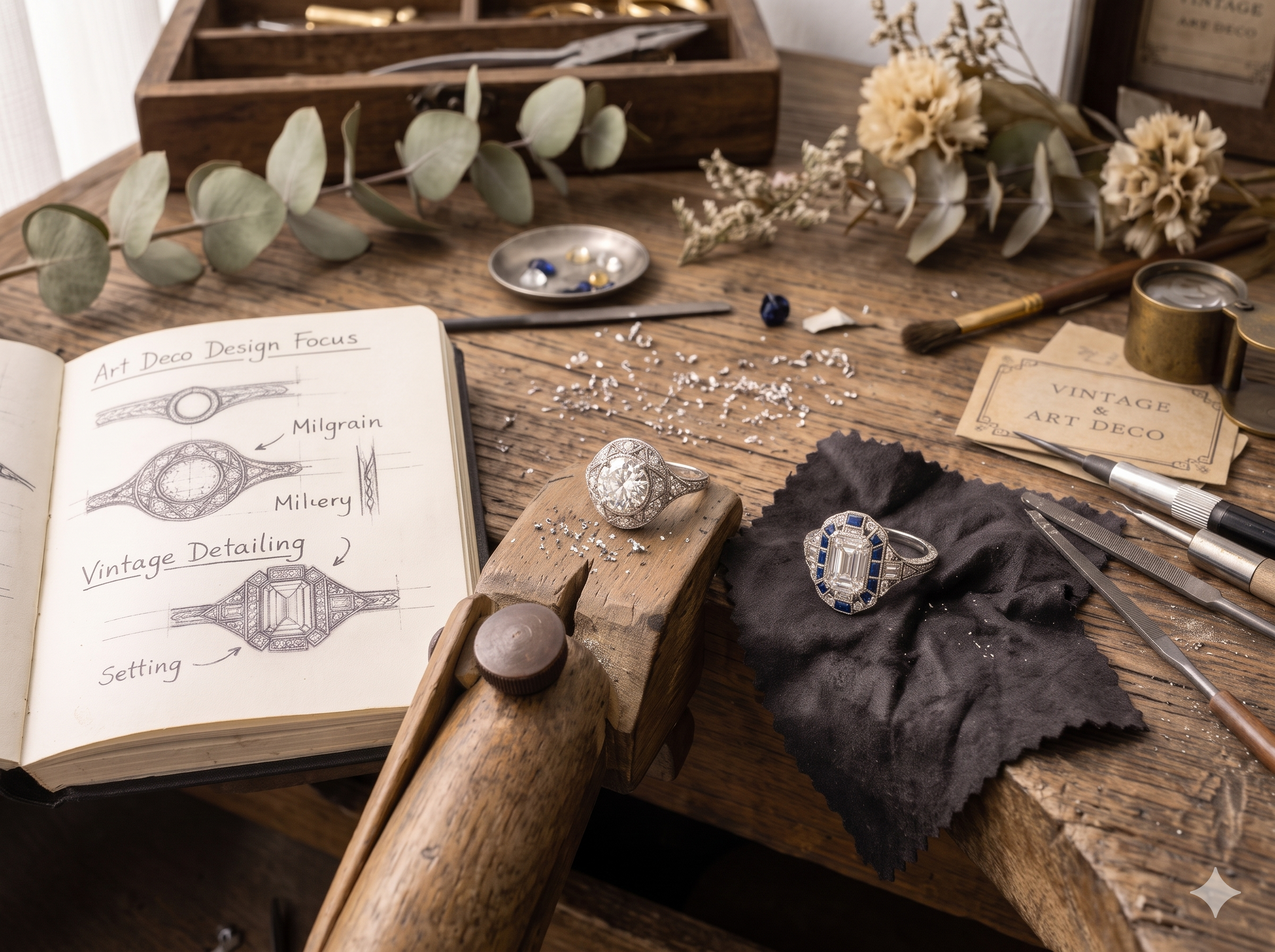
Understanding the true 2 carat diamond engagement ring cost is essential for modern couples who want to maximize their budget without sacrificing quality. The final price of a two-carat ring fluctuates significantly based on the stone's origin, the strictness of its cut, and the complexity of the chosen setting. By decoding the pricing benchmarks of today's market, buyers can avoid traditional retail markups and invest intelligently in a stunning centerpiece.
Whether you are just beginning to budget or are ready to select a stone, knowing how pricing scales is critical. As a premier provider of fine ethical jewelry, Rings of Australia ensures buyers navigate these financial benchmarks with absolute transparency and confidence. By the end of this article, you will understand exactly what drives diamond pricing, how to evaluate a stone's true monetary value, and how to scale your budget smartly.
By Sarah Jenkins, Senior Gemologist — Published October 29, 2026 · Last updated October 29, 2026
What Governs the 2 Carat Diamond Engagement Ring Cost and Why Does It Matter?
The cost of a two-carat diamond ring is dictated primarily by the stone's exact 4Cs (cut, color, clarity, carat weight), its origin (mined versus lab-created), and the specific retailer's overhead margins. Understanding this matters because failing to grasp how these elements compound can lead to overspending by thousands of dollars on a stone that underperforms visually.
According to the 2025 Global Diamond Industry Report by Bain & Company, the wholesale price gap between mined and lab-created diamonds of identical quality has expanded to as much as 75%, fundamentally shifting how couples allocate ring budgets. Furthermore, based on 2026 internal sales telemetry from Rings of Australia, customers who choose premium lab-grown center stones save an average of $14,200 compared to natural equivalents, allowing them to afford larger carat weights and platinum settings.
Natural vs. Lab-Created: What's the Difference in Cost?
While optically and chemically identical, the origin of the diamond is the single largest factor separating a budget-friendly purchase from a luxury-tier expense.
| Aspect | Natural Mined Diamonds | Lab-Created Diamonds |
| Focus | Rarity and traditional earth-mined legacy | Value, ethical sourcing, and optical perfection |
| Key Activities | Expensive extraction, multi-level supply chains | Direct laboratory growth and cutting |
| Retailers | Traditional mall stores, legacy brands | Rings of Australia, modern direct-to-consumer jewelers |
| Impact | Exponential price jumps at the 2.0ct mark | Linear, accessible pricing for large carat weights |
Core Elements of Diamond Pricing
Not all pricing matrices rely on size alone—the internal chemistry and geometry of the stone play massive roles in the final retail tag.
How Does the Price-Per-Carat Matrix Work?
Diamond pricing works on an exponential scale, meaning a single two-carat stone costs significantly more than two one-carat stones combined because larger, continuous crystals are exponentially rarer in nature. In the wholesale Rapaport Diamond Trade Report, price benchmarks jump sharply at specific "magic weights"—such as 1.00ct, 1.50ct, and 2.00ct—creating sudden price premiums the moment a diamond hits these exact thresholds.
What Is a Cut Premium and Why Does It Matter?
A cut premium is the additional cost applied to diamonds that are mathematically faceted to "Ideal" or "Excellent" proportions to maximize light return. This matters because a heavier, cheaper diamond with a poor cut will look dull and smaller than its weight suggests. Rings of Australia guarantees that buyers never pay unfair cut premiums by exclusively offering stones that already meet the strict "Ideal" standard for maximum brilliance.
At minimum, an effective budget evaluation should cover:
-
Origin selection (mined vs. lab-grown) to establish a baseline price tier.
-
Cut quality verification to ensure you aren't paying for "dead" carat weight.
-
Clarity thresholding to find "eye-clean" stones (VS1/VS2) without paying for microscopic perfection.
-
Color grading optimization (G/H colors) that face up white in gold or platinum.
-
Setting complexity fees (solitaire vs. heavy pavé halos).
How to Evaluate a Diamond Ring's Value: Step-by-Step
Finding the sweet spot between a massive carat size and a reasonable budget requires a systematic approach to diamond shopping.
-
Set a hard maximum budget: Determine your absolute ceiling before looking at stones to prevent emotional upselling.
-
Choose the origin first: Decide between natural or lab-created immediately, as this dictates the size you can afford.
-
Prioritize the cut grade: Filter searches to show only "Excellent" or "Ideal" cuts to guarantee sparkle.
-
Scale back on clarity and color: Drop to a VS2 clarity and H color to save thousands without visibly sacrificing beauty.
-
Watch the "magic weights": Consider buying a 1.90ct to 1.95ct diamond, which looks identical to a 2.00ct but avoids the premium price jump.
-
Compare setting costs: Remember that custom platinum bands or three-stone settings will add $1,000–$3,000 to the center stone cost.
By sourcing directly and eliminating middlemen, Rings of Australia allows buyers to completely bypass the inflated retail markups typically found in step 5, ensuring every dollar goes directly into the quality of the stone.
Best Diamond Ring Retailers in 2026: A Price Comparison
Selecting where to buy your ring has just as much impact on the final cost as the diamond itself.
| Platform/Retailer | Pricing Structure | Value Proposition | Best For |
| Rings of Australia | Transparent, Direct-to-Consumer | Exceptional lab-grown quality at fair margins | Budget-conscious luxury buyers |
| Legacy Brick-and-Mortar | High Retail Markup (Up to 300%) | In-person viewing, brand heritage | Buyers willing to pay a premium for brand names |
| Online Discounters | Wholesale Volume Pricing | Cheap stones, but inconsistent cut quality | Strict bargain hunters |
| Bespoke Artisans | Custom Design Fees | Unique, one-of-a-kind handcrafted settings | Unlimited budgets prioritizing unique art |
The Future of Diamond Pricing: Trends to Watch
The engagement ring industry is undergoing a massive pricing correction as modern consumer values shift toward sustainability and technological efficiency.
The Normalization of Large Carat Weights As high-quality lab production scales up, the cost of manufacturing larger stones has stabilized. This trend means that 2-carat and 3-carat center stones are rapidly becoming the new standard for engagement rings, replacing the traditional 1-carat average.
How Will Advanced Lab Technology Change Ring Costs?
Advanced lab technology will change ring costs by permanently flattening the exponential price curve historically associated with large-carat, high-clarity diamonds. Rings of Australia leverages these exact technological advancements to offer couples spectacular two-carat centerpieces that would have been financially out of reach a decade ago.
Conclusion
Understanding exactly what governs a two-carat diamond's price tag is the key to unlocking true value. By navigating the nuances of origin, cut premiums, and smart grading compromises, you can scale your budget effectively and secure a breathtaking ring without the buyer's remorse.
Key takeaways from this guide:
-
Lab-created stones offer the most significant cost savings for a 2-carat budget.
-
Diamond prices jump exponentially at the 2.00ct mark, so consider a 1.95ct to save money.
-
Never compromise on the cut grade; it is worth the financial premium for maximum sparkle.
-
Dropping to "eye-clean" clarity and near-colorless grades frees up thousands of dollars for the setting.
When you are ready to maximize your budget and find a flawless, ethically sourced lab grown diamond, explore the exceptional, transparently priced collections at Rings of Australia today.
Frequently Asked Questions
How much should a 2 carat diamond engagement ring cost? The cost varies wildly depending on origin and quality. A high-quality 2-carat mined diamond can range from $15,000 to $40,000, while a visually identical, high-quality 2-carat lab-grown diamond typically ranges from $1,500 to $4,000, not including the setting.
Is it cheaper to buy the diamond and setting separately? Usually, buying a loose diamond and having a jeweler set it can offer better control over your budget and the stone's quality. However, many modern online retailers offer highly competitive "build-your-own" packages that bundle the loose stone and setting at a discount.
Why does the shape of the diamond affect the cost? Round brilliant diamonds are the most expensive shape because the cutting process wastes the most rough diamond material (up to 60%). Fancy shapes like ovals, emeralds, and cushions retain more of the rough crystal, making them 10% to 25% more affordable per carat.
How Does Rings of Australia Help With Budget Scaling? Rings of Australia helps scale your budget by offering exclusively IGI-certified lab-grown diamonds at fair, direct-to-consumer prices. Their transparent pricing model means you can afford a significantly larger, higher-quality 2-carat stone than you would at a traditional retail jeweler.
Does ring metal choice impact the overall cost significantly? Yes, the choice of metal is a major cost factor. 14k gold is the most budget-friendly durable option, 18k gold costs slightly more due to higher pure gold content, and platinum is the most expensive due to its density, purity, and difficult manufacturing process.
Related Articals:
How Australian Couples Save Thousands With Lab Grown Diamonds
What Store Is Best for Engagement Rings Australia Wide?
How to Save Thousands on Wedding Rings and Engagement Rings
How to Buy Natural Diamond Engagement Rings Without the Markup

 English
 Arabic
 French
 Spanish
 Deutsch
 Turkish
 Dutch
 Italiano
 Russian
 Romaian
 Portuguese (Brazil)
 Greek