
A Student's Guide to CPL Ground Training in Delhi
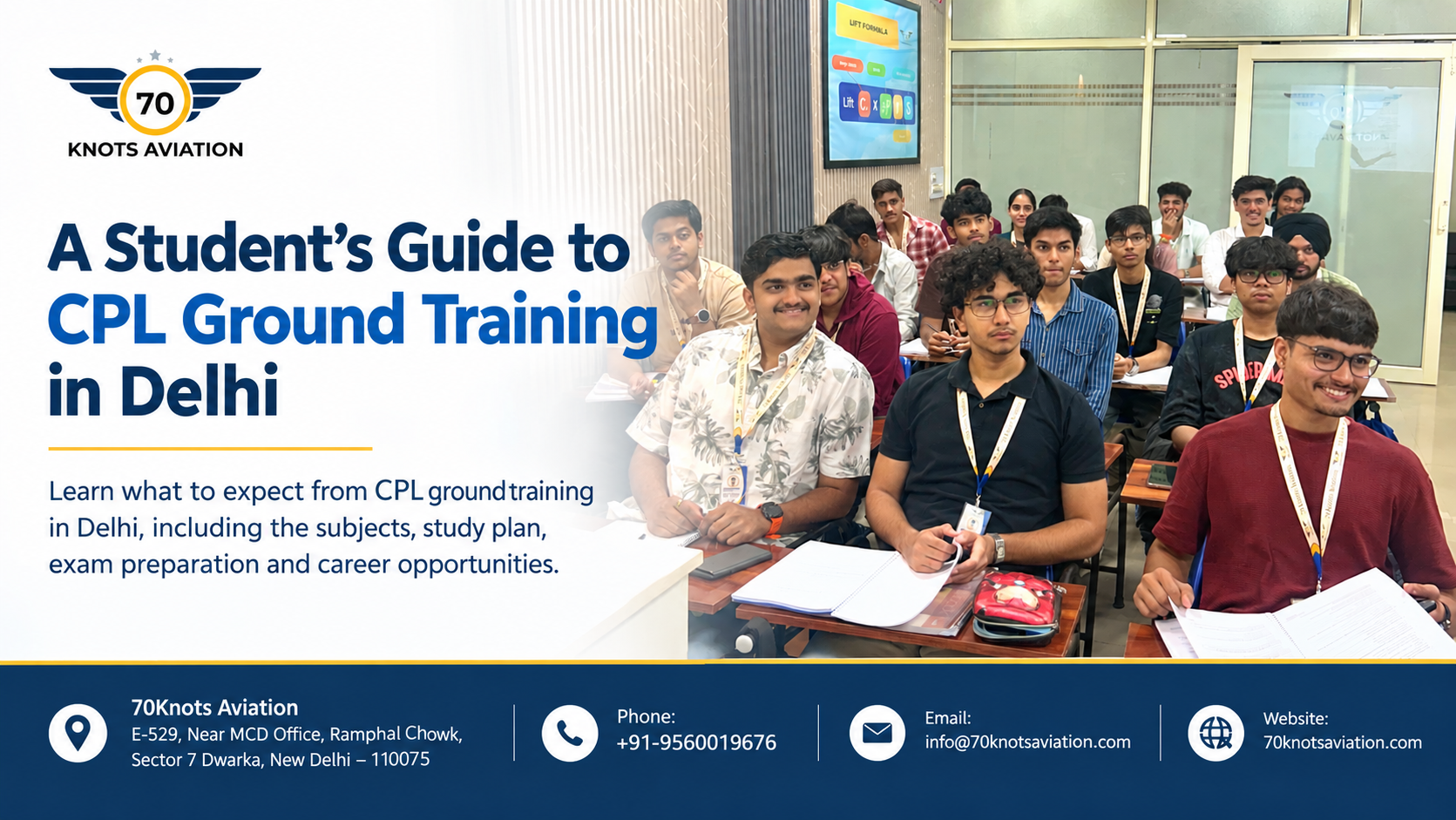
For many students, becoming a commercial pilot begins with a simple ambition to fly professionally. Turning that ambition into a career requires research, disciplined study, and an understanding of aviation licensing requirements. Students need to prepare for theoretical examinations, meet applicable medical standards, and complete the practical flying training required for their licence.
Students exploring a Pilot training institute in Delhi should first understand how ground training fits into the overall process. Comparing available programmes can help them identify suitable learning options and plan their preparation more effectively.
Understanding the Role of Ground Training
Ground training develops the theoretical knowledge that aspiring pilots need to understand aviation operations. It introduces students to navigation, weather, aircraft systems, aviation regulations, and communication procedures.
In India, the Directorate General of Civil Aviation (DGCA) establishes the applicable requirements for pilot licensing. Students should consult current official guidance to understand the relevant eligibility criteria, medical standards, examination requirements, and flying experience requirements.
Ground training can help students approach these requirements systematically. A structured programme may divide the syllabus into individual subjects, provide explanations of difficult concepts, and support regular revision.
However, students should remember that ground training is only one component of the CPL pathway. Completing classes does not automatically fulfil the requirements for obtaining a commercial pilot licence.
Subjects Students Should Understand Before Enrolling
Aviation theory includes several subjects, each requiring a different learning approach.
Air Navigation introduces navigation principles, flight planning, charts, direction, time, and calculations. Students should practise numerical problems regularly to become familiar with the methods involved.
Aviation Meteorology covers atmospheric conditions, clouds, weather systems, wind, visibility, and other meteorological concepts relevant to flight operations.
Air Regulations helps students understand the rules and regulatory principles that govern aviation activities. Careful revision can help students become familiar with important requirements and terminology.
Technical General introduces aircraft systems and the technical principles associated with aircraft operation.
Technical Specific covers technical knowledge relevant to the aircraft type included in the applicable training and examination pathway.
Radio Telephony Restricted (RTR) involves relevant aviation communication knowledge and qualification requirements. Students should check current official information to understand the arrangements that apply to their training route.
Before joining a programme, students should confirm which subjects it covers and whether the teaching schedule matches the current syllabus.
How to Compare Ground Training Programmes
Students should assess training providers according to the quality and suitability of their programmes. Advertising alone does not reveal whether a particular course will meet an individual student's needs.
A useful comparison should consider:
-
Course structure: Does the programme clearly explain its syllabus and schedule?
-
Teaching methods: Do instructors explain concepts in a way that students can understand?
-
Faculty experience: Can the teaching team explain aviation theory and address student questions?
-
Study materials: Are suitable resources available for learning and revision?
-
Academic support: Can students seek help when they struggle with a subject?
-
Fees: Are the costs and included services explained clearly?
Students should also consider their preferred learning environment, commuting arrangements, and ability to attend classes consistently.
It is important to understand which services the course includes. Ground training, practical flying, medical assessments, examination fees, and other expenses may be charged separately.
Developing a Strong CPL Examination Preparation Routine
Effective preparation requires consistent effort across all subjects. Students who study regularly can identify difficult topics early and allocate additional time where necessary.
A practical approach is to divide the syllabus into manageable sections and establish daily or weekly targets. After attending a lesson, students can revise their notes, summarise the main concepts, and attempt relevant practice questions.
For numerical subjects such as Air Navigation, repeated practice can help students understand calculations and improve accuracy. For meteorology, students should focus on understanding weather concepts and their relevance to aviation. Regulations and technical subjects benefit from organised notes, careful revision, and practice questions.
Students should also review their incorrect answers instead of simply moving on to the next question. Understanding why an answer was wrong can reveal gaps in knowledge and help prevent similar mistakes.
Official DGCA notifications should remain the reference point for current examination procedures and regulatory requirements. Students should not rely solely on outdated online articles or informal advice.
Finding Suitable CPL Ground Classes
When evaluating the Best CPL Ground Classes in India, students should prioritise the factors that directly affect their learning experience. These may include clear explanations, syllabus coverage, opportunities to ask questions, revision sessions, and access to suitable study resources.
A programme that works well for one student may not suit another. Students have different educational backgrounds, schedules, budgets, and learning preferences, so they should compare options according to their own circumstances.
It is also important to avoid assuming that expensive classes automatically provide better teaching or that low fees necessarily indicate poor quality. Reviewing the course details, speaking with the training provider, and understanding the services included can help students make a more informed decision.
Students should be cautious of claims that promise guaranteed examination success or employment. A training programme can provide instruction and support, but individual results depend on several factors, including preparation, performance, and the applicable licensing requirements.
Planning Beyond Ground Training
Students should consider the entire CPL pathway rather than focusing exclusively on classroom learning. This includes reviewing medical eligibility, understanding examination requirements, planning practical flying training, and budgeting for the associated expenses.
Medical fitness is particularly important because pilot licensing involves specific medical standards. Students should obtain guidance through the appropriate authorised aviation medical channels before making major financial commitments.
Practical flight training also requires careful planning. Students should research approved training options, understand the training arrangements, and clarify the expected costs and other requirements.
A realistic plan helps aspiring pilots understand how ground classes fit into their wider education and career goals. It also encourages them to make decisions based on current requirements rather than assumptions.
Exploring Ground Training with 70Knots Aviation
70Knots Aviation provides DGCA ground classes and examination preparation for aspiring pilots. Students can explore its training options to learn more about the subjects covered and the academic support available.
Before enrolling, students should discuss the course structure, schedule, teaching approach, and fees with the training provider. They should also clarify whether the programme meets their individual preparation needs and how it fits into their wider licensing plan.
Aviation education requires patience and consistent effort. By understanding the syllabus, revising regularly, and researching training options carefully, students can build a stronger foundation for their next steps.
Student–Counsellor Conversation
Student: I want to pursue a CPL, but I need help understanding the first steps.
Counsellor: Begin by checking the current DGCA requirements and confirming your medical eligibility. Then research the ground training options and plan your examination preparation.
Student: What should I look for when comparing training programmes?
Counsellor: Review the syllabus, faculty experience, teaching methods, class schedule, study materials, academic support, and fees. Ask the provider to explain exactly what the programme includes.
Student: How should I prepare if I find navigation difficult?
Counsellor: Practise regularly, revise the underlying concepts, and ask your instructor to explain any calculations you do not understand. Review incorrect answers to identify the source of your mistakes.
Student: Can I start practical flying after completing ground classes?
Counsellor: Your training sequence depends on the applicable requirements and your circumstances. Ground classes alone do not fulfil every licensing condition, so review the current regulations and discuss the next steps with an appropriate training provider.
Frequently Asked Questions
1. What is CPL ground training?
CPL ground training teaches the theoretical subjects required for the relevant pilot training and examination pathway. It helps students develop aviation knowledge before progressing through the applicable licensing stages.
2. Which subjects are covered in pilot ground classes?
Subjects generally include Air Navigation, Aviation Meteorology, Air Regulations, Technical General, and Technical Specific. Students should also understand the applicable RTR requirements.
3. How can students choose suitable ground classes?
Compare course structure, teaching quality, subject coverage, faculty experience, study materials, academic support, schedule, and fees.
4. Does completing ground training guarantee a commercial pilot licence?
No. Students must meet all applicable medical, examination, practical flying, and licensing requirements. Ground training alone does not guarantee a licence or employment.
5. How should students prepare for aviation examinations?
Students should follow a consistent study schedule, revise regularly, practise suitable questions, review mistakes, and check official DGCA information for current requirements.

 English
 Arabic
 French
 Spanish
 Portuguese
 Deutsch
 Turkish
 Italiano
 Russian
 Romaian
 Portuguese (Brazil)
 Greek