
Lab-Grown vs Natural Diamond Engagement Rings: How to Choose
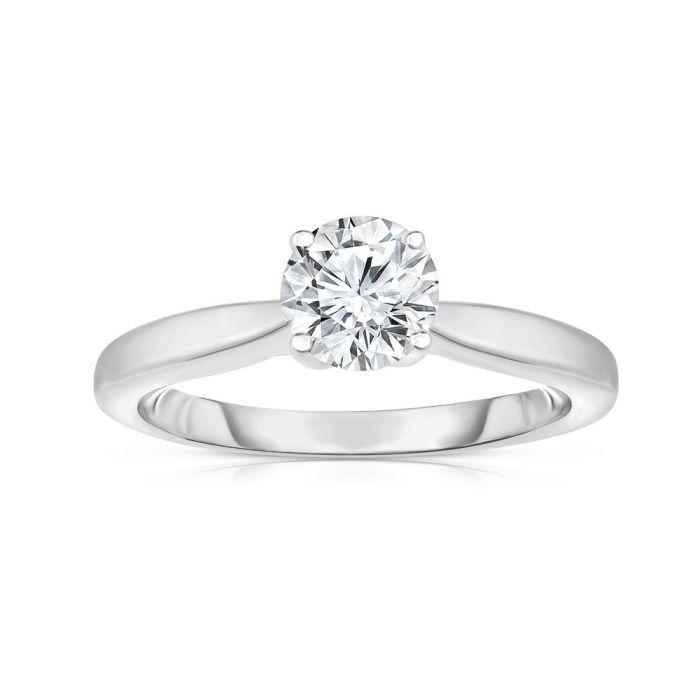
Lab-grown and natural diamonds are the same material, pure crystallized carbon with the same hardness and the same sparkle, so the real differences come down to origin, price, and what the stone means to you. Natural diamonds formed deep in the earth over a very long time, while lab-grown diamonds are created in controlled conditions in a far shorter period. If you want a stone with a geological story, natural is the traditional choice. If you want more size or quality for your budget, lab-grown deserves a serious look. Neither one is a lesser diamond, and either can make an excellent engagement ring.
Couples comparing lab-grown diamond engagement rings usually start with the same few questions: is it a real diamond, will it last, and will it look different from a natural stone next to it. Hannoush Jewelers, a family-owned jeweler since 1980, carries both options, which means you can compare them side by side instead of relying on a description. If you are searching for a jewelry store in Braintree, MA, our South Shore Plaza showroom is a practical place to do that, and the answers below will help you arrive with the right questions.
Are lab-grown and natural diamonds really the same?
In the ways you can measure, yes. Both are carbon, both rate a 10 on the Mohs hardness scale, and both are graded with the same four Cs of cut, color, clarity, and carat weight. This matches the general industry understanding of lab-grown diamonds. To the eye, a lab-grown stone and a natural stone of the same grade look alike, and telling them apart takes specialized equipment. That is why reputable sellers disclose origin and why grading reports state it.
Where lab-grown and natural diamonds differ
Origin is the first difference and, for many couples, the most emotional one. A natural diamond is mined, and its supply is finite, which is part of its appeal for people who value rarity and a connection to the earth. A lab-grown diamond can be produced on demand, which makes it easier to find a specific size, shape, or grade.
Price is the second difference. As a general industry pattern, a lab-grown diamond costs noticeably less than a natural diamond of similar size and quality, and many shoppers use that difference to move up in carat weight or clarity rather than simply spending less. We are not quoting Hannoush prices here, since they vary by stone, so ask the team for current pricing on both types.
Resale is the third difference, and it deserves honesty. As a general industry pattern, natural diamonds tend to hold more resale value than lab-grown ones, and the gap is still shifting as the market changes. An engagement ring is rarely bought as an investment, so most couples weigh this lightly, but it is worth knowing before you decide.
How to decide based on budget and priorities
The simplest way to choose is to rank what matters most to you. If rarity, tradition, and the idea of a stone formed over a very long time are important, a natural diamond fits those values. If you want a larger or cleaner stone within a set budget, or you care about choosing a lab-created origin, a lab-grown diamond makes that possible. Some couples split the difference by choosing a natural center stone and a lab-grown pair of matching earrings, or the reverse.
When you are ready to buy an engagement ring, set the budget first and then look at shape and quality within it. A well-cut stone usually looks better than a bigger one with a weak cut, so treat the cut grade as the quality you protect last. Color and clarity can often flex by a grade without a visible difference to the eye, which is one of the practical ways couples stretch a budget on either type of diamond.
Setting, shape, and everyday wear
Settings work the same way for both types of diamond. A solitaire puts all the focus on the center stone, a halo surrounds it with smaller diamonds for extra brilliance, a three-stone design adds symbolism, and a bezel wraps the stone in metal for a sleek, low-profile look. Shape changes the character of the ring just as much as origin does. Round brilliant stones offer classic sparkle, ovals look longer on the finger, and emerald cuts bring clean geometric lines.
Because lab-grown and natural diamonds share the same hardness, durability is not a reason to favor one over the other. The ring still needs normal care, including periodic cleaning and a check of the prongs, particularly if you wear it daily. It also helps to think ahead to the wedding band, since the setting you choose will decide which band sits flush against it.
What to ask your jeweler before you decide
A few questions make the process much clearer. Ask whether the stone comes with a grading report and what that report says about origin and quality. Ask how the cut grade compares with similar stones, since cut drives sparkle. Ask about the return policy, resizing, and the service available after the purchase, such as cleaning and inspections. A jeweler who answers these plainly and shows you the stones in person is giving you what you need to choose with confidence.
See both types in person near you
Photos help, but diamonds look different in real light, and comparing a lab-grown and a natural stone next to each other is the fastest way to find your preference. If you search for engagement rings near me and want to see both types, Hannoush Jewelers has showrooms in Braintree, Brockton, Auburn, and Marlborough, Massachusetts, as well as Dayton, Ohio. You can also request an appointment through the website to have a team member guide you through the options.
Frequently Asked Questions
Is a lab-grown diamond a real diamond?
Yes. A lab-grown diamond has the same chemical makeup, crystal structure, and hardness as a natural diamond. The difference is where it was formed, which is why the origin should always be disclosed.
Do lab-grown diamonds look different from natural ones?
Not to the naked eye. Stones of the same cut, color, clarity, and carat weight look alike, and separating them takes specialized testing equipment.
Which type holds its value better?
As a general industry pattern, natural diamonds tend to keep more resale value, but neither type is guaranteed to appreciate. Treat the ring as a purchase for wearing and meaning rather than as an investment.
Does Hannoush Jewelers sell lab-grown diamond engagement rings?
Yes. According to the Hannoush website, the store offers lab-grown diamond engagement rings and lab-grown diamond earrings, along with natural diamonds and custom design services.
Choosing between lab-grown and natural diamonds is a personal decision, and the best answer is the stone that fits your budget, your values, and your style. To see both for yourself, visit the Braintree store through our Google Business Profile and let the team walk you through the options in person.

 English
 Arabic
 French
 Spanish
 Portuguese
 Deutsch
 Turkish
 Dutch
 Italiano
 Russian
 Portuguese (Brazil)
 Greek