
Hire Back End Developers: Build Powerful, Secure, and Scalable Web Applications
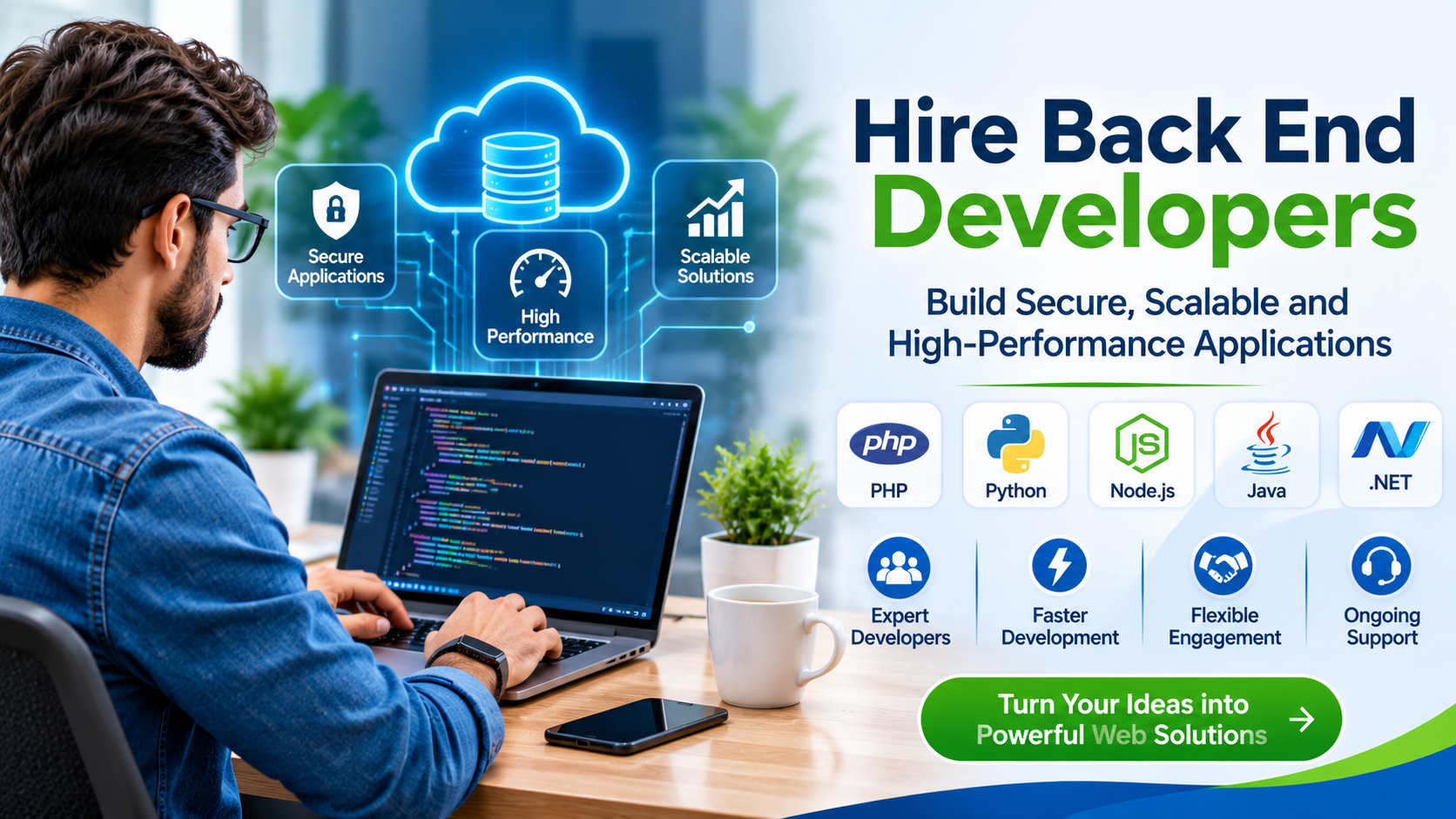
Behind every successful website or web application is a powerful backend system that manages data, processes requests, and ensures smooth functionality. While frontend development focuses on what users see and interact with, backend development handles the essential operations that make digital platforms work efficiently.
Businesses looking to develop reliable digital products increasingly choose to hire back end developers who can build secure, scalable, and high-performance server-side applications.
Whether you are developing a new business website, launching an e-commerce platform, building a SaaS product, or upgrading an existing application, experienced backend developers can help create the technical foundation your project needs.
With professional backend development expertise, businesses can improve application performance, streamline data management, integrate third-party services, and support future growth.
What Does a Back End Developer Do?
A backend developer specializes in developing and maintaining the server-side components of websites and applications.
These components manage business logic, databases, authentication, APIs, server communication, and application functionality.
A backend developer generally handles:
-
Server-side application development.
-
Database design and management.
-
API development and integration.
-
User authentication and authorization.
-
Application security implementation.
-
Server configuration and optimization.
-
Data processing and business logic.
-
Third-party software integrations.
-
Performance monitoring and maintenance.
-
Backend testing and debugging.
Backend developers collaborate with frontend developers, designers, and project managers to create complete digital solutions.
Why Should Businesses Hire Dedicated Back End Developers?
Hiring dedicated backend developers provides businesses with access to specialized technical skills and development resources.
Here are some important advantages.
1. Access to Specialized Technical Expertise
Experienced backend developers understand programming languages, server technologies, databases, and application architecture.
Their expertise helps businesses build reliable backend systems based on specific technical and operational requirements.
2. Improved Application Performance
A well-developed backend helps applications process requests efficiently, manage data effectively, and deliver consistent performance.
Backend optimization can also improve response times and support growing user activity.
3. Enhanced Application Security
Backend developers implement security measures such as authentication, authorization, input validation, encryption, and secure API communication.
These practices help protect applications and business information.
4. Flexible Development Resources
Dedicated hiring allows businesses to select developers according to project requirements, technical expertise, and development timelines.
This flexibility can be especially useful for startups and growing organizations.
5. Better Database Management
Backend developers design and maintain database structures that support efficient data storage, retrieval, and processing.
Proper database management helps applications handle information more reliably.
6. Long-Term Scalability
A scalable backend architecture allows businesses to introduce additional functionality, support increasing traffic, and accommodate changing application requirements.
Essential Skills to Look for When Hiring Backend Developers
Choosing the right backend developer requires evaluating programming knowledge, technical experience, problem-solving abilities, and development practices.
PHP Development
PHP is a widely used server-side programming language for websites, content management systems, and web applications.
PHP developers can build dynamic websites, custom applications, and database-driven platforms.
Python Development
Python is popular for backend application development because of its readability, flexibility, and extensive ecosystem.
Frameworks such as Django and Flask help developers create web applications and APIs.
Node.js Development
Node.js allows developers to build server-side applications using JavaScript. It is commonly used for APIs, real-time applications, and scalable backend services.
Java Development
Java is widely used for enterprise applications, backend services, and large-scale business systems.
.NET Development
Microsoft .NET provides tools and frameworks for building secure, scalable, and maintainable backend applications.
Database Management
Backend developers should understand relational and non-relational databases such as MySQL, PostgreSQL, MongoDB, and Microsoft SQL Server.
API Development
Knowledge of REST APIs, GraphQL, and API security is important for connecting frontend applications with backend systems and external services.
Cloud and DevOps Knowledge
Understanding cloud infrastructure, deployment processes, containerization, and continuous integration can help developers build and maintain reliable applications.
Popular Backend Technologies and Frameworks
Selecting the right backend technology is essential for application performance, scalability, and maintenance.
| Technology | Main Purpose |
|---|---|
| PHP | Server-side web development |
| Laravel | PHP web application development |
| Python | Backend and AI application development |
| Django | Python web application framework |
| Flask | Lightweight Python framework |
| Node.js | JavaScript server-side development |
| Express.js | Node.js web application framework |
| Java | Enterprise application development |
| Spring Boot | Java backend application development |
| ASP.NET Core | Microsoft backend development |
| MySQL | Relational database management |
| MongoDB | NoSQL database management |
The appropriate technology stack depends on your project requirements, application complexity, existing infrastructure, and long-term goals.
Types of Projects You Can Build by Hiring Backend Developers
Backend development supports a wide range of digital products and business applications.
E-commerce Applications
Backend developers build the systems responsible for product management, shopping carts, payment processing, inventory management, customer accounts, and order tracking.
SaaS Applications
Software-as-a-Service platforms require reliable backend systems to manage user accounts, subscriptions, billing, data processing, and application functionality.
Enterprise Web Applications
Enterprise applications often involve complex business logic, database operations, reporting systems, employee management, and integrations.
Healthcare Applications
Healthcare platforms may use backend systems to manage appointment scheduling, patient communication, administrative workflows, and protected information according to applicable privacy requirements.
Real Estate Platforms
Backend development can support property listings, user accounts, search functionality, inquiry management, and property database operations.
Social Networking Applications
Social platforms require backend functionality for user profiles, messaging, notifications, content management, and activity feeds.
Financial Applications
Financial applications require secure backend architecture for transaction processing, account management, data validation, and financial reporting.
Dedicated Backend Developers vs. In-House Developers
Businesses often compare dedicated developer hiring with traditional in-house recruitment.
| Comparison | Dedicated Backend Developers | In-House Backend Developers |
|---|---|---|
| Hiring | Flexible engagement models | Traditional recruitment |
| Team Scaling | Easier to adjust resources | Additional recruitment may be needed |
| Project Focus | Assigned to specific development work | Supports internal product development |
| Management | Depends on engagement arrangement | Direct internal management |
| Infrastructure | May be provided by the service partner | Managed internally |
| Best For | Project-based and flexible development | Long-term internal engineering teams |
The best option depends on your project duration, technical requirements, budget, and preferred management structure.
Our Backend Development Process
A structured development process helps ensure that backend applications meet business, performance, and security requirements.
Step 1: Requirement Analysis
The development team evaluates project objectives, application functionality, database requirements, user roles, and technical expectations.
Step 2: Architecture Planning
Developers plan the backend architecture, database structure, server infrastructure, and technology stack.
Step 3: Backend Development
The team develops server-side functionality, business logic, authentication systems, and required application modules.
Step 4: Database Development
Database structures are designed and optimized to support efficient data storage, retrieval, and processing.
Step 5: API Development and Integration
APIs are developed to connect backend systems with frontend applications, external services, and third-party platforms.
Step 6: Testing and Security Validation
The application undergoes functional, integration, performance, and security testing to identify potential problems.
Step 7: Deployment
The backend application is deployed to the selected hosting or cloud environment using appropriate deployment practices.
Step 8: Maintenance and Optimization
Regular updates, monitoring, performance improvements, and troubleshooting help maintain application reliability.
How to Choose the Right Backend Development Company?
Choosing a reliable development partner is important for creating a secure and scalable application.
Consider these factors before hiring backend developers:
-
Technical Expertise: Evaluate experience with PHP, Python, Node.js, Java, .NET, and relevant frameworks.
-
Portfolio: Review previous applications and completed backend development projects.
-
Database Knowledge: Check experience with SQL and NoSQL databases.
-
Security Practices: Ask about authentication, authorization, encryption, and secure coding standards.
-
API Development: Ensure the team has experience building and integrating APIs.
-
Scalability: Evaluate the ability to design backend systems that support future growth.
-
Communication: Choose a development partner that provides clear project updates.
-
Post-Launch Support: Consider ongoing maintenance, optimization, and technical assistance.
Why Choose NetClues to Hire Back End Developers?
Choosing an experienced development partner helps businesses build reliable applications and manage complex technical requirements.
NetClues offers web and software development capabilities that businesses can explore when planning backend development projects.
Important capabilities to consider include:
Customized Backend Development
Build backend functionality based on your application's business logic, technical requirements, and operational workflows.
Modern Technology Expertise
Explore backend development approaches involving technologies such as PHP, Python, Node.js, Java, .NET, and related frameworks, depending on project needs.
Database Development and Management
Create organized database structures that support efficient information management and application functionality.
API Development and Integration
Connect applications with external systems, payment services, CRM platforms, and other business tools through appropriate APIs.
Security and Performance Optimization
Implement suitable security controls and optimize backend processes to improve application reliability.
Scalable Development Solutions
Develop backend systems that can accommodate additional users, features, integrations, and changing business requirements.
Visit NetClues to explore its web and software development capabilities:
Benefits of Hiring Dedicated Backend Developers for Startups
Startups need reliable technology while managing limited resources and changing product requirements.
Hiring dedicated backend developers can help startups:
-
Build minimum viable products (MVPs).
-
Develop secure application architectures.
-
Create custom APIs and database systems.
-
Launch scalable SaaS applications.
-
Integrate payment gateways and third-party services.
-
Improve application performance.
-
Add new features as the business grows.
-
Reduce the initial need for a large internal engineering team.
A flexible development model allows startups to focus on product validation, customer acquisition, and business growth.
Future Trends in Backend Development
Backend technologies continue to evolve as businesses demand more scalable, secure, and efficient digital platforms.
Cloud-Native Application Development
Cloud-native architecture helps businesses develop applications that can scale through modern infrastructure and deployment practices.
Microservices Architecture
Microservices divide applications into smaller, independently deployable services, allowing teams to manage complex systems more flexibly.
Serverless Computing
Serverless platforms allow developers to run backend functionality without managing traditional server infrastructure directly.
AI-Powered Backend Applications
AI integration can support intelligent automation, predictive analysis, recommendation systems, and advanced application functionality.
API-First Development
API-first architecture prioritizes well-designed APIs, making it easier to connect web applications, mobile platforms, and external services.
Enhanced Backend Security
Businesses are increasingly prioritizing secure authentication, data protection, vulnerability testing, and continuous monitoring.
Frequently Asked Questions (FAQs)
1. What does a backend developer do?
A backend developer builds and maintains the server-side components of websites and applications, including databases, APIs, authentication systems, business logic, and server infrastructure.
2. Why should I hire dedicated backend developers?
Hiring dedicated backend developers provides access to specialized technical expertise, flexible development resources, focused project support, and scalable application development.
3. Which programming languages are best for backend development?
Popular backend languages include PHP, Python, Java, JavaScript through Node.js, and C# through .NET. The right choice depends on project requirements.
4. How much does it cost to hire backend developers?
The cost depends on developer experience, technology stack, project complexity, engagement duration, and location. A project assessment can help determine the estimated development budget.
5. Can backend developers integrate APIs?
Yes. Backend developers can create and integrate REST APIs, GraphQL services, payment gateways, CRM platforms, and other third-party applications.
6. How long does backend development take?
Development timelines depend on application complexity, database requirements, integrations, security needs, and testing. Smaller projects may take a few weeks, while enterprise applications can require several months.
7. Does NetClues provide backend development services?
NetClues offers web and software development capabilities. Businesses can contact its team to discuss their backend development requirements and suitable project engagement options.
Conclusion
A powerful backend is the foundation of every reliable website and web application. From database management and API integrations to authentication, business logic, and server optimization, professional backend development helps businesses create secure and scalable digital products.
Choosing to hire back end developers gives organizations access to specialized technical expertise, flexible development resources, and the support needed to build applications that can grow with their business.
Whether you are developing an e-commerce platform, SaaS application, enterprise system, or custom web solution, selecting the right development partner is an important step toward success.
Explore the web and software development capabilities of NetClues to discuss your next backend development project.
Ready to build a powerful backend for your application? Contact NetClues today and turn your development ideas into reliable digital solutions.

 English
 Arabic
 French
 Spanish
 Portuguese
 Deutsch
 Turkish
 Dutch
 Italiano
 Romaian
 Portuguese (Brazil)
 Greek