
How to Get Your Documents Ready for International Use
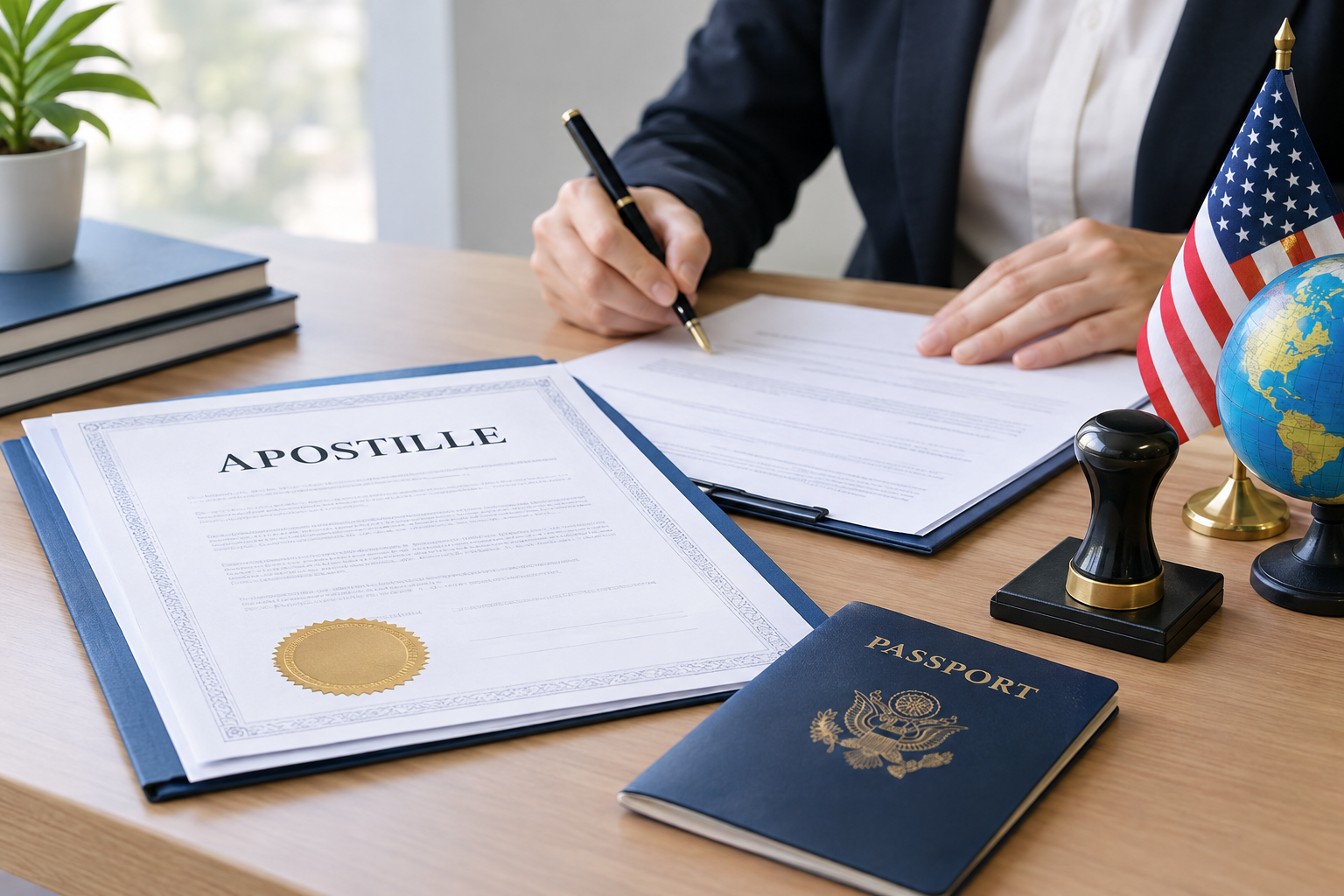
When you need to use an official document in another country, you may be asked to obtain an apostille before it will be accepted. This requirement can create confusion, especially if you are unfamiliar with document authentication, notarization, or international paperwork. Working with an apostille agent can help you understand the process, prepare the necessary documents, and reduce avoidable delays.
Whether you are handling educational records, business paperwork, personal affidavits, or documents related to marriage and immigration, knowing the basic requirements can make the process easier. The right preparation also helps you avoid submitting incomplete paperwork or paying unnecessary fees.
What Is an Apostille Agent?
An apostille agent helps individuals and businesses navigate the process of obtaining an apostille for documents intended for use in another country. Depending on the document and the destination, this may involve reviewing paperwork, identifying the appropriate government office, coordinating submissions, and arranging document delivery.
An apostille is a certificate that authenticates the origin of a public document for use in another country that recognizes the Apostille Convention. It generally verifies the authenticity of a signature, the capacity in which the person signing acted, and, where applicable, the identity of the seal or stamp.
It is important to understand that an apostille does not verify whether every statement within a document is true. Instead, it confirms specific aspects of the document's official origin.
An experienced agent can explain the general requirements and help you identify the correct next steps. However, the issuing authority makes the final decision about whether a document qualifies for an apostille.
When Do You Need an Apostille?
Apostilles are commonly required when official documents must be presented in another country. The exact requirements depend on the document type, destination, and purpose.
Some common examples include:
-
Educational documents: Diplomas, academic transcripts, and certain school records used for overseas employment or education.
-
Personal documents: Birth certificates, marriage certificates, and death certificates.
-
Legal documents: Powers of attorney, affidavits, declarations, and other documents prepared for international use.
-
Business paperwork: Corporate records, company authorizations, and certain commercial documents.
-
Financial and property documents: Selected banking declarations, property-related paperwork, and supporting documents required for international transactions.
Not every document follows the same authentication procedure. For example, a document issued by a government agency may require a different process from a privately signed affidavit.
Before beginning, ask the receiving organization which documents it accepts and whether an apostille is specifically required.
How an Apostille Agent Can Help You Avoid Delays
One of the main reasons people seek professional assistance is to reduce mistakes that can lead to rejected applications or repeated submissions.
Here are several ways an apostille agent may help.
1. Identify the Correct Authentication Process
The first step is determining which authority can authenticate your document. In the United States, the appropriate office may be a state Secretary of State, another designated authority, or the U.S. Department of State, depending on the document.
An agent can help you identify the likely route and explain what information you should confirm before submitting your paperwork.
2. Check Document Preparation Requirements
Some documents must be original government-issued records, while others may require notarization before they can be authenticated. Certain documents may also need certification by a county clerk or another official.
Checking these requirements in advance can prevent you from submitting a document that is not eligible for the requested service.
3. Coordinate Notarization When Necessary
A document that requires notarization must be signed and notarized according to the applicable rules. A certified notary public can help with eligible notarization tasks, such as witnessing signatures and completing the required notarial certificate.
However, notarization and apostille authentication are different procedures. A notary does not issue an apostille merely by notarizing a document.
Some states require additional certification of a notary's signature before an apostille can be issued. The exact process depends on the document and the jurisdiction.
4. Help Organize Submission and Delivery
An apostille agent may assist with application forms, submission instructions, payment requirements, shipping arrangements, and return delivery.
These services can be particularly useful when you are working under a deadline or cannot easily visit the relevant government office yourself.
Before hiring an agent, confirm which services are included, whether government fees are separate, and how you will receive updates about your documents.
Apostille Agent vs. Certified Notary Public: What Is the Difference?
Although these services can work together, they have different responsibilities.
A certified notary public performs authorized notarial acts under the applicable state law. These acts may include verifying a signer's identity, witnessing a signature, administering an oath, or completing a notarial certificate when legally permitted.
An apostille agent, on the other hand, helps coordinate the authentication process for documents intended for international use. The agent does not automatically have authority to notarize documents or issue apostilles.
Consider a person who needs a power of attorney for use overseas. The document may first need to be signed before a notary, then undergo any required additional certification, and finally receive an apostille from the appropriate authority.
Other documents may follow a different route or may not require notarization at all.
Understanding these differences helps you choose the right service instead of paying for an unnecessary step.
How to Choose the Right Apostille Agent
Not all service providers offer the same level of assistance. Before choosing an apostille agent, evaluate the following factors.
Experience With Your Document Type
Ask whether the provider has experience handling your particular document. Educational records, corporate documents, notarized affidavits, and vital records can have different requirements.
A provider familiar with your document type may be better equipped to explain the process and identify common preparation issues.
Clear Pricing
Request an itemized estimate that separates service charges from government fees, shipping costs, and any additional certification expenses.
A clear quote makes it easier to compare providers and avoid unexpected costs.
Realistic Processing Times
Ask how long the process is expected to take and whether the estimate includes mailing, government processing, and return delivery.
No agent can guarantee approval or control every government processing delay. Be cautious of promises that sound unrealistic, especially when your deadline is approaching.
Document Security
Your paperwork may contain personal, educational, financial, or business information. Choose a provider that explains how documents are handled, transmitted, stored, and returned.
Avoid sending sensitive original documents before confirming the provider's identity, submission instructions, and service terms.
Communication and Support
A reliable provider should explain what is needed, identify possible complications, and tell you how to check the status of your request.
Good communication is especially important if a receiving institution has specific formatting or authentication requirements.
Common Apostille Mistakes You Should Avoid
Even a straightforward application can be delayed by small preparation errors. Before submitting your documents, watch for these common problems.
-
Using the wrong document: Confirm whether the receiving authority requires an original, certified copy, or notarized version.
-
Choosing the wrong authentication office: The correct authority depends on the document's origin and the type of certification required.
-
Skipping required notarization: Some private documents need proper notarization before they can be authenticated.
-
Ignoring destination-country requirements: Confirm whether the destination accepts an apostille or requires a different authentication procedure.
-
Overlooking translation rules: The receiving organization may require a translation, and it may specify how the translation must be prepared or authenticated.
-
Waiting until the last minute: Processing, shipping, and document corrections can take longer than expected.
-
Assuming every document qualifies: An issuing authority may reject a document that does not meet its authentication requirements.
A short review before submission can save time and help prevent repeated applications.
How to Prepare Your Documents Before Applying
You can make the process more manageable by following a simple checklist.
First, contact the organization that will receive your documents and ask exactly what it requires. Confirm the destination country, document type, acceptable format, and whether an apostille is necessary.
Next, identify the authority responsible for issuing the apostille. For U.S. documents, the correct office may depend on whether the document is a state record, a federal document, or a notarized private document.
Then, check whether notarization, certified copies, county authentication, or other preliminary steps are required. Do not notarize a document unnecessarily, particularly if it is an official record that must be submitted in its original form.
Gather the required application forms, identification or supporting information where requested, fees, and delivery details. Keep copies of your paperwork when appropriate, and use a trackable delivery method for important original documents.
Finally, review the submission instructions before sending anything. If the requirements remain unclear, contact the issuing authority or consult a qualified apostille service provider.
Does Every International Document Need an Apostille?
No. An apostille is not required for every document used overseas.
The requirement depends on the destination country's participation in the Apostille Convention, the document's purpose, and the rules of the organization receiving it. If the convention does not apply to the destination or document, another authentication procedure may be necessary, sometimes involving consular legalization.
Even when an apostille is available, the receiving institution may have additional requirements relating to document age, translation, formatting, or supporting records.
For this reason, confirm the requirements with the receiving authority before arranging authentication. This is particularly important for immigration applications, international business transactions, overseas education, and legal proceedings.
Final Thoughts
Obtaining an apostille does not have to be confusing when you understand the process and prepare your paperwork correctly. An apostille agent can help you navigate submission requirements, coordinate necessary steps, and reduce avoidable mistakes when documents must be used internationally.
If your paperwork requires notarization, a qualified certified notary public may be an important part of the process. However, remember that notarization, document authentication, and apostille issuance serve different purposes.
Start by confirming the destination country's requirements, identifying the correct issuing authority, and checking your document's eligibility. With careful preparation and reliable assistance, you can move through the authentication process with greater confidence and fewer unnecessary delays.

 English
 Arabic
 French
 Spanish
 Portuguese
 Deutsch
 Turkish
 Dutch
 Russian
 Romaian
 Portuguese (Brazil)
 Greek