
What are the key trends in the HVAC industry for 2026?
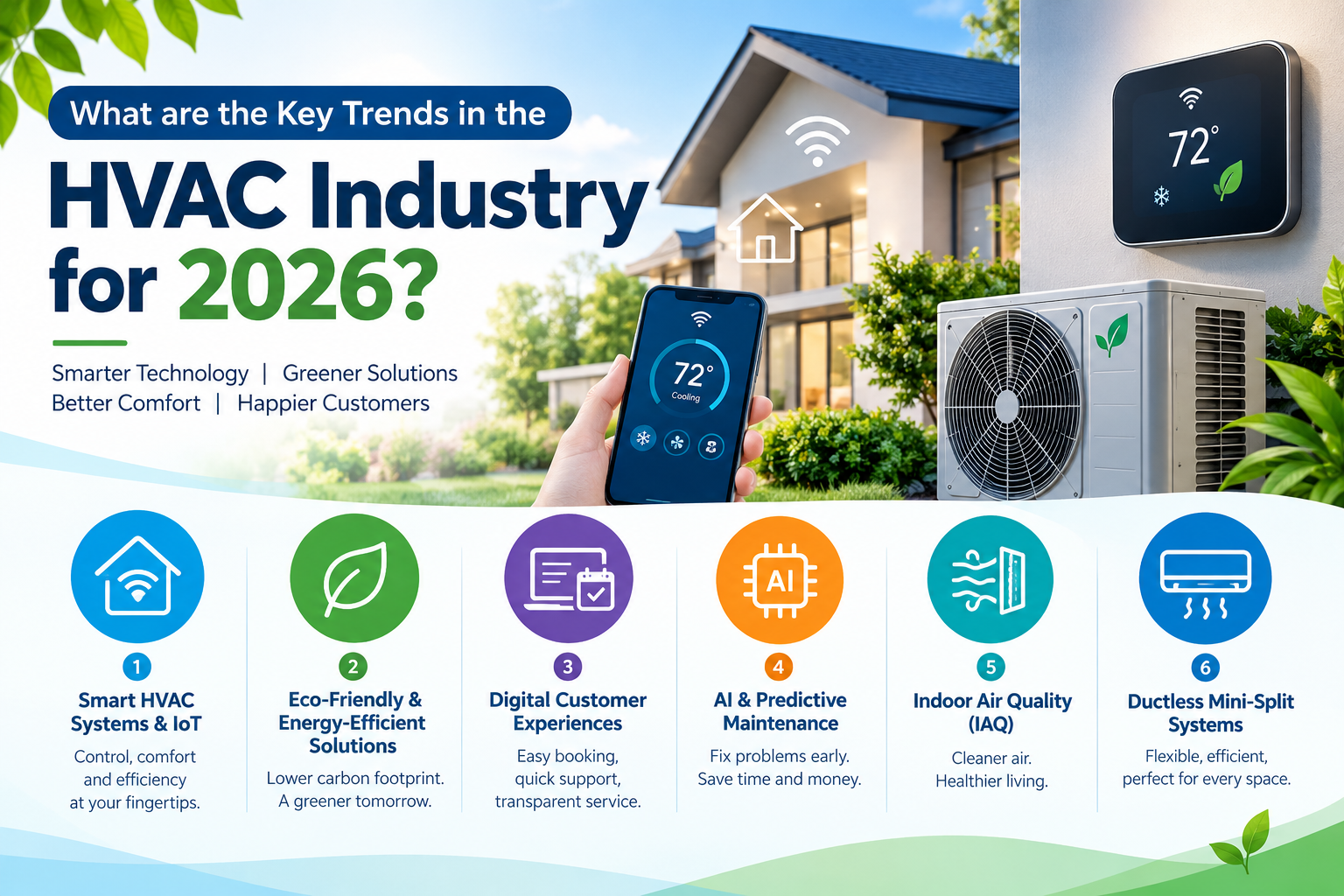
The heating, ventilation, and air conditioning (HVAC) industry is moving faster than ever. As we enter 2026, new technology and changing customer needs are reshaping how businesses operate. Clients now expect smarter, greener, and more efficient ways to control their indoor climate. From smart home devices to eco-friendly systems, the future is all about saving energy and improving comfort.
To keep up, companies must also upgrade their online presence. A professional website built with an HVAC Theme allows contractors to display services clearly and attract local customers. Let’s dive into the key HVAC trends for 2026.
1. Smart HVAC Systems and IoT Integration
The Internet of Things (IoT) has completely changed how we interact with home appliances, and heating and cooling equipment is no exception. In 2026, smart HVAC systems are no longer seen as a luxury item; they are a standard expectation for new installations. Homeowners want the ability to control their indoor temperatures directly from their smartphones, no matter where they are in the world.
Furthermore, these smart thermostats connect seamlessly with voice assistants like Amazon Alexa or Google Home. They also learn a family's daily routine over time. The system knows when people wake up, when they leave for work, and when they return home. By adjusting the temperature automatically based on these patterns, these smart systems save a massive amount of energy. For HVAC contractors, this trend means you must be tech-savvy. You are no longer just installing pipes and vents; you are setting up advanced digital networks that make modern homes incredibly comfortable and efficient.
2. Eco-Friendly and Energy-Efficient Solutions
Sustainability is a major driving force in 2026. Consumers are highly aware of their carbon footprint, and local governments are passing stricter rules regarding energy use and harmful emissions. Because of this, energy-efficient solutions are at the top of everyone's wish list when it comes to upgrading their homes.
One of the biggest shifts we are seeing is the complete phase-out of older, harmful refrigerants. The industry has fully embraced environmentally friendly options that have a much lower impact on the ozone layer and global warming. Additionally, electric heat pumps have seen a massive surge in popularity. Unlike traditional gas furnaces that burn fossil fuels to create heat, heat pumps transfer heat from the outside air into the home. They are incredibly efficient and work perfectly in both summer and winter seasons. Solar-powered air conditioning units are also becoming more affordable. Businesses that promote these green technologies will easily win over modern homeowners.
3. The Shift to Digital Customer Experiences
While installing new equipment is the core of your job, the way you communicate and interact with your customers has changed dramatically. Today’s consumers want instant communication, easy online booking, and transparent digital estimates. They heavily prefer clicking a button on a website over waiting on hold during a phone call.
To provide this smooth and modern experience, having a highly functional website is absolutely critical for your business. For example, integrating the best WordPress forms on your service pages allows you to capture customer leads quickly, schedule maintenance appointments, and gather customer feedback without any hassle. When a homeowner has an emergency leak or a broken heater in the middle of the night, a simple, easy-to-use digital form ensures they can request your help immediately. Automated emails and text message reminders for upcoming service appointments also build trust and professionalism. The easier you make it for customers to reach you online, the faster your company will grow.
4. Artificial Intelligence and Predictive Maintenance
Artificial Intelligence (AI) is making a huge mark on the HVAC industry by taking the guesswork out of system repairs. In the past, a homeowner would wait for their air conditioner to make a strange noise or stop working altogether before calling a technician. This reactive approach often led to expensive emergency repairs and very uncomfortable days without cooling.
In 2026, AI enables something called predictive maintenance. Modern HVAC systems are now equipped with advanced sensors that monitor airflow, motor health, and energy usage in real time. AI software analyzes this data to spot minor issues before they turn into major disasters. For instance, if a fan motor is working slightly harder than usual, the AI will notify both the homeowner and the service provider that a part might fail soon. This allows contractors to schedule a repair at a convenient time, saving the customer money and preventing a total system breakdown.
5. Indoor Air Quality (IAQ) Takes Center Stage
People are spending more time indoors than ever before, whether they are working from home, exercising, or simply relaxing with their families. Because of this lifestyle shift, Indoor Air Quality (IAQ) has become a massive priority for property owners. It is no longer just about keeping a house warm or cool; it is about keeping the air clean, healthy, and safe to breathe.
HVAC systems in 2026 are heavily focused on advanced filtration and purification features. High-efficiency particulate air (HEPA) filters, ultraviolet (UV) light purifiers, and whole-home humidification systems are highly requested upgrades. These helpful add-ons safely remove dust, pet dander, harmful allergens, and airborne bacteria from the indoor environment. Contractors should take the time to educate their customers on the health benefits of good IAQ. Offering professional air quality testing as a standard part of your seasonal maintenance visits is a great way to add value to your service.
6. The Massive Growth of Ductless Mini-Split Systems
Another major trend dominating the market in 2026 is the rising popularity of ductless mini-split systems. Older homes often rely on bulky, dusty ductwork to push air through different rooms. However, installing new ducts in an older house is expensive, messy, and sometimes structurally impossible. Ductless systems solve this problem beautifully.
These compact units are mounted directly onto the wall of a room and connect to an outdoor compressor through a small hole. They allow for perfect "zoning," which means you can cool or heat specific rooms without wasting energy on empty spaces. If you only use your home office during the day, you only need to run the mini-split in that one room. This targeted approach to climate control reduces energy bills significantly. Ductless systems are also much easier and faster for technicians to install, making them a highly profitable option for HVAC service companies looking to expand their product offerings.
Conclusion
The HVAC industry in 2026 is exciting and focused on modern technology and sustainability. From the widespread use of smart home devices to the rise of eco-friendly heat pumps and predictive AI software, the way we control our indoor climate is changing for the better. Customers today are demanding higher energy efficiency, better air quality, and seamless digital interactions. To succeed, HVAC businesses must adapt to both the physical technologies and the digital tools available to them. By embracing these industry trends, you can attract more clients and ensure your business remains highly profitable for years to come.

 English
 Arabic
 Spanish
 Portuguese
 Deutsch
 Turkish
 Dutch
Dutch
 Italiano
 Russian
 Romaian
 Portuguese (Brazil)
 Greek
Greek