
What Is Neurowellness and How Does Yoga Fit Into It?
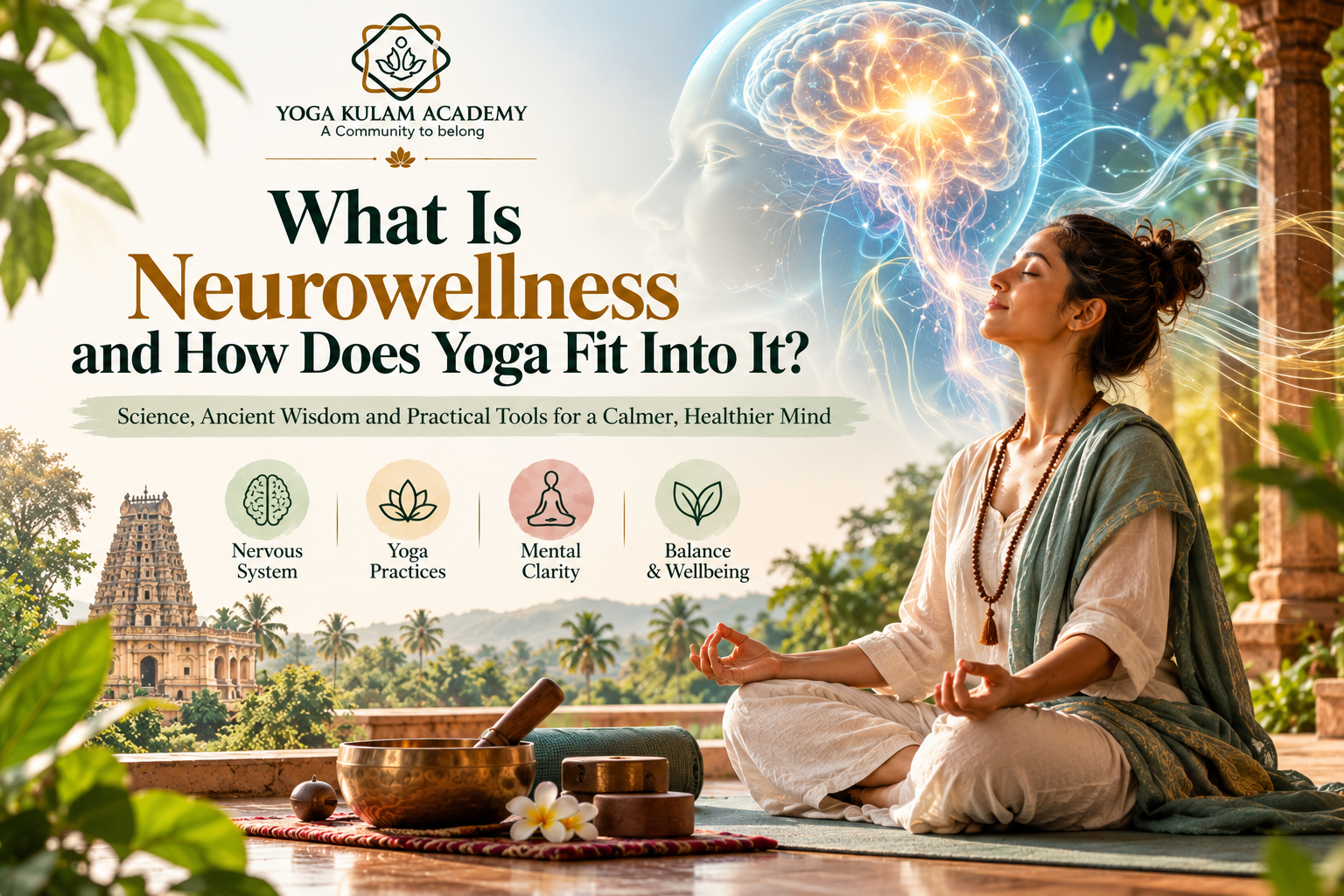
Wellness is evolving beyond fitness, nutrition, and stress management. One of the most discussed emerging ideas in 2026 is neurowellness—an approach focused on supporting the nervous system so that the body can move more effectively between stress, recovery, alertness, and rest.
The Global Wellness Summit describes neurowellness as an emerging field centred on regulation, recovery, and resilience of the nervous system. Modern life can keep people in prolonged states of activation through constant notifications, information overload, irregular sleep, work pressure, and digital stimulation.
Yoga fits naturally into this conversation because traditional yoga already combines many practices now associated with nervous-system regulation: conscious breathing, mindful movement, meditation, relaxation, body awareness, and structured daily routines.
What Does Neurowellness Mean?
Neurowellness is not simply another term for relaxation.
It focuses on how effectively the nervous system responds to stress and, just as importantly, how effectively it returns to a state of recovery afterward.
The autonomic nervous system helps regulate processes such as heart rate, breathing, digestion, and the stress response. When a challenge appears, the body can shift toward greater activation. When the challenge passes, recovery systems should help bring the body back toward balance.
The problem is that modern stress is often continuous rather than occasional.
Emails, social media, screens, deadlines, poor sleep, and mental overstimulation can create repeated low-level stress throughout the day. Current wellness research is therefore increasingly interested in practices that help people build nervous-system flexibility rather than simply chasing constant productivity.
Why Yoga Is Relevant to Neurowellness
Yoga brings together the body, breath, attention, and mind.
This combination makes it particularly relevant to nervous-system regulation.
The Global Wellness Institute has identified “Neurowellness and Nervous System Regulation” as one of its major 2026 yoga trends, noting growing research into the role of breath control, meditation, mindful movement, and relaxation in supporting autonomic regulation.
This does not mean every yoga class automatically “heals” the nervous system.
The style, intensity, breathing pattern, environment, and individual practitioner all matter.
A fast, physically demanding class may feel energising, while a slower Hatha practice may feel more grounding. Restorative postures, Yoga Nidra, pranayama, and meditation can create a very different experience again.
Students joining the Best 200 hour yoga teacher training mysore often encounter several of these practices together rather than studying asana alone.
Breath Is One of Yoga’s Most Powerful Tools
Breathing is one of the clearest connections between traditional yoga and modern neurowellness.
Most of the time, breathing happens automatically. Yet it can also be consciously influenced.
When people feel stressed, breathing may become faster, shallower, or irregular. Slow, controlled breathing practices can encourage greater awareness and may help support a shift toward calmer physiological states.
Pranayama practices should always be learned gradually and appropriately.
For beginners, something as simple as observing the natural breath or gently lengthening the exhalation can be useful.
Students taking a 100 hour yoga teacher training mysore program may begin exploring how breathing interacts with movement, concentration, and meditation.
The goal is not to perform complicated techniques. It is to develop awareness of how breath influences the way the body and mind feel.
Mindful Movement Can Interrupt Stress Patterns
Stress is not only mental.
It is also physical.
People may unconsciously tighten the jaw, raise the shoulders, restrict breathing, or hold tension through the back and hips.
Yoga creates an opportunity to notice these patterns.
Slow movements encourage practitioners to pay attention to muscular sensation, balance, breathing, and posture.
A traditional practice might include standing poses, seated postures, gentle twists, forward bends, and relaxation.
Over time, this type of movement can help people become more aware of their physical responses to stress.
This broader understanding is one reason students searching for the best Yoga Teacher Training Mysore often look for programs that combine physical practice with pranayama, meditation, philosophy, and relaxation.
Meditation and Attention Regulation
Modern life constantly competes for attention.
Phones, advertisements, messages, news, and social media encourage people to shift their focus repeatedly.
Meditation does the opposite.
It asks the practitioner to stay with one experience—perhaps the breath, a mantra, a sensation, or simple observation.
When attention wanders, the practitioner returns.
This repeated process can help develop greater awareness of mental activity without immediately reacting to every thought.
From a neurowellness perspective, this ability to notice internal states may be valuable because regulation begins with awareness.
You cannot easily respond to stress if you do not notice that it is happening.
Kundalini Practices and Nervous-System Awareness
Some students are drawn to practices that combine breathing, meditation, mantra, mudra, and energetic concepts.
A 100-Hour Kundalini Yoga Teacher Training in Mysore may introduce students to these traditional practices within a structured educational setting.
Kundalini-based approaches can involve more intensive breathing or meditation techniques, so guidance and progression are important.
They should not be treated simply as quick methods for producing altered states or dramatic experiences.
Within a responsible training environment, the emphasis should remain on understanding the practices, observing individual responses, and using them with appropriate preparation.
Why Rest Matters as Much as Practice
One of the most important principles in neurowellness is recovery.
Many people already know how to stay active.
They know how to work longer, exercise harder, consume more information, and keep themselves busy.
What they may struggle with is genuine rest.
Yoga traditionally includes practices such as Savasana and Yoga Nidra, which intentionally create space for physical and mental relaxation.
Rest is not wasted time.
It is part of the cycle that allows effort to be sustainable.
This is also why a yoga retreat in mysore may feel very different from practising occasionally at home. Retreat environments often combine structured practice with meditation, nourishing meals, reduced daily distractions, and dedicated periods of rest.
Consistency Matters More Than Intensity
Neurowellness is not about performing one powerful technique and expecting permanent change.
Like physical fitness, regulation develops through repetition.
A simple daily routine may be more useful than an intense practice performed once every few weeks.
For example, someone might practise:
-
Five minutes of slow breathing in the morning
-
Ten to twenty minutes of yoga
-
Brief movement breaks during work
-
A short evening meditation
-
Regular sleep and wake times
These habits create repeated opportunities for the body to move between activity and recovery.
Students looking for the Best 100 hour yoga teacher training mysore may therefore benefit from programs that emphasise sustainable practice rather than simply teaching a large number of techniques.
The Role of the Learning Environment
The environment in which yoga is practised can also affect the experience.
A noisy, rushed, competitive setting may create a very different response from a calm, focused environment.
Traditional yoga training often encourages routine, concentration, community, and fewer distractions.
A 100 hour yoga teacher training mysore course can provide a shorter immersive format for students who want to explore specific areas of yoga without immediately committing to a longer program.
The value of immersion is that yoga becomes part of the whole day rather than something squeezed between other responsibilities.
Neurowellness Is Not a Medical Treatment
It is important to use the term responsibly.
Neurowellness practices may support stress management, relaxation, sleep routines, and general wellbeing, but they should not be presented as replacements for medical or mental-health care.
Persistent anxiety, severe sleep problems, neurological symptoms, depression, or other health concerns should be discussed with qualified healthcare professionals.
Yoga can be complementary.
It should not be used to make exaggerated promises about curing disease or permanently “resetting” the nervous system.
This distinction is especially important for yoga teachers.
A strong Best 200 hour yoga teacher training mysore program should encourage students to understand professional boundaries and avoid presenting yoga as a substitute for healthcare.
Why Retreats Fit Into the Neurowellness Trend
One reason wellness retreats are becoming increasingly relevant is that they temporarily change the conditions that contribute to stress.
Participants may spend less time on devices, follow regular meal and sleep schedules, practise daily movement, meditate, and spend more time outdoors.
A yoga retreat in Mysore can therefore offer something beyond sightseeing or physical practice.
It can create an environment where recovery becomes part of the daily schedule.
The goal should not be to escape normal life permanently.
The real value is learning habits that can be taken home afterward.
Yoga as a Long-Term Regulation Practice
Yoga is particularly well suited to neurowellness because it is adaptable.
On one day, the body may benefit from stronger movement.
On another, the practitioner may need slower breathing, restorative postures, or meditation.
This flexibility is important.
The aim is not always to become calmer.
Healthy regulation includes the ability to activate when energy is needed and recover when the demand has passed.
Students choosing the best Yoga Teacher Training Mysore can benefit from learning this broader perspective rather than thinking of yoga only as flexibility or exercise.
Final Thoughts
Neurowellness reflects a growing shift in the wellness world: away from constant optimisation and toward regulation, resilience, and recovery.
Yoga fits naturally into this movement because its traditional methods already combine many of the same elements now gaining attention—breath, movement, meditation, rest, concentration, and self-awareness.
Whether someone explores a Best 100 hour yoga teacher training mysore, joins a specialised Kundalini program, attends a retreat, or simply develops a regular home practice, the principle remains similar.
The nervous system needs both challenge and recovery.
Yoga offers a practical framework for becoming more aware of that balance.
Rather than promising a permanently calm life, yoga teaches something more realistic: how to notice what is happening within the body and mind, respond with greater awareness, and create regular opportunities to return to balance.

 English
 Arabic
 French
 Spanish
 Portuguese
 Turkish
 Dutch
 Italiano
 Russian
 Romaian
 Portuguese (Brazil)
 Greek