
Infertility Treatment in Islamabad: A Complete Guide to Starting Your Family
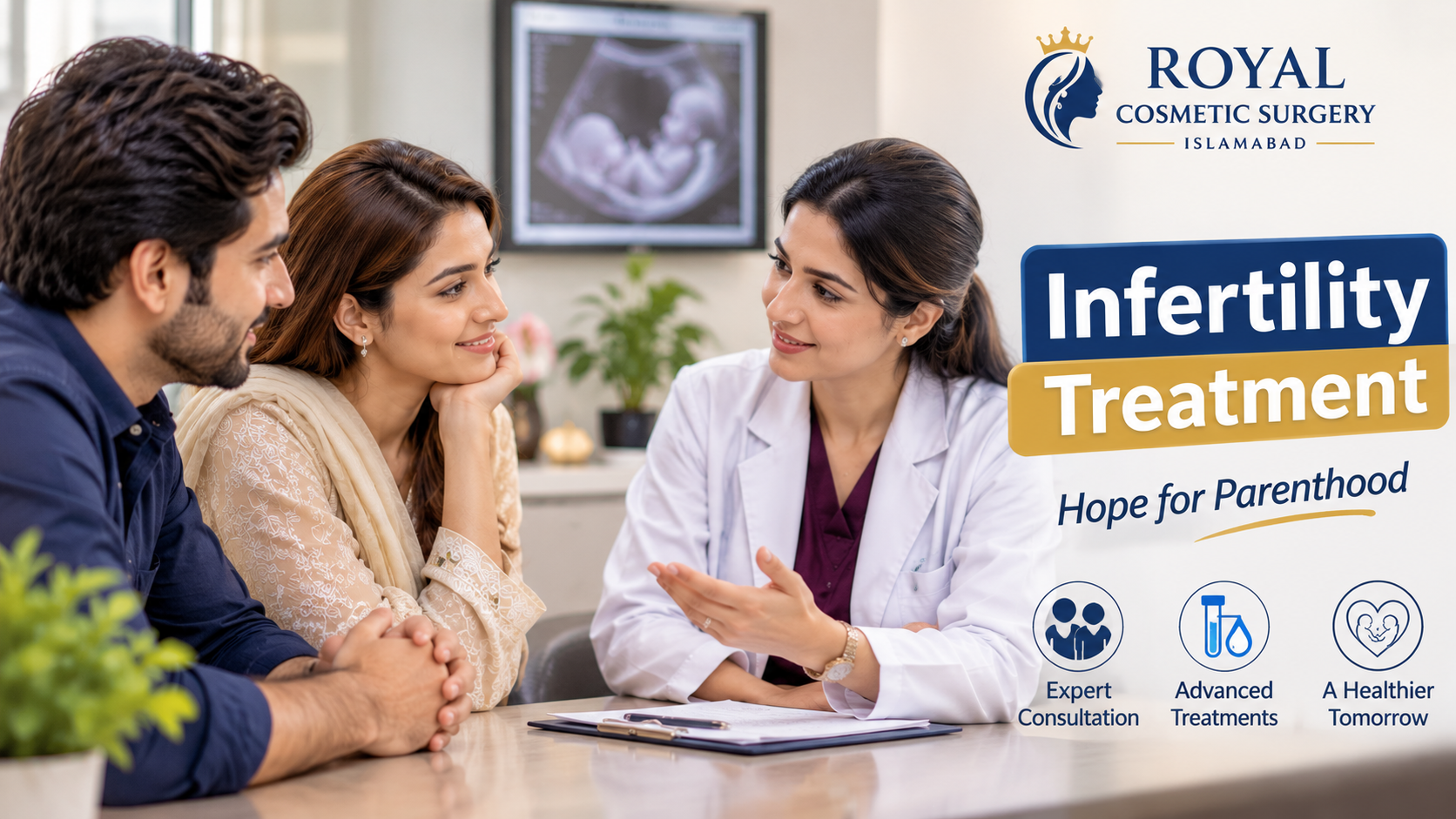
Waiting for a positive pregnancy test month after month can wear down even the strongest couples. Hope turns into worry, and worry can slowly become silence between partners. If this feels familiar, you are far from alone, and modern medicine has more answers than ever. Infertility treatment in Islamabad now ranges from simple medication to advanced assisted reproduction. The first step is usually just an honest conversation with a specialist.
What Is Infertility?
Infertility is generally defined as being unable to conceive after a year of regular, unprotected intercourse. Doctors often shorten that window to six months when the woman is over 35, because age affects both the quantity and quality of eggs. Infertility is not a verdict on anyone's worth, and it is not only a female issue. The cause can lie with the woman, the man, both partners, or remain unexplained, which is why both should be evaluated together.
Common Causes of Infertility
In women, frequent causes include:
Ovulation disorders such as polycystic ovary syndrome (PCOS)
Endometriosis
Blocked fallopian tubes
Uterine fibroids
Thyroid imbalance
Age-related decline in egg reserve
In men, the causes often involve:
Low sperm count
Poor sperm movement or shape
Varicocele (enlarged veins in the scrotum)
Hormonal problems
Infections
Blockages in the reproductive tract
Lifestyle also matters for both partners. Smoking, heavy alcohol use, obesity, chronic stress, and poor sleep can all lower fertility. In some couples, even detailed testing finds no clear reason, which is known as unexplained infertility. This does not mean treatment won't work.
When Should You See a Fertility Specialist?
Consider booking a consultation if:
You have been trying to conceive for a year without success, or six months if the woman is over 35.
The woman has irregular or absent periods.
Either partner has a known condition such as PCOS, endometriosis, or a low sperm count.
There is a history of pelvic infection, pelvic surgery, or repeated miscarriages.
Seeing a doctor early often saves months of uncertainty and gives you more options.
How Infertility Is Diagnosed
Diagnosis begins with a detailed consultation about medical history, cycles, lifestyle, and previous treatments. Tests are then chosen for each couple. For women, these usually include blood tests to check hormone levels and ultrasound scans to assess the uterus, ovaries, and follicles. For men, a semen analysis shows sperm count, movement, and shape. Further tests may be advised depending on the findings. The goal is to find the specific obstacle so the treatment plan targets the real problem rather than guessing.
Infertility Treatment Options
The right treatment depends entirely on the underlying cause. The main options are:
Fertility medications. These regulate or stimulate ovulation in women and can improve sperm production in men. They are often the first step, especially for ovulation problems.
Intrauterine insemination (IUI). Prepared sperm is placed directly into the uterus around the time of ovulation. This shortens the sperm's journey to the egg and improves the chance of fertilisation.
In vitro fertilisation (IVF). Eggs are collected from the ovaries, fertilised with sperm in a laboratory, and the resulting embryos are transferred to the uterus. IVF is a leading option for blocked tubes, severe male factor problems, and cases that haven't responded to simpler treatments.
Intracytoplasmic sperm injection (ICSI). A single sperm is injected directly into an egg. It is commonly used when sperm count or quality is very low.
Assisted hatching. A tiny opening is made in the outer layer of the embryo to help it implant in the uterine lining.
Donor eggs or sperm. When a partner's own eggs or sperm cannot be used, donor gametes offer another route to parenthood.
Surrogacy. When a woman cannot safely carry a pregnancy, another woman may carry it on her behalf.
Male infertility care. Treatment may include medication, correction of conditions such as varicocele, and lifestyle guidance. Royal Cosmetic Surgery's team includes Dr. Adil Shafi, who specialises in male infertility.
Who Is an Ideal Candidate?
Treatment is usually suitable for:
Couples who have not conceived after a year or more of trying
Women with conditions like PCOS or endometriosis
Men with low sperm count or sperm quality concerns
Younger patients, who generally have a better outlook, although treatment is possible at many ages
Your specialist will tell you whether you are suited to treatment after reviewing your tests.
Preparing for Treatment
Good preparation can make the process smoother and may support better outcomes:
Complete all recommended diagnostic tests.
Stop smoking and cut back on alcohol.
Aim for a healthy weight through balanced meals and regular, moderate exercise.
Find ways to manage stress, such as walking, prayer, meditation, or counselling.
Keep your partner involved. Fertility treatment is easier as a shared journey.
What Happens During Treatment
Your care typically follows a clear path:
Consultation. The doctor reviews your history and explains the possible options.
Testing. Blood work, ultrasound, and semen analysis identify the cause.
Treatment plan. Based on the results, you may be prescribed medication or advised on IUI, IVF, or ICSI.
Monitoring. Regular scans and hormone tests track follicle growth and your response.
Procedure. In IVF, the ovaries are stimulated, eggs are collected, fertilised in the lab, and embryos are transferred to the uterus.
Follow-up. Your doctor adjusts the plan if needed and guides you at each stage.
Aftercare and Recovery
After treatment, follow your medication schedule exactly and report any unusual symptoms promptly. Attend every follow-up appointment so your progress can be checked. Keep eating well, staying gently active, and avoiding tobacco and heavy alcohol. The waiting period can be emotionally tough, so lean on your partner, family, or a counsellor.
Benefits and Risks
The main benefit is the chance of a pregnancy and a family. Treatment can also offer clarity, since a diagnosis ends the guessing. Many couples feel more in control and less isolated once they have a plan.
Like any medical treatment, it has downsides to weigh:
Physical side effects: bloating, headaches, mood changes, and injection-site discomfort are common with fertility drugs.
Emotional strain: anxiety, frustration, and sadness can build up, especially after unsuccessful cycles.
Financial pressure: repeated cycles and medications can add up.
Your doctor will explain these in detail before you begin.
Results and Realistic Expectations
Results vary widely with age, diagnosis, and the type of treatment. Some couples conceive in the first attempt, while others need several cycles. No clinic can honestly guarantee a pregnancy, so be wary of anyone who does. If one approach doesn't work, your doctor can review the plan, try a different method, or discuss options such as donor gametes or adoption.
Cost of Infertility Treatment in Islamabad
The cost of infertility treatment in Islamabad depends on your diagnosis, the treatment chosen, the medications needed, and how many cycles are required. IVF, for example, costs more than medication or IUI. The most accurate way to learn your costs is to have a consultation and receive a personalised plan before committing.
Why Choose Royal Cosmetic Surgery?
Royal Cosmetic Surgery offers private, personalised care in a central location at Ammar Center, F-7 Markaz, Islamabad. Your treatment is guided by experienced doctors who explain every step in plain language, respect your privacy, and tailor the plan to your situation rather than offering a one-size-fits-all package.

 English
 Arabic
 French
 Spanish
 Portuguese
 Deutsch
 Turkish
 Dutch
 Italiano
 Russian
 Portuguese (Brazil)
 Greek