
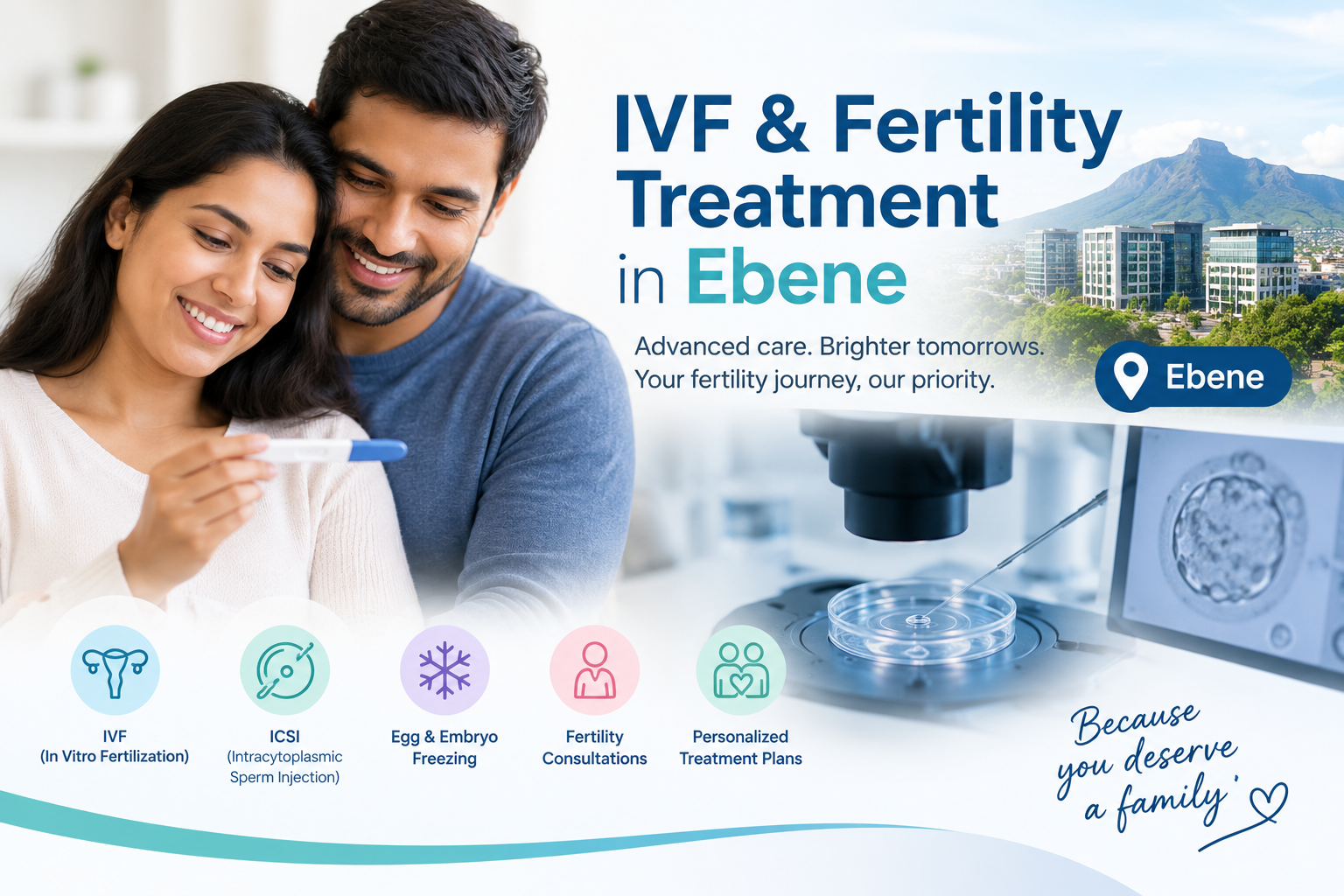
IVF & Fertility Treatment in Ebene: A Complete Guide to Your Parenthood Journey
Introduction
Starting a family is a meaningful milestone for many couples. While some people conceive naturally without difficulty, others may experience challenges that make the journey to parenthood longer and more complicated than expected. Fertility concerns can be emotionally demanding, but modern reproductive medicine offers several treatment options that can help individuals and couples explore their possibilities of having a child.
For those looking for IVF & Fertility Treatment in Ebene, Mauritius, understanding the available medical services, diagnostic procedures, and treatment approaches is an important first step. Ebene is a recognised business and healthcare destination in Mauritius, making it a convenient location for people seeking medical consultations and fertility-related information.
Fertility treatment is not limited to in vitro fertilisation (IVF). Depending on the underlying cause of infertility, a specialist may recommend lifestyle adjustments, medication, ovulation monitoring, intrauterine insemination (IUI), or advanced assisted reproductive techniques.
The most important thing to remember is that every fertility journey is different. With appropriate medical guidance, accurate diagnosis, and emotional support, couples can make informed decisions about their reproductive health.
Understanding Fertility Challenges
Infertility is a medical condition that affects people of different ages and backgrounds. It may be associated with female reproductive factors, male reproductive factors, a combination of both, or circumstances in which the cause remains unexplained after investigation.
For many couples, the first challenge is understanding why pregnancy has not occurred despite regular attempts at conception.
Female fertility can be affected by irregular ovulation, polycystic ovary syndrome (PCOS), endometriosis, blocked fallopian tubes, age-related changes in egg quality, and certain uterine conditions. Hormonal imbalances and previous reproductive health problems may also influence the chances of conceiving.
Male fertility concerns can involve sperm count, sperm movement, sperm shape, or problems affecting sperm production and delivery. In some situations, both partners may have factors contributing to difficulty conceiving.
This is why fertility assessment generally involves both partners rather than focusing exclusively on the woman.
Seeking professional advice does not mean that IVF will automatically be necessary. A fertility specialist can assess the available information, identify potential causes, and recommend a treatment plan that suits the couple's medical circumstances.
Why Consider IVF and Fertility Treatment in Ebene?
Choosing a location for fertility care involves several practical and medical considerations. Patients often look for qualified specialists, appropriate diagnostic facilities, clear communication, treatment transparency, and a supportive environment.
People researching IVF & Fertility Treatment in Ebene should consider these factors when comparing healthcare providers.
One important consideration is access to reproductive health consultations and diagnostic services. Early investigations can help patients understand their fertility status before committing to a particular treatment.
Another factor is the availability of different treatment approaches. Fertility care may involve hormonal assessments, ultrasound examinations, semen analysis, fertility medication, assisted conception procedures, and follow-up consultations.
Patients should also consider how conveniently they can attend appointments. Some treatments require multiple visits for monitoring, medication adjustments, laboratory procedures, and follow-up testing. Choosing a provider with a suitable appointment schedule can make the process easier to manage.
Privacy and emotional support are equally important. Fertility treatment can involve personal medical information, sensitive decisions, and periods of uncertainty. A respectful healthcare environment can help patients feel more comfortable discussing their concerns.
Before choosing a clinic, it is advisable to verify the qualifications of the treating specialists, the services currently available, the treatment costs, and the support provided throughout the process.
What Is In Vitro Fertilisation (IVF)?
In vitro fertilisation, commonly known as IVF, is an assisted reproductive technique in which eggs and sperm are brought together in a laboratory to facilitate fertilisation. If fertilisation occurs and embryos develop, a suitable embryo may be transferred into the uterus.
IVF is used for several fertility-related conditions, including certain cases involving blocked fallopian tubes, ovulation problems, male-factor infertility, and unexplained infertility.
The procedure typically involves several stages.
1. Initial Fertility Consultation
The process begins with a consultation during which the specialist reviews the medical history of both partners. Previous pregnancies, menstrual patterns, earlier fertility treatments, medications, and relevant health conditions may be discussed.
The doctor may recommend investigations to identify possible reasons for difficulty conceiving.
2. Fertility Investigations
Female fertility assessments may include blood tests to evaluate relevant hormones and an ultrasound examination to assess the ovaries and uterus.
Male fertility assessment commonly includes semen analysis, which evaluates characteristics such as sperm concentration, movement, and morphology.
Additional investigations may be recommended when the initial findings indicate that further assessment is necessary.
3. Ovarian Stimulation
When an IVF cycle proceeds, medication is generally used to stimulate the ovaries to develop multiple follicles. The treatment response is monitored through ultrasound scans and, when appropriate, blood tests.
The medication and monitoring schedule are personalised according to the patient's medical history and response to treatment.
4. Egg Retrieval and Fertilisation
When the follicles are ready, eggs are collected through a medical procedure performed under appropriate clinical supervision.
A sperm sample is also obtained, and fertilisation is attempted in the laboratory. Depending on the circumstances, conventional IVF or a technique called intracytoplasmic sperm injection may be used.
5. Embryo Development
The laboratory monitors the development of fertilised eggs. Embryologists assess embryo development to help determine which embryos may be suitable for transfer or freezing.
Not every egg fertilises, and not every fertilised egg develops into an embryo suitable for transfer. The specialist explains the results and discusses the available options with the patient.
6. Embryo Transfer and Pregnancy Testing
A selected embryo may be transferred into the uterus. Any prescribed medication and follow-up instructions should be followed carefully.
A pregnancy blood test is arranged at the appropriate time to determine whether implantation has resulted in pregnancy.
Although IVF has helped many people become parents, success is not guaranteed. Outcomes depend on several factors, including age, reproductive health, embryo development, and the circumstances of the individual treatment cycle.
Other Fertility Treatments to Explore
IVF is an important option, but it is not always the first or most appropriate treatment. A specialist may recommend another approach depending on the diagnosis.
Intrauterine Insemination (IUI)
IUI involves placing prepared sperm directly into the uterus around the time of ovulation. It may be considered in selected cases, including certain unexplained fertility situations or mild male-factor infertility.
Its suitability depends on factors such as the woman's age, fallopian tube function, ovulation, and sperm quality.
Ovulation Induction
Some women experience difficulty conceiving because they do not ovulate regularly. Medication may be prescribed to encourage ovulation, with ultrasound or other monitoring used when necessary.
This approach may be suitable for certain patients with ovulatory disorders, including some women with PCOS.
Intracytoplasmic Sperm Injection (ICSI)
ICSI is a laboratory technique in which a single sperm is injected directly into an egg. It may be recommended for particular cases of male-factor infertility or when previous fertilisation results indicate that the technique could be helpful.
ICSI is usually performed as part of an IVF cycle.
Fertility Preservation
Some individuals may wish to preserve eggs, sperm, or embryos for possible future use. Fertility preservation may be considered before certain medical treatments or when personal circumstances make delaying parenthood desirable.
The available options depend on individual medical needs, age, legal requirements, and the facilities offered by the treating centre.
A qualified fertility specialist can explain the benefits, limitations, risks, and likely costs of each option.
The Importance of Early Fertility Assessment
Many couples postpone fertility consultations because they hope pregnancy will occur naturally with time. Although this can happen, delaying assessment may not always be beneficial, particularly when age or an underlying medical condition could affect reproductive outcomes.
As a general guideline, people under 35 are often advised to seek an infertility evaluation after 12 months of regular, unprotected intercourse without pregnancy. Those aged 35 or older are generally advised to seek assessment after six months. People over 40 or those with known fertility risk factors may benefit from earlier medical advice.
An earlier consultation may be appropriate when there are irregular or absent periods, a history of endometriosis, known tubal problems, previous cancer treatment, recurrent pregnancy loss, or suspected male-factor infertility.
Early assessment does not necessarily mean starting an advanced treatment immediately. Instead, it helps patients understand their circumstances and consider suitable next steps.
For anyone researching IVF & Fertility Treatment in Ebene, arranging an initial consultation can be a practical way to obtain personalised information instead of relying entirely on general advice.
Factors to Consider When Choosing a Fertility Clinic
Selecting a fertility provider is an important decision because treatment can involve medical procedures, significant expenses, and emotional investment.
Before making a choice, consider the following factors.
Qualified medical professionals: Check the experience and qualifications of the reproductive medicine specialist and the wider clinical team.
Diagnostic capabilities: Ask whether the provider offers the investigations needed to assess both partners and identify potential causes of infertility.
Treatment options: Confirm whether IVF, ICSI, IUI, fertility preservation, and other relevant services are available directly or through a referral arrangement.
Laboratory standards: For IVF treatment, ask about embryology laboratory procedures, quality controls, and the way embryos are monitored and handled.
Transparent pricing: Request a written estimate covering consultations, diagnostic tests, medications, laboratory procedures, embryo transfer, and any additional charges that may apply.
Individualised care: Treatment recommendations should reflect the patient's medical findings rather than a standard plan applied to everyone.
Communication and emotional support: Patients should feel comfortable asking questions, discussing concerns, and understanding the potential outcomes of treatment.
Clear information about success rates: Ask how success rates are calculated and whether the figures relate to pregnancy per transfer, pregnancy per treatment cycle, or live birth. These measures are different and should not be compared without context.
A clinic that communicates openly about both the possibilities and limitations of treatment can help patients make better-informed decisions.
Managing the Emotional Side of Fertility Treatment
Fertility treatment involves more than medical appointments and laboratory procedures. It can affect relationships, finances, daily routines, and emotional well-being.
Some people experience anxiety while waiting for test results. Others may feel disappointed when a treatment cycle does not produce the expected outcome. Comparing their experiences with those of friends or relatives can add unnecessary pressure.
Partners can support each other by discussing expectations honestly, attending consultations together when possible, and making decisions as a team.
It may also help to establish practical boundaries around conversations about pregnancy and family planning. Patients do not need to share personal medical details with everyone around them.
Professional counselling can be valuable for individuals and couples who find the process emotionally difficult. Support groups may also provide opportunities to connect with others who understand the uncertainty associated with fertility treatment.
Most importantly, fertility difficulties should not be viewed as a personal failure. Reproductive health is influenced by many biological and medical factors, and needing treatment is not something to feel ashamed of.
Lifestyle Habits That Support Reproductive Health
Lifestyle changes cannot guarantee pregnancy or replace appropriate medical care, but healthy habits can support general well-being before and during fertility treatment.
A balanced diet containing vegetables, fruits, whole grains, protein sources, and healthy fats can contribute to overall health. Staying physically active and maintaining a suitable weight may also support reproductive health.
Smoking can negatively affect fertility, and avoiding tobacco is advisable for both partners. Alcohol intake should be discussed with a healthcare professional, particularly when trying to conceive or undergoing treatment.
Adequate sleep and effective stress management can help patients manage the demands of the treatment process.
Women planning pregnancy are generally advised to discuss folic acid supplementation with their healthcare provider. The appropriate dose depends on individual circumstances and medical recommendations.
Patients should also inform their doctor about all prescription medicines, over-the-counter products, and supplements they use. Some treatments may need to be reviewed before pregnancy.
These measures are supportive rather than curative. A healthy lifestyle is beneficial, but fertility problems may still require medical investigation and treatment.
Understanding the Cost of IVF and Fertility Treatment
The cost of fertility treatment varies according to the clinic, diagnostic requirements, medication needs, and type of procedure.
A basic fertility consultation and initial investigations generally involve different expenses from a complete IVF cycle. Additional costs may arise from specialised laboratory techniques, embryo freezing, storage, or subsequent frozen embryo transfers.
When comparing options for IVF & Fertility Treatment in Ebene, patients should request a detailed estimate rather than relying on an advertised starting price.
It is helpful to ask whether the quoted amount includes medication, monitoring appointments, egg retrieval, anaesthesia where required, laboratory fertilisation, embryo transfer, and pregnancy testing.
Patients should also clarify the fees for treatment cycles that do not proceed as planned, as well as any costs associated with repeating a procedure.
Financial planning can reduce uncertainty and help couples understand the commitment involved before treatment begins.
It is equally important to remember that the least expensive option is not automatically the most suitable. Clinical quality, patient safety, transparent communication, and the appropriateness of the treatment plan should remain central to the decision.
Questions to Ask Before Starting Treatment
A fertility consultation is an opportunity to understand the medical situation and explore available options.
Consider asking the specialist:
-
What could be contributing to our difficulty conceiving?
-
Which investigations are necessary for both partners?
-
Is IVF the most appropriate option, or should we consider another treatment first?
-
What are the potential benefits and risks of the recommended procedure?
-
How does age or our medical history affect the expected outcome?
-
What is the complete estimated cost of treatment?
-
How many appointments are likely to be required?
-
What emotional support or counselling services are available?
-
What happens if the first treatment cycle is unsuccessful?
Writing down questions before an appointment can help ensure that important concerns are addressed.
Patients should leave the consultation with a clearer understanding of the proposed plan, the alternatives, and the next steps.
Conclusion
The journey towards parenthood can take different paths, and fertility challenges may bring uncertainty for individuals and couples. However, advances in reproductive medicine have created several options for investigating and treating difficulties with conception.
For those exploring IVF & Fertility Treatment in Ebene, the best starting point is a comprehensive fertility assessment with a qualified specialist. Understanding the underlying cause, comparing appropriate treatment options, and receiving clear information about costs and expected outcomes can make the process easier to navigate.
Whether the recommended approach involves ovulation induction, IUI, IVF, ICSI, or another form of reproductive care, treatment should be tailored to the patient's individual needs.
Ebene and the wider Mauritius healthcare sector are worth exploring when researching fertility services, but patients should verify the current availability of specific treatments, clinical credentials, and laboratory facilities before making a decision.
With accurate information, realistic expectations, and compassionate professional guidance, individuals and couples can take informed steps towards their reproductive goals. Every journey is unique, and the right care begins with understanding your circumstances and choosing a path that suits your medical needs.

 English
 Arabic
 French
 Spanish
 Portuguese
 Deutsch
 Turkish
 Dutch
 Italiano
 Russian
 Romaian
 Greek