
Why Do Commercial Skylights Leak, and When Should You Repair or Replace Them?
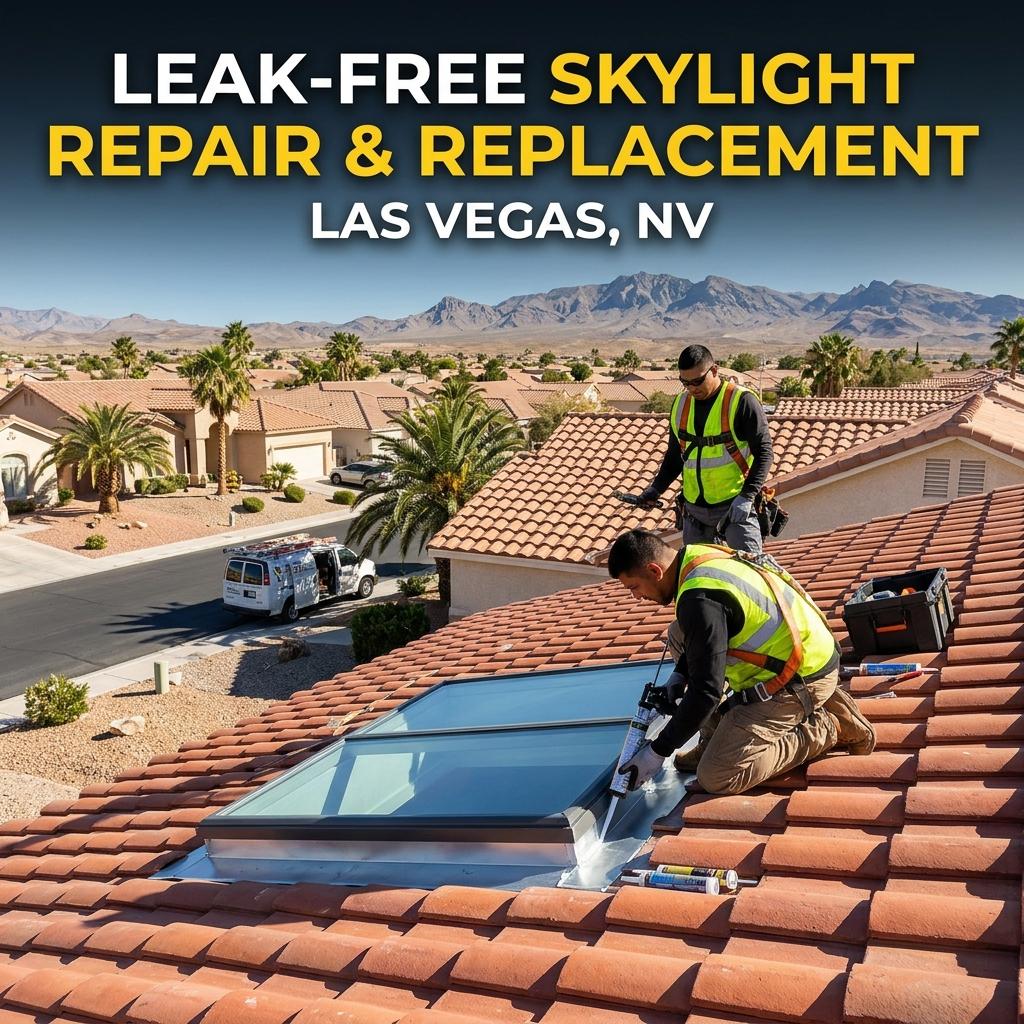
Skylights are a valuable feature in commercial buildings, allowing natural daylight to enter warehouses, offices, retail stores, and other business spaces. They can reduce dependence on artificial lighting and create a more comfortable indoor environment. However, when a skylight develops a leak, the same opening that brings natural light inside can become a source of water damage, interior deterioration, and costly maintenance problems.
For commercial property owners in Las Vegas, skylight maintenance deserves particular attention. Intense sunlight, high temperatures, seasonal weather changes, and occasional heavy monsoon rainfall can place stress on roofing materials and waterproofing components. Even a small gap around a skylight can allow water to enter during a storm.
Understanding why skylights leak, how to identify potential problems, and when repairs are no longer sufficient can help property owners protect their buildings and make informed maintenance decisions.
What Causes Commercial Skylights to Develop Leaks?
A leaking skylight does not necessarily mean the entire unit has failed. In many cases, water enters through deteriorated seals, damaged flashing, or problems with the surrounding roofing materials.
Identifying the actual source of moisture is essential because repairing the wrong component may leave the underlying problem unresolved.
1. Deteriorating Seals and Caulking
Skylights rely on properly installed seals to prevent water from entering around their frames. Over time, exposure to sunlight and changing temperatures can cause sealants to become brittle, shrink, or separate from adjoining surfaces.
Once these protective barriers deteriorate, rainwater can find small openings around the skylight assembly. Replacing damaged sealant may resolve the problem when the skylight itself remains structurally sound.
2. Damaged or Improperly Installed Flashing
Flashing creates a waterproof connection between the skylight and the surrounding roof. If flashing becomes loose, corroded, damaged, or improperly integrated with the roofing membrane, water can travel underneath it.
Commercial flat roofs require particular attention to flashing because water drainage, roof penetrations, and membrane connections must work together to protect the building.
3. Cracked or Aging Skylight Glazing
The glazing is the transparent or translucent portion of a skylight. Depending on its construction, it may consist of glass or another suitable glazing material.
Cracks, failed glazing seals, and deteriorating frames can allow moisture to enter the building. Fogging between glazing layers can also indicate that the original sealed assembly has lost its integrity.
4. Water Accumulation Around the Skylight
Commercial flat roofs depend on appropriate drainage to move rainwater toward drains and scuppers. When debris blocks drainage paths or the surrounding roof develops low spots, water may collect around skylight openings.
Prolonged exposure to standing water can increase the likelihood of leaks, particularly when existing flashing or membrane connections are already weakened.
Why Is Skylight Maintenance Important in Las Vegas?
Las Vegas has a desert climate characterized by intense sunshine, high summer temperatures, and significant temperature differences between day and night. Although the region receives relatively limited annual rainfall, seasonal monsoon storms can bring periods of heavy precipitation.
These conditions create several challenges for commercial roofing systems.
Continuous ultraviolet exposure can accelerate the deterioration of exterior sealants and roofing components. Temperature fluctuations can also contribute to expansion and contraction, placing additional stress on joints and connections.
When sudden rainfall occurs, previously unnoticed openings around skylights may become pathways for water intrusion.
For warehouses, offices, and retail properties, even a relatively small leak can create several problems:
-
Water stains on ceilings and interior walls.
-
Damage to stored inventory, equipment, and furniture.
-
Moisture exposure around electrical components.
-
Deterioration of insulation and surrounding roofing materials.
-
Disruptions to employees, customers, and daily business activities.
-
Increased maintenance expenses when minor problems remain unresolved.
Regular inspections help identify developing issues before they become more extensive roofing problems.
How Can Property Owners Identify a Leaking Skylight?
Some skylight leaks are immediately visible, while others develop gradually behind ceiling materials or around the roof opening.
Property managers should pay attention to warning signs both inside and outside the building.
Interior Warning Signs
Water stains, discoloration, peeling paint, and damp ceiling materials near a skylight may indicate moisture intrusion. Dripping water during rainfall is an obvious warning, but a leak can also appear as persistent dampness after a storm.
Fogging or condensation between glazing layers deserves attention as well. It may indicate a failed glazing seal rather than a conventional roof leak.
Exterior Warning Signs
A roof inspection may reveal separated sealant, damaged flashing, loose components, or deterioration around the skylight curb.
The curb is the raised structure that supports the skylight above the surrounding roof surface. Its height, condition, and waterproof connection to the roof membrane all contribute to effective water management.
Property owners should avoid walking on skylight glazing or attempting repairs without appropriate safety equipment. Commercial roof inspections involve fall hazards and should be handled by qualified professionals.
When Should You Choose Skylight Repair Instead of Replacement?
The correct solution depends on the condition of the skylight, the source of the leak, and the extent of surrounding roof damage.
A professional assessment helps determine whether the existing assembly can be restored or whether replacement is a more appropriate long-term decision.
When Repair Is Usually Appropriate
Repair may be suitable when the skylight remains structurally sound and the problem is limited to specific components.
Examples include:
-
Deteriorated exterior sealant.
-
Minor flashing separation.
-
Small gaps around the skylight curb.
-
Localized waterproofing problems.
-
Repairable damage to surrounding roofing materials.
In these situations, addressing the affected area may restore the waterproof connection without requiring the entire skylight to be removed.
When Replacement Becomes Necessary
Replacement deserves consideration when the skylight has extensive deterioration or its primary components can no longer provide dependable protection.
Cracked glazing, warped frames, persistent seal failures, and repeated leakage may indicate that continued repairs are becoming less practical.
A replacement project also provides an opportunity to evaluate the curb, surrounding membrane, and flashing system. Simply installing a new skylight without correcting underlying roof problems can allow leaks to return.
How Does Professional Skylight Repair and Replacement Protect Commercial Buildings?
Commercial skylight work involves more than applying sealant around an opening. The complete assembly must be evaluated to understand how the skylight interacts with the surrounding roofing system.
Property owners seeking Leak-Free Skylight Repair & Replacement in Las Vegas should prioritize an approach that considers the glazing, curb, flashing, and surrounding roof membrane together.
An appropriate assessment typically examines the following areas:
-
Skylight condition: Checking glazing for cracks, fogging, deterioration, and visible damage.
-
Curb inspection: Evaluating the supporting structure for deterioration, movement, and potential water entry points.
-
Flashing assessment: Identifying loose connections, damaged materials, and improperly sealed transitions.
-
Roof membrane evaluation: Checking the surrounding roofing material for openings, deterioration, or moisture-related damage.
-
Drainage review: Identifying standing water and obstructions that could contribute to recurring leakage.
For commercial property owners exploring broader roofing solutions, understanding how commercial flat roof installation and waterproofing services address roof penetrations and membrane connections can also provide useful context.
The objective is to identify the actual source of moisture and select a repair or replacement method that works with the existing roofing system.
What Should Property Owners Consider Before Scheduling Skylight Work?
Planning ahead can make a commercial skylight project easier to manage. Before approving repairs or replacement, property owners should understand the condition of the existing installation and the work being proposed.
Evaluate the Full Roofing Assembly
A skylight leak may originate from the roof membrane rather than the skylight itself. Water can travel along roofing layers before becoming visible inside the building.
An inspection should therefore consider the surrounding roof area instead of focusing exclusively on the visible opening.
Understand the Proposed Repair
Ask which components require attention and why. A clear explanation should distinguish between sealant replacement, flashing repairs, curb corrections, glazing replacement, and complete skylight replacement.
This information makes it easier to understand the scope of work and compare different solutions.
Consider Business Operations
Commercial properties often operate throughout the day, making project scheduling important. Discuss access requirements, work areas, safety precautions, and any expected disruption before work begins.
Warehouses and retail facilities may need additional coordination to protect inventory, employees, and customers.
Plan for Ongoing Maintenance
Even a properly repaired or replaced skylight requires periodic inspection. Checking flashing, seals, and surrounding roofing materials helps identify deterioration before it creates another water intrusion problem.
Property managers should also arrange additional inspections after significant storms or nearby roofing work.
Frequently Asked Questions
1. Can a leaking commercial skylight be repaired without replacing it?
Yes. If the glazing, frame, and supporting structure remain in good condition, repairing deteriorated sealant, flashing, or localized waterproofing may resolve the problem. The appropriate solution depends on the actual source of the leak.
2. How do I know whether my commercial skylight needs replacement?
Cracked glazing, warped frames, persistent fogging, repeated leaks, and extensive deterioration may indicate that replacement is necessary. An inspection can help determine whether repairing individual components remains practical.
3. Can a skylight leak damage a commercial flat roof?
Yes. Water entering around a skylight can affect surrounding roofing materials, insulation, and interior building components. If moisture remains trapped within the roofing assembly, deterioration may extend beyond the original leak location.
4. How often should commercial skylights be inspected in Las Vegas?
A practical maintenance approach is to inspect skylights during routine roof maintenance at least twice a year and after significant storms or nearby roofing work. Additional inspections may be appropriate when warning signs appear.
Conclusion
Commercial skylights provide valuable natural lighting, but their long-term performance depends on properly maintained glazing, flashing, curbs, and surrounding roofing materials. In Las Vegas, intense sunlight and seasonal storms make these connections particularly important.
Property owners should investigate warning signs early, understand the difference between repairable damage and complete component failure, and avoid treating visible water stains as the only indication of a roofing problem.
A thorough assessment helps identify the actual source of moisture and determine whether targeted repairs or complete replacement offer the more suitable solution. By addressing skylight problems promptly and maintaining the surrounding flat roof, commercial building owners can better protect their interiors, equipment, and long-term property investments.

 English
 Arabic
 French
 Spanish
 Portuguese
 Deutsch
 Turkish
 Italiano
 Russian
 Romaian
 Portuguese (Brazil)
 Greek