
Terrace Waterproofing Services for Water Leakage Repair
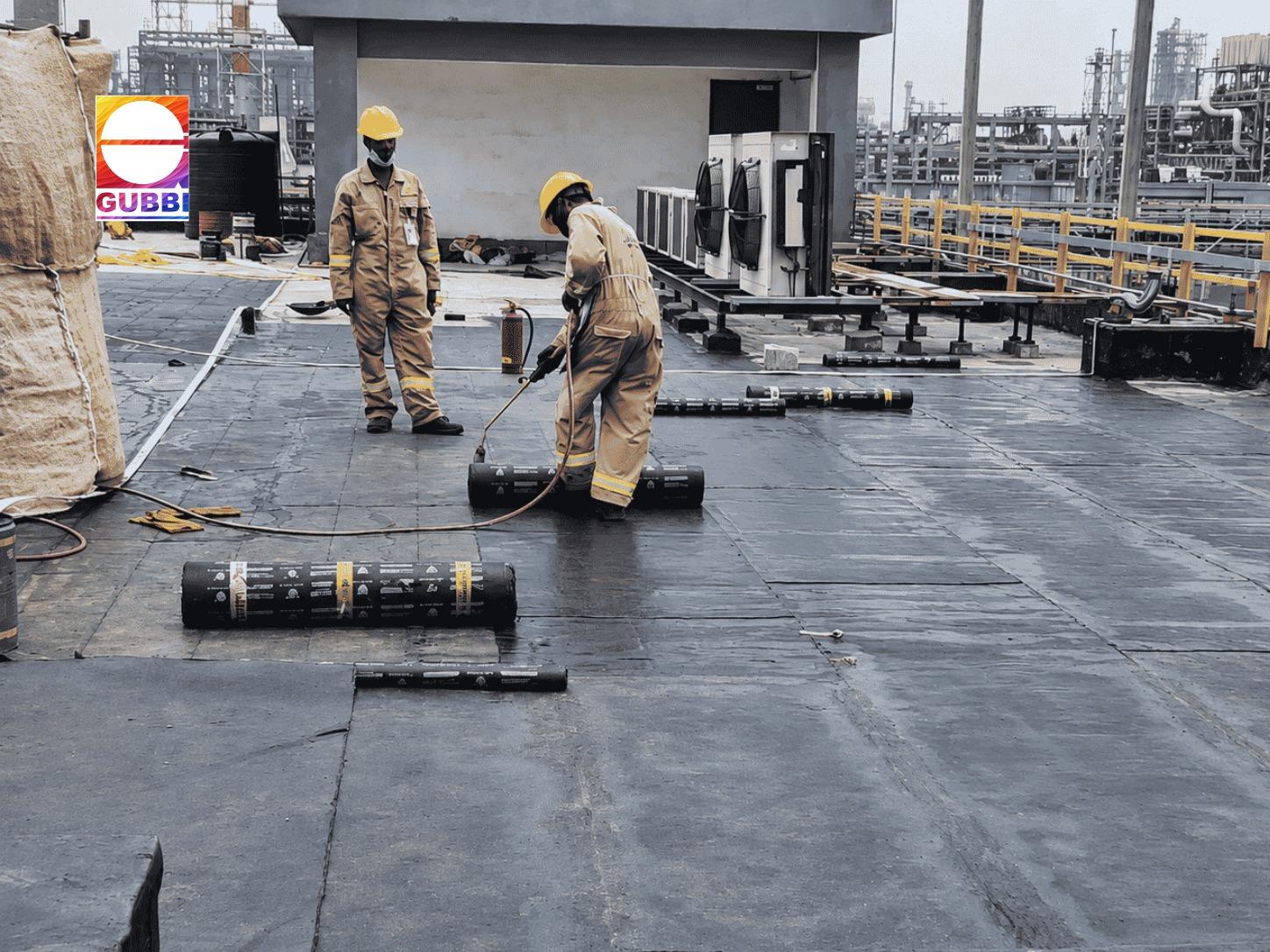
Roof waterproofing services are important for protecting industrial, commercial, and infrastructure buildings from rainwater, seepage, moisture ingress, and repeated exposure. A roof may appear sound while water slowly enters through cracks, joints, penetrations, damaged coatings, or poorly drained areas. Professional waterproofing therefore requires more than applying a chemical layer. The solution should begin with understanding the roof condition, identifying leakage paths, and selecting a system suitable for actual site requirements.
Terrace waterproofing services become especially important for exposed RCC terraces because these surfaces face rainfall, sunlight, temperature changes, water ponding, and regular maintenance activity. When waterproofing fails, moisture can travel through concrete and create dampness, staining, peeling finishes, corrosion, or deterioration. Treating the visible leakage alone may provide only temporary relief. A planned terrace waterproofing approach considers the surface, drainage, cracks, joints, penetrations, existing layers, and expected exposure.
Why Roof Leakage Develops
Many building owners search for roof waterproofing services only after leakage becomes visible inside the structure. However, water damage can develop before a ceiling stain or damp patch appears. Small cracks, blocked outlets, deteriorated joints, and damaged waterproofing layers can allow moisture to remain around the roof surface. Early inspection can identify these conditions and help building managers plan repairs before leakage develops into a larger maintenance problem.
Industrial and commercial roofs often have more complicated requirements than ordinary exposed slabs. Large roof areas may contain equipment foundations, pipelines, cable supports, drainage outlets, expansion joints, service penetrations, and maintenance pathways. Each interface can become a potential water entry point when detailing is inadequate. Industrial roof waterproofing therefore needs a method that considers the complete roof rather than concentrating only on the visible leakage location.
Role of Terrace Waterproofing Contractors
Terrace waterproofing contractors should first understand why water is entering the structure before recommending a treatment. Leakage may result from cracks in RCC, failed joints, inadequate slope, water ponding, damaged old waterproofing, open penetrations, or deterioration around drainage outlets. The internal location of dampness does not always match the external entry point. Proper diagnosis helps contractors trace the likely pathway and choose a repair sequence that addresses the source.
Surface preparation is one of the most important stages in roof waterproofing. Dust, loose concrete, laitance, oil, deteriorated coatings, algae, and other contaminants can interfere with adhesion and system performance. Depending on the existing condition, the surface may require cleaning, mechanical preparation, removal of failed layers, crack treatment, and local concrete repair. Waterproofing material should be applied only after the substrate is suitably prepared for the selected system.
Crack Repair Before Waterproofing
Crack treatment should be considered before applying terrace waterproofing services across the area. Cracks can have different causes, widths, depths, and movement characteristics, so the repair method should match the defect. Surface cracks may require sealing, while deeper or active cracks may need specialised treatment. If cracks are simply covered without understanding the cause, they can reopen and create pathways for water ingress through the waterproofing layer.
Drainage is another major factor in successful roof waterproofing services. Even a well-applied waterproofing system can face stress when rainwater remains standing for long periods. Roof slopes, outlets, channels, and discharge routes should be inspected to identify areas where water accumulates. Correcting drainage problems can reduce moisture exposure and improve waterproofing performance. Water should be directed away efficiently rather than allowed to remain. This helps reduce prolonged water exposure.
Selecting the Right Waterproofing System
Different waterproofing systems can be suitable for different roof and terrace conditions. Depending on the project, solutions may include liquid-applied membranes, polyurethane coatings, polymer-based systems, cementitious treatments, bituminous membranes, or other compatible technologies. Selection should consider the substrate, exposure, movement, existing layers, drainage, and intended use. The objective is not to select the most popular material, but to select a system that suits the structure for the specific project.
Polyurethane waterproofing can be considered where flexibility and seamless protection are important for exposed roofs. Liquid-applied PU systems can form a continuous layer over prepared surfaces and can be useful around complex details when properly specified. Their performance depends on substrate preparation, material compatibility, application thickness, curing conditions, detailing, and protection. Therefore, the chemical alone does not determine the outcome; workmanship and site conditions remain important parts of the waterproofing system.
Membrane Waterproofing for Roofs and Terraces
Membrane waterproofing is another option used for roofs where a continuous protective layer is required. Sheet-based and liquid-applied membranes have different installation needs and performance. The selected membrane should be compatible with the substrate and expected exposure. Attention is required around parapets, joints, drains, penetrations, corners, and equipment supports because these areas can become weak points without detailing. Installation maintains continuity across the roof and supports consistent waterproofing protection.
Industrial roof waterproofing also needs to account for operational conditions. A factory or commercial facility may not be able to stop operations simply because roof repairs are required. Waterproofing contractors may need to coordinate access, work zones, equipment movement, safety arrangements, and suitable working windows. A well-planned execution sequence can reduce disruption while allowing critical repair areas to be treated systematically. Project planning is connected with waterproofing quality and safety.
Impact of Water Leakage on RCC Structures
Water leakage can affect more than the appearance of a building. Persistent moisture may contribute to concrete deterioration, reinforcement corrosion, damaged finishes, and increased maintenance requirements. In an RCC structure, repeated water ingress can become concerning when cracks or exposed reinforcement are present. Roof waterproofing services should therefore be viewed as part of building maintenance and concrete protection, rather than as a cosmetic treatment. Timely inspection can support repair planning.
The cost of terrace waterproofing services depends on several project-specific factors, so a single rate cannot accurately represent every roof. Area, surface condition, existing waterproofing, crack repair requirements, drainage correction, selected system, number of coats, detailing, accessibility, protection requirements, and labour conditions can influence the scope. A site assessment allows the contractor to identify necessary work and prepare a meaningful quotation instead of estimating only from the roof area.
How to Choose Terrace Waterproofing Contractors
Choosing terrace waterproofing contractors requires attention to their technical approach, not only their quoted price. Building owners should understand how the contractor will inspect the surface, identify leakage, prepare the substrate, treat cracks and joints, handle drainage, apply the selected system, and protect completed work. Experience with industrial and commercial structures can also matter when the roof includes complicated penetrations, large exposed areas, equipment supports, or operational restrictions.
A waterproofing inspection should document visible cracks, damp areas, ponding locations, drainage points, old coating conditions, joints, penetrations, and other relevant observations. This information helps establish the likely causes of leakage and define the treatment area. In larger facilities, photographs and marked-up roof layouts can also support communication between the facility team and contractor. Clear documentation makes it easier to track repairs, compare future conditions, and plan maintenance.
Identifying the Actual Leakage Path
Terrace waterproofing contractors may need to inspect areas that appear unrelated to leakage. Water can travel through concrete, joints, interfaces, or concealed pathways before appearing inside. The indoor point should not automatically be treated as the source. A systematic site inspection of the roof surface, drainage, and detailing helps create a clearer understanding of the water ingress mechanism. This supports Roof Moisture Pathway Mapping.
A suitable waterproofing system should consider movement and exposure. Roofs and terraces experience temperature changes that can cause expansion and contraction of construction materials. Joints, corners, parapets, penetrations, and interfaces may require treatment. Waterproofing design should allow the system to perform under expected conditions. Correct detailing matters at transitions. The system should suit the substrate, exposure, maintenance needs, and roof use.
Maintenance After Waterproofing
Maintenance after roof waterproofing is important for protecting the completed system over time. Facility teams should regularly inspect drainage outlets, visible cracks, joints, surface damage, equipment supports, and areas exposed to maintenance activity. Blocked drains and accumulated debris should be addressed before they create prolonged ponding. If new dampness or leakage appears, the affected location should be investigated promptly. Regular observation supports timely maintenance planning for facilities.
For industrial, commercial, and infrastructure projects, Gubbi Civil Engineers Limited can be considered for roof and terrace waterproofing requirements involving existing RCC structures. The appropriate recommendation should be based on site condition, leakage mechanism, exposure, drainage, existing waterproofing, and project requirements. A technically planned approach can align repair activities with the building’s operational needs while avoiding unnecessary treatment that does not address the source.
Integrated Waterproofing and Structural Protection
Waterproofing should not be treated as a one-material solution because different roofs experience different causes of leakage and deterioration. A successful project may involve crack repair, joint treatment, drainage correction, surface preparation, membrane application, protective coating, or additional concrete rehabilitation. The combination depends on the condition found during assessment. This approach is especially relevant for older industrial and commercial structures where previous repairs may have created multiple layers and interfaces.
Selecting roof waterproofing services should ultimately be based on the condition of the asset and the performance required from the repair. A properly assessed roof can receive treatment designed around its cracks, drainage, exposure, movement, existing layers, and operational environment. For commercial and industrial facilities, this can support moisture control and reduce recurring leakage. The goal is to establish a planned waterproofing system that can be maintained.

 English
 Arabic
 French
 Spanish
 Portuguese
 Deutsch
 Dutch
 Italiano
 Russian
 Romaian
 Portuguese (Brazil)
 Greek