
What Is the Difference Between Wax, Wax-Resin, and Resin Barcode Ribbons?
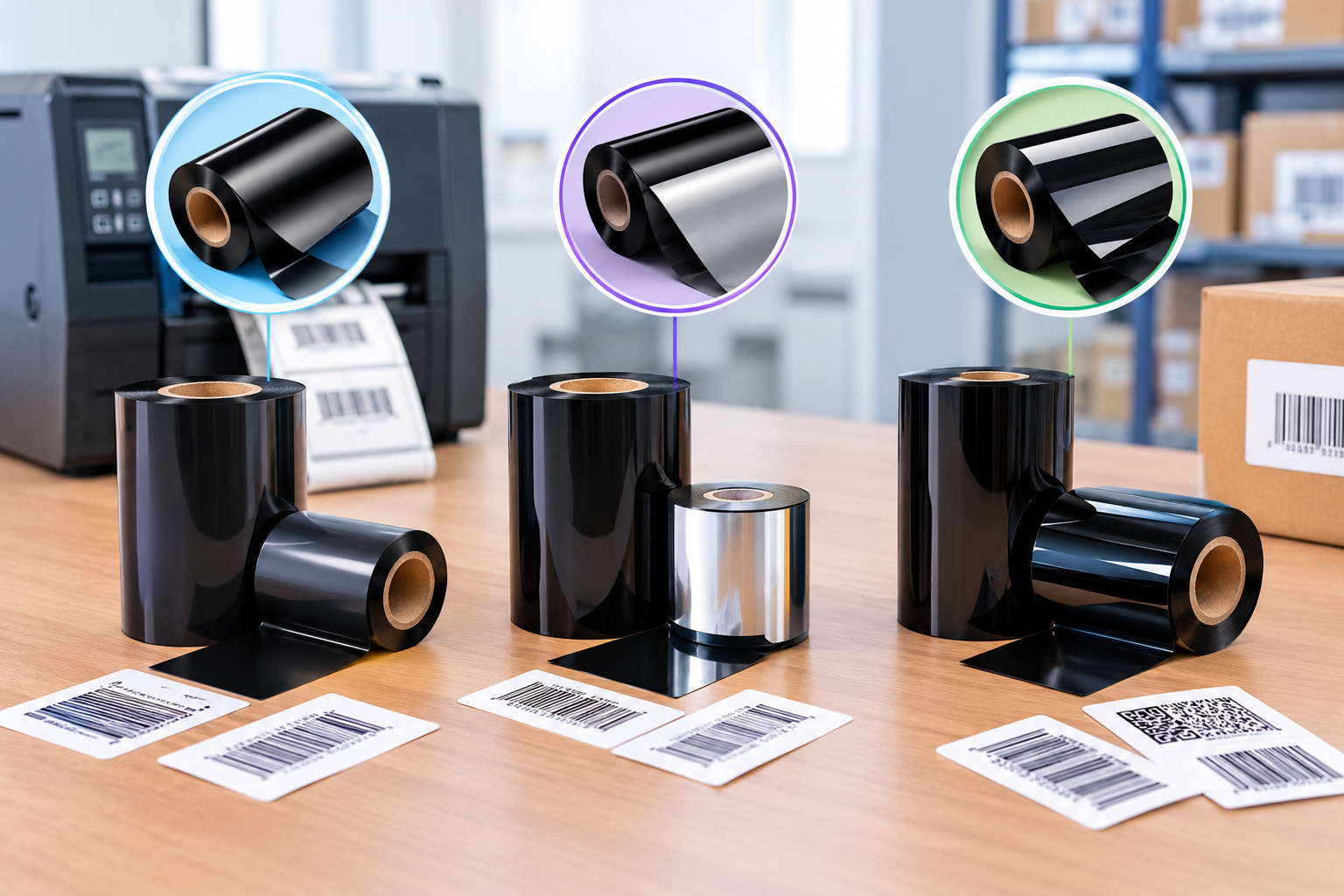
Choosing the right barcode ribbon is essential for producing clear, durable, and scannable labels. The wrong ribbon can cause smudging, fading, poor print quality, and unnecessary printing costs. Three common thermal transfer ribbon types are wax, wax-resin, and resin, each designed for different label materials and operating conditions.
For businesses comparing barcode printing supplies, Pointus Solutions can help identify suitable printing products for different applications. Understanding these ribbon types also makes it easier to buy barcode labels and ribbons kuwait based on your business requirements rather than price alone.
Table of Contents
-
What Are Barcode Ribbons?
-
What Is a Wax Barcode Ribbon?
-
What Is a Wax-Resin Barcode Ribbon?
-
What Is a Resin Barcode Ribbon?
-
Key Differences Between the Three Ribbon Types
-
How to Choose the Right Barcode Ribbon
-
Frequently Asked Questions
-
Conclusion and Call to Action
1. What Are Barcode Ribbons?
Barcode ribbons are consumables used in thermal transfer printers. During printing, the printer's heated printhead transfers ink from the ribbon onto a label or tag.
The ribbon type affects print clarity, durability, material compatibility, and resistance to environmental conditions. Selecting the right combination of ribbon, label material, and printer settings helps businesses maintain readable barcodes and reduce waste.
2. What Is a Wax Barcode Ribbon?
Wax ribbons use primarily wax-based ink and are generally the most economical option for everyday barcode labeling.
They work best with compatible paper labels and are commonly used for indoor applications where labels do not face severe friction, chemicals, or extreme temperatures.
Common applications include:
-
Retail price labels
-
Shipping and logistics labels
-
Warehouse inventory labels
-
Short-term product identification
-
General-purpose packaging labels
Advantages: Wax ribbons are usually affordable, print efficiently, and work well for many standard paper-label applications.
Limitations: They generally offer less resistance to scratching, smudging, heat, and chemicals than wax-resin or resin ribbons.
Choose wax ribbons when affordability and clear printing on paper labels are the main priorities.
3. What Is a Wax-Resin Barcode Ribbon?
Wax-resin ribbons combine wax and resin-based materials to balance cost and durability. They generally provide better resistance to smudging and abrasion than standard wax ribbons.
They are often suitable for coated paper labels and some compatible synthetic materials, depending on the ribbon formulation and printer specifications.
Common applications include:
-
Product identification labels
-
Manufacturing and warehouse labels
-
Retail labels requiring greater durability
-
Labels exposed to frequent handling
-
Selected logistics and distribution applications
Advantages: Wax-resin ribbons offer a useful middle ground between economical wax ribbons and more durable resin ribbons.
Limitations: They may cost more than wax ribbons and may not provide the chemical or environmental resistance required for demanding industrial applications.
Wax-resin is a practical option when labels need to withstand regular handling without requiring the highest level of durability.
4. What Is a Resin Barcode Ribbon?
Resin ribbons are designed for demanding applications where labels must withstand challenging conditions. They are commonly used with compatible synthetic label materials, such as polyester or polypropylene.
Depending on the ribbon and label combination, resin printing can provide strong resistance to abrasion, chemicals, moisture, and elevated temperatures.
Common applications include:
-
Industrial equipment identification
-
Laboratory and healthcare labeling
-
Chemical container labels
-
Outdoor asset identification
-
Durable product and component labels
Advantages: Resin ribbons can provide excellent durability and long-lasting print quality when matched with the correct label material.
Limitations: They are generally more expensive and may require specific printer settings and compatible synthetic labels to achieve the intended performance.
Choose resin ribbons when label readability must be maintained under demanding operating conditions.
5. Key Differences Between the Three Ribbon Types
| Feature | Wax | Wax-Resin | Resin |
|---|---|---|---|
| Typical cost | Low | Medium | High |
| Best-suited labels | Paper | Coated paper and selected synthetics | Compatible synthetic materials |
| Smudge resistance | Basic | Good | Excellent with the right combination |
| Abrasion resistance | Low | Moderate to high | High |
| Chemical resistance | Limited | Varies by formulation | Often high |
| Common use | Shipping and retail | Product and warehouse labeling | Industrial and specialty labeling |
Actual performance varies by ribbon formulation, label material, printer settings, and environmental conditions.
6. How to Choose the Right Barcode Ribbon
Before purchasing ribbons, consider these factors:
Match the Ribbon to the Label Material
Wax is usually suitable for paper labels, while wax-resin may work well with coated paper and selected synthetics. Resin is often preferred for synthetic labels requiring greater durability. Always check the manufacturer's compatibility guidance.
Consider the Operating Environment
Think about whether labels will face moisture, heat, sunlight, friction, cleaning agents, or chemicals. More demanding environments may require wax-resin or resin ribbons.
Check Print Quality Requirements
Small barcodes, fine text, and detailed graphics require appropriate ribbon quality, label surfaces, and printer settings. Test samples before placing a large order.
Calculate the Total Cost
The cheapest ribbon may not be the most economical if labels need frequent replacement. Compare ribbon cost, label cost, printing performance, and expected service life.
Verify Printer Compatibility
Check ribbon width, length, core size, ink-side orientation, and printer specifications. When you buy barcode labels and ribbons kuwait, make sure both supplies are compatible with your thermal transfer printer.
Businesses evaluating other printing equipment can also compare the id card printer price in kuwait separately, since ID card printers typically use different ribbons and consumables from barcode label printers.
7. Frequently Asked Questions
Q1. Which barcode ribbon is the cheapest?
Wax ribbons are generally the most economical and work well for many standard paper-label applications.
Q2. Which ribbon lasts the longest?
Resin ribbons often provide the greatest durability when paired with a compatible synthetic label and used under the intended conditions.
Q3. Can wax ribbons print on synthetic labels?
Some combinations may work, but wax ribbons are generally best suited to paper labels. Check the label and ribbon manufacturer's recommendations before use.
Q4. Is wax-resin better than wax?
Wax-resin generally offers improved smudge and abrasion resistance, making it useful for labels that experience more handling.
Q5. Can I use any ribbon in my thermal transfer printer?
No. Ribbon dimensions, ink-side orientation, printer requirements, and label compatibility must all be checked.
8. Conclusion and Call to Action
Wax, wax-resin, and resin barcode ribbons serve different purposes. Wax is ideal for economical, everyday paper labels; wax-resin balances cost and durability; and resin is suited to demanding applications requiring stronger resistance to wear and environmental exposure.
Need help selecting barcode printing supplies? Contact Pointus Solutions to explore suitable ribbons and label options for your business. Before you buy barcode labels and ribbons kuwait, consider your label material, operating environment, and durability requirements to make a cost-effective choice.

 English
 Arabic
 French
 Spanish
 Portuguese
 Deutsch
 Turkish
 Dutch
 Italiano
 Russian
 Romaian
 Greek