
What Happens During Fat Transfer Treatment?
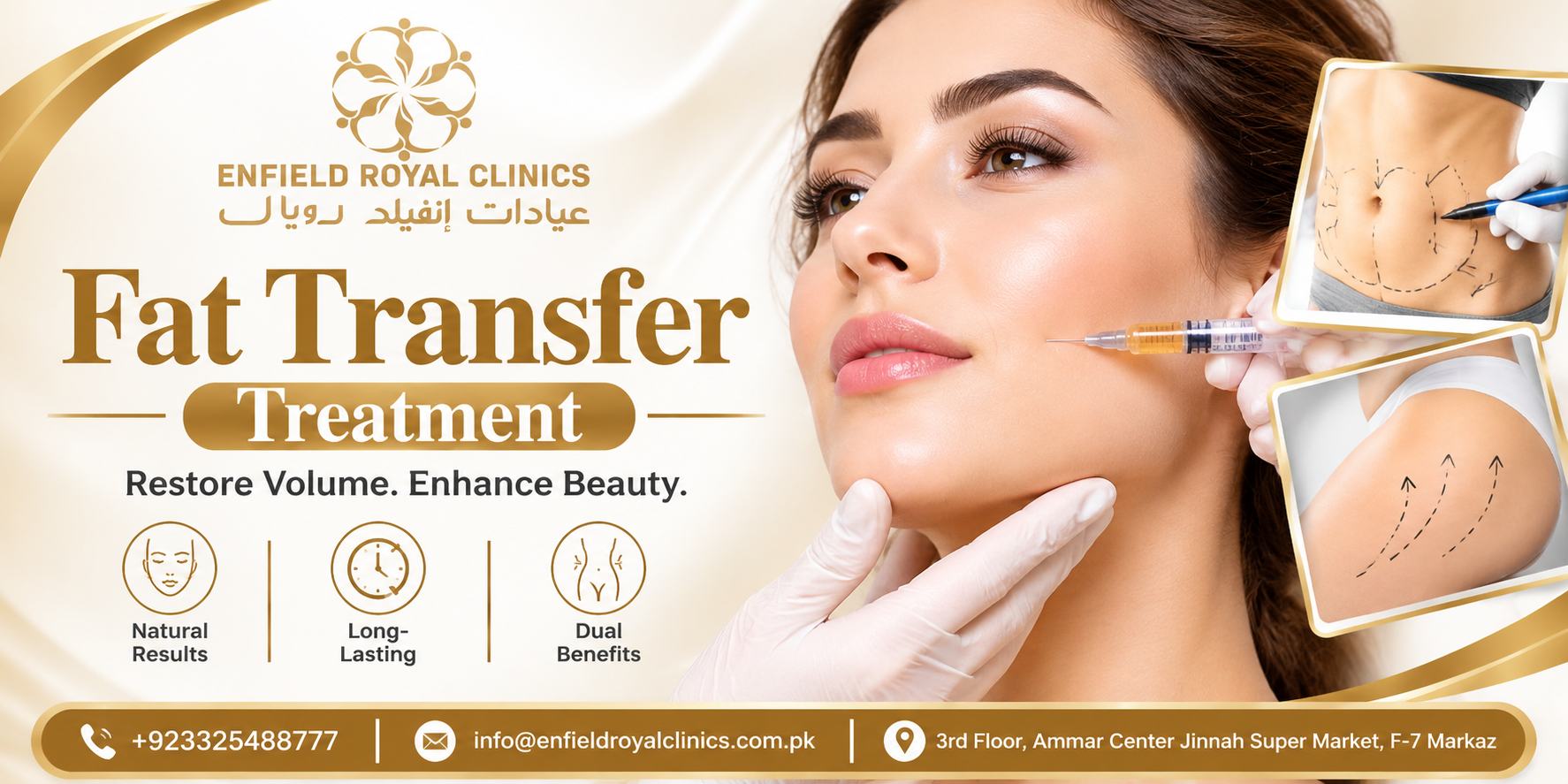
Fat transfer treatment is a cosmetic procedure designed to restore volume, improve selected body contours, and enhance facial features using the patient's own fat. It has become an appealing option for people who want natural-tissue enhancement rather than relying entirely on synthetic materials. The procedure involves collecting fat from one area of the body, preparing it, and carefully transferring it to another area that needs additional fullness.
People considering Fat Transfer Treatment in Islamabad often want to understand exactly what happens during the procedure. Knowing the steps involved can make the experience less confusing and help patients prepare for treatment and recovery.
Although the process may sound straightforward, fat transfer requires careful planning, appropriate surgical techniques, and attention to safety. The exact procedure varies depending on the treatment area, the amount of fat required, and the patient's individual anatomy.
1. Initial Consultation and Treatment Planning
The process begins with a detailed consultation. Before recommending fat transfer, a qualified surgical professional evaluates the patient's health, cosmetic concerns, and expectations.
The consultation helps determine whether the procedure is appropriate and which areas may benefit from treatment. For example, some patients want to restore cheek volume, while others are interested in improving hip or buttock contours.
During this assessment, several factors are considered:
-
Treatment goals: The areas requiring additional volume and the expected level of enhancement.
-
Donor fat availability: Whether the abdomen, thighs, flanks, or another suitable area contains enough fat for harvesting.
-
Medical history: Existing health conditions, previous procedures, medications, and allergies.
-
Skin condition: Skin quality, elasticity, and the presence of loose or uneven tissue.
-
Recovery expectations: The patient's ability to follow aftercare instructions and allow enough time for healing.
The surgical professional may take photographs and measurements to support treatment planning. Patients should also discuss possible complications, expected fat retention, and whether additional sessions may be needed.
This stage is especially important because fat transfer is not suitable for every individual. A personalized plan helps establish realistic expectations before the procedure begins.
2. Preparing the Patient Before the Procedure
Once the treatment plan is finalized, the patient receives instructions to prepare for surgery. These instructions depend on the treatment area, the type of anaesthesia, and the individual's medical condition.
Preparation may include a review of medications and supplements, relevant medical tests, and guidance about eating and drinking before anaesthesia. Patients should disclose all prescription medicines, over-the-counter products, supplements, allergies, and previous surgical experiences.
Smoking is another important consideration because it can interfere with circulation and tissue healing. Patients may be advised to stop smoking before and after the procedure for a period recommended by their surgical professional.
The patient should also arrange suitable transportation and assistance during the initial recovery period, particularly if general anaesthesia or sedation is planned.
On the day of treatment, the donor and recipient areas are assessed and marked. These markings help guide fat collection and placement according to the planned contours.
3. Fat Harvesting From the Donor Area
The first main surgical stage involves collecting fat from a suitable area of the body. Common donor areas include:
-
Abdomen
-
Thighs
-
Flanks or waist
-
Hips, where suitable
Fat harvesting is generally performed using a liposuction technique. After the appropriate anaesthesia is administered, small incisions are made in the selected area. A thin instrument called a cannula is inserted through these openings to gently loosen and collect fat.
The technique is designed to remove fat while minimizing unnecessary trauma to the surrounding tissue. The amount collected depends on the patient's available donor fat and the volume required for the planned enhancement.
It is important to understand that fat harvesting is not intended to produce major weight loss. Its purpose is to collect suitable tissue for transfer and may also improve localized contours in the donor area.
After harvesting, the small incision sites are managed according to the surgical plan. Some patients may experience bruising, swelling, or tenderness around the donor area during recovery.
4. Processing and Preparing the Collected Fat
After fat harvesting, the collected material cannot usually be injected directly into the recipient area without preparation. It contains a mixture of fat cells, fluids, blood, and other components.
The harvested fat is processed using an appropriate technique to separate the suitable fat tissue from unwanted material. Depending on the method used, this may involve filtration, washing, settling, or centrifugation.
The goal is to prepare fat that can be transferred carefully while maintaining the quality of the tissue. Proper handling is important because excessive trauma during harvesting or processing may affect fat-cell survival.
The prepared fat is then placed into suitable syringes or other sterile delivery equipment for injection.
This stage plays an important role in the overall outcome of Fat Transfer Treatment in Islamabad. The quality of the collected tissue, processing method, and handling technique can influence how much transferred fat survives after treatment.
However, even with careful preparation, not every fat cell will survive. Some absorption is a normal part of the healing process.
5. Injecting Fat Into the Target Area
Once the fat is prepared, the next stage involves transferring it to the selected recipient area. The surgical professional uses small instruments or cannulas to place the fat in carefully planned locations.
The fat is generally injected in small amounts and distributed across multiple tissue layers where appropriate. This helps create a more even result and allows the surrounding tissue to support the transferred cells.
The exact placement technique depends on the treatment area.
Facial fat transfer: Fat may be placed in selected areas such as the cheeks, temples, or certain under-eye hollows to restore volume and improve facial contours.
Hip enhancement: Carefully distributed fat may add fullness to the hip region and improve selected body proportions.
Buttock fat transfer: This requires particularly strict safety precautions. Fat must be injected only into the subcutaneous tissue above the gluteal muscle, never into or beneath the muscle. Real-time ultrasound guidance is an important safety measure to help confirm the injection location and reduce the risk of serious fat embolism.
Breast fat transfer: In suitable patients, fat may be used for modest volume enhancement or to improve selected contour irregularities. Patients should understand that breast fat grafting can cause fat necrosis, oil cysts, and calcifications that may appear on imaging.
The amount of fat transferred is based on the recipient area's capacity and the patient's treatment goals. Adding too much fat in one area may compromise tissue conditions and does not guarantee better retention.
6. What Happens Immediately After the Procedure?
After fat placement is complete, the surgical team manages the small incision sites and monitors the patient during the initial recovery period. The patient may remain under observation until the effects of anaesthesia have sufficiently reduced and discharge is considered appropriate.
The treated areas may initially appear fuller than expected. This is partly due to the transferred fat and temporary swelling. Bruising, tenderness, and mild discomfort can also occur around both the donor and recipient areas.
Some patients may need compression garments around the donor area, depending on the harvesting technique and surgical instructions. However, pressure on the recipient area may need to be limited, particularly after certain types of body fat transfer.
The patient receives specific aftercare guidance covering wound care, activity restrictions, medication, sleeping positions, and follow-up appointments.
Recovery instructions should always be followed carefully because different treatment areas require different precautions.
7. Recovery and When Results Become Visible
Recovery after Fat Transfer Treatment in Islamabad varies according to the amount of fat harvested, the recipient area, and the patient's healing response.
During the first few days, swelling, bruising, and tenderness are common. These effects generally improve gradually over the following weeks.
Some transferred fat is naturally absorbed by the body during the healing process. The remaining fat cells may establish a blood supply and survive in the recipient area. This is why the initial appearance can change as the swelling decreases.
A general recovery overview includes:
-
First few days: Swelling, bruising, and tenderness may be noticeable.
-
First few weeks: Initial discomfort and swelling usually begin to improve.
-
One to three months: The treated area continues to settle as the body absorbs some transferred fat.
-
Three to six months: Results often become more stable and easier to evaluate.
Patients should avoid strenuous activities until they receive clearance and follow any instructions about pressure on the treated area.
Fat transfer also carries possible complications, including infection, bleeding, fluid collection, fat necrosis, lumps, asymmetry, and contour irregularities. Fever, spreading redness, worsening pain, or unusual swelling requires prompt medical assessment. Chest pain, shortness of breath, fainting, or sudden vision changes require emergency care.
For more information visit Enfield royal clinic in islamabad
Frequently Asked Questions (FAQs)
1. How long does fat transfer treatment take?
The procedure duration varies depending on the amount of fat harvested, the recipient area, and the complexity of treatment. The expected time can be discussed during the consultation.
2. Is fat transfer treatment performed under anaesthesia?
It may be performed using local anaesthesia with sedation or general anaesthesia, depending on the treatment area, procedure extent, and patient's medical needs.
3. Which areas can provide fat for transfer?
Common donor areas include the abdomen, thighs, and flanks. The selected area depends on available fat and the patient's anatomy.
4. Does all transferred fat survive?
No. Some transferred fat is naturally absorbed during healing. The remaining fat may establish a blood supply and provide longer-lasting volume.
5. Is fat transfer treatment painful?
Patients may experience discomfort, swelling, and tenderness after the procedure. Anaesthesia helps manage discomfort during treatment, while prescribed aftercare measures support recovery.
6. When can patients return to normal activities?
The return to daily activities depends on the treatment area and individual recovery. Light activities may resume earlier than strenuous exercise, which should be delayed until the surgical professional gives clearance.
Conclusion
Fat transfer treatment involves several carefully planned stages, beginning with consultation and fat harvesting and continuing through tissue preparation, injection, and recovery. Each stage contributes to the safety and quality of the outcome. The procedure can restore volume and improve selected facial or body contours, but results depend on individual anatomy, surgical technique, and how much transferred fat survives.
Anyone considering Fat Transfer Treatment in Islamabad should understand the complete process, possible risks, and recovery requirements before proceeding. A detailed consultation with a qualified surgical professional can help determine whether the procedure is suitable and what results may realistically be expected.

 English
 Arabic
 French
 Spanish
 Deutsch
 Turkish
 Dutch
 Italiano
 Russian
 Romaian
 Portuguese (Brazil)
 Greek