
PP Clips: A Practical Guide to Choosing Reliable Polypropylene Clips for Industrial Applications
Introduction
In modern industries, even the smallest components can make a significant difference in the performance, reliability, and safety of an entire system. From water treatment facilities to chemical processing plants, every part must work efficiently to support smooth operations. One such component that plays an important role in industrial applications is PP clips, also known as polypropylene clips.
Polypropylene is a widely used thermoplastic material valued for its lightweight structure, chemical resistance, durability, and versatility. These properties make it suitable for manufacturing various industrial components, including clips, fasteners, holders, and supporting accessories. Depending on their design and intended application, PP clips can help secure components, maintain proper positioning, and simplify installation in different systems.
For businesses involved in water treatment, piping, chemical handling, and industrial fabrication, selecting suitable plastic components is an important part of maintaining operational efficiency. The right clips can help organize installations, support specific components, and contribute to a more manageable maintenance process.
What Are PP Clips?
PP clips are components manufactured from polypropylene, a thermoplastic polymer commonly used across industrial, commercial, and domestic applications. They are designed in different shapes and sizes to suit specific fastening, holding, or supporting requirements.
Depending on their design, these clips may be used to hold lightweight components in place, secure certain accessories, organize installations, or support assembly processes. Their precise function depends on the clip's dimensions, construction, and intended application.
One of the main reasons polypropylene is used in manufacturing these components is its balance of durability and lightweight performance. Unlike some metal alternatives, polypropylene does not rust, making it useful in environments where moisture exposure is a concern.
PP clips can also offer practical advantages during installation. Their relatively low weight makes them easy to handle, while their material properties can make them suitable for applications where resistance to certain chemicals is required.
However, not every polypropylene clip is suitable for every environment. Factors such as operating temperature, mechanical loading, chemical exposure, and the clip's design should always be considered before selecting a product.
For industrial buyers, understanding these basic characteristics provides a useful starting point when comparing different plastic fastening and supporting components.
Key Benefits of Polypropylene Clips
1. Lightweight and Easy to Handle
One of the most noticeable benefits of PP clips is their lightweight construction. Polypropylene is generally lighter than many commonly used metals, making components manufactured from it convenient to transport, store, and install.
In projects involving numerous small accessories, reducing component weight can simplify handling and help streamline installation activities.
For maintenance teams, lightweight clips can also be convenient when replacing worn or damaged components. Their ease of handling makes them a practical option for applications where frequent installation or adjustment may be necessary.
2. Resistance to Moisture and Corrosion
Moisture can affect the performance and lifespan of certain materials, especially metals that are susceptible to rust or corrosion. Polypropylene does not rust, making it a useful material for many wet or humid environments.
This characteristic can be valuable in water treatment plants, plumbing-related installations, and other industrial facilities where exposure to water is part of normal operations.
Nevertheless, the complete assembly must be evaluated carefully. Although polypropylene itself resists corrosion, the performance of a finished clip also depends on its design, installation conditions, and any additional materials used in the assembly.
3. Chemical Resistance
Polypropylene offers resistance to many acids, alkalis, and other chemicals. This makes it an attractive material for selected industrial applications involving chemical processing or handling.
In facilities where equipment and accessories come into contact with industrial fluids, material compatibility is an important consideration. Using an appropriate plastic component can help reduce concerns associated with corrosion that may affect unsuitable metal materials.
Chemical resistance is not universal, however. Strong oxidizing agents, certain solvents, elevated temperatures, and prolonged exposure can affect polypropylene.
Before choosing PP clips for chemical environments, businesses should confirm compatibility with the actual chemicals, their concentrations, operating temperatures, and expected exposure periods.
4. Cost-Effective Performance
Industrial purchasing decisions often involve balancing product quality, installation requirements, maintenance costs, and expected service life.
Polypropylene is widely used in manufacturing because it can provide a practical combination of performance and cost. Depending on the application, PP clips may offer an economical alternative to components manufactured from more expensive materials.
Their lightweight construction may also simplify logistics and handling.
However, the lowest initial purchase price does not always represent the best value. Businesses should consider whether the clips meet the required mechanical, chemical, and environmental specifications before making a final decision.
5. Versatility Across Applications
Polypropylene can be processed into different shapes and sizes, allowing manufacturers to produce components for a variety of purposes.
PP clips may be used in suitable fastening, positioning, assembly, and organizational applications. Their exact use depends on the design and specifications of the product.
This versatility makes polypropylene clips relevant to several industries, including water management, manufacturing, chemical processing, and equipment assembly.
For companies purchasing industrial accessories, identifying the intended function of the clip is the first step toward choosing the right product.
How PP Clips Support Industrial Piping Systems
Industrial piping systems are responsible for transporting water, chemicals, and other fluids throughout facilities. Although pipes and fittings receive much of the attention during project planning, pipe supports are equally important for maintaining an organized and functional installation.
Without appropriate support, pipes may sag, shift out of alignment, or experience unnecessary mechanical stress. Over time, these problems can increase maintenance requirements and affect the overall reliability of the system.
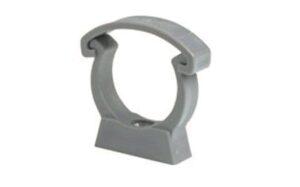
PP pipe clips help keep pipes properly positioned while supporting the design requirements of thermoplastic piping installations. Depending on the selected model, they can be mounted on walls, floors, or ceilings.
ANZ Waters offers pipe clips in different sizes for various pipe diameters, helping contractors and engineers select suitable support components for their projects. Its product range includes options designed for industrial piping applications. You can explore the available products on the ANZ Waters PP clips page.
Choosing an appropriate clip involves more than finding a product that fits around the pipe. The pipe material, operating temperature, fluid density, mounting arrangement, and expected loads must also be considered.
When these factors are evaluated during the design stage, installation becomes more organized, and the piping system is better equipped to meet its intended operating requirements.
Different Types of PP Clips and Their Uses
Not all pipe clips serve the same purpose. Their design and dimensions vary according to the pipe size, installation environment, and level of support required.
Understanding the available options can help project managers and installers make better purchasing decisions.
Standard pipe clips: These clips are designed to hold pipes in position and are suitable for applications where a straightforward support arrangement meets the project's requirements.
Clips with locking straps: Some designs include an additional strap that closes over the pipe. This feature can provide extra retention where the installation requires it, including certain vertical or overhead arrangements.
Clips with distance plates: Depending on the model, an integrated distance plate can help maintain clearance between the pipe and its mounting surface. This can be useful when planning organized piping routes.
Larger pipe support clips: Industrial facilities often use pipes of different diameters. Selecting appropriately sized clips helps ensure that each section receives suitable support.
The most appropriate option depends on the application. Before ordering, buyers should check the manufacturer's product information to confirm dimensions, mounting requirements, compatibility, and load limitations.
Important Factors to Consider When Buying PP Clips
Finding suitable PP clips requires a practical understanding of the installation. A few important considerations can help simplify the selection process.
Check the Pipe Diameter
The first step is to determine the outside diameter of the pipe that needs support.
A clip that is too small may be difficult to install or may place unwanted pressure on the pipe. A clip that is too large may not provide the intended positioning or retention.
For this reason, accurate measurements are essential. Buyers should compare the pipe dimensions with the manufacturer's sizing information rather than relying on approximate measurements.
Consider the Operating Environment
Industrial installations can experience moisture, temperature variations, chemical exposure, and mechanical vibration.
Polypropylene offers useful resistance to moisture and many chemicals, but the actual suitability of a clip depends on its grade and the conditions in which it will be used.
For example, a clip installed in a water treatment facility may face different environmental conditions from one used in a chemical processing plant.
Evaluating the operating environment before purchasing helps reduce the risk of selecting an unsuitable component.
Evaluate Temperature Requirements
Temperature affects the behaviour of thermoplastic materials and the expansion of the pipes they support.
A suitable support arrangement should hold the pipe securely without unnecessarily restricting the movement required by the piping system.
Before installation, engineers should check the allowable temperature range of the selected clip and consider the pipe's thermal expansion characteristics.
Select the Appropriate Mounting Arrangement
The mounting method is another important consideration.
Depending on the product design, pipe clips may be suitable for wall, floor, or ceiling installation. However, the mounting surface, fixing method, pipe load, and installation orientation must all be evaluated.
Vertical and overhead applications may require additional retention or a different support arrangement.
Following the manufacturer's instructions helps ensure that the selected component is used within its intended limits.
Why PP Clips Are Useful in Water Treatment Facilities
Water treatment facilities depend on interconnected piping systems to move water between treatment stages, storage areas, pumps, and distribution equipment.
These systems may operate continuously, making proper pipe positioning and support important considerations during installation.
Polypropylene clips can be useful in suitable thermoplastic piping applications because they are lightweight and resistant to corrosion. Unlike conventional metal components that may rust under certain conditions, polypropylene does not rust.
This property makes it an attractive option for selected installations where moisture exposure is common.
In addition, properly selected pipe supports can help maintain clear routing paths, simplify visual inspections, and make maintenance activities more manageable.
For facilities handling treated water, wastewater, or industrial process fluids, the suitability of each component should be assessed against the specific operating conditions.
ANZ Waters provides thermoplastic piping products and accessories for industrial applications, making its product range relevant to businesses planning or maintaining water management infrastructure.
PP Clips in Chemical Processing Industries
Chemical processing facilities often require piping systems that can withstand exposure to specific acids, alkalis, salts, and other industrial substances.
Material selection is therefore essential when choosing not only pipes and fittings but also supporting components.
Polypropylene is resistant to many commonly encountered industrial chemicals. This can make PP clips a practical option for compatible piping applications where corrosion resistance is important.
However, chemical compatibility must never be assumed for every substance. Certain chemicals, concentrations, and elevated temperatures can affect polypropylene's performance.
Engineers should verify material compatibility using the manufacturer's technical information before specifying clips for chemical installations.
They should also consider the weight of the pipe and its contents, the spacing between supports, and any additional forces that may affect the installation.
By evaluating these requirements together, project teams can select support components that suit the intended application.
The Importance of Correct Installation and Maintenance
Even a well-designed PP clip may not perform as expected if it is installed incorrectly.
Before beginning installation, workers should check that the clip matches the pipe diameter and is compatible with the selected piping material.
The mounting surface should be suitable for the intended load, and the correct fasteners should be used according to the manufacturer's recommendations.
Support spacing also deserves careful attention. Pipes that are supported too far apart may sag, while inappropriate restraint can interfere with thermal movement.
The recommended distance between clips depends on factors such as pipe diameter, wall thickness, material, operating temperature, and fluid density. Therefore, a single spacing measurement should not be applied to every piping installation.
Once the system is operating, periodic inspections can help identify damaged clips, loose fixings, unusual pipe movement, or other visible issues.
Replacing unsuitable or damaged components promptly can help maintain the intended support arrangement.
These simple practices contribute to a more organized installation and can help prevent avoidable maintenance problems.
Finding a Suitable PP Clips Supplier
For contractors, engineers, and industrial purchasing teams, finding the right supplier is an important part of project planning.
A suitable supplier should offer clear product information, relevant size options, and technical details that help customers determine whether a component meets their requirements.
It is also useful to work with a supplier that understands thermoplastic piping systems and the practical challenges associated with industrial installations.
Before placing an order, buyers should confirm product availability, dimensions, material specifications, mounting requirements, and any applicable minimum order quantities.
For larger projects, sharing the pipe sizes and intended application with the supplier can make product selection more straightforward.
ANZ Waters supplies products for thermoplastic piping applications, including polypropylene-based solutions and pipe support accessories.
Businesses looking for suitable PP clips can review the available options and contact the company to discuss their specific requirements.
Conclusion
PP clips may be small components, but they play an important role in maintaining properly supported and organized piping systems. Their lightweight construction, corrosion resistance, and suitability for many industrial environments make polypropylene a useful material for selected pipe support applications.
From water treatment plants and chemical processing facilities to commercial infrastructure and industrial installations, appropriately selected clips can help maintain pipe alignment and simplify installation.
However, choosing the right product requires careful attention to pipe diameter, material compatibility, operating temperature, mounting conditions, and support spacing. Correct installation and regular inspection are equally important for maintaining a reliable support arrangement.

 English
 French
 Spanish
 Portuguese
 Deutsch
 Turkish
 Dutch
 Italiano
 Russian
 Romaian
 Portuguese (Brazil)
 Greek