
Neurology Courses: Understanding Brain Diseases, Diagnosis and Modern Research
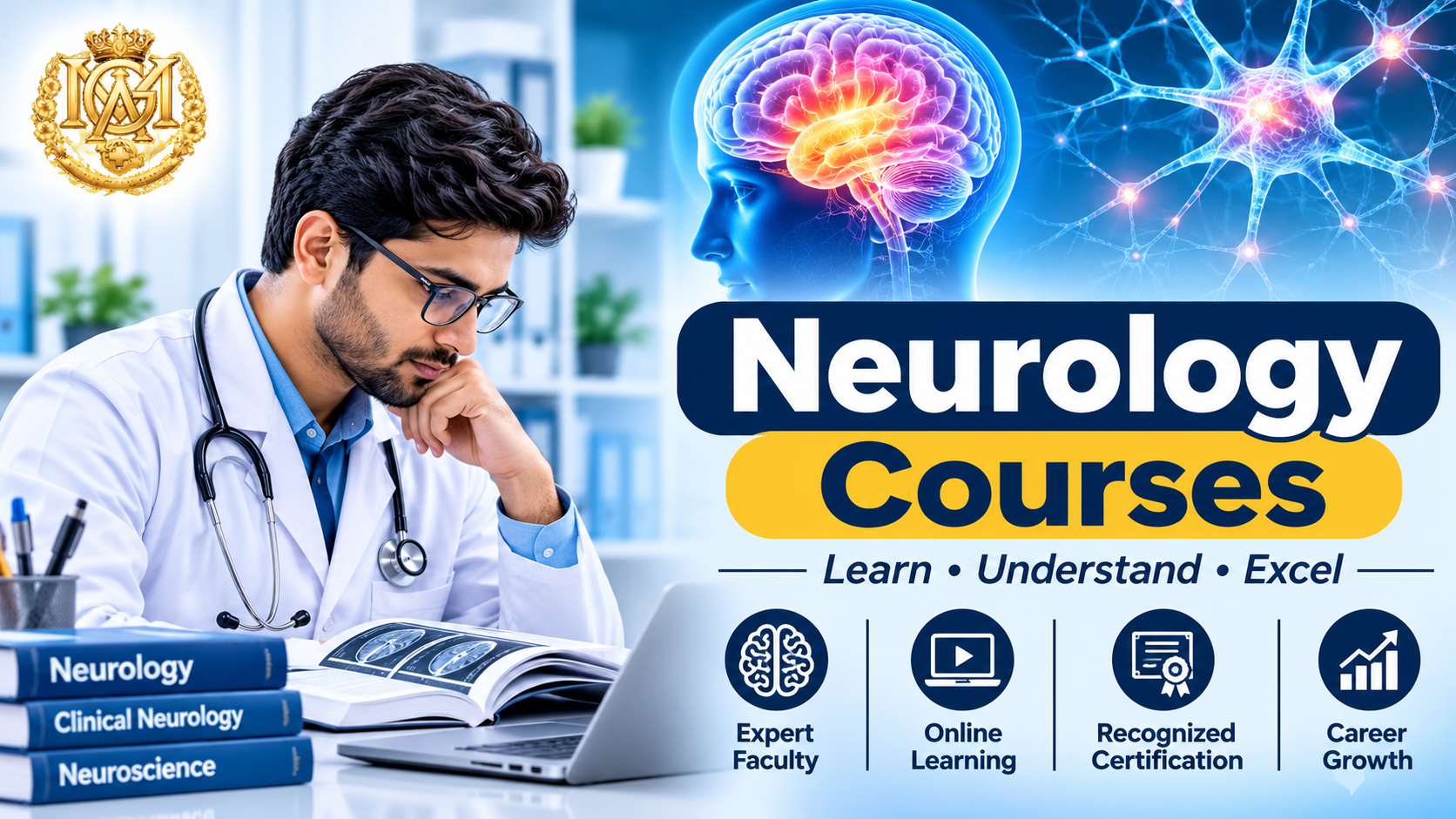
The human brain is an extraordinary organ, yet it remains one of the most challenging parts of the body to understand. It controls movement, memory, emotions, language, and countless other functions that we often take for granted. But what happens when something disrupts this finely balanced system? A small change in brain activity can sometimes affect several aspects of daily functioning. For doctors, understanding these changes means exploring the nervous system from multiple perspectives, including anatomy, physiology, disease mechanisms, and modern research. That's why neurology courses can be a useful part of academic learning, helping medical professionals build a clearer understanding of neurological conditions and the science behind them.
Why Understanding Brain Diseases Matters
Brain diseases can affect people in different ways. Some conditions develop suddenly, while others progress gradually over months or years. Their symptoms may also overlap, making the underlying mechanisms particularly interesting to study.
For medical professionals, understanding brain diseases involves exploring how changes in the nervous system influence different functions.
Some important areas include:
-
Cognitive function: How neurological conditions may influence memory, attention, language, and decision-making.
-
Motor function: How changes in the brain and nervous pathways can affect movement and coordination.
-
Sensory processing: How the nervous system receives and interprets information such as touch, temperature, and pain.
-
Autonomic regulation: How neural pathways contribute to functions such as heart rate and digestion.
-
Brain development: How the nervous system develops, adapts, and changes throughout life.
Looking at these areas together helps doctors understand that neurological conditions rarely exist in isolation from the wider functioning of the body.
Major Brain Diseases Every Medical Professional Should Understand
Neurological science covers a broad range of disorders. Although each condition has distinct characteristics, studying their underlying mechanisms can provide a better understanding of the nervous system.
1. Alzheimer's Disease
Alzheimer's disease is a progressive neurodegenerative condition associated with changes in memory, thinking, and cognitive function.
It is an important subject in neurology because researchers continue to investigate how abnormal protein accumulation, neuronal damage, and other biological processes contribute to disease progression.
2. Parkinson's Disease
Parkinson's disease is a neurodegenerative disorder that primarily affects movement. Common features include tremors, muscle rigidity, slowness of movement, and changes in balance.
Studying this condition introduces doctors to the role of dopamine, basal ganglia circuits, and the neurological mechanisms involved in motor control.
3. Epilepsy
Epilepsy is characterised by an enduring tendency to experience recurrent seizures. These episodes are associated with abnormal electrical activity in the brain.
Important academic topics include seizure classification, EEG principles, epilepsy syndromes, and the mechanisms behind different seizure patterns.
4. Stroke
A stroke occurs when blood supply to part of the brain is interrupted or when bleeding occurs within or around the brain.
Major categories include:
-
Ischaemic stroke.
-
Haemorrhagic stroke.
Understanding cerebrovascular anatomy, blood circulation, and the effects of interrupted oxygen supply is central to studying this subject.
5. Multiple Sclerosis
Multiple sclerosis is an immune-mediated disease involving damage to myelin in the central nervous system. It can affect communication between the brain, spinal cord, and other parts of the body.
Its study introduces important concepts in neuroimmunology, inflammation, demyelination, and neurological function.
How Neurological Diagnosis and Investigations Are Studied
Understanding neurological diseases also means learning about the investigations used to examine the nervous system. Different tests provide different types of information, and their interpretation depends on the clinical context.
Some important investigations include:
1. Magnetic Resonance Imaging (MRI): Provides detailed images of brain and spinal cord structures.
2. Computed Tomography (CT): Uses X-rays to produce cross-sectional images and is commonly used in evaluating several neurological conditions.
3. Electroencephalography (EEG): Records electrical activity in the brain and is particularly relevant to the study of seizure disorders.
4. Nerve Conduction Studies: Examine how electrical signals travel through peripheral nerves.
5. Electromyography (EMG): Studies the electrical activity of muscles and can provide information about neuromuscular function.
Learning the principles, applications, and limitations of these investigations gives doctors a stronger academic foundation for understanding neurological assessment.
How Structured Learning Connects Brain Diseases with Modern Research
Studying brain diseases becomes more meaningful when doctors can connect disease mechanisms, neurological functions, and scientific developments.
At this stage, neurology courses can provide a structured academic pathway for exploring important neurological subjects. Depending on the curriculum, learning may include neurological disorders, neuroanatomy, neurophysiology, diagnostic investigations, and developments in neuroscience.
A well-planned programme may help doctors:
-
Organise their understanding of complex neurological subjects.
-
Explore different categories of brain diseases.
-
Become familiar with modern neurological research.
-
Understand the academic principles behind diagnostic technologies.
-
Develop a broader perspective on specialised areas of neuroscience.
When selecting a programme, doctors should review its syllabus, faculty, learning objectives, duration, and accreditation details. The quality of the academic content matters far more than the programme title alone.
Online Neurology Courses: Flexible Academic Learning for Doctors
Online Neurology Courses offer a flexible learning format for medical professionals who want to explore neurological subjects alongside their existing responsibilities.
Depending on the programme, online education may include several learning components.
Live Online Lectures
Live academic sessions allow learners to follow organised lectures, explore challenging concepts, and participate in discussions with faculty members.
Recorded Classes
Recorded sessions make it easier to revisit complicated topics. For example, doctors can review neurophysiology or cerebrovascular concepts whenever they have time.
Study Materials and Assessments
Digital resources, assignments, and assessments can support revision and help learners evaluate their understanding of different subjects.
Academic Guidance
Faculty support and structured learning plans may help doctors navigate complex topics in a more organised manner.
Before enrolling, it's sensible to check whether the programme's content matches individual learning goals and professional requirements.
Modern Research Areas Shaping Neurological Science
Neurology is constantly evolving. Researchers are exploring new technologies and scientific approaches to understand brain function and neurological diseases.
Here are some developments worth following:
-
Artificial Intelligence: AI-based tools are being investigated for analysing medical images and supporting research.
-
Neurogenetics: Researchers are studying genetic influences associated with neurological disorders.
-
Neuroplasticity: This field explores how the nervous system adapts and reorganises its connections.
-
Brain-Computer Interfaces: These technologies examine how brain signals can interact with external devices.
-
Precision Medicine: Research is exploring how individual biological differences may influence disease characteristics and treatment responses.
These developments highlight why continuous academic learning is important for doctors interested in neurological science.
Frequently Asked Questions
1. What are the major diseases studied in neurology?
Major conditions include Alzheimer's disease, Parkinson's disease, epilepsy, stroke, multiple sclerosis, and other disorders affecting the brain, spinal cord, and peripheral nerves.
2. Which investigations are important in neurological studies?
Commonly studied investigations include MRI, CT scans, EEG, nerve conduction studies, and electromyography.
3. Why is neurophysiology important for understanding brain diseases?
Neurophysiology explains how nerve cells communicate and how the nervous system controls different functions. It provides a foundation for understanding the mechanisms behind many neurological disorders.
4. What is the role of modern research in neurology?
Modern research helps expand scientific understanding of neurological conditions through developments in genetics, neuroimaging, artificial intelligence, and neuroscience.
5. Can doctors explore neurological subjects through online learning?
Yes. Online academic programmes may provide lectures, recorded classes, study materials, assessments, and faculty guidance. Doctors should check the curriculum and learning outcomes before choosing a programme.
Conclusion
Understanding brain diseases requires more than learning their names and symptoms. It involves exploring the nervous system, examining disease mechanisms, understanding neurological investigations, and following developments in modern research.
For doctors, building this knowledge is an ongoing process. By studying conditions such as Alzheimer's disease, Parkinson's disease, epilepsy, and stroke, alongside subjects like neurophysiology and neuroimaging, medical professionals can develop a broader academic understanding of neurological science. And with research continuing to uncover new insights into the brain, there's always another important discovery waiting around the corner.

 English
 Arabic
 French
 Spanish
 Portuguese
 Deutsch
 Turkish
 Dutch
 Italiano
 Romaian
 Portuguese (Brazil)
 Greek