
How to Prepare for the IELTS Exam: Complete Guide for Test Takers
Introduction
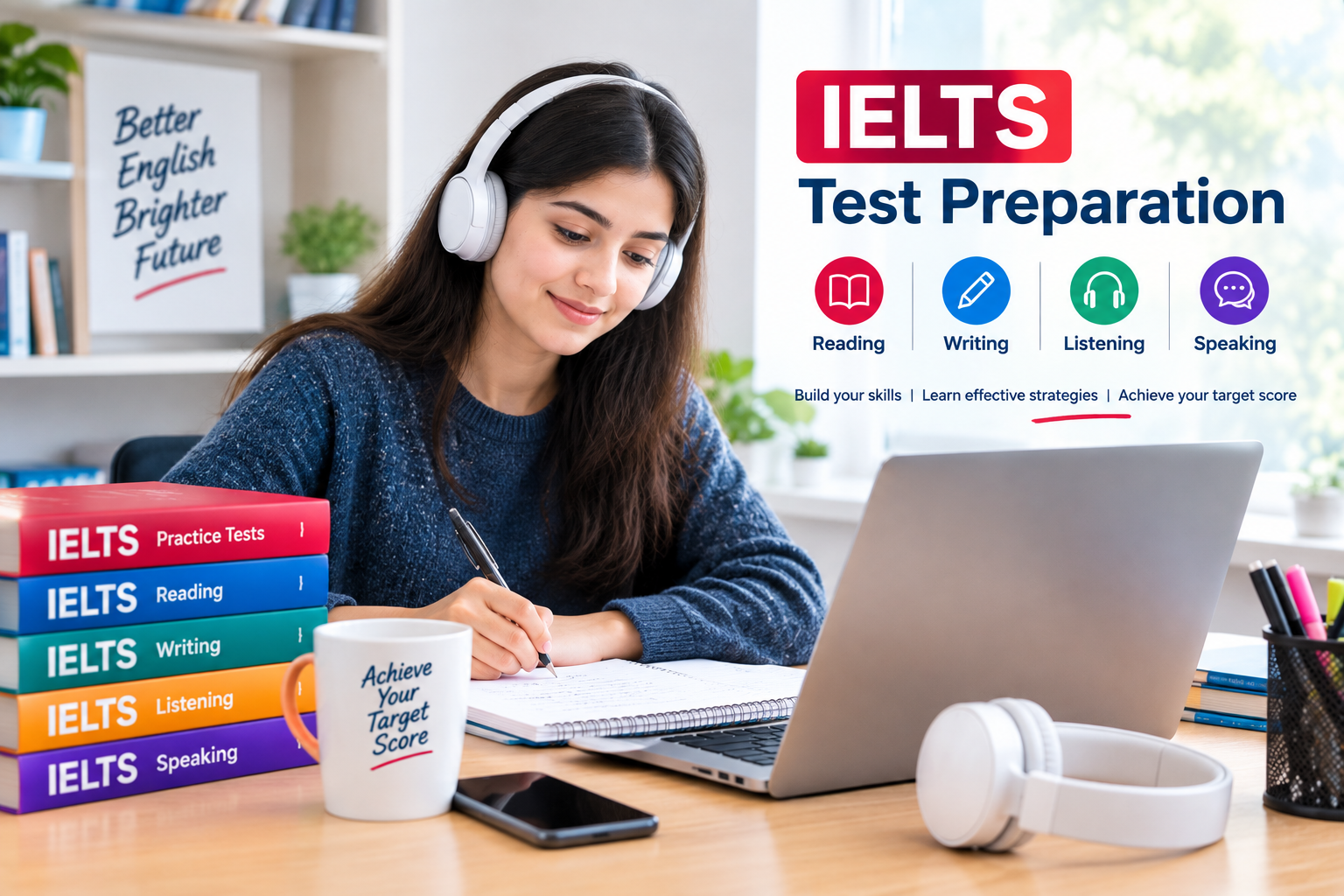
Preparing for the IELTS exam can feel challenging, especially when you need to achieve a particular band score for university admission, migration or professional registration. Many candidates understand English reasonably well but struggle to perform confidently under exam conditions. The reason is often a lack of structured preparation, limited practice or unfamiliarity with the IELTS test format.
Achieving your target IELTS score requires more than learning new vocabulary. You need to develop all four English skills, understand the assessment criteria, manage your time effectively and practise with realistic exam questions.
This guide explains how to prepare for IELTS step by step, improve your performance in each section and avoid common mistakes during your preparation.
What Is the IELTS Exam?
The International English Language Testing System (IELTS) is an English proficiency test designed to assess how effectively candidates communicate in English. It is commonly used for international education, migration and professional purposes.
The IELTS test assesses four language skills:
-
Listening
-
Reading
-
Writing
-
Speaking
IELTS offers two main test types:
IELTS Academic: Generally designed for people applying to higher education institutions or certain professional registration pathways.
IELTS General Training: Commonly used for migration, work-related purposes and some training programmes.
Before booking your test, check which IELTS version your university, organisation or immigration pathway requires.
How to Prepare for the IELTS Exam
Successful IELTS preparation involves a balanced study routine, consistent practice and regular performance reviews.
The following steps can help you build a more effective preparation strategy.
1. Understand the IELTS Test Format
Before starting your preparation, become familiar with the structure of the IELTS examination. Understanding the test format helps you know what each section requires and how much time you have to complete different tasks.
The four sections assess different aspects of your English ability:
-
Listening: Understanding conversations, discussions and spoken information.
-
Reading: Identifying main ideas, details and specific information in written passages.
-
Writing: Organising ideas and presenting information clearly and accurately.
-
Speaking: Communicating naturally and responding to questions confidently.
Practical advice:
-
Review the instructions for every question type.
-
Understand the time limits for each section.
-
Practise using official sample questions.
-
Learn how your responses are assessed.
-
Take a diagnostic test to identify your strengths and weaknesses.
2. Improve Your IELTS Listening Skills
The IELTS Listening section assesses your ability to understand spoken English in different situations. Candidates may hear conversations, discussions and educational talks.
One common difficulty is missing important information while trying to understand every word.
To improve your listening performance:
-
Listen to English podcasts, interviews and educational programmes.
-
Practise identifying names, dates, numbers and key details.
-
Read questions before the recording begins.
-
Pay attention to synonyms and paraphrased information.
-
Review incorrect answers to understand why you missed them.
Regular IELTS listening practice helps you become more familiar with different speakers, accents and speaking speeds.
3. Strengthen Your IELTS Reading Skills
The Reading section requires candidates to understand written information, identify relevant details and manage their time effectively.
Many test takers spend too much time reading every sentence carefully. Developing efficient reading techniques can help you complete questions within the available time.
Useful reading strategies:
-
Skimming: Quickly reading a passage to understand its main idea.
-
Scanning: Searching for specific information, names, dates or keywords.
-
Identifying keywords: Recognising important words in questions.
-
Understanding context: Using surrounding sentences to understand unfamiliar vocabulary.
Practise different question types, including True/False/Not Given, matching headings, multiple-choice questions and sentence completion.
Consistent IELTS reading practice can improve comprehension, vocabulary and reading speed.
4. Develop Better IELTS Writing Skills
Writing can be challenging because candidates need to communicate ideas clearly while maintaining accurate grammar, vocabulary and organisation.
The IELTS Writing section contains two tasks, with requirements that differ between Academic and General Training.
Task 1:
-
Academic candidates describe visual information such as charts, graphs, tables or processes.
-
General Training candidates write a letter for a particular situation.
Task 2:
Candidates write an essay responding to a question or statement.
To improve your writing:
-
Understand the requirements of each task.
-
Organise your ideas before writing.
-
Use clear paragraphs and logical transitions.
-
Develop vocabulary without using unnatural expressions.
-
Check grammar, punctuation and spelling.
-
Practise completing tasks within the time limit.
Regular IELTS writing practice and detailed feedback can help you recognise repeated mistakes and improve the clarity of your responses.
5. Build Confidence in IELTS Speaking
The Speaking section assesses how effectively you communicate in English through a face-to-face interview or an approved video-call format.
Candidates are assessed on fluency and coherence, lexical resource, grammatical range and accuracy, and pronunciation.
You can improve your speaking ability through regular practice.
Practical speaking techniques:
-
Speak about familiar topics such as education, work and daily activities.
-
Practise answering questions without memorising complete responses.
-
Record yourself and identify areas for improvement.
-
Develop your ability to explain opinions with relevant examples.
-
Work on clear pronunciation and natural speaking speed.
The IELTS Speaking test includes three parts:
-
Part 1: Introduction and questions about familiar topics.
-
Part 2: An individual long turn based on a topic card.
-
Part 3: A more detailed discussion related to the Part 2 topic.
Practising all three parts can help you become more comfortable with the interview format.
6. Take Regular IELTS Mock Tests
An IELTS mock test helps you understand your current performance and become familiar with exam conditions.
It is useful for identifying weaknesses and measuring progress before the actual examination.
Regular mock tests can help you:
-
Understand the examination structure.
-
Improve time management.
-
Identify weak language skills.
-
Develop confidence under timed conditions.
-
Monitor progress towards your target band score.
However, completing practice tests without reviewing mistakes may limit your improvement. Analyse your answers, understand recurring errors and focus on the skills that need additional attention.
7. Create a Structured IELTS Study Plan
A realistic study plan helps you practise consistently without neglecting any section of the examination.
Here is an example of a weekly IELTS preparation routine:
-
Monday: Listening practice and answer review.
-
Tuesday: Reading exercises and vocabulary development.
-
Wednesday: Writing Task 1 practice.
-
Thursday: Speaking practice and pronunciation.
-
Friday: Writing Task 2 practice.
-
Saturday: Complete IELTS mock test.
-
Sunday: Review mistakes and revise difficult topics.
Adjust your routine according to your current English level, available study time and target band score.
If you have limited preparation time, prioritise the skills that require the most improvement.
IELTS Academic vs IELTS General Training
Choosing the correct IELTS test type is important because the Reading and Writing sections differ between Academic and General Training.
IELTS Academic
-
Commonly used for university and higher education applications.
-
Reading passages are generally more academic in nature.
-
Writing Task 1 involves describing visual information.
IELTS General Training
-
Commonly used for certain migration and work-related pathways.
-
Reading materials include everyday and workplace-related texts.
-
Writing Task 1 involves writing a letter.
The Listening and Speaking sections are generally the same for both test types.
Always confirm the test type and score requirements with the institution, organisation or authority you are applying to.
Common IELTS Preparation Mistakes to Avoid
Many candidates make avoidable mistakes that affect their preparation and examination performance.
Some common mistakes include:
-
Preparing without a clear target band score.
-
Ignoring the IELTS test format.
-
Practising only one or two English skills.
-
Spending too much time on difficult questions.
-
Memorising complete speaking and writing responses.
-
Using advanced vocabulary incorrectly.
-
Ignoring grammar and spelling mistakes.
-
Taking mock tests without reviewing answers.
-
Not practising under timed conditions.
-
Starting preparation too close to the examination date.
Recognising these mistakes early can help you develop better study habits and make your preparation more effective.
How Learn With Hafiz Can Help with IELTS Preparation
Preparing for IELTS independently can be difficult when you are unsure how to improve your performance or which areas require attention.
Learn With Hafiz is an online English test-preparation platform that provides structured learning support for candidates preparing for English proficiency examinations.
Its IELTS Preparation programme helps learners explore practical preparation strategies, develop their English skills and follow a more organised study routine.
Preparation support includes:
-
Practical IELTS strategies.
-
Structured learning resources.
-
Speaking and writing practice.
-
Reading and listening exercises.
-
Mock tests.
-
Personalised performance feedback.
-
Expert guidance.
-
Flexible online learning.
These resources can help candidates approach their IELTS preparation with greater clarity and confidence.
Final Tips for Achieving Your Target IELTS Band Score
Before taking the IELTS examination, remember these important preparation tips:
-
Understand your required IELTS band score.
-
Choose the correct IELTS test type.
-
Practise all four English skills regularly.
-
Improve grammar and vocabulary through everyday learning.
-
Take timed mock tests.
-
Review mistakes and work on weaker areas.
-
Practise speaking naturally and confidently.
-
Use reliable preparation materials.
-
Maintain a consistent study schedule.
Conclusion
Preparing for IELTS requires a clear understanding of the examination, regular practice and a balanced approach to all four English skills. Whether you are planning to study overseas, apply for migration or meet a professional English requirement, a structured preparation strategy can make your learning more organised and productive.
Focus on improving your actual English ability rather than relying entirely on memorised answers or shortcuts. Set realistic goals, monitor your progress and give yourself enough time to practise.
To explore guided English test preparation, visit Learn With Hafiz and discover learning resources designed to support your IELTS preparation journey.
For further information, contact Learn With Hafiz at +61 404 897 857 or [email protected].

 English
 Arabic
 Spanish
 Portuguese
 Deutsch
 Turkish
 Dutch
 Italiano
 Russian
 Romaian
 Portuguese (Brazil)
 Greek