
Ground Penetrating Radar Market Growth Prospects Across Emerging Economies
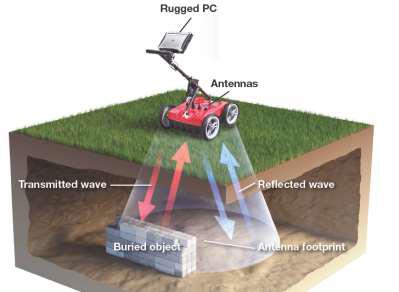
In a discussion on infrastructure resilience, participants frequently ask why demand for subsurface radar is expanding faster than conventional surveying tools. The answer lies in three converging forces: dense urban underground congestion, deteriorating twentieth-century bridges and highways, and tighter environmental rules discouraging invasive drilling. Tracking Ground Penetrating Radar growth highlights how modern cities layer fiber cables, district heating pipes, stormwater tunnels, and high-voltage lines beneath crowded streets, making blind excavation unacceptably risky. Simultaneously, transportation agencies rely on non-destructive radar scans to map bridge-deck delamination, asphalt thickness, and subsurface sinkholes without shutting down entire highway corridors. For a group discussion, this creates a sharp policy question: how much public money could governments save if preventative radar diagnostics became routine across highway and municipal asset-management budgets?
Environmental stewardship and responsible resource exploration add further momentum to market expansion. In mining, brownfield redevelopment, and hydrogeological surveys, operators increasingly favor non-invasive imaging over exploratory boreholes that disturb fragile ecosystems or risk puncturing buried storage tanks. However, translating raw radar scans into regulatory-grade engineering reports still requires rigorous calibration and quality control. Group members can explore how engineering standards bodies and environmental regulators should certify non-destructive testing protocols so subsurface radar data stands alongside traditional core sampling in legal and structural audits.
Frequently Asked Questions
1. Why is urbanization driving higher demand for ground penetrating radar? Rapid urban development concentrates water, gas, power, and telecommunications lines underground, requiring accurate non-invasive mapping before new construction or repairs begin.
2. How does ground penetrating radar support environmentally responsible operations? It maps subsurface contamination plumes, buried tanks, and geological layers without invasive drilling or soil disturbance, minimizing ecological disruption.
➤➤➤Explore MRFR’s Related Ongoing Coverage In Semiconductor Industry:
Electromagnetic Compatibility Filtration Market
Electromagnetic Field Meter Market
Electronic Gadget Insurance Market
Electronic Pressure Transmitter Transducer Market
Emergency Location Transmitter Market

 English
 French
 Spanish
 Portuguese
 Deutsch
 Turkish
 Dutch
 Italiano
 Russian
 Romaian
 Portuguese (Brazil)
 Greek