
Best Portable Power Stations for Home Backup: A Practical Guide
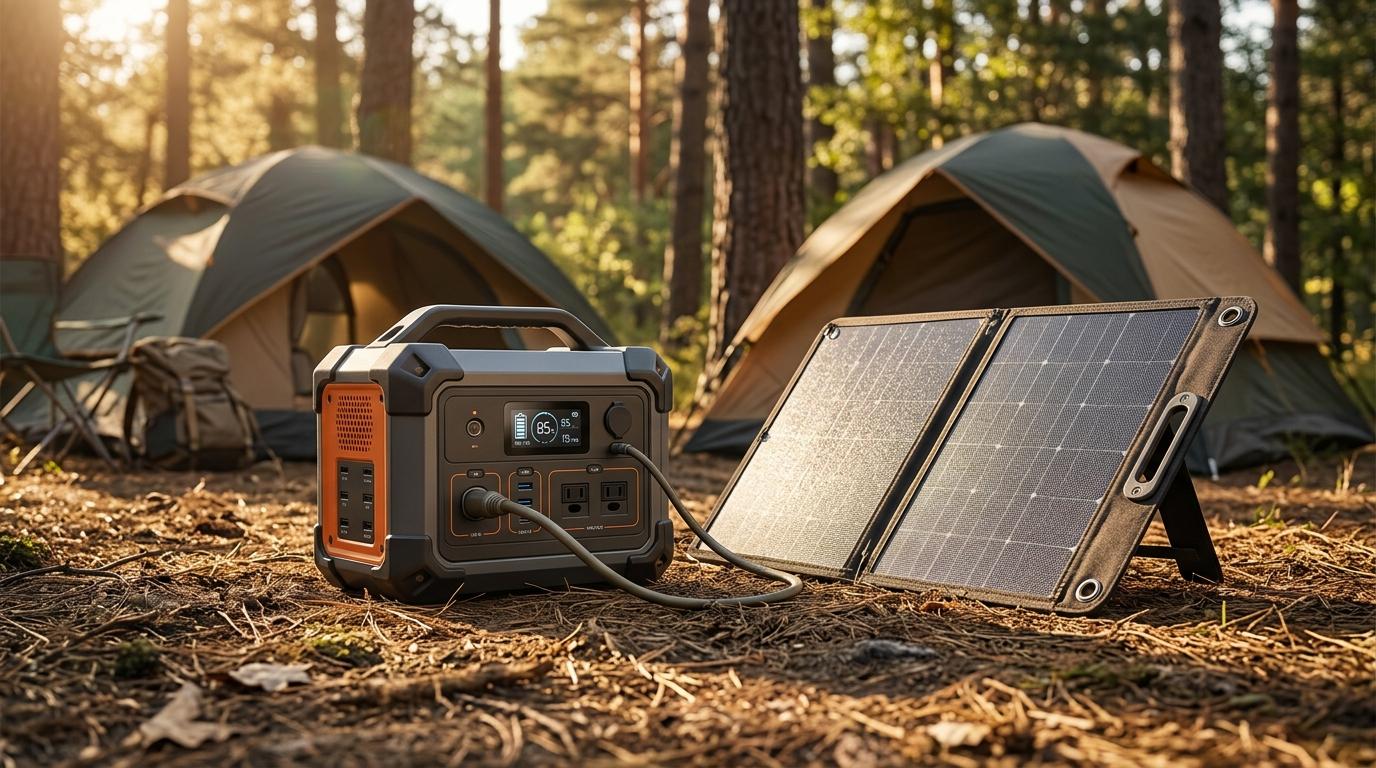
Power interruptions can affect daily routines, internet access, food storage, and home office activities. Choosing the best portable power stations for home backup depends on the appliances you need to operate, the length of an outage, and the amount of energy your household uses. A suitable power station can provide electricity for essential devices without the noise, exhaust fumes, or fuel requirements associated with conventional fuel-powered generators.
Portable power stations have become useful for households that need a flexible source of backup electricity. These battery-powered units can operate lights, charge mobile phones, support internet routers, and run selected appliances, depending on their capacity and output rating. Understanding their main features helps homeowners select a system that meets their needs without paying for unnecessary power.
What Is a Portable Power Station?
A portable power station is a rechargeable battery system with built-in outlets and power conversion components. It stores electricity and supplies it to compatible devices when the main power supply is unavailable.
Most models include AC outlets, USB ports, and sometimes 12-volt DC connections. Some units also support solar panels, allowing users to recharge the battery when sunlight is available.
Unlike conventional portable generators, battery-powered stations produce no exhaust during operation. This makes them suitable for indoor use when operated according to the manufacturer's instructions. However, their available energy is limited by battery capacity, so users must plan their electricity needs carefully.
Why Homeowners Need Backup Power
A reliable backup system can make power interruptions easier to manage. The right setup keeps important household functions running until normal electricity returns.
Maintaining Essential Lighting
Battery-powered lights help households maintain visibility during evening outages. LED lamps are particularly useful because they generally consume less electricity than traditional lighting options.
Keeping Communication Devices Charged
Mobile phones, tablets, and laptops allow people to communicate with family members, access information, and continue important tasks. A power station with suitable USB and AC connections can support these devices throughout an interruption.
Supporting Internet Connectivity
Internet routers and modems usually require relatively little electricity compared with larger appliances. A properly sized power station can keep a home network operating, provided the internet service itself remains available.
Supporting Selected Household Appliances
Some larger power stations can operate refrigerators, fans, medical equipment, and other appliances. Compatibility depends on the device's power requirements, starting surge, battery capacity, and available connections.
Important Features to Check Before Buying
When researching the best portable power stations for home backup, focus on specifications that directly affect performance rather than relying on product size or marketing claims.
Battery Capacity
Capacity, measured in watt-hours (Wh), indicates how much energy a battery stores. A larger capacity generally supports longer operation, although actual runtime depends on energy losses and the connected devices.
For example, a 500Wh station cannot necessarily deliver 500Wh of usable electricity to AC appliances because the inverter consumes some energy during conversion.
Estimate your daily needs by multiplying each appliance's wattage by its expected operating hours. Add the results together and allow extra capacity for conversion losses and unexpected use.
Continuous Output and Surge Capacity
Output is measured in watts (W). It determines how much power the station can deliver at a given moment.
Continuous output must be sufficient for the devices running simultaneously. Appliances with motors, including refrigerators and pumps, may require extra starting power. Check both the running wattage and surge rating before choosing a station.
Battery Chemistry
Lithium iron phosphate, commonly called LiFePO4 or LFP, is widely used in modern portable power stations. These batteries can offer long cycle life and good thermal stability when used within their specified limits.
Battery lifespan still depends on temperature, charging habits, discharge depth, and the manufacturer's design. Review the warranty and stated cycle-life rating before purchasing.
Charging Options
Many stations recharge through a wall outlet, a vehicle connection, or compatible solar panels. Wall charging is convenient when grid electricity is available, while solar charging can be useful during extended outages.
Check the supported solar input, charging time, connector compatibility, and whether solar panels are included or sold separately.
Choosing a Suitable Capacity for Your Home
The ideal capacity depends on which devices you want to power and how long you need them to operate.
Small Capacity for Basic Needs
Compact stations may be appropriate for phones, LED lights, small electronics, and occasional laptop charging. They are easy to move and generally take up less storage space.
However, they may not provide enough energy for a refrigerator or multiple appliances over an extended outage.
Medium Capacity for Everyday Backup
Mid-sized units can provide a practical balance between portability and stored energy. Depending on their output ratings, they may support a home office, internet equipment, lighting, and selected low-power appliances.
Households should still calculate their expected energy consumption instead of choosing a model based on capacity alone.
Large Capacity for Longer Outages
Larger stations are better suited to households that need more stored energy or want to operate several essential devices for longer periods. Some models support additional batteries to extend their runtime.
These systems can be heavier, more expensive, and more complicated to connect to household circuits. Professional guidance may be necessary when integrating a station with a home's electrical panel.
How to Estimate Backup Runtime
A simple calculation helps set realistic expectations.
Divide the battery's usable capacity in watt-hours by the total power consumption in watts to estimate operating time.
For example, a station with 1,000Wh of usable energy powering a constant 100W load would provide approximately 10 hours of operation. Real-world performance may be lower because of conversion losses, temperature, and changes in device consumption.
For multiple devices, add their expected wattage when they operate simultaneously. Also calculate total energy use over the entire backup period.
Solar Charging During Power Outages
Solar compatibility can improve the usefulness of a portable power station during prolonged electricity interruptions. Compatible solar panels convert sunlight into electricity that can recharge the battery.
Actual charging speed depends on sunlight intensity, panel angle, weather, shading, and the station's maximum solar input. A panel's advertised wattage does not guarantee that it will produce that amount continuously.
Before buying panels, verify their voltage, current, connector type, and compatibility with the station. Solar charging can extend backup availability, but users should not assume it will fully recharge the battery every day.
Safety and Maintenance Considerations
Portable power stations require appropriate handling to maintain reliable operation.
-
Follow the manufacturer's instructions for charging, storage, and operating temperatures.
-
Keep the unit dry and use only connections designed for the model.
-
Avoid exceeding the rated continuous output or surge limits.
-
Inspect charging cables and connectors for damage.
-
Store the battery according to the manufacturer's recommended charge level and temperature.
-
Never connect a power station to household wiring through an improvised backfeed connection. Use approved transfer equipment installed by a qualified electrician when connecting to home circuits.
These practices help reduce electrical hazards and support longer equipment life.
Common Mistakes to Avoid
One common mistake is choosing a station based only on its battery capacity. A unit can store substantial energy but still lack the output required to start a particular appliance.
Another mistake is assuming that a portable station can power an entire home. Heating systems, air conditioners, electric ovens, and other high-demand appliances can consume substantial energy and may exceed the unit's limits.
Buyers should also check the weight, charging speed, number of outlets, warranty, replacement battery options, and availability of compatible accessories. These details affect how convenient the system will be during an actual outage.
Conclusion
The best portable power stations for home backup are those that match a household's essential electricity needs, expected outage duration, and available budget. Battery capacity determines how long devices may operate, while continuous output and surge capacity determine which appliances the station can support.
By estimating power consumption, reviewing charging options, checking battery chemistry, and following safe operating practices, homeowners can choose a practical backup solution. A carefully selected station can keep essential devices running and make unexpected power interruptions easier to manage.
Frequently Asked Questions
Can a portable power station run a refrigerator?
Yes, if its continuous output, starting surge capacity, and usable battery energy meet the refrigerator's requirements. Check the appliance label and manufacturer specifications before connecting it.
How long can a portable power station provide backup electricity?
Runtime depends on usable battery capacity and the total power consumption of connected devices. A low-power load will generally run longer than a high-power appliance on the same battery.
Can solar panels recharge a portable power station?
Many models accept compatible solar panels. Charging speed depends on sunlight conditions, panel performance, and the station's maximum solar input.
Are portable power stations safe to use indoors?
Battery power stations produce no exhaust during normal operation, but they must be used according to the manufacturer's instructions. Protect them from moisture, excessive heat, and damaged electrical connections.

 English
 Arabic
 French
 Spanish
 Portuguese
 Deutsch
 Turkish
 Italiano
 Russian
 Romaian
 Portuguese (Brazil)
 Greek