
Is Hunepulley Suitable for Your Bearing and Pulley Requirements?
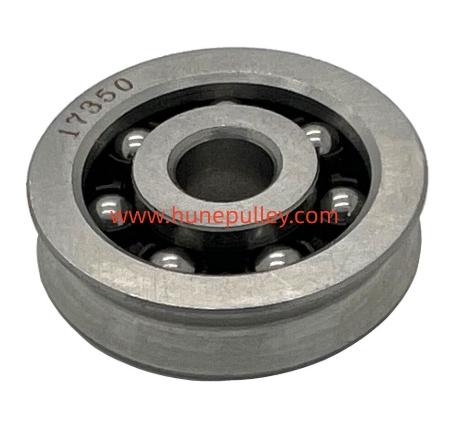
Mechanical systems depend on components that work together through repeated movement, controlled rotation, and consistent alignment. Bearing and Pulley solutions from Hunepulley introduce businesses to an approach centered on practical engineering, material considerations, and application-specific requirements. For manufacturers, equipment designers, and purchasing teams, understanding how these components interact can help guide product selection and support the development of functional mechanical assemblies.
Bearings and pulleys serve different but complementary purposes in many mechanical arrangements. A bearing helps support rotating components and manage friction, while a pulley guides or transfers motion through a belt, cable, or related mechanism. Their performance depends on the surrounding structure, operating conditions, installation method, and compatibility with connected parts. Selecting suitable components therefore requires attention to the complete assembly rather than examining individual items in isolation.
Material choice can influence how a component behaves in its intended environment. Metal components may be suitable for particular load and operating requirements, while engineered plastics can offer advantages in applications where weight, noise, or resistance to certain environmental conditions matters. The appropriate option depends on the design objective, contact surfaces, expected movement, and maintenance requirements. Reviewing material specifications helps purchasing teams make informed comparisons.
Component geometry also deserves careful consideration. Pulley grooves, wheel profiles, bearing dimensions, and mounting arrangements affect how parts fit and interact. A groove profile should correspond to the intended belt or track, while the bearing configuration should suit the shaft and housing arrangement. Careful matching helps reduce installation difficulties and supports smoother interaction between connected components.
In manufacturing environments, these details can influence equipment design and maintenance planning. Components used in sliding systems, conveying equipment, furniture hardware, and other mechanical assemblies may face different movement patterns and environmental conditions. Dust, moisture, temperature changes, and repeated operation can affect material suitability and maintenance needs. Evaluating the intended application helps engineers identify relevant specifications before confirming a component choice.
Installation practices are equally important. Even a correctly selected part may perform poorly if it is misaligned, improperly secured, or used outside its intended conditions. Clear installation guidance and appropriate inspection procedures help technicians identify potential issues during assembly and maintenance. Businesses should follow manufacturer recommendations regarding lubrication, mounting, operating conditions, and replacement intervals where applicable.
For purchasing teams, supplier communication can simplify component selection. Sharing drawings, dimensional requirements, material preferences, and details about the operating environment helps clarify the intended application. It can also reduce uncertainty when comparing different configurations or discussing customized requirements. Maintaining clear technical communication supports a more organized process from initial inquiry to product integration.
Consistency in component specifications is another useful consideration for businesses managing recurring production needs. Clear documentation can help teams confirm dimensions, review compatibility, and coordinate purchasing with assembly requirements. When replacement components are needed, accurate identification can also help maintenance personnel select suitable parts without unnecessary confusion.
A practical component strategy balances functionality, compatibility, maintenance, and the demands of the operating environment. By examining these factors together, businesses can make more informed decisions about mechanical assemblies and develop product specifications that reflect real application requirements. Attention to these details also encourages more effective communication between designers, manufacturers, and suppliers.
Every well-planned mechanism begins with understanding how its individual parts work together. Visit https://www.hunepulley.com/product/ to browse the available product range, review component options, and find ideas for your next mechanical project. Your next design question may lead to a useful solution just a few clicks away.

 English
 Arabic
 Spanish
 Portuguese
 Deutsch
 Turkish
 Dutch
 Italiano
 Russian
 Romaian
 Portuguese (Brazil)
 Greek