
Top Data Governance Challenges and How to Overcome Them
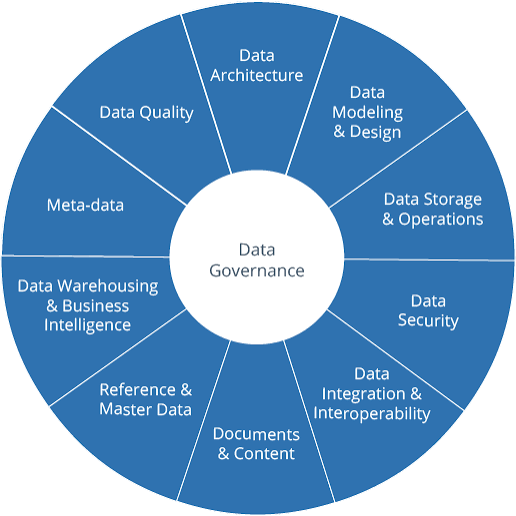
In today's digital world, businesses collect and manage large amounts of data from websites, applications, customers, employees, and business operations. This information helps organizations understand customer behavior, improve decision-making, and increase operational efficiency. However, managing data effectively is not always easy. Without proper rules, processes, and responsibilities, businesses can face serious data management problems.
This is where data governance becomes important. Data governance helps organizations maintain accurate, secure, consistent, and reliable information. It establishes policies and procedures that explain how data should be collected, stored, accessed, managed, and protected.
Although data governance offers many benefits, implementing it can be challenging. Organizations often struggle with poor data quality, unclear ownership, security risks, compliance requirements, and a lack of employee awareness.
In this article, we will explore the top data governance challenges businesses face and practical ways to overcome them.
What Is Data Governance?
Data governance is a collection of policies, standards, processes, and responsibilities used to manage business data throughout its lifecycle. It ensures that information remains accurate, consistent, secure, accessible, and useful.
A strong data governance program defines who can access information, who is responsible for maintaining it, how data quality is measured, and how organizations follow privacy and regulatory requirements.
For example, a company may store customer information across its CRM, website, marketing platform, and sales database. Without proper governance, the same customer may have different contact details in different systems. Data governance helps establish consistent rules to prevent these problems.
Why Is Data Governance Important?
Data governance supports businesses by improving the way information is managed and used. It helps organizations:
-
Maintain accurate and consistent business information.
-
Protect sensitive customer and employee data.
-
Reduce duplicate and outdated records.
-
Improve reporting and business intelligence.
-
Support regulatory compliance.
-
Establish clear data ownership and accountability.
-
Build trust in business reports and analytics.
However, achieving these benefits requires organizations to identify common challenges and develop effective solutions.
Top Data Governance Challenges and How to Overcome Them
1. Poor Data Quality
Poor data quality is one of the most common challenges in data governance. Businesses often work with incomplete, outdated, duplicated, or incorrect information.
For example, a customer database may contain incorrect email addresses, missing phone numbers, or duplicate customer profiles. These problems can affect marketing campaigns, sales reports, and business decisions.
How to Overcome It:
Organizations should establish clear data quality standards and regularly review their information. They can use data validation rules, automated cleaning tools, and duplicate detection processes to identify errors.
Businesses should also monitor important data quality measurements, such as accuracy, completeness, consistency, and timeliness. Assigning responsibility for maintaining important datasets can help prevent the same problems from returning.
2. Lack of Clear Data Ownership
Many organizations do not clearly define who is responsible for managing specific types of data. As a result, employees may not know who should correct errors, approve access requests, or maintain important records.
For example, customer information may be managed by the sales department, while financial information belongs to the finance team. Without defined responsibilities, data management activities can become confusing.
How to Overcome It:
Businesses should establish clear data ownership roles. A data owner can be responsible for approving access and defining requirements, while a data steward can help maintain data quality and follow established policies.
Organizations should document responsibilities for important datasets and communicate them across departments. This creates accountability and makes data management more organized.
3. Data Security and Privacy Risks
Businesses store sensitive information, including customer details, financial records, employee information, and business documents. If this information is not properly protected, organizations may face unauthorized access, data breaches, and privacy problems.
Security risks can increase when employees share information through unsecured platforms or when too many people have access to sensitive records.
How to Overcome It:
Organizations should develop strong data security and privacy policies. They should use role-based access control so employees can only access information required for their responsibilities.
Additional security measures include encryption, multi-factor authentication, regular security assessments, and activity monitoring.
Businesses should also classify sensitive information and establish rules for collecting, storing, sharing, and deleting it.
4. Managing Data Across Multiple Systems
Modern businesses use different platforms to manage operations. These may include CRM systems, ERP software, cloud databases, marketing tools, and analytics platforms.
When information is stored across disconnected systems, organizations may experience data duplication, inconsistent records, and difficulties accessing reliable information.
How to Overcome It:
Businesses should develop a centralized approach to managing important data. Data integration tools can connect different platforms and help information move between systems consistently.
Organizations should also establish common data definitions, formats, and standards. This makes it easier for departments to understand and use information in the same way.
5. Lack of Employee Awareness and Training
Even the best data governance policies can fail if employees do not understand how to follow them. Some workers may share sensitive information incorrectly, use outdated records, or ignore established procedures.
This often happens when organizations introduce governance rules without providing proper training.
How to Overcome It:
Businesses should provide regular data governance training for employees. Training should explain data privacy, security requirements, data quality responsibilities, and acceptable data usage.
Organizations can also create simple documentation and internal guidelines to help employees understand their responsibilities.
Building a culture of data responsibility encourages employees to treat business information carefully.
6. Difficulty Meeting Regulatory Compliance Requirements
Businesses operating in different industries and regions may need to follow data protection and privacy regulations. Examples include the General Data Protection Regulation (GDPR) and the Health Insurance Portability and Accountability Act (HIPAA), where applicable.
Understanding these requirements can be difficult, especially when organizations manage large amounts of sensitive information.
How to Overcome It:
Organizations should identify which regulations apply to their operations and develop policies to meet relevant requirements.
They should maintain proper records of data collection, processing, storage, and access. Regular compliance assessments can help identify gaps before they become serious problems.
Businesses should also work with qualified legal, privacy, and security professionals when interpreting regulatory obligations.
7. Lack of Standardized Data Policies
Different departments may follow different rules for collecting, storing, naming, and sharing information. This creates confusion and makes it difficult to maintain consistency across an organization.
For example, two departments may use different formats for customer names, product categories, or reporting dates.
How to Overcome It:
Organizations should create standardized data governance policies that apply across departments. These policies should define data formats, naming conventions, access permissions, retention periods, and quality requirements.
A central policy document can help employees follow the same standards and reduce inconsistencies.
8. Difficulty Scaling Data Governance Programs
A data governance program that works for a small organization may become difficult to manage as the business grows. New departments, employees, applications, and data sources can increase complexity.
Without a scalable approach, governance processes may become slow and difficult to maintain.
How to Overcome It:
Businesses should begin with important datasets and gradually expand their governance programs. They can prioritize sensitive information, critical business records, and frequently used data.
Organizations should also review their policies regularly and update processes as business requirements change. Automation can help manage repetitive tasks and support larger data environments.
9. Limited Budget and Resources
Implementing data governance requires time, skilled employees, technology, and ongoing maintenance. Smaller organizations may not have enough resources to build a large governance team or purchase expensive software.
How to Overcome It:
Businesses should begin with a practical, cost-effective strategy. Instead of managing every dataset immediately, they should focus on the information that has the greatest business value or security risk.
Organizations can use existing tools, assign governance responsibilities to current teams, and introduce automation where it provides clear benefits.
A phased implementation approach can make data governance more manageable.
10. Measuring Data Governance Success
Some businesses introduce data governance policies but do not measure whether those policies are working. Without clear measurements, it becomes difficult to identify weaknesses or demonstrate business value.
How to Overcome It:
Organizations should define measurable key performance indicators (KPIs) for their governance programs.
Useful measurements may include:
-
Reduction in duplicate records.
-
Improvement in data accuracy.
-
Number of unresolved data quality issues.
-
Compliance assessment results.
-
Time required to resolve data access requests.
-
Percentage of employees completing data governance training.
Regular reporting helps organizations understand progress and identify areas that need improvement.
Best Practices for Successful Data Governance
Overcoming data governance challenges requires a consistent and well-planned approach. Businesses can improve their governance programs by following these best practices:
-
Define clear objectives: Identify what the organization wants to achieve through data governance.
-
Assign responsibilities: Establish data owners, stewards, and governance teams.
-
Create consistent policies: Develop clear rules for data access, quality, security, and retention.
-
Use suitable technology: Adopt tools that support data quality, integration, cataloging, and monitoring.
-
Train employees: Make sure everyone understands their data responsibilities.
-
Monitor performance: Review data quality, security, and compliance regularly.
-
Improve continuously: Update governance policies as business needs and technology change.
These practices help organizations build a sustainable data governance program instead of treating governance as a one-time project.
How Professional Data Governance Services Can Help
Managing data across multiple systems requires proper planning, technical knowledge, and ongoing monitoring. Businesses may need support with data quality management, data policies, access controls, data integration, and governance frameworks.
Working with experienced professionals can help organizations identify weaknesses, establish consistent standards, and develop a governance strategy that supports their business goals.
For organizations looking to improve their data management processes, Data Governance Services can provide a starting point for exploring professional support. A well-planned governance approach can help businesses protect important information, improve data reliability, and make better use of their data assets.
Conclusion
Data governance is essential for businesses that want to manage information securely, accurately, and efficiently. However, organizations may face challenges such as poor data quality, unclear ownership, security risks, disconnected systems, compliance requirements, and limited resources.
The best way to overcome these challenges is to establish clear policies, assign responsibilities, train employees, use appropriate technology, and monitor performance regularly.
By taking a structured and continuous approach, businesses can improve data quality, protect sensitive information, and build greater confidence in their business decisions. Strong data governance also creates a reliable foundation for data analytics, business intelligence, and future digital growth.

 English
 Arabic
 French
 Spanish
 Portuguese
 Deutsch
 Turkish
 Dutch
 Russian
 Romaian
 Portuguese (Brazil)
 Greek