
Modern Solutions for Knee Arthritis: Choosing Robotic Knee Replacement Surgery in Navi Mumbai
Knee pain is more than just physical discomfort. It can affect independence, confidence, daily routines, and the ability to enjoy an active lifestyle. Many people experience knee problems due to ageing, arthritis, previous injuries, or gradual wear and tear of the joint. When these conditions become severe, everyday activities such as walking, climbing stairs, and standing for long periods can become difficult.
Advancements in orthopaedic medicine have introduced modern surgical approaches to address severe knee joint damage. Robotic-assisted knee replacement is one such development, offering surgeons advanced tools for surgical planning and guidance.
For individuals exploring treatment options, consulting a qualified Robotic Knee Replacement Surgeon in Navi Mumbai can be an important step towards understanding modern knee replacement procedures.
Why Do People Develop Severe Knee Problems?
The knee joint supports body weight and allows smooth movement during daily activities. It contains cartilage that helps reduce friction between the bones. When this cartilage becomes damaged, the joint may gradually lose its ability to function comfortably.
Several factors can contribute to knee joint deterioration:
-
Osteoarthritis and age-related cartilage damage.
-
Previous knee injuries or fractures.
-
Excess body weight placing additional stress on the joints.
-
Inflammatory joint conditions.
-
Long-term wear and tear.
-
Changes in knee alignment.
As the condition progresses, patients may experience persistent pain, swelling, stiffness, and reduced mobility.
Exploring the Role of Robotic Technology in Knee Replacement
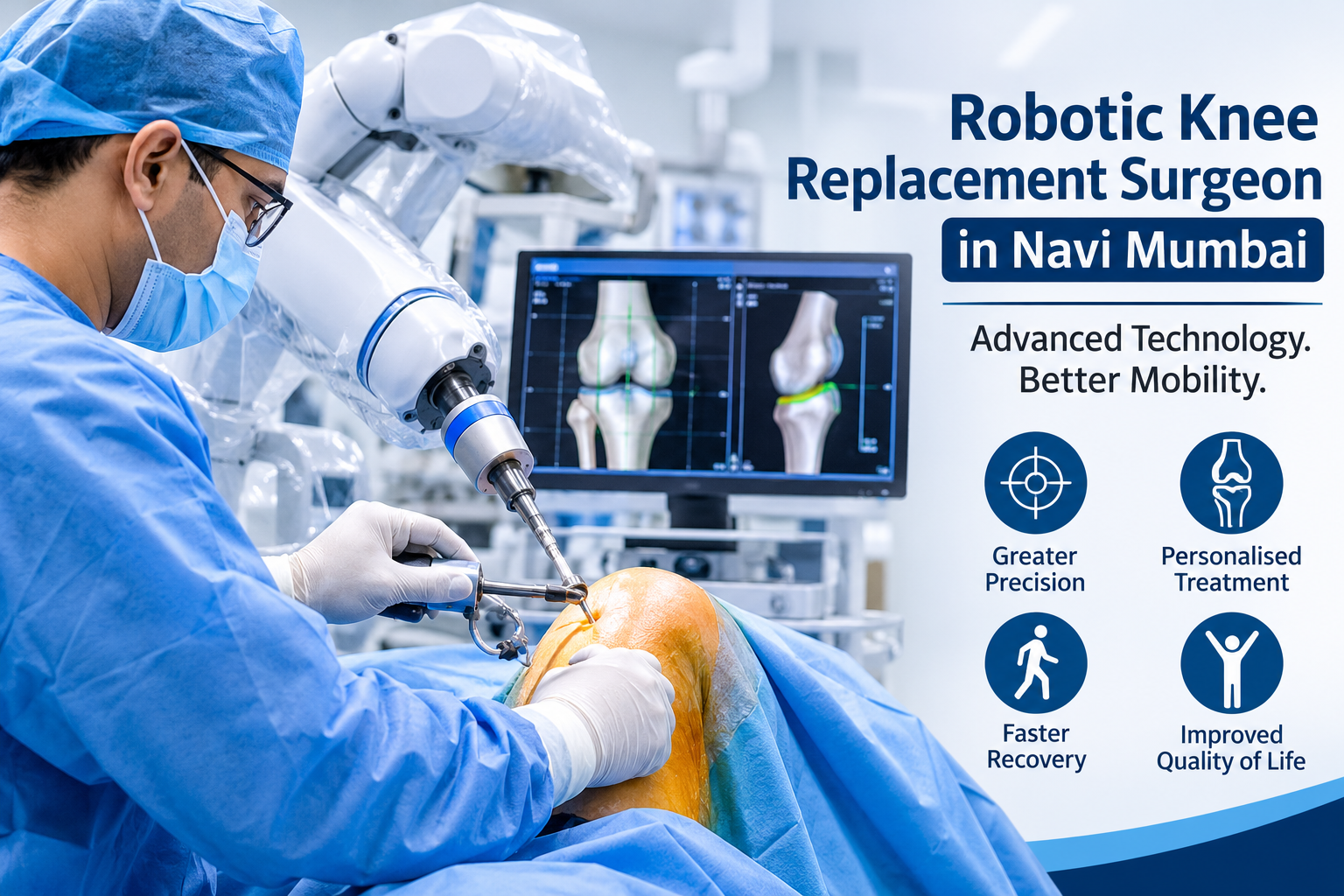
Robotic-assisted knee replacement is an advanced surgical technique that combines orthopaedic expertise with specialised computer-assisted technology.
The procedure starts with a detailed assessment of the patient's knee condition. The surgeon evaluates joint anatomy and develops an appropriate surgical plan. Depending on the robotic system, digital imaging and anatomical measurements may be used to support this planning.
During surgery, robotic assistance provides guidance for specific surgical steps, including bone preparation and implant positioning.
The surgeon remains in control of the operation and makes all important clinical decisions. The technology serves as an additional tool to support the surgical process.
How Robotic-Assisted Surgery Supports Treatment Planning
One of the important features of robotic-assisted knee replacement is its ability to provide detailed information during surgical planning.
Anatomical Assessment: The technology helps the surgeon evaluate the patient's individual knee structure.
Implant Positioning: Digital planning assists in determining an appropriate implant position and alignment.
Joint Balance Evaluation: Information about knee movement and ligament balance can support intraoperative decision-making.
Surgical Guidance: The robotic system helps guide selected stages of the operation according to the planned approach.
These features may support a more individualised surgical procedure, although outcomes vary between patients.
When Should You Consider Knee Replacement Surgery?
Not every person with knee pain requires an operation. Many patients benefit from non-surgical treatments such as physiotherapy, medication, weight management, and lifestyle modifications.
However, knee replacement may be considered when:
-
Knee pain continues despite appropriate conservative treatment.
-
Arthritis has caused significant joint damage.
-
Walking and other routine activities become difficult.
-
Knee stiffness affects normal movement.
-
Joint deformity interferes with mobility.
-
Pain regularly affects sleep and daily comfort.
An orthopaedic specialist can determine whether surgery is appropriate after evaluating the patient's condition and medical history.
Preparing for a Successful Knee Replacement Journey
Proper preparation can help patients approach surgery with greater confidence.
Before the procedure, the orthopaedic team may recommend medical investigations, imaging assessments, medication reviews, and general health evaluations.
Patients may also benefit from strengthening exercises, maintaining a healthy weight, and arranging support for the initial recovery period.
Understanding the surgical process, potential complications, expected rehabilitation, and follow-up requirements is equally important.
Recovery and Rehabilitation After Robotic Knee Replacement
Knee replacement recovery involves more than healing after surgery. Rehabilitation is essential for improving strength, flexibility, balance, and everyday movement.
The recovery programme generally includes:
-
Supervised walking and early mobilisation.
-
Gentle knee movement exercises.
-
Physiotherapy for muscle strengthening.
-
Appropriate pain and swelling management.
-
Gradual return to daily activities.
-
Regular medical follow-up.
Recovery varies according to age, general health, muscle strength, surgical factors, and individual rehabilitation progress.
Patients should follow their surgeon's instructions rather than comparing their recovery with others.
Why Choose an Experienced Robotic Knee Replacement Surgeon in Navi Mumbai?
Selecting the right orthopaedic specialist is an important part of treatment planning. Patients should consider the surgeon's clinical experience, understanding of joint replacement procedures, familiarity with robotic-assisted techniques, and approach to post-operative rehabilitation.
Dr. Abhay Chhallani provides orthopaedic consultation and knee replacement treatment for patients experiencing different types of knee joint conditions.
Individuals considering robotic-assisted knee replacement can consult Dr. Abhay Chhallani to discuss their symptoms, understand available treatment options, and receive guidance based on their medical requirements.
A personalised medical evaluation helps determine whether robotic-assisted surgery or another treatment approach is more suitable.
Moving Towards a More Active Lifestyle
Persistent knee problems should not be ignored, particularly when they begin affecting everyday activities. Early diagnosis and appropriate medical guidance can help patients understand their condition and explore suitable treatment options.
With advancements in robotic-assisted technology, modern knee replacement procedures now include additional tools for anatomical assessment, surgical planning, and intraoperative guidance.
For patients experiencing advanced knee arthritis, consulting a Robotic Knee Replacement Surgeon in Navi Mumbai can help them make informed decisions about their treatment and long-term joint health.
Conclusion
Robotic-assisted knee replacement represents an important advancement in contemporary orthopaedic surgery. By combining computer-assisted planning with the knowledge and experience of an orthopaedic surgeon, this approach offers another treatment option for selected patients with severe knee joint damage.
Choosing an experienced specialist, understanding the surgical process, and following proper rehabilitation are important steps towards improving mobility and maintaining a better quality of life.

 English
 Arabic
 Spanish
 Portuguese
 Deutsch
 Turkish
 Dutch
 Italiano
 Russian
 Romaian
 Portuguese (Brazil)
 Greek