
Brochure Copy That Gets Read: Matching Your Words to Your Print Choices
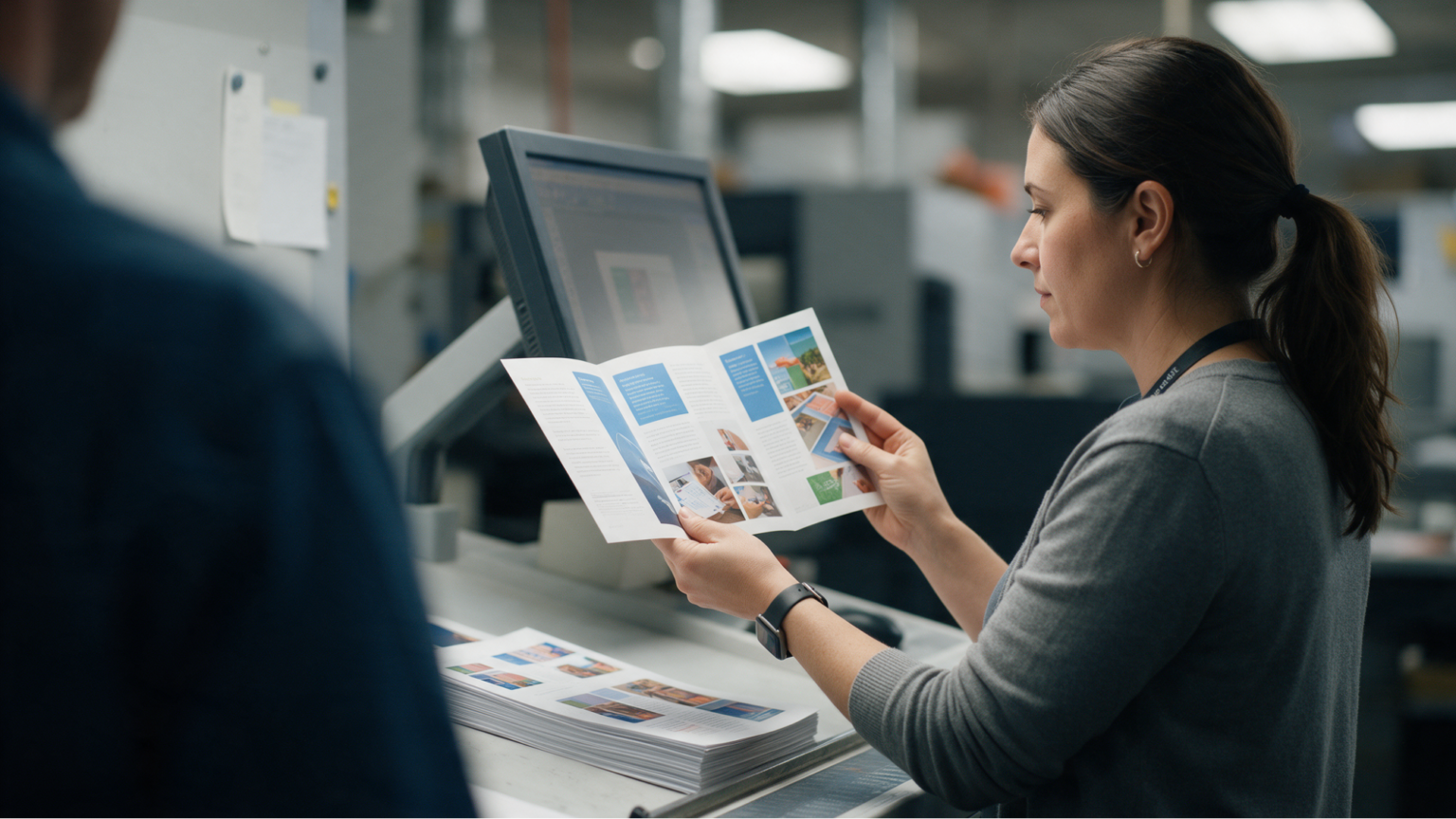
Most brochure advice focuses on design: layout, color, photography. Those things matter, but a brochure with beautiful visuals and muddled words still ends up in the recycling bin. The better approach is to treat the copy and the print decisions as one project. The words you write should fit the fold, the paper, and the place where the brochure will be picked up.
Here's a practical way to do that, one step at a time.
Start with the question your reader is asking
Before writing a single line, finish this sentence: "The person holding this brochure wants to know ____." Maybe it's whether your service fits their budget, how the process works, or why they should choose you over the business down the street.
That question becomes the spine of your copy. Every panel should move the reader a step closer to an answer, and anything that doesn't can be cut.
Let the fold set the pace
The fold you choose decides what the reader sees and in what order. Copy works best when it follows that sequence on purpose.
Tri-fold
This is the most familiar format, and it has a predictable reading order. The front panel gets a headline and an image. The inside spread carries your main story. The back panels handle contact details and a call to action. Treat each panel as a single idea and resist the urge to stuff in more.
Z-fold
Because the panels open like an accordion, this format suits step-by-step content. Use it when you can tell a process in order: how a project starts, what happens next, how it finishes.
Bi-fold
Four panels leave more room per section, which works for brands that want a slower, more detailed introduction. Use the inside spread for a short story and keep the back panel simple.
Write the front panel last
The cover has the toughest job. It has about two seconds to earn a second look. It's easier to write once you know what's inside. Pull the strongest benefit from your inner panels and turn it into a headline. Keep it short and specific. "Fewer Missed Appointments, More Time for Patients" says more than "Quality Care You Can Trust."
Inside panels: one idea, three sentences
Brochure readers skim. They read headings first and only dip into paragraphs if something catches their eye. A reliable pattern for each panel:
-
A short heading that states the benefit
-
Two or three sentences that explain it in plain language
-
One concrete detail, such as a number, an example, or a step
Bullets help when you're listing features, but don't let a brochure turn into a wall of bullets. Mix short paragraphs with the occasional list.
Match the paper and finish to the tone
The physical feel of a brochure speaks before the words do. A heavier stock with a smooth coating suggests polish and premium service. A lightly textured, uncoated sheet reads as approachable and personal. Neither is better, but they should agree with your copy. A playful, conversational voice on stiff, glossy stock can feel mismatched.
Full-color printing makes photography and brand colors stand out. If your budget is tight, you can often keep full color on the cover and spreads and simplify elsewhere.
Plan for the place it will be found
Where will people pick this up? A brochure in a waiting room can be longer and more informative, because readers have time. One handed out at a busy event needs a sharper headline and a very clear next step. One mailed to homes needs to work in the few seconds before the recycling bin decision.
Don't skip the call to action
End with one clear step. A phone number, a short web address, a QR code, or an appointment link all work, as long as there's only one primary ask. If you include a QR code, send it to a page built for brochure readers rather than your general homepage.
Proof the way a stranger would
Read the brochure out loud. Check that every phone number, address, and web link works. Have someone unfamiliar with your business read it and tell you what the offer is. If they hesitate, revise.
When you're ready to print, working with a provider of brochure printing services that offers digital production lets you order shorter runs and update your copy as pricing, photos, or services change. That flexibility matters because the best brochure copy gets sharper each time you revisit it.
A quick pre-print checklist
-
Does the front panel promise one clear benefit?
-
Does each inside panel handle a single idea?
-
Is the fold order matched to the reading order?
-
Do paper and finish fit the voice?
-
Is there one obvious next step?
-
Has someone outside your team proofread it?
Final thoughts
Good brochures happen when writing and printing decisions are made together. Start with the reader's question, let the fold guide your structure, and choose materials that reinforce your message.
If you'd like help turning your next brochure into a finished piece, Spectra can support you from file to print. You can also explore our custom brochure printing options for formats, paper, and finishes.

 Arabic
 French
 Spanish
 Portuguese
 Deutsch
 Turkish
 Dutch
 Italiano
 Russian
 Romaian
 Portuguese (Brazil)
 Greek