
Does Hair Mesotherapy Treatment Help Thin Hair?
Thin hair can affect a person's appearance and confidence. Whether the change happens gradually or becomes noticeable after a period of increased shedding, reduced hair volume often encourages people to explore different treatment options. Genetics, hormonal changes, nutritional deficiencies, stress, medical conditions, and certain hair-care habits can all contribute to thinning. Identifying the underlying cause is an important first step toward choosing an appropriate solution.
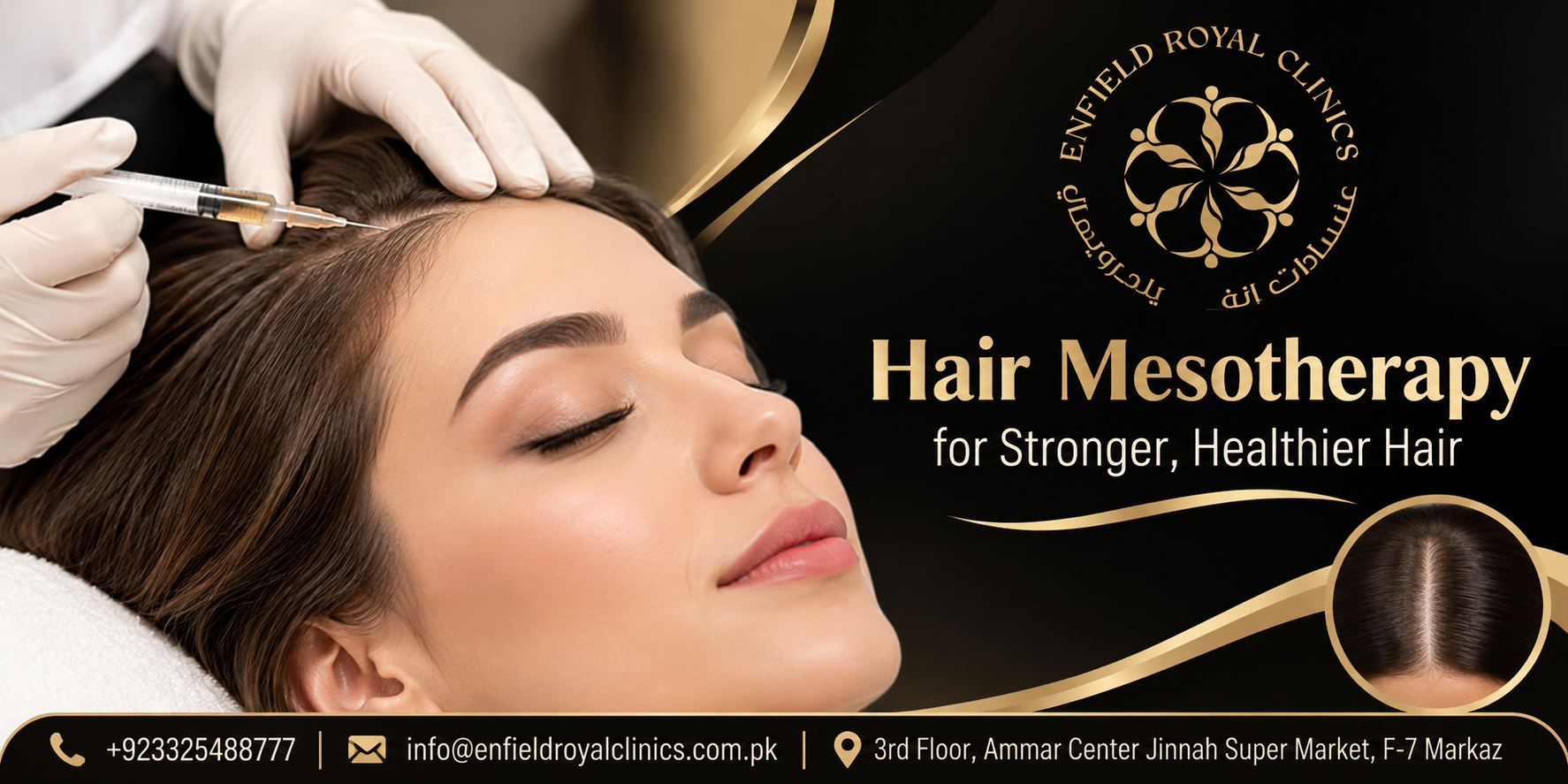
One procedure that has gained attention is hair mesotherapy. Hair Mesotherapy Treatment in Islamabad is often explored by individuals looking for a minimally invasive approach to scalp and hair concerns. The procedure involves injecting selected formulations into the scalp, with the aim of supporting the scalp environment. However, an important question remains: can it actually help thin hair?
The answer depends on the reason behind the thinning, the treatment formulation, and individual circumstances. While mesotherapy may be discussed as an additional option, scientific evidence supporting consistent hair regrowth and increased density remains limited.
1. Understanding Why Hair Becomes Thin
Before considering any hair treatment, it is important to understand why hair becomes thinner. Hair naturally grows in cycles, including growth, transition, and resting phases. When this cycle is affected, individuals may notice increased shedding, slower replacement, or gradual changes in hair thickness.
Some common causes include:
-
Genetic hair loss: Hereditary pattern hair loss can gradually reduce hair density, particularly around the crown, temples, or hairline.
-
Hormonal changes: Hormonal fluctuations and certain medical conditions can influence the hair-growth cycle.
-
Nutritional deficiencies: Low levels of iron, inadequate protein intake, and other nutritional problems may contribute to shedding.
-
Stress and illness: Physical or emotional stress, surgery, fever, and significant illness can trigger temporary hair shedding.
-
Scalp conditions: Inflammation, infections, and certain skin disorders may interfere with healthy hair growth.
-
Hair damage: Frequent heat styling, tight hairstyles, chemical treatments, and rough brushing can cause breakage that makes hair appear thinner.
Because these causes require different approaches, a proper assessment is more useful than choosing a procedure based only on visible thinning.
2. How Does Hair Mesotherapy Work?
Hair mesotherapy is a minimally invasive procedure that uses small injections to deliver a selected formulation into the scalp. Depending on the approach, the ingredients may include vitamins, minerals, amino acids, peptides, or other substances.
The treatment is generally intended to support the scalp environment and address concerns associated with thinning hair. Unlike a hair transplant, it does not involve removing follicles from one part of the scalp and placing them in another area. It also differs from topical treatments because the formulation is delivered through injections.
There is no universally standardized mesotherapy formula. The ingredients, concentration, injection technique, and treatment schedule can differ between providers. This variation makes it important for individuals to ask exactly what substances are being used and why they have been selected.
Although the procedure is promoted for hair concerns, its ability to produce reliable regrowth has not been firmly established through high-quality clinical evidence. It should therefore be approached with realistic expectations rather than as a guaranteed hair-restoration method.
3. Can Hair Mesotherapy Treatment Help Thin Hair?
Hair mesotherapy is sometimes considered by people who notice reduced hair volume, increased shedding, or changes in hair quality. Its minimally invasive nature makes it appealing to those who want to explore options without undergoing hair-transplant surgery.
However, whether it helps thin hair is not a simple yes-or-no question. The outcome depends on the underlying condition, and current evidence does not establish that mesotherapy consistently increases hair density or reverses pattern hair loss.
Some individuals may report improvements after treatment, but personal experiences do not prove that the procedure will produce the same results for others. Hair can also change naturally over time, and improvements may be influenced by other treatments or changes in health.
It is particularly important to understand that mesotherapy cannot reliably restore follicles that have been permanently destroyed. For hereditary hair loss, treatments with stronger supporting evidence, such as topical minoxidil and certain prescription options when medically appropriate, may be more suitable. A qualified professional can explain the benefits and risks of these alternatives.
4. What Are the Potential Advantages of Hair Mesotherapy?
People interested in Hair Mesotherapy Treatment in Islamabad often want to know what makes it different from other hair-loss approaches. Its main appeal is its non-surgical and scalp-focused nature.
Potential advantages include:
-
Minimally invasive procedure: It involves small injections rather than surgical incisions.
-
Targeted application: Selected areas of the scalp can receive the formulation.
-
No hair transplantation: The procedure does not require moving follicles from a donor area.
-
Individual assessment: Treatment discussions can take hair condition and scalp health into account.
-
Limited downtime for many people: Some individuals can return to regular activities relatively soon, although temporary tenderness or redness may occur.
These features describe the procedure rather than guaranteed improvements in hair growth. The ingredients used, their safety, and the evidence behind their proposed effects should always be discussed before treatment.
5. What Happens During and After the Procedure?
The process usually begins with a consultation and examination of the scalp. The professional may ask about the duration of hair thinning, family history, recent illness, medication use, nutrition, and previous treatments. Depending on the symptoms, blood tests or further investigations may be recommended to identify an underlying cause.
If mesotherapy is considered appropriate, the scalp is cleaned before small injections are administered in selected areas. The exact technique and session duration depend on the treatment plan and the area being addressed.
Mild discomfort, redness, swelling, bruising, or tenderness can occur around injection sites. Aftercare instructions may include guidance about washing the scalp, avoiding irritating products, and temporarily limiting activities that could aggravate the treated area.
There is no universally established number of sessions or treatment interval for hair mesotherapy. Individuals should be cautious about plans that promise guaranteed regrowth within a fixed period. Any proposed schedule should be explained clearly, including its evidence, costs, risks, and alternatives.
6. Who May Be Suitable for Hair Mesotherapy?
Adults experiencing hair thinning may ask whether mesotherapy is an appropriate option. However, suitability depends on their medical history, scalp condition, the cause of hair loss, and the formulation being considered.
A professional assessment is especially important for individuals experiencing:
-
Sudden or unexplained hair shedding
-
Patchy areas of hair loss
-
Scalp itching, redness, scaling, or infection
-
Persistent hair thinning despite previous treatment
-
Hair loss alongside fatigue or other changes in general health
People with active scalp infections, allergies to proposed ingredients, bleeding disorders, or those taking blood-thinning medication may need additional assessment and precautions. The procedure may not be appropriate for everyone.
For some individuals, addressing iron deficiency, thyroid problems, nutritional concerns, or scalp inflammation may be more important than undergoing injections. A suitable hair-loss plan should focus on the actual cause rather than treating every type of thinning in the same way.
7. FAQs About Hair Mesotherapy Treatment
1. Does hair mesotherapy make thin hair thicker?
It is intended to support the scalp environment, but reliable evidence that it consistently makes thin hair thicker is limited. Results should not be guaranteed.
2. Can hair mesotherapy treat hereditary hair thinning?
It may be discussed as an additional option, but it is not an established replacement for treatments with stronger evidence for hereditary pattern hair loss.
3. Is hair mesotherapy a surgical procedure?
No. It is a minimally invasive procedure involving small injections into selected scalp areas. It does not involve surgically transplanting hair follicles.
4. How many sessions are needed for thin hair?
There is no universally accepted treatment schedule. The number and timing of sessions can vary, and individuals should ask about the evidence supporting any recommended plan.
5. Are there side effects of hair mesotherapy?
Possible side effects include temporary redness, tenderness, swelling, bruising, and irritation. Infection and allergic reactions are less common but possible. Increasing pain, spreading redness, fever, or discharge should be assessed promptly.
6. Can hair mesotherapy restore permanently lost hair?
It cannot reliably restore follicles that have been permanently destroyed. People with advanced or long-standing hair loss may need to discuss other options based on their condition.
Conclusion
Hair mesotherapy may attract people experiencing thin hair because it offers a minimally invasive approach that does not involve hair-transplant surgery. It is sometimes explored for reduced hair volume and increased shedding, but its effectiveness should be considered carefully. Current scientific evidence does not establish that it reliably restores hair density or reverses every type of hair loss.
Anyone considering Hair Mesotherapy Treatment in Islamabad should first identify the reason behind the thinning and discuss suitable options with a qualified professional. Understanding the formulation, possible side effects, realistic expectations, and better-supported alternatives can help individuals make an informed decision about their hair health.

 English
 Arabic
 French
 Spanish
 Portuguese
 Deutsch
 Turkish
 Dutch
 Italiano
 Russian
 Romaian
 Portuguese (Brazil)