
Mexico Ferrous Scrap Recycling Market Size Projected to Reach USD 3.1 Million by 2034 with a CAGR of 5.14%
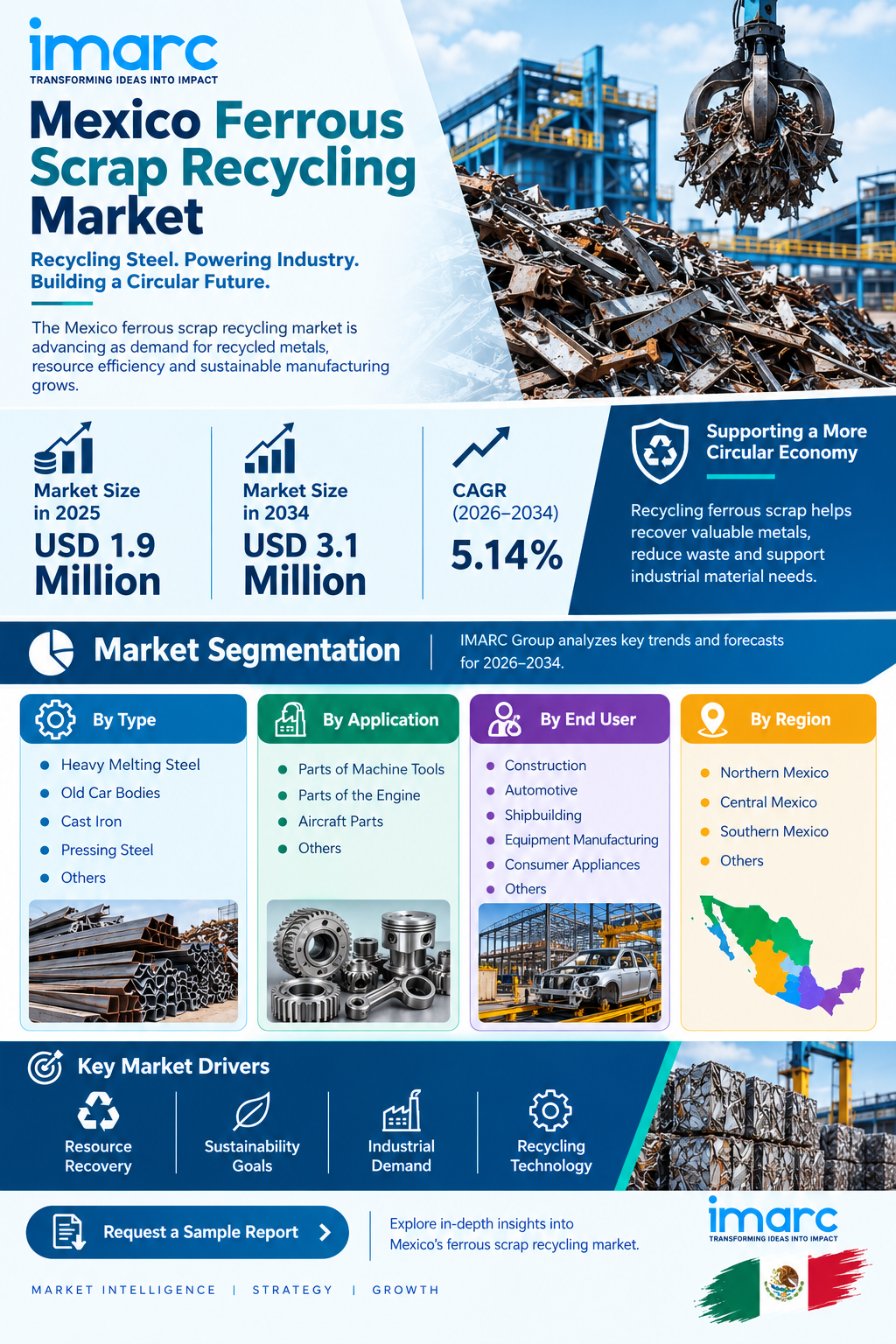
IMARC Group has recently released a new research study titled “Mexico Ferrous Scrap Recycling Market Report by Type, Application, End User, and Region, 2026-2034,” offers a detailed analysis of the market drivers, segmentation, growth opportunities, trends and competitive landscape to understand the current and future market scenarios.
Mexico Ferrous Scrap Recycling Market Size, Growth, and Forecast (2026-2034)
The mexico ferrous scrap recycling market size reached USD 1.9 Million in 2025 and is projected to reach USD 3.1 Million by 2034, growing at a CAGR of 5.14% during 2026-2034. Increasing industrialization, rising demand for steel in the construction and automotive sectors, and the growing emphasis on sustainable waste management practices are the primary factors driving the mexico ferrous scrap recycling market.
Ferrous scrap recycling refers to the collection, sorting, and processing of iron and steel waste, such as discarded machinery, vehicles, appliances, and construction and manufacturing offcuts, so it can be remelted and reused in new steel production. It forms a core feedstock for electric arc furnace steelmaking and supports circular economy goals by reducing the need for virgin raw materials.
Mexico is a major manufacturing hub, and its strategic position, together with government initiatives promoting circular economy models, supports market expansion. Continual advancements in recycling technologies and the rising cost of raw materials are further strengthening the mexico ferrous scrap recycling market share, as steelmakers increasingly look to dependable domestic scrap supply.
Explore Growth Opportunities in the Mexico Ferrous Scrap Recycling Market - Grab Your Sample Report for Evaluation: https://www.imarcgroup.com/mexico-ferrous-scrap-recycling-market/requestsample
Key Trends Driving the Mexico Ferrous Scrap Recycling Market
• Rising industrialization and construction activity: Growing industrial and construction sectors are generating substantial volumes of ferrous scrap, driving both supply and demand within the recycling ecosystem. For instance, manufacturing production in Mexico rose by 3.10% in March 2025 compared to March 2024, according to industry reports, pointing to higher scrap flows from production waste, decommissioned equipment, and demolition. Expanding industrial clusters in Nuevo León, Jalisco, and the Bajío region are expected to support localized recycling operations.
• Strengthening domestic scrap collection infrastructure: Mexico is estimated to use over 18 Million Metric Tons of ferrous scrap while producing approximately 14 Million Metric Tons in 2025, increasing the need for a reliable and well-regulated national collection framework. Collection has historically been dominated by informal networks, but investment in structured supply chains, recycler and manufacturer partnerships, and digital platforms is improving traceability, sorting standards, and volume predictability for steelmakers.
• Sustainability goals and circular economy models: Manufacturers seeking to meet international environmental, social, and governance (ESG) criteria are making ferrous scrap recycling an essential part of sustainable production. Government initiatives promoting circular economy models and continual advancements in recycling technologies are encouraging greater recovery and reuse of steel scrap across the country.
Mexico Ferrous Scrap Recycling Market Report Segmentation:
The Mexico Ferrous Scrap Recycling Market report provides a detailed segmentation analysis to help businesses identify key growth segments and evolving industry dynamics. The market is categorized based on type, application, end user, and region, offering comprehensive insights across the mexico ferrous scrap recycling market.
Type Insights:
• Heavy Melting Steel: Heavy melting steel is a widely used grade of scrap, sourced from structural steel, plate, and heavy industrial waste, and is a staple charge material for steel mills.
• Old Car Bodies: Old car bodies supply recovered steel from end-of-life vehicles, linking the scrap stream to Mexico’s large automotive sector.
• Cast Iron: Cast iron scrap, recovered from machinery, engine blocks, and pipes, is reprocessed for foundry and casting uses.
• Pressing Steel: Pressing steel, which includes baled and compacted light steel scrap, supports efficient handling and transport to processing facilities.
• Others: Other grades complement the core categories and widen the range of recyclable ferrous material.
Application Insights:
• Parts of Machine Tools: Recycled ferrous material is used to produce components for machine tools, supporting the country’s industrial equipment base.
• Parts of The Engine: Engine parts represent an application where recycled iron and steel are reintroduced into automotive and machinery production.
• Aircraft Parts: Aircraft parts form a specialized application linked to Mexico’s growing aerospace manufacturing activity.
• Others: Additional applications extend the use of recycled ferrous material across other manufactured goods.
End User Insights:
• Construction: Construction relies on steel products such as rebar made from recycled scrap, and infrastructure development and urbanization sustain demand.
• Automotive: The automotive sector is both a major source of scrap and a key consumer of recycled steel.
• Shipbuilding: Shipbuilding uses recycled steel for hulls and structural components.
• Equipment Manufacturing: Equipment manufacturers use recycled ferrous inputs to control raw material costs.
• Consumer Appliances: Consumer appliances generate scrap at end of life and use recycled steel in new products.
• Others: Other end users contribute to steady demand across the broader industrial economy.
Regional Insights:
• Northern Mexico: Northern Mexico is home to major steel-producing and manufacturing hubs, creating strong demand for scrap feedstock.
• Central Mexico: Central Mexico, including the Bajío region, combines dense industrial clusters with large volumes of scrap generation.
• Southern Mexico: Southern Mexico is gradually expanding collection and recycling activity as infrastructure development progresses.
• Others: Other regions continue to see steady growth as collection networks formalize and extend coverage.
Mexico Ferrous Scrap Recycling Market: Recent News and Developments
• April 2026: Mexico’s domestic ferrous scrap prices declined for consecutive weeks as mills sought to offset higher freight and energy costs, with industry observers noting that a market floor may have been reached by mid-April, even as scrap demand from mills remained solid.
• October 2026: Gerdau Corsa, Gerdau’s Mexican long steel division, inaugurated a new sustainable recycling plant in Tlaquepaque, Jalisco. The 25,000 square meter facility can collect and process more than 60,000 tons of ferrous scrap per year and integrates with the company’s circular economy model.
Challenges Impacting the Mexico Ferrous Scrap Recycling Market
Informal collection networks, which lack regulatory oversight and consistent material quality, continue to limit the reliability of scrap supply and complicate sorting, pricing, and traceability for steelmakers.
Scrap price volatility, driven by freight and energy costs, seasonal construction demand, and tariff-related uncertainty in cross-border scrap and steel trade, can compress margins for recyclers and complicate planning for mills.
Investment Opportunities in the Mexico Ferrous Scrap Recycling Market
The mexico ferrous scrap recycling market presents compelling investment opportunities supported by its projected growth from USD 1.9 Million in 2025 to USD 3.1 Million by 2034. With Mexico’s scrap consumption estimated to exceed its production in 2025, there is clear room for new processing capacity, structured collection networks, and logistics services that improve the quality and availability of domestic scrap.
Digital sourcing platforms, advanced sorting and processing technologies, and partnerships between recyclers and electric arc furnace steelmakers represent a growing investment frontier. Companies that combine reliable supply, consistent quality, and strong regional coverage can build strong competitive positions in this expanding market.
Explore How Digitalization Is Accelerating Mexico’s Data Center Market - Read the Full Insight: https://www.imarcgroup.com/insight/digitalization-accelerating-mexico-data-center-market
Outlook of the Mexico Ferrous Scrap Recycling Market (2026-2034)
The outlook for the mexico ferrous scrap recycling market is positive, supported by industrial and construction growth, sustainability priorities, and steady investment in scrap collection and processing. The market is projected to grow from USD 1.9 Million in 2025 to USD 3.1 Million by 2034 at a CAGR of 5.14%.
Formalized scrap collection, continued adoption of improved recycling technologies, and the strong link between manufacturing activity and scrap generation will be the defining trends shaping the mexico ferrous scrap recycling market through 2034.
Key Players in the Mexico Ferrous Scrap Recycling Market
The mexico ferrous scrap recycling market is served by integrated steelmakers and recyclers competing on the basis of scrap sourcing networks, processing capacity, and regional coverage.
• Gerdau Corsa: Gerdau’s Mexican long steel division, Gerdau Corsa, is one of the country’s leading metal recyclers, using over 1 million tons of scrap per year and sourcing about 94% of its steelmaking raw material from recycled content. In October 2026, it opened a new 60,000 ton per year scrap processing plant in Tlaquepaque, Jalisco, strengthening its collection and recycling chain.
• Ternium: Ternium is one of Mexico’s largest steel producers and operates electric arc furnace capacity that relies on ferrous scrap as a key feedstock. The company reported a strong recovery in profitability in the second quarter of 2026, supported by higher shipments and firmer market conditions in Mexico, and continues to invest in local steelmaking capacity at its Pesquería site in Nuevo León.
Frequently Asked Questions (FAQs): Mexico Ferrous Scrap Recycling Market
1. What is the current Mexico ferrous scrap recycling market size?
The Mexico ferrous scrap recycling market size reached USD 1.9 Million in 2025 and is projected to reach USD 3.1 Million by 2034, growing at a CAGR of 5.14% during 2026-2034.
2. What is ferrous scrap recycling?
Ferrous scrap recycling is the collection, sorting, and processing of iron and steel waste, including old vehicles, machinery, and industrial offcuts, so that it can be remelted and reused in new steel production.
3. What are the key drivers of the mexico ferrous scrap recycling market?
Key drivers include increasing industrialization, rising steel demand from the construction and automotive sectors, the growing emphasis on sustainable waste management, government support for circular economy models, and advancements in recycling technologies.
4. How is the mexico ferrous scrap recycling market segmented?
The market is segmented by type (heavy melting steel, old car bodies, cast iron, pressing steel, and others), application (parts of machine tools, parts of the engine, aircraft parts, and others), end user (construction, automotive, shipbuilding, equipment manufacturing, consumer appliances, and others), and region (Northern, Central, Southern Mexico, and others).
5. Who are the key players in the mexico ferrous scrap recycling market?
Key players in the mexico ferrous scrap recycling market include Gerdau Corsa and Ternium, alongside other steelmakers, recyclers, and scrap processors serving the construction, automotive, and industrial sectors.
Author IMARC Group
IMARC Group is a global management consulting firm that helps the world's most ambitious changemakers to create a lasting impact. The company provide a comprehensive suite of market entry and expansion services. IMARC offerings include thorough market assessment, feasibility studies, company incorporation assistance, factory setup support, regulatory approvals and licensing navigation, branding, marketing and sales strategies, competitive landscape and benchmarking analyses, pricing and cost research, and procurement research.
Contact Us
IMARC Group,
134 N 4th St. Brooklyn, NY 11249, USA,
Email: [email protected],
United States: +1-201971-6302

 English
 Arabic
 French
 Spanish
 Portuguese
 Deutsch
 Turkish
 Italiano
 Russian
 Romaian
 Portuguese (Brazil)
 Greek