
How to Choose Cloth Napkins for Every Season
Introduction
Dining spaces naturally change throughout the year. Fresh colors and lighter fabrics feel inviting during warmer months, while deeper shades and richer textures can make a table feel comfortable during colder seasons. Cloth napkins offer an easy way to reflect these changes without replacing your entire dining setup.
Rather than buying a completely new collection every few months, you can build a versatile selection of reusable napkins and rotate a few seasonal colors. Choosing the right fabric, texture, and design helps keep your dining table appropriate for the season while remaining practical for everyday use.
Spring: Bring Freshness to the Dining Table
Spring is a good time to introduce softer colors and delicate patterns. As the days become brighter, shades such as sage green, pale blue, blush pink, and soft yellow can make a dining space feel refreshed.
Floral patterns, fine stripes, and subtle botanical designs work well for spring meals. If your dinnerware already has a decorative pattern, choose solid napkins to keep the arrangement balanced.
Lightweight cotton is a practical option for everyday spring dining. It feels comfortable and works well for breakfast, lunch, and casual dinners. A few cotton napkins in fresh seasonal shades can be mixed with neutral table accessories throughout the year.
Summer: Choose Light Fabrics and Relaxed Colors
Summer dining often moves toward outdoor meals, casual gatherings, and simple table arrangements. Napkins in breathable-looking fabrics and lighter colors complement this relaxed atmosphere.
Consider ivory, sand, pale blue, muted coral, or soft green. These shades work particularly well with natural wood, simple ceramics, and woven accessories.
Linen has a naturally textured appearance that suits relaxed summer dining. Its understated finish looks appealing with both casual and more carefully arranged tables. Explore linen napkins when you want a natural fabric texture without adding busy patterns.
For outdoor meals, keep a few extra napkins available so guests can easily reach a clean one when needed.
Autumn: Introduce Warm and Earthy Shades
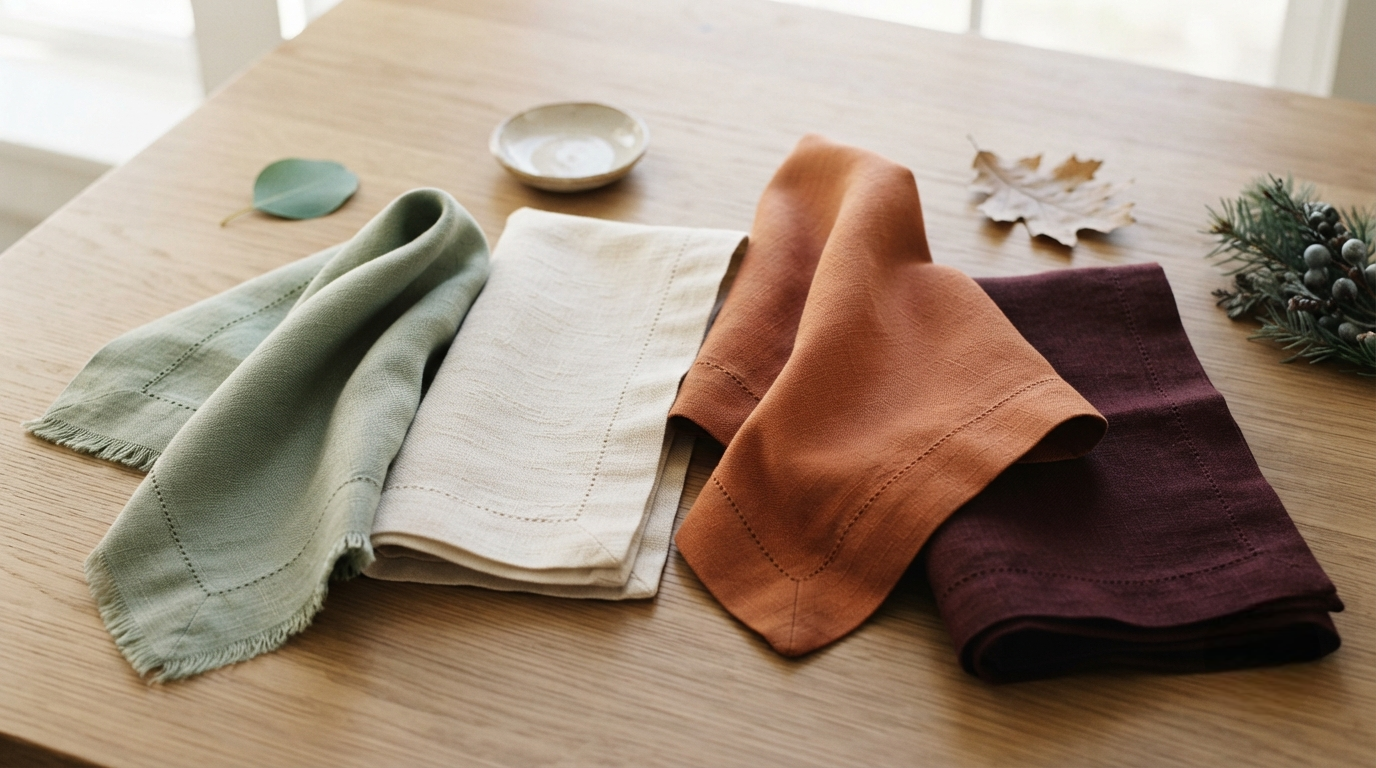
Autumn is an opportunity to bring richer colors to the dining table. Terracotta, rust, mustard, olive, warm brown, and deep burgundy can create a welcoming seasonal appearance.
These shades pair naturally with wooden serving boards, ceramic plates, and neutral table coverings. You can also introduce small-scale checks or understated botanical patterns for added character.
Instead of changing every table accessory, use autumn-colored napkins as the main seasonal detail. A coordinated set of fall cloth napkins can bring warmth to everyday meals and seasonal gatherings.
Winter: Use Rich Colors and More Defined Textures
Winter dining often benefits from deeper colors and a more layered table arrangement. Navy, forest green, charcoal, burgundy, and deep plum can create a striking contrast against white or ivory dinnerware.
For a classic look, pair darker napkins with simple plates and polished flatware. If you prefer a softer appearance, choose warm beige or ivory with a subtle woven texture.
Linen and cotton can both work well during winter. The choice depends on the appearance and care routine you prefer. For formal dinners, neatly folded dinner napkins in a coordinated shade can give each place setting a finished appearance.
Select Fabrics Based on How You Use Your Napkins
Seasonal styling is useful, but comfort and practicality should remain important when choosing fabric.
Cotton for regular meals: Cotton napkins are versatile and suitable for frequent use. They are a practical choice when you want to rotate colors and wash napkins regularly.
Linen for natural texture: Linen adds a relaxed, refined appearance and works with many different table styles. Its natural texture can make even a simple place setting feel considered.
Blended fabrics for flexibility: Depending on their composition, blends may offer a balance of texture, appearance, and care requirements. Always check the product's fabric information before purchasing.
You don't need separate fabric types for every season. A few dependable materials can work throughout the year when paired with different colors and accessories.
Use Patterns to Reflect Seasonal Changes
Patterns can help introduce a seasonal feeling without requiring a large collection.
-
Spring: Small florals, delicate leaves, and fine stripes.
-
Summer: Simple checks, understated geometric designs, and subtle coastal-inspired patterns.
-
Autumn: Botanical prints, earthy checks, and warm-toned designs.
-
Winter: Classic stripes, deeper solid colors, and restrained seasonal motifs.
If you enjoy changing your table decor, keep a few patterned napkins alongside solid-colored basics. This gives you more combinations without overcrowding your storage space.
Keep a Separate Set for Seasonal Hosting
Some napkins may be more suitable for everyday dining, while others are reserved for celebrations and seasonal gatherings.
Keep your regular napkins in accessible kitchen storage. Store seasonal designs in a clean, dry cabinet or labeled container so they are easy to find when needed.
For summer refreshments and casual gatherings, cloth cocktail napkins can complement your larger dinner napkins. They are useful for serving drinks, appetizers, and small snacks.
If you're preparing for a special seasonal celebration, custom napkins can add a personal detail through a selected design or personalization.
Coordinate Seasonal Napkins with Existing Table Accessories
You don't need to replace your tablecloth, placemats, or dinnerware whenever the season changes. Start with the accessories you already own and introduce seasonal colors through the napkins.
For example, ivory napkins can work throughout the year. In spring, pair them with fresh greenery. During autumn, add warm-toned accessories. In winter, combine them with deeper colors and polished table details.
This approach keeps your dining setup cohesive and helps you get more use from each napkin set.
Care for Seasonal Napkins Before Storing Them
Proper storage helps keep seasonal textiles ready for their next use.
Before putting napkins away:
-
Wash them according to their fabric care instructions.
-
Treat visible food stains before storing.
-
Make sure every piece is completely dry.
-
Fold napkins neatly and group matching sets together.
-
Store them in a clean, dry place away from moisture.
Check stored napkins before the next seasonal rotation. This gives you time to refresh them instead of discovering stains or creases just before guests arrive.
Conclusion
Seasonal cloth napkins make it easy to refresh your dining table without changing everything around it. Soft spring shades, relaxed summer textures, warm autumn colors, and deeper winter tones can each create a different atmosphere.
Build your collection around practical fabrics and versatile colors, then introduce a few seasonal designs when you want a change. All Cotton and Linen offers reusable napkin options that can bring a thoughtful finishing touch to everyday meals and seasonal gatherings.

 English
 Arabic
 French
 Spanish
 Portuguese
 Turkish
 Dutch
 Italiano
 Russian
 Romaian
 Portuguese (Brazil)
 Greek