
AI Agent Builder: A Complete Guide to Smart Automation
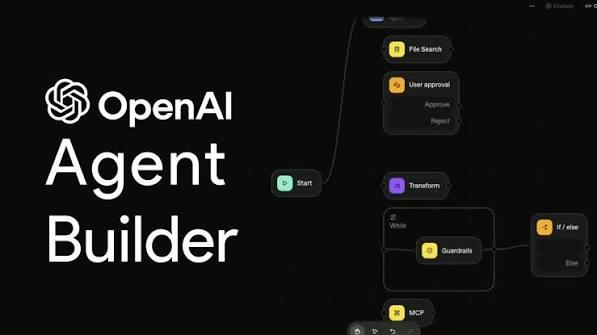
Artificial intelligence is changing how businesses operate, how professionals manage their responsibilities, and how people interact with digital technology. One of the most promising developments is the AI agent builder, a tool that helps users create intelligent systems capable of understanding instructions, processing information, and performing tasks with less manual effort.
Businesses often spend valuable time managing repetitive activities, responding to common questions, organizing documents, and transferring information between applications. An AI agent builder can help simplify these processes by providing an environment for designing automated assistants that work toward specific objectives.
Unlike traditional automation systems that depend entirely on predefined rules, AI agents can interpret natural language, use relevant information, and select appropriate actions within their assigned limits. Their capabilities depend on the AI model, available integrations, and the instructions provided during development.
From customer service and sales support to marketing, research, and administrative work, AI agent builders offer opportunities to improve efficiency across different industries. Understanding their features, benefits, and limitations can help you determine whether this technology is suitable for your needs.
What Is an AI Agent Builder?
An AI agent builder is a software platform that allows users to create, customize, test, and deploy AI agents. It provides tools for configuring an agent's behavior, connecting information sources, defining workflows, and enabling interactions with other applications.
An AI agent is a digital system designed to work toward a particular goal. Depending on its configuration, it can interpret requests, retrieve information, use connected tools, and complete tasks with varying levels of independence.
For example, an online business could create an AI agent that answers product questions, retrieves order information, explains shipping policies, and prepares responses to customer inquiries. A marketing team could develop an agent that researches topics, organizes keyword ideas, and prepares content briefs.
Some AI agent builders offer no-code interfaces for beginners, while others provide advanced development features for technical users. The best platform depends on the complexity of the task and the level of customization required.
The main purpose of an AI agent builder is to make intelligent automation easier to develop and integrate into existing workflows.
How Does an AI Agent Builder Work?
An AI agent builder combines artificial intelligence, instructions, information sources, and tools to help an agent complete its assigned responsibilities.
Defining the Agent's Goal
The process begins by identifying the task the agent should perform. A clear objective helps determine which information, tools, and permissions are necessary.
For example, a company might create an agent to answer common questions using approved support documents. Keeping the purpose specific makes the agent easier to configure, test, and maintain.
Configuring Instructions
Instructions explain the agent's responsibilities, expected behavior, communication style, and limitations. They may also specify when the agent should ask for clarification or transfer a request to a human.
Clear instructions help reduce misunderstandings and establish consistent behavior across similar tasks.
Connecting Information Sources
Agents often need access to relevant information to provide accurate responses. An AI agent builder may support connections to documents, databases, internal knowledge bases, product catalogs, and other approved sources.
The quality and freshness of this information can significantly influence the agent's performance.
Adding Tools and Integrations
Connected tools allow an agent to interact with other software systems. Depending on the platform, an agent may retrieve customer records, prepare emails, create tasks, or update approved information.
These capabilities should be supported by appropriate access controls. Actions that affect customers or business records may require human approval.
Designing Workflows
Workflow features help users define how an agent should move between related activities. The agent may collect information, evaluate a request, retrieve relevant details, prepare a response, and wait for approval before completing an action.
Testing and Deployment
Before an agent is deployed, it should be tested with realistic requests and unusual situations. Testing can reveal incorrect answers, integration problems, and unexpected behavior.
After deployment, ongoing monitoring helps identify weaknesses and maintain reliable performance.
Essential Features of an AI Agent Builder
No-Code and Low-Code Development
No-code and low-code tools make AI agent development accessible to people without extensive programming knowledge. Visual editors, reusable templates, and configuration settings simplify the process of creating and modifying workflows.
Advanced platforms may also support custom programming for specialized business requirements.
Natural Language Understanding
Natural language capabilities allow agents to interpret ordinary questions, instructions, and requests. This makes interactions more convenient because users do not need to rely entirely on rigid commands.
Workflow Automation
Workflow automation enables agents to coordinate tasks across applications and business processes. It can reduce repetitive work and help employees manage activities more efficiently.
Integration With Existing Software
Integrations connect agents to tools such as email platforms, customer relationship management systems, calendars, databases, and project management applications.
These connections allow agents to work with existing business information rather than operating in isolation.
Context and Memory Management
Some platforms allow agents to maintain relevant conversational context or retrieve information from approved storage systems. This can improve continuity during related tasks and reduce unnecessary repetition.
Memory should be managed carefully when confidential or personal information is involved.
Monitoring and Analytics
Monitoring tools help users assess response quality, task completion, usage, errors, and operating costs. These insights support informed decisions about improving an agent's instructions and workflows.
Security and Access Controls
Security features help protect sensitive information and prevent unauthorized actions. Useful capabilities include authentication, role-based permissions, activity logs, and administrative controls.
Businesses should ensure that agents receive only the access necessary to complete their assigned tasks.
Benefits of Using an AI Agent Builder
Improved Productivity
An AI agent builder can help automate repetitive activities such as document preparation, information retrieval, routine communications, and request classification.
Reducing manual work allows employees to spend more time on activities that require creativity, judgment, and personal attention.
Reduced Administrative Work
Agents can help organize information, prepare summaries, and coordinate routine activities. When connected to existing applications, they can reduce the need to repeat the same actions across different systems.
Easier Access to Artificial Intelligence
Developing AI solutions traditionally required technical expertise and specialized infrastructure. No-code and low-code builders simplify many development tasks and make experimentation more accessible.
This allows business teams to explore practical automation opportunities without relying entirely on software developers.
Better Customer Experiences
Customer-facing agents can provide quick responses to common questions and help users find relevant information. They can also prepare summaries that make it easier for human representatives to understand customer concerns.
Human support remains essential when requests require empathy, complex reasoning, or special handling.
Flexible Business Automation
AI agents can support different business functions, including marketing, sales, customer support, research, and administration. Their responsibilities can be adjusted as requirements change, provided the platform supports the necessary modifications.
More Consistent Workflows
Agents can follow approved instructions and standardized procedures when handling routine tasks. This can improve consistency, although their outputs should still be checked because AI systems can make mistakes.
Common Applications of AI Agent Builders
Customer Service Automation
Customer service agents can answer frequently asked questions, explain company policies, retrieve approved information, and help organize incoming requests.
When connected to suitable systems, they may also assist with order inquiries and other routine service activities.
Marketing and Content Planning
Marketing professionals can use agents to research topics, organize keywords, create content outlines, prepare initial drafts, and summarize campaign results.
AI-generated content should be reviewed for factual accuracy, originality, relevance, and usefulness. Content strategies should focus on satisfying user needs rather than producing large amounts of repetitive material.
Sales and Lead Management
Sales agents can organize incoming leads, summarize customer requirements, retrieve product information, and prepare follow-up communications.
These capabilities help sales teams manage information and focus on building meaningful customer relationships.
Research and Data Analysis
Research agents can summarize documents, compare findings, organize information, and prepare preliminary reports. Some agents can also assist with analyzing approved datasets.
Important conclusions should be verified before being used in significant business decisions.
Human Resources and Employee Support
Internal agents can help employees locate workplace policies, understand procedures, retrieve approved documents, and find answers to routine questions.
Appropriate access restrictions are essential when these agents interact with confidential employee information.
Personal Productivity
Individuals can use AI agents to organize tasks, prepare meeting summaries, draft emails, and manage routine activities. Connections to calendars and productivity applications can make these workflows more convenient.
How to Choose the Right AI Agent Builder
Identify Your Requirements
Start by identifying a specific problem that automation could solve. Consider the tasks involved, the information required, and the result you want to achieve.
A focused project is easier to evaluate than an agent expected to handle many unrelated responsibilities.
Evaluate Ease of Use
Beginners may prefer visual interfaces, guided setup, and ready-made templates. Developers may need custom code, API access, advanced workflow controls, and deployment flexibility.
Choose a platform that matches your team's skills and maintenance capabilities.
Check Integration Support
Confirm that the platform supports the applications, databases, and information sources required for your workflow. Consider how it manages authentication, permissions, and integration failures.
Compare Pricing and Operating Costs
Costs may depend on subscription plans, AI model usage, workflow volume, connected applications, and deployment requirements. Ongoing maintenance and monitoring may add to the total expense.
Evaluate the overall cost of operating the agent instead of considering only the advertised starting price.
Prioritize Security and Privacy
Review data protection practices, access controls, authentication, and activity logging. Ensure that the platform meets your organization's security requirements.
Agents that can send messages, modify records, or access sensitive information should operate within carefully defined permissions.
Test Before Deployment
Evaluate the agent with realistic requests, missing information, ambiguous instructions, and unexpected situations. Confirm that it responds appropriately and recognizes when human assistance is necessary.
A gradual rollout can help identify problems before the agent becomes part of an important business process.
AI Agent Builder vs. Traditional Automation
Traditional automation generally follows predefined rules and performs predictable tasks. It works well when inputs and expected outcomes are clearly defined.
An AI agent builder offers additional flexibility by enabling agents to interpret natural language, work with unstructured information, and select appropriate actions within their assigned boundaries.
For example, a traditional workflow might classify customer messages based on specific keywords. An AI agent could interpret the message, summarize the customer's concern, retrieve relevant information, and recommend the next action.
These technologies can also complement each other. Traditional automation can manage predictable operations, while AI agents handle tasks that benefit from language understanding and contextual reasoning.
The best approach depends on the workflow's complexity, reliability requirements, and potential consequences of errors.
Challenges and Limitations of AI Agent Builders
Despite their benefits, AI agent builders require careful implementation and ongoing management.
AI agents can misunderstand requests, generate inaccurate information, or select inappropriate actions. Their performance may also be affected by outdated information, unreliable integrations, and unclear instructions.
Complex workflows may require technical expertise, regular maintenance, and additional testing. Operating costs can increase when agents perform many tasks or rely on resource-intensive models.
Businesses should define clear responsibilities, limit unnecessary permissions, monitor performance, and establish procedures for correcting errors. Human oversight is particularly important when tasks involve financial commitments, confidential information, legal responsibilities, or significant customer consequences.
AI agents should support human decision-making rather than replace accountability. Regular evaluation helps ensure that automation remains useful, safe, and aligned with business objectives.
The Future of AI Agent Builders
AI agent builders are creating new opportunities to connect artificial intelligence with everyday business processes. As the technology evolves, platforms are likely to emphasize simpler development, stronger integrations, improved monitoring, and greater control over agent behavior.
Organizations may increasingly use specialized agents to support different stages of a workflow. These systems could assist with research, customer communication, document processing, and operational coordination.
However, successful adoption will depend on more than advanced AI capabilities. Reliable information, security, privacy, cost management, and human oversight will remain essential.
Businesses that focus on genuine problems and measurable improvements will be better positioned to benefit from AI agent technology.
Frequently Asked Questions
What is an AI agent builder used for?
An AI agent builder helps users create intelligent systems that understand instructions, retrieve information, interact with connected applications, and complete assigned tasks. Common applications include customer support, sales, marketing, research, and workflow automation.
Can I create an AI agent without coding?
Yes. Many platforms offer no-code interfaces, visual workflow editors, and guided configuration. Advanced integrations and customized functionality may still require technical knowledge.
Are AI agent builders suitable for small businesses?
Yes. Small businesses can use them to simplify customer support, organize leads, assist with content planning, and reduce administrative work. The right platform depends on available resources and business requirements.
How does an AI agent differ from a chatbot?
A chatbot primarily focuses on conversations, while an AI agent can also be configured to use external tools and complete multi-step tasks. Actual capabilities vary between platforms.
Are AI agent builders free?
Some platforms provide free plans or trials, while others charge subscriptions or usage-based fees. Costs depend on available features, model usage, integrations, and operational requirements.
How do I select the best AI agent builder?
Evaluate ease of use, integration options, customization, security, monitoring, pricing, and deployment flexibility. Choose a platform that directly supports your intended use case.
Are AI agents reliable for business tasks?
AI agents can perform many tasks effectively when properly configured, but they can still make mistakes. Clear instructions, reliable data, restricted permissions, regular testing, and human oversight help reduce risks.
Do AI agent builders require technical skills?
Basic agents can often be created without programming experience. Advanced workflows may require knowledge of APIs, databases, integrations, or custom development.
Conclusion
An AI agent builder provides a practical way to create intelligent systems that automate repetitive activities, connect business applications, and simplify everyday workflows. These platforms make AI development more accessible and allow users to explore automation without building every component from scratch.
Choosing the right solution starts with understanding your goals, evaluating the available features, and identifying tasks where automation can deliver measurable benefits. Reliable integrations, strong security controls, careful testing, and continuous monitoring are essential for long-term success.
Whether you want to improve customer service, support marketing activities, organize research, or streamline administration, an AI agent builder can become a valuable part of your digital strategy. By focusing on practical requirements and maintaining appropriate human oversight, you can develop AI agents that deliver meaningful results and support sustainable business growth.

 English
 Arabic
 French
 Spanish
 Portuguese
 Deutsch
 Turkish
 Dutch
Dutch
 Italiano
 Russian
 Romaian
 Greek
Greek