
Buy a 3D Printer or Outsource Printing? A Break-Even Guide
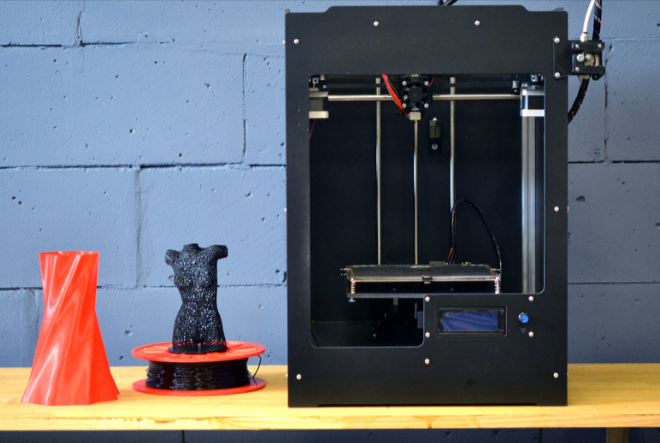
Whether you buy or outsource comes down to one question: will your 3D printer cost fewer rupees per useful part than a print service charges? Most people answer this by gut feeling. They either buy a machine because it looks fun, or they keep paying a service because buying "feels expensive". Neither approach uses numbers.
This guide gives you a simple way to find your own break-even point, covering the costs people forget on both sides and the situations where each option wins. It doesn't repeat our detailed cost breakdown, which explains running costs in depth. Swap that link for the live Blog 2 URL once published. Here we compare ownership against outsourcing. Prices come from Hydrotech 3D Chennai's published listings at the time of writing, taxes included.
Two Ways to Get Parts Printed
Outsourcing means sending a file to a print service or local bureau. You pay per part or per job and receive finished prints. You don't buy a machine, learn settings or manage materials.
Owning means buying a printer and doing the work yourself. You pay upfront, then pay for materials, upkeep and your own time.
Both are legitimate. They simply suit different patterns of use.
| Outsourcing | Owning | |
|---|---|---|
| Upfront spend | None or minimal | Printer, materials, tools |
| Cost per part | Higher, includes the provider's margin | Lower once set up |
| Speed | Depends on provider queue and shipping | Immediate, on your schedule |
| Iteration | Each revision costs money and days | Cheap and fast |
| Learning curve | None | Real, but manageable |
| Material choice | Provider's menu | Whatever your machine supports |
| Privacy | Files leave your hands | Files stay in-house |
| Effort | Low | Moderate, ongoing |
Who Usually Benefits From Outsourcing
Outsourcing is often the smarter choice when:
- You need only a few parts a year.
- You need industrial materials or processes your budget can't match.
- Your parts are large, or need professional finishing.
- You want certified or traceable production.
- You have no space, time or interest to maintain a machine.
If these describe you, buying a printer may just create a gadget that sits idle.
Who Usually Benefits From Owning
Owning tends to win when:
- You iterate designs often, so quick turnaround saves days.
- You print regularly, such as weekly or more.
- You work on prototypes, spares, jigs or models where small errors are cheap to reprint.
- You teach, run a workshop or build products and want control.
- You value privacy for early designs.
- You enjoy making, and the learning is a benefit, not a cost.
Calculating Your Break-Even Point
Here is a straightforward method. All numbers below are assumptions for illustration, so replace them with your own quotes and prices.
Step 1: Get outsourcing quotes. Ask two or three providers to quote the parts you typically need, including shipping and turnaround.
Step 2: Estimate your own cost per part. Use material cost plus a modest allowance for wear, power and failures.
Step 3: Find the saving per part. Outsourced price minus your own cost.
Step 4: Divide. Total ownership cost (printer plus first-month extras) ÷ saving per part = number of parts to break even.
| Illustration | Assumed figure |
|---|---|
| Printer | ₹21,499 (Bambu Lab A1 Mini, as listed) |
| First-month extras | ₹5,000 (assumed) |
| Total ownership cost | ₹26,499 |
| Outsourced price per part | ₹400 (assumed) |
| Your own cost per part | ₹80 (assumed) |
| Saving per part | ₹320 |
| Break-even | About 83 parts |
Eighty-odd parts sound like a lot, but a student project team, a workshop making jigs or a small shop selling gifts can hit that in months. A person who needs three parts a year never will. That's the whole decision in one number.
Two refinements make the maths more honest.
- Add your time. If setup, cleanup and finishing take an hour per part and your time is valuable, include it.
- Add the value of speed. If waiting five days for outsourced parts delays revenue or a deadline, ownership has an extra benefit you can price.
Understanding Real 3D Printer Cost on the Ownership Side
When you look at the true 3D printer cost of ownership, the printer is usually the smaller part over several years. Think in categories.
| Category | Examples | Notes |
|---|---|---|
| Machine | Listed from about ₹21,499 for an entry filament model | One-time, with resale value |
| Materials | Filament or resin | Scales with how much you print |
| Wear parts | Nozzles, plates, film | Replace over time |
| Consumables for resin | Wash solution, gloves | Extra for resin users |
| Space and power | Table, ventilation, electricity | Often ignored |
| Time | Learning, setup, finishing | Real, though not on any invoice |
| Failures | Wasted prints | Part of learning |
None of this means ownership is a bad deal. It means you should budget for it, then compare against what outsourcing would have cost for the same output.
Where Do the Savings Come From?
Ownership savings aren't evenly spread. They concentrate in a few situations.
| Situation | Why ownership saves money |
|---|---|
| Many small, simple parts | Material cost is tiny compared with a service's per-part price |
| Frequent design changes | Each reprint costs only material and a little time |
| Spare and replacement parts | You print what you need when you need it |
| Educational or training use | Many students share one machine |
| Selling printed products | You capture the margin a service would take |
| Large volumes of one design | Costs per part drop with repetition |
And where outsourcing may still be cheaper: single complex parts in special materials, one-off large pieces, or professional finishes that need equipment you don't own.
A Hybrid Approach Often Wins
You don't have to choose one forever. Many small businesses use both.
- Own a reliable entry machine for prototypes, tests and everyday parts.
- Outsource special jobs that need unusual materials, large sizes or industrial processes.
- Start by outsourcing, then buy once your volume justifies it.
- Buy a machine and sell spare capacity to others, which helps pay it off.
This keeps your risk low while your needs are still unclear.
Choosing the Best Place to Buy 3D Printer in Chennai
If you decide ownership makes sense, the next question is where to buy. The Best place to buy 3D printer in Chennai for you depends less on slogans than on how well a seller answers practical questions before you pay. Our beginner guide offers a general seller checklist. Swap that for the live Blog 1 URL once published. Here are extra tests specific to a buy-versus-outsource decision.
| Question to ask | Why it matters for your decision |
|---|---|
| Can you show printed samples from this exact model? | Confirms quality matches what you need |
| Can you estimate cost per part for my typical job? | Helps with your break-even calculation |
| Which consumables do you stock locally? | Avoids delays that erase your time savings |
| What happens if the machine fails in month three? | Defines your downtime risk |
| Are parts and film or nozzles available in Chennai? | Keeps maintenance cheap and quick |
| Do you offer a demonstration or a short orientation? | Shortens the learning curve |
| What is the warranty route in India? | Protects your investment |
Hydrotech says it has been a dedicated 3D printing specialist since 2020, is an authorised reseller for Bambu Lab, Elegoo, Phrozen, Snapmaker and Uniformation, and welcomes visitors to its Valasaravakkam store for walkthroughs and sample prints. Whichever seller you consider, a team that happily helps you estimate your own costs, even if the answer is "outsourcing suits you", is showing the kind of honesty worth rewarding.
Matching Machines to Break-Even Needs
If your numbers favour ownership, these listed models give a feel for where different budgets land.
| Need | Example model | Listed price |
|---|---|---|
| Low-volume prototypes and small parts | Bambu Lab A1 Mini | ₹21,499 |
| Student and workshop use | Elegoo Neptune 4 | ₹24,000 |
| Larger parts and mixed projects | Bambu Lab A1 | ₹29,999 |
| Detailed resin work | Phrozen Sonic Mini 4K | ₹20,000 |
| Multi-colour or tougher materials | Bambu Lab P1S Combo | ₹68,999 |
The more you print, the more a faster or more capable machine can pay for itself through saved time. The less you print, the more a modest one makes sense.
Hidden Risks on Each Side
Outsourcing risks: unpredictable lead times, shipping delays, inconsistent quality between providers, extra charges for revisions and exposure of confidential designs.
Ownership risks: an idle machine, slow learning, failed prints, spare-part delays, safety issues with resin and a workspace that gets messy.
Reduce ownership risk by starting with a simple, well-supported machine and a limited set of materials. Reduce outsourcing risk by keeping files organised, asking for samples and building a relationship with one reliable provider.
A Quick Decision Checklist
Answer yes or no.
- Will I need at least a few parts every month?
- Will I redesign and reprint often?
- Do I have space and ventilation for a printer?
- Am I willing to learn the process and troubleshoot?
- Are my materials ones that an entry or mid-range machine can print?
- Is my break-even point under about a year?
- Do I have a local seller I trust for support?
Mostly yes: owning likely makes sense. Mostly no: outsourcing is probably the better value for now. Mixed: try the hybrid route.
Final Thoughts
Buying a printer is a good decision for people who print often, iterate quickly and want control. It's a poor one for people who need a few parts a year. The way to know is to collect real quotes, estimate your own cost per part and divide your total ownership cost by the saving. If the break-even number feels comfortable, buy with confidence, from a seller who can support you after delivery.
To compare current models and prices, visit the Hydrotech 3D printers page, call +91-9445390912 or visit the store at First Floor, 117A, Chowdry Nagar 10th Street, Valasaravakkam, Chennai 600087.
Frequently Asked Questions
1. Is buying a 3D printer cheaper than using a print service?
It depends on volume. Frequent printers usually save money over time, while occasional users often don't.
2. How do I calculate break-even?
Divide your total ownership cost by the saving per part, which is the outsourced price minus your own cost.
3. Should I count my time?
Yes. If setup and finishing take significant time, include it, along with the value of faster turnaround.
4. Can I do both?
Yes. Many users own a modest printer and outsource special jobs.
5. What printer is a sensible starting point if I decide to buy?
Entry-level filament models, such as those listed from about ₹21,499, are common starting points. Choose by your use.
6. Do I need to buy materials separately?
Yes. Budget for filament or resin from the beginning.
7. Can I see a printer in action before buying?
Hydrotech says you can visit its Valasaravakkam store to see sample prints and discuss your needs.

 English
 Arabic
 French
 Spanish
 Deutsch
 Turkish
 Dutch
 Italiano
 Russian
 Romaian
 Portuguese (Brazil)
 Greek