
Planning Your Pilot Training Journey in New Delhi
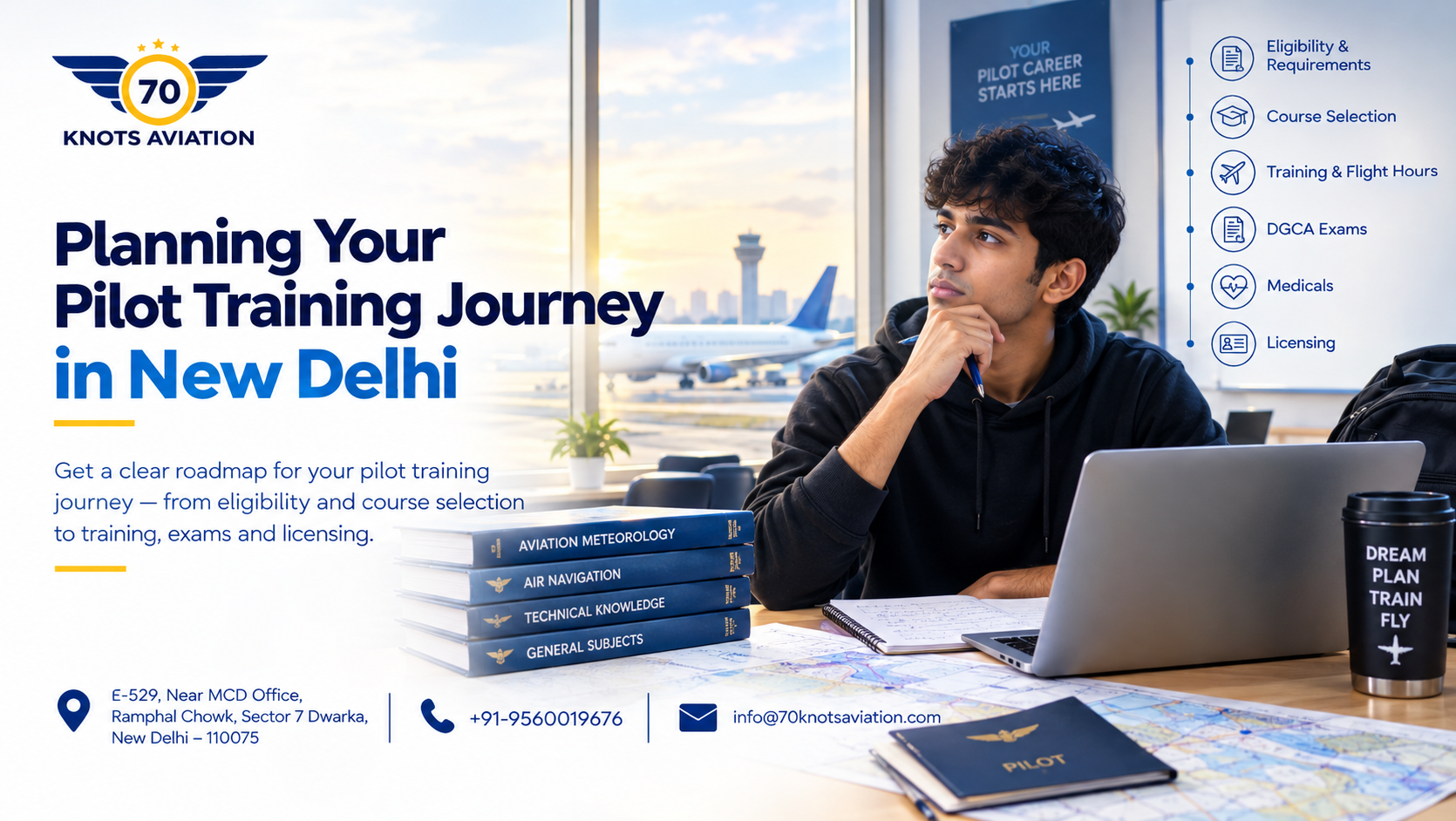
Introduction: Building a Strong Foundation for Aviation
For students who dream of becoming commercial pilots, the journey involves much more than learning to fly an aircraft. It requires theoretical knowledge, practical skills, medical fitness, discipline, and an understanding of aviation regulations. Knowing how these elements fit together can help aspiring pilots make better decisions before investing time and money in training.
One of the early steps is understanding the role of ground classes. These classes introduce students to essential aviation subjects and help them prepare for the relevant theoretical examinations. A clear study plan, suitable instruction, and consistent practice can make the learning process more manageable.
70Knots Aviation, located near Ramphal Chowk in Dwarka, New Delhi, is an option for students exploring DGCA ground preparation. Before selecting any institute, candidates should understand their training requirements, review the available learning support, and ensure that their plans align with the latest applicable regulations.
Understanding the Different Stages of Pilot Training
Aviation training follows a structured pathway. Although the exact process depends on a candidate's circumstances and current regulatory requirements, students should become familiar with the major stages before beginning.
Meeting the Eligibility Requirements
Candidates should first review the applicable educational, age, documentation, and medical requirements. They should also understand the requirements for the licence they intend to pursue.
Medical assessments are particularly important. Aspiring pilots should obtain guidance on the relevant DGCA medical requirements and arrange the appropriate assessments at the correct stage rather than making assumptions based on informal advice.
Preparing for Theoretical Examinations
Ground preparation helps students understand aviation principles before or alongside the other stages of their training. The syllabus can involve calculations, technical concepts, meteorological information, and aviation rules.
Students should identify the subjects applicable to their training pathway and organise their preparation accordingly.
Completing Practical Flight Training
Theoretical knowledge and practical flying experience serve different purposes. Flight training allows students to develop aircraft handling, communication, situational awareness, and operational decision-making skills under the required supervision.
Ground classes alone do not qualify someone to operate as a commercial pilot. Candidates must satisfy all applicable examination, flight experience, medical, and licensing requirements.
What Should You Look for in a DGCA Ground Training Programme?
Choosing a ground training programme requires careful consideration. Students should focus on the quality and suitability of the learning experience instead of selecting an institute solely because of its location or promotional claims.
When comparing options, students researching the Best DGCA Ground Classes in New Delhi should pay attention to several practical factors.
Subject Coverage and Teaching Methods
A suitable programme should clearly explain which subjects it covers and how lessons are delivered. Students should ask whether the classes include concept-based teaching, question-solving sessions, doubt clarification, and revision opportunities.
For example, Air Navigation requires regular numerical practice, while Aviation Meteorology involves understanding weather processes and interpreting aviation-related information. Air Regulations requires students to understand applicable rules and their practical significance.
A teaching approach that recognises these differences can help students organise their learning more effectively.
Faculty Knowledge and Student Support
Students should ask about the instructors' relevant aviation experience and their methods for explaining difficult topics. It is also worth checking whether learners can ask questions during classes and receive clarification when they struggle with particular concepts.
Consistent academic support can be particularly useful for students entering aviation without prior technical knowledge.
Study Materials and Progress Tracking
Well-organised notes, practice questions, revision exercises, and mock examinations can help students identify areas that need improvement.
Progress tracking is equally important. Instead of measuring preparation only by the number of hours spent studying, students should assess how well they understand each topic and whether they can solve relevant questions accurately.
Transparent Fees and Course Information
Before enrolling, request clear information about fees, course duration, included subjects, class timings, and any additional charges. Students should understand precisely what a programme offers before making a financial commitment.
No training provider should be assumed to guarantee examination success. Results depend on several factors, including preparation, comprehension, and individual performance.
Why Location Matters When Selecting Aviation Classes
A demanding study schedule can become harder to maintain when students spend excessive time travelling. Choosing a convenient location may help them attend classes consistently while leaving enough time for revision and practice.
For students living in Dwarka and surrounding areas, Ramphal Chowk may be a useful location to consider when comparing aviation training options.
However, convenience should not be the only deciding factor. Students researching the Best Pilot Training institute in Ramphal Chowk should compare the programme's subject coverage, teaching methods, instructor experience, student support, and overall suitability.
70Knots Aviation is situated near Ramphal Chowk, Sector 7, Dwarka, New Delhi. Interested students can enquire about its current DGCA ground preparation offerings, class schedules, fees, and admission process to determine whether they meet their needs.
It is also sensible to visit the premises or speak with the institute before enrolling. This allows students to clarify expectations and understand how the learning programme fits into their broader aviation plans.
Developing Effective Study Habits for Aviation Examinations
Students often underestimate the importance of consistency. Studying intensively for a few days and then taking long breaks can make it difficult to retain technical information. A repeatable study routine is generally more useful.
Divide the Syllabus into Smaller Topics
Break each subject into manageable sections. Set realistic targets for completing individual topics and leave sufficient time for revision. Smaller targets can make a large syllabus feel more achievable.
Combine Theory with Practice
After studying a concept, attempt relevant questions to check your understanding. For calculation-based subjects, practise regularly instead of postponing numerical work until the end of the course.
For theoretical subjects, explain important concepts in your own words and review how rules or principles apply in different situations.
Keep a Record of Mistakes
Maintain a notebook or digital document containing questions you answered incorrectly. Record why each answer was wrong and revisit those concepts during revision.
This approach can help you recognise recurring weaknesses instead of repeatedly making the same mistakes.
Use Mock Tests Strategically
Mock tests can help students become familiar with question formats and assess their progress. However, completing a test is only one part of the process. Reviewing the answers and understanding the underlying concepts is equally important.
Follow Official Information
DGCA examination procedures and applicable requirements may change. Students should consult official DGCA announcements and the DGCA Pariksha portal for relevant examination services and updates.
The portal supports examination-related processes; it should not be confused with a separate aviation subject.
Student–Counsellor Conversation: Choosing the Right Starting Point
Student: I have completed school and want to explore a career as a commercial pilot. What should I do first?
Counsellor: Begin by reviewing the current eligibility requirements, educational criteria, and medical requirements. Then understand the different stages of pilot training so you can plan your next steps realistically.
Student: Should I join ground classes before starting flight training?
Counsellor: Ground preparation can help you develop the theoretical knowledge needed for the applicable examinations. The right timing depends on your circumstances and training pathway, so discuss the sequence with a qualified aviation training provider.
Student: I am worried about subjects such as Air Navigation and Technical General. Are they difficult?
Counsellor: Some topics may feel challenging at first, especially if you have not studied aviation before. Start with the fundamentals, practise regularly, and seek clarification when you encounter difficulties. Your progress will depend on consistent effort and understanding.
Student: How can I compare institutes around Dwarka?
Counsellor: Compare subject coverage, teaching methods, instructor experience, revision support, fees, and class schedules. You should also confirm which subjects are currently available and whether the programme matches your preparation needs.
Student: I found 70Knots Aviation while researching ground classes. What should I ask before enrolling?
Counsellor: Ask about the current course structure, timetable, fees, study materials, revision arrangements, and admission process. Make sure you understand what is included and what additional training you may need elsewhere.
Student: Will attending ground classes ensure that I pass my DGCA examinations?
Counsellor: No institute can responsibly guarantee an examination result. Good instruction can support your preparation, but you must also study consistently, practise questions, and meet the examination requirements.
Frequently Asked Questions About Pilot Ground Training
1. What is the purpose of DGCA ground training?
DGCA ground training develops the theoretical aviation knowledge needed for the relevant examinations. It covers applicable subjects such as navigation, meteorology, regulations, and aircraft-related technical topics.
2. How should I compare aviation institutes in New Delhi?
Review the subjects offered, faculty experience, class schedules, learning materials, doubt-clearing support, fees, and revision arrangements. Verify that the programme meets your current training requirements.
3. Can students without an aviation background join ground classes?
Students from different educational backgrounds may explore pilot training, but they must satisfy the applicable eligibility requirements. They should review the current criteria and seek guidance about the preparation pathway before enrolling.
4. Is ground training sufficient to obtain a commercial pilot licence?
No. Ground training is only one part of the process. Candidates must also satisfy the applicable medical, examination, flight training, experience, and licensing requirements.
5. What should I ask 70Knots Aviation before joining?
Ask about the current subjects offered, course duration, class timings, faculty, fees, study resources, and revision support. Confirm the programme details directly before making an enrolment decision.
Conclusion: Take the Next Step with a Clear Plan
A career in aviation requires careful planning, a willingness to learn, and a realistic understanding of the training process. Students who research their options thoroughly can make more informed decisions about ground preparation and the other requirements involved in becoming a pilot.
70Knots Aviation, located near Ramphal Chowk in Dwarka, New Delhi, is one institute students can explore while comparing DGCA ground preparation options. Before committing to a programme, review its current offerings, ask relevant questions, and verify the latest official requirements.
A structured timetable, regular practice, and a strong understanding of aviation fundamentals can help aspiring pilots approach their training with greater confidence and direction.

 English
 Arabic
 French
 Spanish
 Portuguese
 Turkish
 Dutch
Dutch
 Italiano
 Russian
 Romaian
 Portuguese (Brazil)
 Greek
Greek