
What Should Be Included in a Complete Checklist for Home Selling?
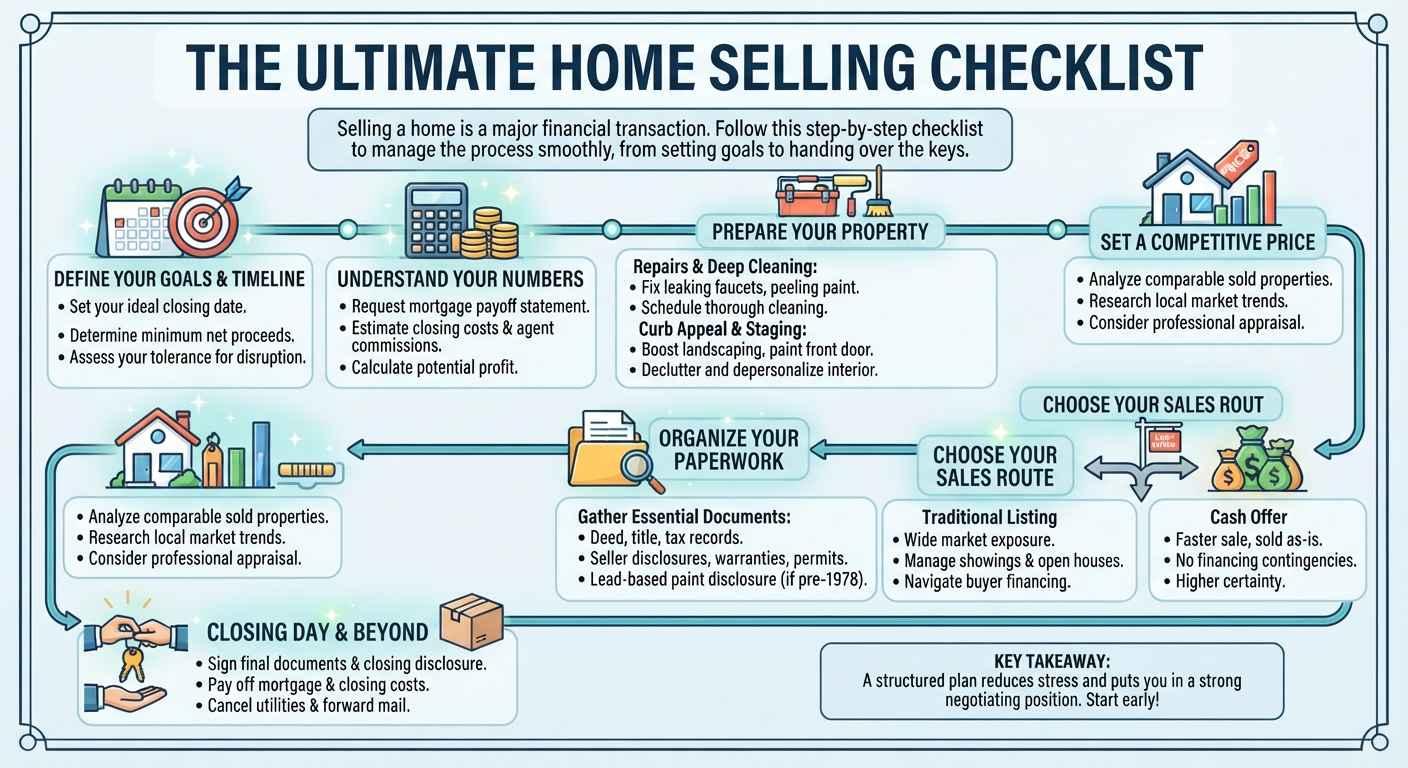
Selling a home is one of the largest financial transactions most people will ever manage, and it rarely goes smoothly without a plan. Repairs, paperwork, pricing decisions, showings, and negotiations all compete for your attention at once. A well organized checklist for home selling keeps those moving parts in order so that nothing important is missed. This guide walks through each stage, from setting your goals to handing over the keys, with practical examples along the way.
Start With Your Goals and Timeline
Decide Why and When You Are Selling
Every strong plan begins with a clear purpose. A seller relocating for a job in six weeks will make very different choices from a retiree who wants the best possible price and has a year to wait. Write down your ideal closing date, your minimum acceptable net proceeds, and how much disruption you can tolerate. These three answers will shape every decision that follows, including whether to renovate, how to price, and which type of buyer to approach.
Understand Your Numbers
Before listing, request a payoff statement from your lender and estimate your closing costs, agent commissions, and any repairs. Consider a seller named Maria who owes 210,000 dollars on her mortgage and expects to sell near 300,000 dollars. After commissions, closing costs, and repairs, her real profit may be far smaller than the headline price suggests. Knowing this early prevents unpleasant surprises at the table.
Home Selling Preparation Checklist for the Property
Repairs and Deep Cleaning
Buyers notice small defects and assume larger problems are hiding behind them. Fix leaking faucets, cracked tiles, sticking doors, and peeling paint first. Then schedule a thorough cleaning, including windows, carpets, and appliances. If your budget allows, a pre listing inspection can reveal issues before a buyer’s inspector does, which gives you time to repair them on your own terms instead of negotiating under pressure.
Curb Appeal and Staging
First impressions begin at the curb. Trim hedges, refresh mulch, repaint the front door, and make sure house numbers and lighting look sharp. Inside, remove personal photographs, clear countertops, and rearrange furniture so each room feels spacious. Staged homes often photograph better, and strong photographs drive the online interest that leads to showings.
Set a Competitive Price
Overpricing is a common mistake that causes homes to sit and lose momentum. Compare recently sold properties that match yours in size, condition, and location, rather than relying on active listings alone. A local agent or a professional appraisal can sharpen this estimate considerably.
Documents Needed to Sell a House
Having paperwork ready speeds up negotiations and builds buyer confidence. At a minimum, gather your deed or title information, your mortgage payoff statement, recent property tax records, and any homeowners association rules and fee details. Add your seller disclosure form, warranties for appliances or roofing, permits for past renovations, and recent utility bills so buyers can estimate their monthly costs. If your home was built before 1978, federal rules require you to share any known information about lead based paint, and the EPA explains these disclosure requirements in detail. Keep digital and printed copies of everything in one folder, because requests often arrive at inconvenient moments.
Choose the Right Way to Sell
Not every seller needs a traditional listing. Listing with an agent usually offers broad exposure, but it also brings showings, open houses, buyer financing contingencies, and a longer timeline. A cash buyer can be a better fit when speed, certainty, or the condition of the property is the main concern, since there is no mortgage approval to wait for and repairs are usually not required. Compare both paths honestly against the goals you set at the beginning, and ask each option for a written estimate of your net proceeds.
Closing Day and What Comes After
Once you accept an offer, expect an inspection, an appraisal if the buyer uses financing, and a final walkthrough. The Consumer Financial Protection Bureau explains the closing disclosure, which itemizes the final costs, so review it carefully and ask questions before signing. Afterward, cancel utilities, forward your mail, and keep your closing paperwork. Because profits can have tax consequences, review the IRS guidance on selling your home or speak with a tax professional about possible exclusions.
Conclusion
A reliable checklist for home selling turns a stressful process into a series of manageable steps: define your goals, understand your numbers, prepare and price the property, organize your paperwork, choose the right sales route, and close with care. Sellers who follow this order tend to negotiate from a position of confidence rather than urgency. If you want a faster and simpler path, especially for a house that needs work, you can explore Sell My House Fast In Pensacola FL and request a no obligation offer. Take the first step today by writing down your goals and gathering your documents.
Frequently Asked Questions
1. How early should I begin preparing to sell my house?
Ideally, start two to three months before listing. This gives you time to complete repairs, gather paperwork, and research pricing without rushing.
2. What documents are needed to sell a house?
Common items include your deed, mortgage payoff statement, property tax records, disclosure forms, HOA information, warranties, permits, and utility bills.
3. Do I need a home inspection before I sell?
It is not required, but a pre listing inspection helps you find and fix problems early, which can prevent price reductions later.
4. How much does it cost to sell a house?
Costs vary by location and sale method, but sellers should budget for agent commissions, closing fees, transfer taxes, repairs, and prorated property taxes.
5. Should I make repairs or sell my house as is?
Minor repairs often pay off in a traditional sale. If major repairs are costly or time is short, selling as is to a cash buyer may be more practical.
6. How long does it take to sell a house?
Traditional sales commonly take one to three months from listing to closing, while cash sales can close in as little as one to two weeks.
7. Do I have to pay taxes when I sell my home?
You may owe capital gains tax on profit above certain exclusion limits. The IRS offers guidance, and a tax professional can confirm your situation.
8. What should I do on moving day after closing?
Leave keys, garage openers, and manuals for the buyer, take final meter readings, and confirm that utilities have been transferred.

 English
 Arabic
 French
 Spanish
 Portuguese
 Deutsch
 Turkish
 Dutch
 Italiano
 Romaian
 Portuguese (Brazil)
 Greek