
Early Warning Signals in Credit Risk: How Businesses Can Identify Financial Risks Early
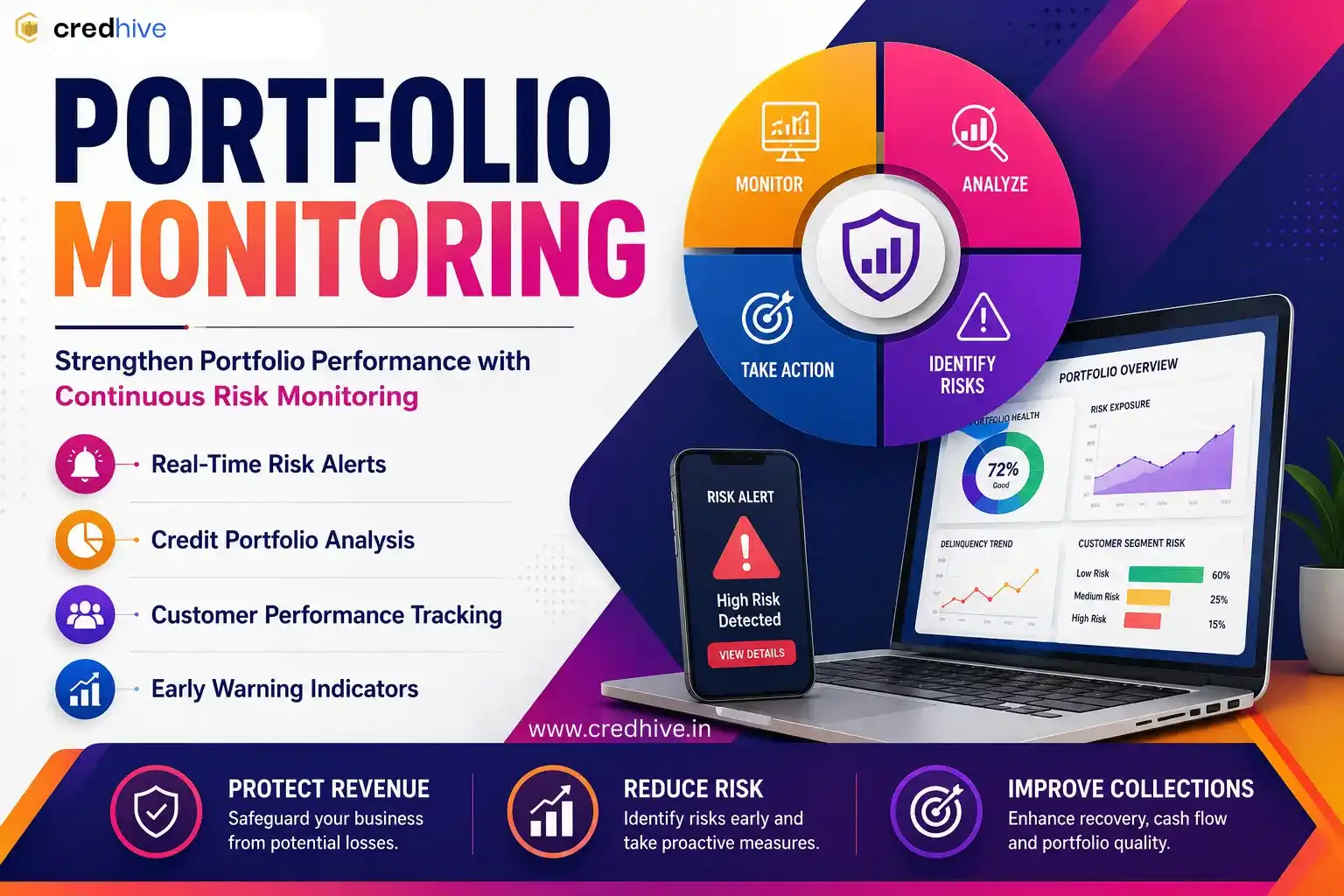
Financial risks rarely emerge without any indication. Changes in a company's financial performance, delayed payments, legal disputes, compliance issues, or management changes can provide early clues about potential business difficulties. Identifying these developments at the right time helps lenders, financial institutions, and businesses take preventive action before risks become more serious.
Early Warning Signals (EWS) play an important role in credit risk management by helping organisations identify potential borrower stress, assess changing business conditions, and make informed decisions. Instead of relying only on past financial statements or periodic reviews, businesses can use ongoing monitoring and company intelligence to recognise emerging risks.
For banks, NBFCs, fintech companies, insurers, and corporate finance teams, a structured early warning system can strengthen risk assessment, improve portfolio oversight, and support better decision-making.
What Are Early Warning Signals in Credit Risk?
Early Warning Signals are indicators that suggest a company, borrower, supplier, or business partner may be experiencing financial, operational, legal, or compliance-related difficulties. These signals do not necessarily confirm that a business is in distress. However, they highlight developments that may require further investigation.
For example, a company reporting declining revenue, accumulating debt, frequent legal disputes, or changes in its regulatory status may require closer monitoring. When several warning indicators appear together, the need for a detailed credit review becomes more significant.
An effective early warning system combines financial information, corporate records, payment behaviour, and other relevant business data to identify changes that could affect creditworthiness.
Why Are Early Warning Signals Important?
1. Identify Potential Credit Risks Early
Early identification allows lenders to investigate warning signs before a borrower's financial position deteriorates further. This can help credit teams review exposure, reassess repayment capacity, and determine whether additional safeguards are necessary.
2. Strengthen Credit Risk Management
Traditional credit assessments often focus on information available when a loan is approved. However, a company's financial position can change throughout the lending relationship. Early warning signals help institutions evaluate these changes and update their risk assessments accordingly.
3. Improve Portfolio Monitoring
Banks and NBFCs manage multiple borrowers across industries and risk categories. Monitoring each borrower manually can be time-consuming. A structured EWS framework helps risk teams prioritise accounts that show significant changes and may need immediate attention.
4. Support Better Lending Decisions
Warning indicators provide additional context for credit reviews, renewals, limit enhancements, and lending decisions. By considering recent developments alongside financial history, lenders can make more informed assessments of borrower risk.
5. Reduce Unexpected Business Disruptions
Early warning signals are also useful beyond lending. Enterprises can monitor suppliers, distributors, vendors, and other counterparties to identify developments that may affect payments, delivery commitments, or business continuity.
Key Early Warning Signals Businesses Should Monitor
1. Deteriorating Financial Performance
Changes in financial performance are among the most important indicators of potential business stress. A sustained decline in revenue, shrinking profit margins, reduced operating cash flow, or rising borrowing costs may affect a company's ability to meet its financial obligations.
Credit teams should examine financial trends over time rather than relying on a single reporting period. A temporary decline may not indicate a serious problem, but repeated deterioration combined with increasing debt deserves further review.
2. Delayed Payments and Repayment Difficulties
Repeated payment delays can indicate cash-flow pressure or weakening financial discipline. For lenders, missed instalments, overdue accounts, and frequent requests to restructure repayment schedules may warrant closer examination.
For suppliers and corporate finance teams, delayed invoice payments or a growing number of outstanding balances may indicate that a business partner is facing liquidity challenges.
Payment behaviour should be assessed alongside other available information to distinguish isolated delays from persistent financial stress.
3. Legal Disputes and Litigation
New legal proceedings, material disputes, recovery actions, or insolvency-related developments can affect a company's financial position and business continuity.
Monitoring relevant litigation records can help lenders and business partners identify issues that require investigation. The nature, stage, financial significance, and outcome of a case should be considered before drawing conclusions, as the existence of a legal dispute alone does not establish financial distress or wrongdoing.
4. Regulatory and Compliance Issues
Changes in a company's regulatory or compliance status may create operational, financial, or reputational concerns. Examples include overdue statutory filings, relevant regulatory actions, compliance irregularities, or changes in registration status.
For credit and risk teams, reviewing corporate filings and other available compliance information can help identify developments that may affect the company's ability to operate normally or meet its obligations.
5. Changes in Directors, Ownership, or Management
Changes in directors, promoters, ownership structures, or key management personnel can sometimes signal a significant business transition. In certain circumstances, frequent changes or unusual ownership developments may justify further due diligence.
However, leadership changes can also occur as part of normal business activity. Risk teams should evaluate the reason for the change, the company's overall condition, and any associated financial or compliance indicators.
6. Rising Debt and Weakening Repayment Capacity
An increase in borrowings is not always a warning sign, as businesses may take loans to fund expansion or working capital. The concern arises when debt grows faster than cash flow or the company's ability to service its obligations weakens.
Useful indicators include increasing leverage, declining interest coverage, greater dependence on short-term borrowing, and reduced liquidity. Evaluating these measures together helps lenders understand whether a borrower has sufficient financial capacity to manage its debt.
7. Adverse Changes in Business Operations
Operational disruptions can eventually affect a company's financial health. Examples include production interruptions, the loss of major customers, supply-chain problems, significant reductions in business activity, or dependence on a small number of customers or suppliers.
These developments may not immediately appear in financial statements. Combining operational information with financial and corporate data can therefore provide a broader view of potential risk.
8. Negative Developments in Related Entities
A company's risk profile may also be influenced by its promoters, directors, subsidiaries, group companies, or connected business entities. Financial difficulties, significant legal issues, or adverse corporate developments involving related entities may warrant additional scrutiny where a relevant connection exists.
Corporate linkage intelligence can help credit teams understand these relationships and determine whether they have a meaningful impact on the business under assessment.
How an Early Warning System Works
An effective early warning system follows a structured process that converts business information into actionable risk insights.
Step 1: Establish a Baseline Risk Profile
Begin by assessing the company's financial position, repayment history, corporate records, compliance status, and existing exposure. This baseline helps teams identify meaningful changes over time.
Step 2: Define Relevant Warning Indicators
Select indicators based on the organisation's risk appetite, industry, customer profile, and exposure. A lender may focus on repayment behaviour and leverage, while a company managing suppliers may prioritise payment reliability, legal developments, and business continuity.
Step 3: Collect and Monitor Business Information
Bring together relevant information from available financial statements, corporate filings, payment records, litigation sources, and compliance data. Automated monitoring can reduce dependence on repeated manual checks, subject to data availability and update frequency.
Step 4: Assess and Prioritise Alerts
Not every alert requires the same response. Risk teams should evaluate the severity, reliability, relevance, and combination of indicators. Multiple significant warning signs may justify a more urgent review than an isolated, low-impact event.
Step 5: Investigate and Take Appropriate Action
Depending on the findings, an organisation may request updated financial information, conduct additional due diligence, review credit limits, reassess lending terms, or strengthen monitoring. Any decision should be supported by verified information and the organisation's established policies.
Step 6: Review Outcomes and Improve the System
An early warning system should be reviewed regularly. Tracking which alerts led to confirmed issues, which were false positives, and how quickly teams responded helps improve the quality of future risk assessments.
Early Warning Signals vs. Traditional Credit Assessment
Traditional credit assessment generally evaluates a borrower's creditworthiness at a particular point in time. It may rely on financial statements, credit history, company records, and information collected during onboarding or loan approval.
Early warning signals complement this process by focusing on changes that occur after the initial assessment. They help teams identify developments that may affect the borrower's current risk profile.
For example, a company may have demonstrated strong financial performance when a loan was approved. Six months later, declining cash flow, new legal proceedings, and rising debt may indicate a need for reassessment.
Using both approaches provides a more complete view of credit risk: initial assessment establishes the baseline, while ongoing monitoring helps identify emerging concerns.
Challenges in Implementing Early Warning Signals
Although early warning systems offer important benefits, their effectiveness depends on data quality, suitable indicators, and consistent follow-up.
Fragmented information: Relevant company details may be spread across different sources, making it difficult to develop a complete risk picture.
Delayed updates: Some financial and corporate information is published periodically rather than continuously. Monitoring frequency should reflect the actual update cycle of each source.
False positives: A single event may appear concerning without representing a material risk. Alerts should be validated before decisions are made.
Limited context: Financial ratios or corporate changes may be misleading when considered in isolation. Industry conditions, company size, and business strategy should also be taken into account.
Manual processes: Reviewing large portfolios manually can delay the identification and investigation of important changes. Appropriate automation and clear escalation procedures can help address this challenge.
How Credhive Supports Early Risk Identification
Credhive is a business and credit intelligence platform that helps organisations access company information to support credit assessment, due diligence, and ongoing risk evaluation.
By bringing together relevant business information, including corporate filings, financial indicators, litigation records, director linkages, and compliance-related insights, Credhive helps credit and risk teams develop a broader understanding of companies they evaluate.
For banks, NBFCs, fintech companies, and enterprise risk teams, these insights can support the identification of developments that deserve further investigation. Combined with a structured Early Warning Signals framework and regular portfolio reviews, business intelligence can help organisations prioritise risk reviews and make more informed decisions.
Credhive's business intelligence and portfolio monitoring capabilities can complement an organisation's existing risk management processes. The usefulness of any alert depends on the underlying data, its freshness, the company's circumstances, and appropriate validation by the risk team.
Best Practices for an Effective Early Warning Signals Framework
Organisations can improve their early warning processes by following these practical steps:
-
Choose indicators relevant to your exposure: Avoid using the same risk thresholds for every borrower, industry, or business partner.
-
Combine multiple sources: Evaluate financial, legal, corporate, compliance, and payment-related information where available.
-
Set clear alert thresholds: Define which developments require routine review and which need urgent escalation.
-
Assign ownership: Make sure specific teams or individuals are responsible for reviewing alerts and documenting actions.
-
Validate before acting: Investigate material signals and seek additional evidence before making consequential credit or business decisions.
-
Monitor continuously where possible: Establish review frequencies that reflect the risk level and availability of updated information.
-
Measure effectiveness: Track alert accuracy, review turnaround times, and whether the framework identifies material risks early enough to support action.
Conclusion
Early Warning Signals are an important part of modern credit risk management. By identifying changes in financial performance, repayment behaviour, litigation, compliance, ownership, and business operations, organisations can recognise potential concerns before they become more difficult to manage.
An effective framework goes beyond generating alerts. It combines reliable information, risk-based prioritisation, human investigation, and timely follow-up. For lenders and businesses managing complex portfolios or counterparty relationships, this approach supports more consistent oversight and better-informed decisions.
With business intelligence and ongoing monitoring, Credhive helps organisations strengthen their understanding of company-level risks and support a more proactive approach to credit assessment and risk management.
Frequently Asked Questions
1. What are Early Warning Signals in credit risk?
Early Warning Signals are indicators of potential financial or business difficulties, such as declining cash flow, delayed payments, rising debt, legal disputes, or compliance issues. They help risk teams identify accounts that may require further investigation.
2. What are the common types of Early Warning Signals?
Common signals include deteriorating financial performance, payment delays, increasing leverage, litigation, regulatory concerns, management changes, operational disruptions, and adverse developments involving related entities.
3. How do Early Warning Signals help banks and NBFCs?
They help banks and NBFCs identify potential borrower stress, prioritise credit reviews, monitor existing portfolios, and reassess exposure when material changes occur. They complement, rather than replace, credit assessment and professional judgement.
4. What is an Early Warning System in banking?
An Early Warning System is a structured process or technology framework that collects relevant information, monitors risk indicators, generates alerts, and helps banking teams investigate potential borrower or portfolio risks.
5. How can Credhive support Early Warning Signals?
Credhive provides business and credit intelligence, including relevant company information, financial indicators, litigation records, director linkages, and compliance-related insights. These data points can support due diligence and risk reviews when used alongside an organisation's monitoring policies and verification processes.

 Arabic
 French
 Spanish
 Portuguese
 Deutsch
 Turkish
 Dutch
Dutch
 Italiano
 Russian
 Romaian
 Portuguese (Brazil)
 Greek
Greek