
Heavy-Duty GRP Stair Nosing: Non-Slip Step Edge Safety and Compliance Guide
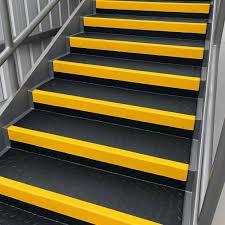
Staircases in UK industrial plants, distribution centres, commercial kitchens, hospitality venues, and busy office buildings face relentless operational wear every single day. Heavy safety boots, rolling trolleys, pallet trucks, and constant foot movement place intense downward force and horizontal shear directly onto the leading edge of every step. Over time, concrete edges chip and crumble, metal treads polish slick, and timber corners wear down into uneven slip hazards. Damp weather across the UK, oil spills in food preparation areas, and tracked-in moisture only heighten the risk of slips, trips, and falls on unprotected steps.
Specifying engineered grp stair nosing offers a durable, high-traction defense for high-risk staircases. Glass Reinforced Plastic combines a rigid fiberglass-reinforced resin matrix with bonded anti-slip grit to create step covers that resist corrosion, absorb heavy impacts, and maintain high friction even in wet or oily conditions. This guide explores the mechanics of stair edge wear, material performance, UK visual contrast compliance, and installation best practices for workplace safety leaders and facility managers.
Biomechanics of Stair Descent and Step Edge Hazards
Moving up and down stairs places greater biomechanical demand on human joints and balance systems than walking across flat flooring. During descent, body weight shifts forward and downward onto the front margin of each step, generating localized impact forces that can reach two to three times an individual's body weight. When a step edge is worn smooth, chipped, or coated in moisture or grease, shoe soles lose reliable grip at the exact moment stability is most critical.
In demanding UK workplaces—from busy warehouses and commercial kitchens to multi-storey buildings where staff move between standing desks, workstations, and meeting rooms—unsafe steps increase muscle tension and physical fatigue. A well-defined, high-friction leading edge gives footwear a firm, predictable contact point. By stabilizing foot placement on every step, durable edge protection reduces sudden gait corrections, eases joint strain during repetitive stair use, and lowers the likelihood of fall-related injuries.
Composite Engineering and Material Advantages of GRP
Glass Reinforced Plastic is manufactured by reinforcing a thermosetting resin matrix with glass fibres and embedding hard mineral grit, such as silicon carbide or quartz aggregate, directly into the surface layer. This composite structure gives step covers exceptional strength-to-weight performance in environments where standard trims struggle to survive.
-
Corrosion and Weather Resistance: Unlike untreated steel or standard metal profiles, GRP does not rust, rot, or corrode when exposed to rain, frost, salt spray, or industrial cleaning agents.
-
High Impact and Load Tolerance: Fiberglass reinforcement distributes concentrated point loads from heavy footwear and rolling equipment without cracking or deforming under normal operational stress.
-
Consistent Non-Slip Grit: Embedded mineral grit provides high surface friction across wet, oily, and high-footfall walkways without relying on surface coatings that peel away quickly.
-
Electrical Non-Conductivity: Resin and glass fibre composites do not conduct electricity, adding a practical safety margin near electrical equipment, plant rooms, and technical facilities.
Safety officers and facility teams evaluating broader step protection strategies can explore additional commercial options through the main Anti Slip Stair Nosing resource hub.
Comparing Stair Nosing Materials for UK Workplaces
Selecting the right step edge material requires weighing impact resistance, slip friction, moisture tolerance, and expected service life against the realities of your site.
| Material Type | Primary Environment | Impact Resistance | Wet and Oily Grip | Typical Lifespan |
| GRP Composite | Industrial, Outdoor, Wet Zones | Very High | Very High (Coarse Grit) | 15 to 20+ Years |
| Aluminium | Commercial, Warehouse, Office | High | High (With Inserts) | 15 to 20 Years |
| Rubber | Kitchens, Healthcare, Corridors | High (Elastic) | High (Ribbed/Textured) | 10 to 15 Years |
| PVC | Light Commercial, Indoor Walkways | Moderate | Moderate to High | 5 to 8 Years |
Profile Design, Grit Grades, and UK Visual Contrast Rules
Effective step safety depends on matching the profile shape and surface grit to the surrounding environment. Coarse grit profiles provide aggressive traction for outdoor steps, loading bays, and wet industrial floors where thick work boots are worn. Finer grit textures suit indoor commercial or hospitality spaces where footwear varies and regular floor cleaning is essential.
In the UK, building safety guidance such as Approved Document M and BS 8300 highlights the importance of clear visual contrast on stair edges so people with visual impairments can judge step boundaries accurately. High-contrast colours such as safety yellow or bright white stand out sharply against dark concrete, metal grating, or shaded stairwells, helping users spot each step edge clearly in both bright daylight and low-light conditions.
Facility managers and maintenance supervisors comparing profile dimensions, grit options, and high-visibility colours can review technical specifications within the heavy-duty GRP stair nosing collection to match profiles to their exact tread measurements.
Installation Practices for Long-Term Step Safety
Even a high-grade composite step cover will underperform if fitted over a dirty, uneven, or poorly prepared tread. Combining a sound structural adhesive with mechanical fixings delivers dependable holding power across concrete, timber, and metal steps.
-
Prepare the Step Substrate: Sweep away loose dust, grit, and debris, and remove oil, grease, or old flaking coatings. Fill chipped concrete edges or hollow wooden treads with a suitable repair compound so the profile sits flat.
-
Measure and Cut to Fit: Measure each step individually, as older staircases often vary slightly in width from side to side. Cut the profile cleanly with an appropriate blade and smooth cut edges so there are no sharp points.
-
Apply Structural Adhesive: Run a continuous bead of high-tack polyurethane construction adhesive along the underside of the nosing to help seal out moisture and reduce vibration under footfall.
-
Anchor with Mechanical Fasteners: Position the nosing firmly against the step edge, drill pilot holes where required, and drive in countersunk fixings appropriate for concrete, wood, or metal so the profile stays locked down under heavy traffic.
Frequently Asked Questions
Why is GRP stair nosing effective for outdoor and wet staircases?
GRP resists rust, rain, frost, and UV exposure while keeping coarse mineral grit bonded to the walking surface, helping maintain reliable grip on external steps and damp industrial walkways.
Can GRP stair nosing be fitted over damaged concrete steps?
Yes. Pre-formed GRP profiles can bridge chipped or worn concrete corners and restore a straight, high-friction leading edge without requiring full step reconstruction.
How does GRP stair nosing help meet UK visual contrast requirements?
Profiles in high-visibility shades such as safety yellow or bright white create strong contrast against darker treads, making step edges easier to see in line with UK building accessibility guidance.
Is GRP stair nosing suitable for commercial kitchens and oily areas?
Yes. Its non-porous composite body resists moisture and many chemicals, while mineral grit provides strong traction, though regular degreasing is still needed to prevent oil build-up on the surface.
Can GRP stair nosing be installed on metal grating or checker plate stairs?
Yes. GRP profiles can be secured onto steel treads and grating using suitable mechanical fasteners and structural adhesive, provided the fixing points align safely with the metal structure.
How do I clean and maintain GRP step edge covers?
Regular sweeping with a stiff brush followed by washing with water and a mild, neutral industrial detergent helps clear dirt, dust, and grime without harming the composite surface.
What is the typical lifespan of GRP stair nosing in busy facilities?
In commercial and industrial settings with proper installation and routine cleaning, quality GRP stair nosing commonly lasts 15 to 20 years or more.
Do I need both adhesive and screws when installing GRP stair nosing?
Using both structural adhesive and mechanical fasteners is recommended on high-traffic or outdoor stairs because adhesive seals out moisture and cushions movement while screws resist heavy shear forces.

 English
 Arabic
 Spanish
 Portuguese
 Deutsch
 Turkish
 Dutch
 Italiano
 Russian
 Romaian
 Portuguese (Brazil)
 Greek