
Heavy-Duty Rubber Stable Mats: Transforming Safety, Insulation, and Ergonomics Across UK Facilities
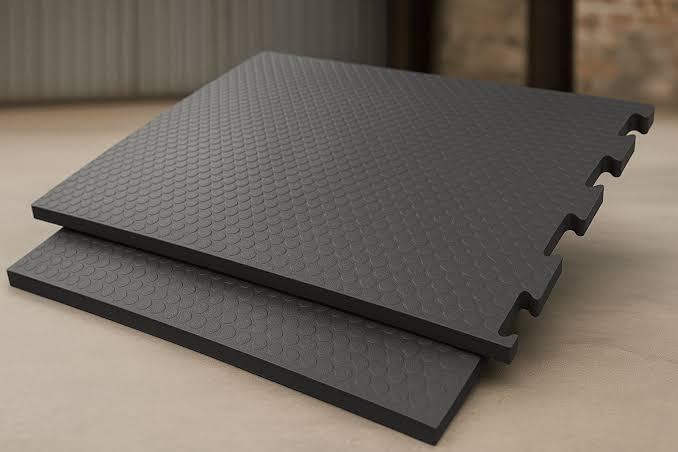
Concrete, stone, and asphalt subfloors serve as the structural base for agricultural estates, commercial workshops, and industrial buildings across the United Kingdom. While structurally sound, bare concrete is cold, unyielding, and prone to surface chipping under heavy mechanical wear. Originally engineered to protect livestock from hard ground and moisture, heavy-duty rubber stable mats have become an indispensable flooring solution across commercial, light industrial, and specialized workshop environments.
The high-density elastomeric construction required to support equine point loads makes these mats exceptionally resilient in human workspaces. Understanding how vulcanized rubber panels distribute weight, block cold ground temperatures, and absorb impact energy allows facility managers, safety officers, and workshop operators to protect both their physical infrastructure and their teams.
Understanding Heavy-Duty Rubber Stable Mats
Commercial and agricultural rubber stable mats are thick, high-density vulcanized rubber panels crafted from natural rubber, reclaimed tire compounds, or synthetic elastomers. Built to withstand extreme point loads, continuous dampness, and abrasive traffic, these panels create a durable, slip-resistant barrier over raw concrete or compacted stone subfloors.
Unlike soft open-cell foam pads that compress permanently under heavy equipment, high-density rubber panels carry a firm shore hardness rating. This structural density prevents bottoming out under substantial static weight, ensuring the surface retains its shock-absorbing memory and flat profile over years of continuous service.
Core Structural Advantages
When deployed across commercial, agricultural, or mechanical spaces, dense rubber panels deliver several practical benefits:
-
Extreme Point Load Tolerance: Shields underlying concrete slabs from cracking or spalling under dropped tools, machinery legs, and heavy equipment.
-
Thermal and Moisture Insulation: Blocks cold temperatures and dampness rising from subterranean concrete, maintaining a warmer, drier working surface.
-
High-Traction Surface Profiles: Features molded bubble-top, hammer-top, or ribbed textures that maintain secure footing in wet, muddy, or dusty conditions.
Operational Considerations During Installation
While dense rubber panels offer exceptional durability, facility planners should account for specific physical characteristics:
-
Substantial Panel Weight: High material density makes individual slabs heavy, requiring safe manual handling practices during layout.
-
Joint Alignment: Straight-edged panels must be fitted tightly together to prevent dust, grit, or organic debris from working into the seams over time.
Biomechanical Mechanics: How Surface Deflection Protects Standing Personnel
Remaining stationary on unyielding concrete for hours places continuous mechanical strain on the human musculoskeletal and circulatory systems. When a person stands on a rigid surface, the calf and lower leg muscles remain locked in static contraction to maintain balance. This sustained tension constricts local blood vessels and impairs venous return—the natural mechanism by which leg muscles pump blood back upward toward the heart.
As circulation slows, blood pools in the lower extremities, causing leg swelling, joint stiffness, and accelerated physical fatigue. Simultaneously, the spine absorbs direct upward kinetic feedback with every step or shift in posture, contributing to lower back discomfort and chronic conditions such as plantar fasciitis.
Integrating specialized Anti-Fatigue Mats or high-density rubber floor panels introduces controlled elastic deflection beneath the feet. Even dense rubber yields subtly under human weight, encouraging natural micro-movements in the ankles and calves. These continuous muscular adjustments stimulate the venous pump, promoting healthy blood circulation and reducing physical exhaustion across extended shifts.
Material Formulations: Selecting the Right Rubber Compound
Choosing the appropriate flooring compound requires matching polymer chemistry to your facility's environmental conditions, chemical exposures, and load demands.
Vulcanized Natural Rubber and SBR Blends
Most heavy-duty stable and workshop panels are manufactured from vulcanized natural rubber (NR) and styrene-butadiene rubber (SBR). This combination delivers high tensile strength, superior tear resistance, and reliable impact absorption at a practical price point. NR and SBR blends excel in equestrian facilities, dry assembly bays, and general storage areas, though they will swell if exposed to petroleum oils or harsh chemical solvents.
Nitrile Rubber (NBR) Compounds
In environments exposed to hydraulic fluids, motor oils, animal fats, or aggressive industrial degreasers, nitrile rubber is required. Nitrile is a synthetic copolymer engineered to resist oil penetration and chemical degradation, maintaining its slip resistance and structural integrity in automotive repair bays, machine shops, and food processing zones.
Closed-Cell Polyurethane and EVA Foams
Where maximum leg comfort during stationary standing is prioritized over heavy vehicle or equipment loads, micro-cellular polyurethane and high-density EVA foams offer softer surface deflection. While unsuitable for heavy machinery or shod horses, these materials excel at dedicated packing stations and standing desk workstations.
Comparing Floor Protection Options: Stable Mats vs Rubber Sheeting and Epoxy Coatings
Selecting the ideal floor system depends on whether your priority is heavy impact absorption, broad seamless coverage, or liquid-tight concrete sealing.
| Performance Metric | Heavy-Duty Rubber Stable Mats | Continuous Rubber Sheet Flooring | Epoxy Resin Floor Coatings |
| Primary Function | Heavy impact absorption and load protection | Seamless broad-area surface coverage | Impermeable concrete sealing and dust proofing |
| Typical Thickness | 12mm to 22mm (thick, dense panels) | 3mm to 10mm (flexible rolled sheeting) | 1mm to 3mm (rigid cured resin layer) |
| Load Tolerance | Extreme (heavy machinery, livestock, drops) | Moderate to High (foot traffic, rolling carts) | High static weight; prone to chipping on impact |
| Thermal Insulation | High (blocks cold concrete transfer) | Moderate (reduces ground chill) | None (transfers subfloor cold directly) |
| Installation Method | Loose-laid panels; easy to lift or replace | Rolled out loose or bonded with adhesive | Multi-day liquid application and curing |
| Fluid Containment | Seams exist between individual panels | Minimal seams limit fluid penetration | 100% seamless liquid-proof barrier |
Facilities outfitting equestrian stalls, agricultural barns, or heavy-duty mechanical bays can source purpose-built heavy-duty rubber stable mats engineered to withstand severe point loads while insulating against cold subfloors.
Practical Applications Across UK Workspaces
Deploying heavy rubber panels effectively involves matching surface textures and panel thicknesses to the specific tasks performed in each area.
Equestrian Centers and Agricultural Facilities
In UK stables, tack rooms, and washdown bays, thick rubber panels remain the standard for animal welfare and facility hygiene. Cushioning hard concrete floors protects horses' joints during prolonged standing, reduces the volume of bedding required, and provides a non-slip surface that drains efficiently during routine cleaning.
Mechanical Workshops and Maintenance Garages
Automotive workshops and engineering bays expose floors to dropped tools, heavy engine components, and constant foot traffic. Placing dense rubber panels around workbenches and vehicle lifts prevents expensive hand tools from fracturing upon impact, protects concrete slabs from spalling, and insulates technicians from freezing concrete during winter months.
Industrial Storage and Heavy Equipment Bays
Warehouses storing heavy metal stock, kegs, or machinery components frequently suffer from severe concrete surface degradation. Laying thick vulcanized rubber panels across staging zones absorbs dynamic drop impacts, dampens structural noise across large open bays, and provides a stable, high-grip surface for material handling teams.
Frequently Asked Questions
What makes rubber stable mats effective in industrial workshops?
Their high structural density, extreme load tolerance, and thermal insulation protect concrete subfloors from dropped heavy equipment while providing mechanics and operators with a slip-resistant, cushioned standing surface.
Can rubber stable mats be laid directly over concrete without glue?
Yes, heavy rubber panels are designed to be loose-laid over flat concrete. Their substantial self-weight keeps them securely in place during daily operations while allowing staff to lift individual panels for deep cleaning or inspection.
How do thick rubber panels protect dropped tools and subfloors?
Unlike rigid concrete, dense vulcanized rubber yields slightly under sudden kinetic impact. When heavy wrenches, machined parts, or equipment drop onto the mat, the rubber absorbs and disperses the impact energy, preventing tool damage and concrete chipping.
Are heavy rubber mats easy to clean and maintain?
Yes, dense rubber panels can be swept, vacuumed, hosed down, or pressure-washed using water and a mild, pH-neutral detergent. Avoid harsh petroleum solvents or concentrated bleach, which can dry out the rubber compound over time.
How do rubber mats insulate against cold UK winter floors?
Rubber has low thermal conductivity, making it an effective thermal barrier. Installing thick rubber panels over bare concrete blocks cold temperatures rising from the ground, keeping workers' feet warmer in unheated warehouses and workshops.
What is the difference between bubble-top and ribbed rubber mat surfaces?
Bubble-top or hammer-top textures provide multi-directional slip resistance and comfortable underfoot traction for standing work. Ribbed surfaces channel liquids in a single direction and offer extra grip on sloped walkways or washdown areas.
Will heavy static equipment permanently indent dense rubber mats?
High-density vulcanized rubber features strong elastic memory. While it compresses slightly under heavy static machinery legs to distribute weight, it rebounds to its original thickness once the equipment is moved.
How do I prevent moisture from accumulating beneath loose-laid mats?
Choose panels featuring grooved, fluted, or stud-patterned undersides that promote airflow and drainage beneath the mat. Periodically lifting and drying the panels in wet environments further prevents moisture buildup on the subfloor.

 English
 Arabic
 French
 Spanish
 Portuguese
 Deutsch
 Turkish
 Dutch
 Italiano
 Russian
 Portuguese (Brazil)
 Greek